Our Stories

When Anthony (Tony) Weathersbee walked into a veteran job fair hosted by PRIDE Industries in El Paso, Texas, he didn’t expect it to change his life. A U.S. Army veteran, Tony had already held several jobs while hiding his disability acquired while in the service. But it was a conversation with a friend and a bit of encouragement that led him to PRIDE Industries, where he now thrives as an HVAC Technician.

 “I didn’t even want to go to the fair that day,” Tony said. “I was working and super busy. But a friend that worked at PRIDE Industries kept telling me I should apply. So, I finally did.”

The Hidden Struggles of Transitioning Veterans

Tony’s journey to PRIDE Industries is a story of perseverance. Inspired by his stepfather, a Vietnam veteran, Tony joined the Army as a dental lab technician. He cross-trained as a dental assistant and combat medic, crafting dental crowns and bridges for fellow soldiers. But a serious injury during jump school at Fort Benning changed everything.

 “I hurt my neck, back, and shoulder,” he recalled. “It was the beginning of a long road.”

After his discharge, Tony faced the hidden challenges many veterans know too well, finding meaningful work while managing chronic pain. “I didn’t want to be treated differently,” he said. “So I felt I had to hide my injuries just to get by.”

He held jobs as a truck driver, a police officer, and an oil field worker, rising to safety director, all while managing the lingering effects of his injuries. “It was tough,” he said. “I was in pain, but I kept going. Keeping my injuries a secret.”

Meeting PRIDE Industries at a veteran job fair marked a turning point in Tony’s career journey.

Veteran Job Fair Launches New Mission

Tony was quickly drawn to PRIDE Industries’ mission to support veterans and people with disabilities. “I walked in, and it just felt right,” Tony said. “The structure, the mission, the support for veterans; it reminded me of the military.”

Today, Tony is thriving as an HVAC Technician at PRIDE Industries working at Fort Bliss Army Base in Texas. In this role, he’s been able to apply many of the skills he developed during his military service, such as discipline, adaptability, and teamwork, to excel in a fast-paced, mission-driven environment, while earning a competitive wage.

 “It’s nice to know that you work for a company that will take care of you and that understands the problems you face, and I see that with a lot of veterans here,” Tony shared. “Some of them have mental health challenges or disabilities but they are able to be open about that and get the support they need.”

For Tony, the reassurance that he no longer has to hide his disabilities has been life changing. He’s found a workplace where his strengths are recognized, his service is honored, and his well-being is prioritized.

Finding Community Among Veterans

Tony found more than a job; he found a community.

 “There are a lot of other veterans here,” he said. “It’s nice to work alongside people who understand your experience and know what you’re going through. With so many veterans working here and veterans with disabilities, it feels like a family.”

He also appreciates the understanding that PRIDE Industries offers. “The supervisors are supportive,” he said. “They put you and your family first. If you need help, they’re there for you.”

 With natural ambition, Tony is already thinking about what is next. “PRIDE Industries encourages you to move up and grow your career,” he said. “There are programs to help you do that.”

 His advice to other veterans seeking sustainable employment?

 “Don’t give up. Talk to someone. Ask for help. Find a place like PRIDE Industries that sees your abilities, not your disabilities.”


This is Part One of a two-part series on the integration of AI and manufacturing. This blog focuses on the benefits of using AI for manufacturing. Read Part Two here.

Chatbots, virtual assistants, and in-home smart devices have made AI such a ubiquitous part of daily life that people are beginning to take it for granted. But what’s true for people isn’t always true for companies, and if your business isn’t taking advantage of AI for manufacturing as a catalyst for efficiency, innovation, and competitiveness, it’s at a disadvantage.

Artificial intelligence—at least in its most rudimentary form—has been around for 50 years. It was first used by electronics manufacturers in the 1970s in the form of computer-aided design (CAD) and computer numerical control (CNC) machines. Engineers used these early software-driven tools to create and modify product designs more accurately and efficiently. Over time, these systems became more advanced as they began to incorporate algorithms and machine learning.

By delivering continuous, accurate, and actionable insights in real time, AI transforms logistics monitoring from reactive to proactive.

Fast forward to this decade, and AI is far more advanced. Whereas traditional AI typically provides information or recommendations for action, a new form of AI, “agentic” AI, has systems that go further. Gartner, a global technology research firm, describes “agentic” AI as a new generation of artificial intelligence systems that work autonomously to achieve goals. These systems can plan, reason, and adapt—without the need for constant human interaction. And if granted the authority, they can even make decisions and execute tasks independently across complex workflows, business processes, and company departments. Gartner predicts that half of all cross-functional supply chain management systems will incorporate agentic AI by 2030.

Why AI for Manufacturing?

Electronics manufacturers are facing challenges across multiple fronts. Rapid advances in electronics are fueling a seemingly insatiable demand for components, and manufacturers are struggling to meet that demand due to labor shortages, complex supply chains, trade restrictions, and rising costs. In a survey of manufacturers conducted by IPC in the spring of 2025, 56% of respondents reported rising labor costs, and half reported rising material costs. In this challenging environment, traditional manufacturing methods are no longer sufficient. Fortunately, AI for manufacturing promises to bring greater efficiency and innovation to every stage of the manufacturing process, from design to delivery.

AI for Manufacturing Optimizes Design and Development

AI for manufacturing is transforming the creation of electronic devices. For example, engineers are now using AI generative design software to optimize configurations and component selection for PCBAs, and are discovering options that may not have been found using conventional methods. Unlike a traditional board design that relies on human engineers and electronic design automation (EDA) software to arrange integrated circuits and connecting traces, an AI-designed circuit board can deliver more computing power in a smaller, more energy-efficient form. This miniaturization is critical for creating electronic devices that are both powerful and portable. Dense PCBs are also essential for AI-based applications—including running software applications that optimize AI PCB design.

Product design is also benefiting from AI, as more and more engineers use AI-enhanced simulation tools to explore design options, optimize for attributes such as strength and weight, and accelerate product development. Altair, a maker of design simulation software, claims that engineers can explore designs 1000 times faster with embedded AI software than with traditional simulations. These designs can then be quickly refined through rapid prototyping, utilizing tools such as additive manufacturing.

AI for Manufacturing Improves Production Processes

In addition to facilitating design, AI can optimize production by automating many intricate yet routine production tasks, leading to greater efficiency. This can be seen, for example, in the management of robots and cobots (robots that work alongside humans).

In electronics manufacturing, one way that robots assist is in the coating and assembly of PCBAs. Industrial robots equipped with force and tactile sensors can outperform humans in placing delicate components precisely and quickly, speeding up the production of the finished product. Now, AI tools driven by machine learning algorithms can optimize these robotic processes, cutting excess motion and speeding up production even more. Some AI tools even allow for real-time process adaptation through data analytics on a massive scale.  

And it’s not just robots that benefit from AI’s ability to analyze movement and suggest efficiencies. Human ergonomics are also being optimized through AI-enhanced analysis. Using computer vision and AI-based pose estimation software, worker movement can now be assessed without the need for intrusive wearables. By tracking key joints such as shoulders, knees, elbows, and wrists, and analyzing the movements through a 3D-rendered skeletal model, AI systems are able to flag unsafe or static postures and repetitive motions, then make suggestions for improvement.

AI for Manufacturing Enables Predictive Maintenance and Equipment Uptime

Traditionally, manufacturers have maintained equipment on a just-in-case basis, irrespective of how heavily a piece of equipment is used. However, AI-driven analytics can enable manufacturers to maintain machines more accurately and cost-effectively by predicting equipment failures before they cause problems—or worse, shut down an entire facility. This approach, known as predictive maintenance, is fueled by data-gathering sensors that feed AI algorithms. Beyond helping a company optimize maintenance, AI tools can also provide manufacturers with a deeper understanding of the root causes of equipment failure.

A man in a hardhat and work overalls, holding a computer tablet, adjusts a setting on an industrial robot.
Predictive maintenance significantly reduces unplanned factory downtime, saving companies millions of dollars.

One company benefiting from AI-enhanced maintenance is Siemens, the global technology giant. Not so long ago, the company was facing significant challenges. Unplanned equipment downtime was leading to delays and significant financial losses; reactive maintenance strategies were incurring high costs; maintaining consistent product quality and worker safety was difficult; and energy usage was high. To solve these problems, Siemens increased the integration of AI for manufacturing—focusing on predictive maintenance, quality control, and energy efficiency—and was able to transform operations. New predictive maintenance strategies saved the company millions of euros annually by significantly reducing unplanned downtime, and smart energy management initiatives led to a 20% reduction in energy consumption across multiple facilities.

Enhancing Quality Control through AI

Electronics testing and inspection is essential to ensure a consistent flow of quality products. But testing can be expensive, and with traditional methods there is always the risk of human error. AI, however, can solve both problems. For example, as PCBAs move down an assembly line, sensors and optical scanners coupled with AI software can be used to check for defects such as missing components and soldering errors. These automated quality control systems can even remove a faulty board from the line or alert workers that a fix is needed by following a three-step process:

  • Image capture – Cameras take high-resolution images of the assembled PCB as it moves along the production line.
  • Deep Learning Analysis – These images are then analyzed by deep learning algorithms that have been trained on thousands, even millions, of examples—both good and defective. Deep learning enables the detection of patterns, anomalies, and defects that humans and non-AI machine vision systems often miss.
  • Decision Making – The AI system then decides if the inspected board is acceptable or defective.

One electronics manufacturer that has adopted AI-enhanced inspection is LG Electronics. The company had sought to scale production and develop more complex products, and found that their traditional inspection methods—which were prone to human error—weren’t sufficient. To address this issue, LG Electronics developed MAVIN-Cloud, a cloud-based AI quality inspection platform. It uses deep learning models to automatically inspect products and components throughout the various stages of manufacturing. Using the new platform, the development cycle for new quality inspection models was shortened by 50%, and the rate of false defect judgments dropped by 50% as well. An added benefit of the platform is that it allows for easy deployment and maintenance, even by employees with limited AI expertise.

Streamlined Supply Chain and Inventory Management

Electronics manufacturers aren’t limiting their use of AI to product design and inspection. Many companies have discovered that supply chain and inventory management also benefit from the quick data analysis and rapid calculations made possible by AI. For example, AI analytics can optimize stock on hand, improve supplier sourcing, and enable real-time logistics monitoring.

AI improves demand forecasting by analyzing vast amounts of historical data and market trends to fine-tune stock on hand. McKinsey estimates AI-driven demand forecasting can reduce forecast errors by 30% to 50%, reducing lost sales due to out-of-stock products by up to 65%.

Using data from IoT sensors, RFID tags, and cameras, AI systems can provide real-time inventory monitoring and management. Continuously collecting and analyzing data, these tools provide up-to-the-minute visibility into the status, location, and condition of products throughout the supply chain. AI helps automate the detection and resolution of issues, reducing manual intervention and speeding up problem-solving. By delivering continuous, accurate, and actionable insights in real time, AI transforms logistics monitoring from reactive to proactive.

AI also improves supplier sourcing. AI-enhanced software can evaluate delivery times, geopolitical risks, and supplier reliability. For example, AI programs may recommend switching from an overseas supplier to a domestic one when global circumstances change. A real-world example of using such data is Samsung’s AI-powered logistics platform. It analyzes 60,000 global news articles daily to spot supply chain risks as they arise. The system can even recommend actions to bolster supply chain security, such as choosing an alternate transportation route.

By analyzing thousands of global news articles daily, AI can spot supply chain risks as soon as they arise, allowing manufacturers to respond quickly.

Present-Day AI

Artificial intelligence is no longer a futuristic concept—it’s the present-day driver of modern electronics manufacturing. From optimizing design and production to intelligent supply chain management, AI can improve every stage of the manufacturing process. As the use of AI systems in manufacturing expands, so must strategic leadership. Executives must evolve beyond operational oversight and become strategic AI leaders, guiding their organizations through this technological shift. How? Stay tuned for part two of our series, where we’ll dive into best practices for successfully implementing AI in manufacturing.

A Contract Manufacturer You Can Rely On

Ready to optimize your manufacturing operations? With decades of experience and a strong commitment to innovation, PRIDE Industries can help you boost efficiency, quality, and supply chain performance. For a smarter, more resilient manufacturing future, partner with us for our full suite of end-to-end electronics manufacturing services.

For decades, many American companies based their electronics manufacturing overseas because of reduced labor costs, less expensive raw materials, and tax benefits. However, recent changes—such as increased shipping costs, fluctuating tariffs, rising costs of foreign labor, and delivery delays—have prompted many companies to pivot and actively search for a US PCB manufacturer.

Kearney, a global management consulting firm, has been tracking this reshoring activity for over a decade. Over the years they’ve seen a shift in CEO perception of reshoring from “cautious skepticism to unbridled enthusiasm.”  While their 2025 report saw a recent downturn in reshoring, the overall trend still indicates a strong desire to reshore. For example, the company’s 2025 research report documented a year-over-year increase of 15% in the share of CEOs planning to reshore at least part of their operations within the next three years. The reasons cited varied, but Kearney’s report also shows that politics are increasingly shaping supply chain strategy—there was a 50% rise in CEOs citing geopolitical tensions as a primary motivator for reshoring.  

But it’s not just geopolitical instability and tariffs that are giving CEOs reasons to reshore. Read on to discover seven reasons why American companies are coming home.

Avoiding Tariffs and Other Costs with a US PCB Manufacturer

An important factor in the drive to reshore are tariff policies that aim to incentivize domestic manufacturing, part of an effort to reduce trade deficits and protect national security. These policies have yet to stabilize, but it seems likely that once policies are settled, tariffs will remain higher than they have been historically. This is one reason why more manufacturers are rethinking overseas production.

The impact of fluctuating tariffs is being felt in many industries, including electronics manufacturing. It has become increasingly clear that the tariff rule of today may not be the tariff rule of tomorrow—making it difficult for manufacturers to accurately predict product pricing, material availability, and product demand. In fact, some experts contend that the market is changing too quickly to count on any single long-term plan, and so advise preparing for more than one possible outcome.

A 2025 report by Kearney, a global management consulting firm, found a year-over-year increase of 15% in the share of CEOs planning to reshore at least part of their operations within the next three years.

A large cargo ship, loaded with containers, at sea
In an era of continuing supply chain uncertainty, reshoring is often the most economically sensible option.

One way to prepare for uncertainty, of course, is to shift manufacturing to a US PCB manufacturer. This can significantly mitigate tariff fluctuations, and also reduce other variable expenses such as shipping costs. In the current climate, in addition to being the more stable path, reshoring is now often the most economical one.

More Control Over Production

Sending your PCB or semiconductor manufacturing overseas can make it harder to keep control of your product, especially since any disputes you have with your manufacturer will be handled in foreign courts. This is a lesson that shoe retailer New Balance learned the hard way when its Chinese manufacturing partner ignored orders from the corporate office and ordered materials for 450,000 new pairs of shoes, costing the company millions of dollars.

Though this cautionary tale is from the retail sector, it’s important to keep in mind that electronics manufacturers have their cases heard in the same courts. And as some U.S. companies have discovered, those foreign courts tend to side with domestic defendants.

Robust Intellectual Property (IP) Protection

Production decisions aren’t the only rights you may be giving up when manufacturing overseas. For electronics companies, the biggest risk may very well be the loss of hard-earned intellectual property (IP). In 2018, the United States Trade Representative conducted a seven-month investigation into China’s theft of proprietary technology and branding and found that these losses cost American companies between $225 billion and $600 billion annually.

American tech company AMSC is a case in point. The company designs and manufactures technology that enables wind turbines to run efficiently. In 2018, its Chinese partner Sinovel Wind Group was convicted in a Wisconsin federal court of stealing AMSC’s technology. But though AMSC won the case, there was little it could do to seek restitution. Today, about 20 percent of China’s wind turbines—approximately 8,000 units—are running on AMSC’s stolen software, though the company has never been compensated.

Companies need to remember that obtaining rights in the United States does not automatically confer rights overseas and that even if you register your patents and copyrights in China, IP enforcement is inconsistent. Companies that subcontract with American suppliers, on the other hand, can rely on a set of robust laws—and reliable enforcement—to protect their intellectual property.

Reliable Communication and Collaboration

Effective communication is critical to a successful working relationship with your PCB manufacturer. Language barriers, lax communication protocols, and time zone challenges are just a few of the communication hurdles companies face when working with an overseas manufacturer. (It’s hard to expect a quick response time if your urgent 3:00 p.m. email arrives in the middle of the night in your contract partner’s location.) Avoiding these sorts of challenges is critical if you want your design, engineering, and manufacturing teams to collaborate and produce a superior product.

Better Quality Control with a US PCB Manufacturer

A Consumer Reports survey found that 8 in 10 Americans express a preference for domestically made products and that these products are often assumed to be of higher quality than imported ones. This impression may be because, in general, American-made products must adhere to stricter quality control standards.

In addition to complying with stricter standards, domestic suppliers also make oversight easier for American companies. Facility visits and audits—essential for robust quality control—are more easily accomplished with a domestic partner who is only a short plane ride away.

Quality control is especially important in industries like aerospace and healthcare, where the impact on human life leaves no room for error. In these cases, a U.S. manufacturing partner skilled in design for manufacturability (DFM) and design for test (DFT) can make the difference between a consistent, reliable product and one that faces expensive recalls.

Faster Time to Market with a US PCB Manufacturer

Electronics manufacturers whose customers are primarily in the United States can save significant time in shipping and transportation by manufacturing domestically. This is good news for companies battling delivery delays—a common supply chain dilemma even years after the pandemic, when an IPC survey found that 69% of electronics distributors had experienced delivery delays averaging between three to six weeks. While conditions have improved, global conflicts and natural disasters continue to inject uncertainty into the supply chain.

Being geographically close to customers can also accelerate the time to market for new features and designs, making it easier for a US PCB manufacturer to adjust to shifting customer needs in real time. This advantage is especially valuable in the electronics industry, where both the preferred electronic components and customer requirements can change quickly.

Two engineers, a woman and a man, standing in a glassed-in conference room, looking at a laptop computer the woman is holding
Engineers with a DFM background can help you improve your design to eliminate the need for custom processes, lowering both labor and material costs.

Improved Supply Chain Resilience

A desire to lower costs was one of the original motivations behind offshoring. But now, the stability of domestic production often makes reshoring the more economically sensible option—especially in an era of continuing supply chain uncertainty. For example, companies can run a leaner operation when they aren’t required to tie up extra capital in large inventories “just in case” there are manufacturing delays or shipping disruptions.

And the benefits of domestic production go beyond shipping stability. Keeping production close to home also reduces sourcing issues and can increase your company’s ability to respond quickly to market changes—especially if you partner with a US PCB manufacturer that prioritizes DFM.

A DFM partner can help you improve your design to eliminate the need for custom processes, lowering both labor and material costs. And if a crucial component suddenly becomes unavailable, a DFM-savvy manufacturing partner will be able to redesign your board using readily available parts.

Qualities to Look for in a US PCB Manufacturer

There are multiple reasons companies are bringing their PCB manufacturing closer to home. But that doesn’t mean you need to manufacture in house. Many original equipment manufacturers (OEMs) are turning to contract electronics manufacturers as they seek to reset their global supply chains. However, even with domestic production, companies must still practice due diligence when choosing a contract manufacturer. Below are a few qualities to keep in mind when vetting manufacturing partners.

Experience and Expertise

Is your US PCB manufacturer experienced in surface-mount technology and through-hole manufacturing? Are your vendor’s designers familiar with a variety of design tools, including CAD and schematic capture software?

Certifications and Compliance Experience

A review of certifications will quickly reveal a manufacturer’s abilities. At a minimum, facilities should be ISO 9001 certified. And depending on your industry, look for specialized certifications like ISO 13485 for medical manufacturing, or AS9100 for aerospace and defense. Remember, too, that working with a manufacturer that employs SMTA-certified SMT Process Engineers will give you extra assurance that it has the staff to handle even complex devices.

Quality Control

Does the manufacturer conduct component-level checks and in-circuit verifications in addition to visual inspections? Is the manufacturer using the latest in automated optical inspection (AOI) technology—as well as 2D and 3D X-ray inspection—to ensure durability, reliability, and quality?

Expanded Capabilities and Resources

Does the manufacturer have the ability and capacity to go beyond manufacturing? For example, do they offer design services, procurement and materials management services, forecasting and capacity planning, and logistics services? What about real-time tracking so that you can avoid product shortages or overstocking? Having a contractor that can provide multiple services will add convenience, save time, and lower costs.

An Increasingly Attractive Option

The shifting landscape of global manufacturing has made reshoring an increasingly attractive option for American companies, particularly in the electronics sector. From mitigating the impact of unpredictable tariffs and shipping costs to safeguarding intellectual property and ensuring superior quality, the benefits of partnering with a US PCB manufacturer are clear. Domestic production not only fosters stronger communication and collaboration with suppliers, but also enhances supply chain resilience and speeds time to market—critical factors in today’s fast-paced, innovation-driven economy.

An Electronics Manufacturing Partner You Can Rely On

At PRIDE Industries, our US-based, state-of-the-art facilities minimize your risk of supply chain disruption, optimize manufacturing and fulfillment processing, and provide flexible, on-demand inventory schedules. Partner with us to better manage the unpredictability of tariffs, component availability, and shipping costs—while meeting customer demand for products made in the USA.

Water conservation is a win-win for most commercial facilities. With a strong commercial water management program, facilities managers are able to satisfy tenants and community leaders looking for sustainability—while saving significant amounts of money.

The latter is especially true today. Water utilities are experiencing cost increases due to higher energy expenditures, catchups on deferred maintenance, increased wages, and in some cases, the need to import water from distant sources. These increased expenditures are being passed along to utility customers, and can hit corporate users especially hard, as commercial facilities are one of the largest consumers of water—according to the EPA, commercial buildings consume approximately 17 percent of the public water supply each year.

Fortunately, a robust water conservation plan can reduce water consumption by as much as 45 percent, leading to significant savings.

Understanding Your Facility’s Water Usage

High-impact facility upgrades include replacing outdated plumbing fixtures, optimizing cooling towers, installing submeters, and—where possible—reducing outdoor water use with desert-friendly flora.

Water use varies greatly by type of facility. In most office complexes, restrooms use the bulk of the facility’s water. Hospitals, restaurants, and other facilities have additional water needs. But no matter what type of facility you manage, developing a water conservation plan will follow similar steps.

Determine Your Annual Water Use and Costs

In order to develop a commercial water management plan, you need to know how much water your facility uses in a year. Getting this information can be as simple as adding up the amounts reported in your water bills. If you already employ submetering, you should be able to assess fairly accurately which areas and functions within your facility—landscaping, air conditioning, restrooms, etc.—are hogging the most water.

If you don’t have submeters, you may have to estimate your usage. Fortunately, there are tools that can help with this, such as portable ultrasonic water meters that clamp onto pipes to measure water flow at various points along the pipe.

Conduct a Water Audit

Once you understand where and how water is consumed in your facility, you can identify opportunities for more efficient water use. In other words, you need to conduct a water audit.

Begin your water audit by walking through your facility and identifying every point where water is used. Document each device that uses water—such as toilets, faucets, and irrigation systems—along with their locations and their flow rate. And be sure to include mechanical equipment such as boilers and cooling towers, which use a significant amount of water.

The audit is also a good time to check plumbing and related fixtures to make sure they’re in working order. Fixing drips and leaks is the low-hanging fruit of the water conservation tree.

Other easy conservation steps include:

  • Checking water submeters installed on major water-using equipment and systems.
  • Testing water pressure on each floor of a building to ensure it is within optimal range for fixture and equipment performance.
  • Checking and adjusting automatic sensors and metering the faucets to ensure accurate timing and delivery of water per cycle.
  • Testing and calibrating automatic- and sensor-flushing devices to prevent double/phantom flushes.
  • Ensuring irrigation schedules are appropriate for your region’s climate and soil conditions.

Analyze Trends

Once you’ve audited your systems, the next step is to spot patterns and opportunities for improvement.  There are many different tools available to help with water use analyses, including water management software, smart water meters, and water management sensors that can detect leaks and other anomalies. The EPA’s WaterSense Water Use and Savings Evaluation (WaterUSE) Tool is a good free resource that details how to conduct a water audit and analyze the results.

Develop a Commercial Water Management Plan

Now that you know how much water you’re using and where it’s being used, you can develop your commercial water management plan. The EPA recommends that you begin by bringing building owners, facility management staff, senior management, and any other key decisionmakers together to develop a list of goals and policy initiatives. In addition, including employees from different parts of the organization in the goal-setting process will promote a sense of ownership across the company. Once water conservation goals have been developed, they should be communicated to the entire organization. Having senior management or the building owners communicate these goals will send a message to employees (or tenants) that water conservation is a priority.

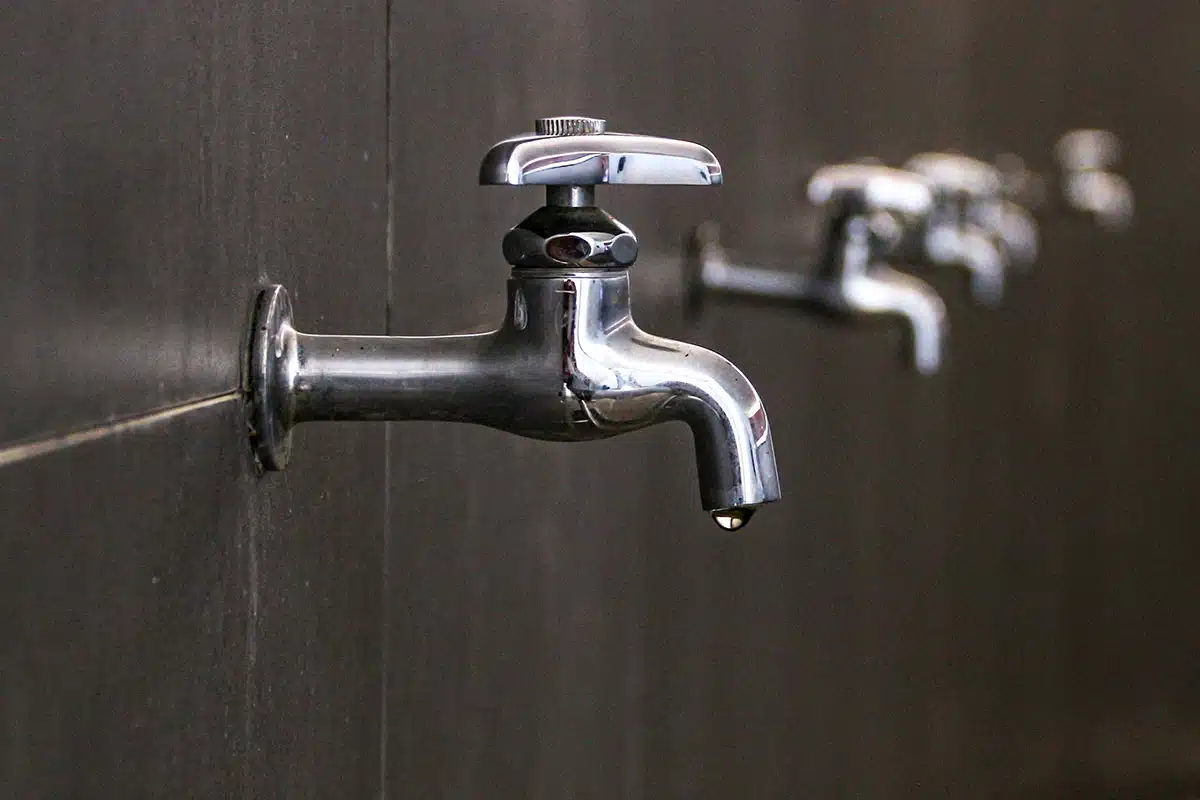
An old-fashioned faucet, with a slow drip, in an office building bathroom
Even a slow drip can waste up to 3,000 gallons a year.

Examples of commercial water management goals may include:

  • Reducing water use by a certain percentage per year for a period of years to reach a target reduction goal, using the facility’s current water consumption as the baseline.
  • Completing projects identified through the planning process within a set timeframe.
  • Upgrading targeted areas such as mechanical systems, restrooms, or commercial kitchens.
  • Establishing a leak-detection program to identify and correct any unaccounted water use that could be due to leaks.

Once water conservation goals have been set, it’s time to create an action plan for achieving these goals. Which actions or projects will lead to the desired reduction in water use? What are the associated costs for these changes, and what are the potential savings? Will improvements be funded through operating expenses or capital funding mechanisms?

Some upgrades involve significant up-front costs. Fortunately, rebates and incentive programs from local water utilities or state governments can help reduce those costs.  For example, the East Bay Municipal Utilities District offers a variety of incentives to support commercial customers, including free water-saving devices and customizable rebates up to $15,000 for landscape and equipment upgrades. Similarly, the Metropolitan Water District in Southern California offers business customers rebates for several types of upgrades, including water-saving toilets and urinals, more efficient cooling tower pH controllers, and even landscaping equipment. Many localities offer incentives for more efficient water use, so be sure to explore the rebate programs available from your local water utility or state agency.

Prevent Water Waste

One of the least expensive ways to conserve water is to prevent it from being wasted in the first place. And two of the most important ways to do this are to monitor your plumbing system for leaks, and to educate the people working in your facility about water-saving steps they can take every day.

Leak Detection and Repair

Leaks are a common cause of water waste. A dripping faucet may seem minor, but just one faucet leaking at a rate of one drip per second will waste 3,000 gallons of water a year. Regular maintenance checks will ensure that these “minor” leaks are caught quickly, and fortunately, most leaks can be repaired simply and inexpensively.

Submetering devices allow you to pinpoint opportunities for water savings.

When searching for leaks, it’s important to check behind walls and other hard-to-reach places. There are several types of handheld devices that use non-invasive thermal imaging to detect leaks, while drones can be used to inspect upper floors, rooftops, and other elevated locations. Finally, visual inspection tools like borescopes can allow your staff to see inside narrow and difficult-to-access spaces. Using the right tools will make your inspection process easier and less expensive.

When it comes to fixing water waste, smart water meters can make a big difference. These devices monitor water flow and will automatically alert you to unusual patterns. Some smart meters can even shut off a water line automatically if a significant, unexpected flow is detected.

When tightening up water use, be sure to look outside the building as well. Landscaping can be a water hog, so any efficiencies gained here can significantly impact the bottom line. Make sure that your landscaping personnel regularly check irrigation systems for leaks. Since sprinklers and drip lines are often run after business hours—when no one may be around to notice leakage—it’s important to proactively check lines and systems for leaks and other malfunctions.

Employee education

Your maintenance staff plays a crucial role in identifying and rectifying water waste, but your facility’s tenants and employees also play a big role in how water is used. To turn your facility’s occupants into water conservation allies, you can:

  • Hold regular training sessions to educate occupants about simple conservation steps like turning off faucets (if manually operated). Occupants can also be taught to identify common signs of leaks, such as water stains, musty odors, and mold growth. Using visual aids like videos and diagrams to show where leaks commonly occur can be helpful. And make it easy for occupants to report possible leaks by setting up a phone number or dedicated email address they can reach out to.
  • Create a culture of awareness in which occupants feel responsible for reporting potential issues. You can even develop a program that rewards occupants who report leaks or engage in other water conservation efforts.

Upgrade fixtures and equipment

Some of the highest-impact facility upgrades are replacing outdated plumbing fixtures, optimizing cooling towers, installing submeters, and reducing outdoor water use with desert-friendly flora that require less irrigation. You can garner big water savings by replacing older fixtures and systems with water-conserving devices that meet today’s standards. For example, if your facility was built before 1992, it may still have toilets that use as much as five gallons of water per flush. Today’s toilets must comply with the federal standard of 1.6 gallons per flush, or state standards (such as California’s) mandating no more than 1.28 gallons. Replacing these water-wasting toilets can make a big difference in water consumption.

Other major savings can be found by:

  • Integrating meters and submeters. Meters and submeters can be integrated into a centralized building management system, making it easy to track and report water usage on an hourly, daily, monthly, or annual basis. Such a system can also trigger alerts when leaks or other operational anomalies are detected.
  • Optimizing cooling tower operations to minimize water loss. One way to do this is to maximize the cycle of concentration (or concentration ratio). When water evaporates from a tower, dissolved solids remain in the recirculating water, but as more water evaporates, the concentration of solids increases and can cause scale to form, which also can lead to corrosion problems. Removing a portion of the highly concentrated water and replacing it with fresh make-up water to compensate for evaporation is the most significant way of conserving water in cooling tower operations. In some cases, water from other equipment at the facility, such as air handler condensate, can be recycled and reused for this make-up water.
  • Reducing irrigation watering. There are several ways to do this, like switching to drought-resistant landscaping, which can cut outdoor water use by up to 50 percent. Shrubs can be watered through drip irrigation instead of sprinklers. Another water-saving tactic is to install weather-based irrigation controllers, which let you water plants based on temperature and rainfall.
  • Upgrading equipment. Upgrading key equipment is one of the most effective ways to improve water conservation while maintaining system efficiency. In addition to switching to water-saving toilets, consider upgrading your boilers and chillers (especially if they’re more than a few years old) with newer, higher-efficiency models.

Implement Recycling and Reuse Systems

Cooling towers aren’t the only areas where water can be reused. Facilities can also reuse treated wastewater from sinks and showers, for example, for non-potable purposes like toilet flushing or irrigation. Doing this, however, requires a dedicated greywater system, and the costs of retrofitting an existing facility to incorporate a greywater system can be prohibitive. So, make sure to explore the cost thoroughly before making any decisions.

In areas with significant rainfall, rainwater harvesting systems can be installed, particularly where the roof is large enough to collect a sufficient volume of water. The water is funneled into storage containers, either above ground or below ground. Equipment is available to filter the water before it reaches the storage container in order to remove dirt, debris, and organic material. Using harvested  rainwater for landscaping is usually easier than using it indoors. If you plan to use the water for indoor applications or cooling towers, pumps and additional pipes will be needed. Make sure you check with local authorities first to find out if these systems are permitted and what requirements they may have. Sometimes rebates or incentives may be available to offset some of the costs of installing a water harvesting system.

Monitor and Evaluate Progress

Like anything else, preventing water waste is an ongoing process. Once you’ve established your baseline of water use and implemented your water-saving projects, you’ll need to monitor your water consumption to determine the effectiveness of your conservation system, compare current water use to your goals and benchmarks, and adjust practices accordingly.

Fortunately, there are tools to help you monitor your savings and alert you to any issues that need to be addressed. These tools include water meters, flow sensors, smart devices, and software applications

You may also want to consider conducting retro-commissioning audits. Ideally performed every five years, these audits identify operational inefficiencies and allow facilities engineers to make needed adjustments. Although primarily a tool for energy conservation, the audits can also be used to monitor water conservation.

Reaping the Benefits of Commercial Water Management

In addition to enabling you to save water (and money), a robust commercial water management plan can help you:

  • Ensure regulatory compliance. Many states are tightening their water use regulations. Water-scarce California, for example, imposed mandatory 25 percent cutbacks on water use during a drought in 2014.
  • Support LEED certification efforts. Implementing water efficiency plans demonstrates your company’s commitment to environmental stewardship and may help qualify you for the prestigious LEED certification, raising your company profile and distinguishing you from competitors.
  • Champion resiliency. By reducing dependence on limited local water resources, water-efficient properties are less vulnerable to fluctuations in water supply from weather-related disasters. Reducing water consumption also ensures a more sustainable water supply for your surrounding community.

Saving money is just one of the many benefits of reducing water use. Fortunately, with current technologies—and the right commercial water management plan—it’s easier than ever to reduce, reuse, and recycle your facility’s most precious resource.

A Facilities Management Partner You Can Rely On

With over 35 years of experience in facilities management, we know the best practices to ensure that your buildings are safe, efficient, and sustainable. Rely on us for award-winning expertise in engineering and project services, predictive maintenance, custodial services, and commercial water management.

For decades, PCBs have used essentially the same configurations to serve the internet application needs of big tech companies. Whether supporting a search engine like Google or an email application such as Microsoft Outlook, traditionally designed and assembled PCBs have been sufficient. Now, however, the increasing reliance on AI is rapidly driving new requirements for PCBs, including the need for new types of components. Designing boards advanced enough to keep up with the demands of AI technology—AI PCB design—is redefining electronics manufacturing.

How AI is Driving Changes in Computer Design

Gordon Moore first posited his famous law in 1965, then updated it ten years later. Since then, Moore’s Law—that the number of transistors in an integrated circuit (IC) doubles about every two years—has been the most famous (if not most important) truism driving the electronics industry. AI is about to change that.

Manufacturers who understand the unique challenges of AI PCB design, as well as appropriate solutions, will be better prepared to ride the AI wave.

According to OpenAI, the amount of computing power—aka “compute”—used for training the largest AI models has been increasing exponentially since 2012, growing 10-fold every year compared to the doubling of chip transistors every two years per Moore’s Law.

This rapid growth is making AI models smarter, but it also requires more energy and resources, posing challenges for sustainability and infrastructure. For example, one ChatGPT query, on average, takes 10 times the electricity to process as a Google search. And while traditionally a single server was sufficient for AI tasks, modern AI applications require global data centers. In fact, by 2026, AI operations could consume over 40% of global data center power, according to Deloitte.

 “AI’s transformational potential is analogous to paradigm-shifting technologies like the advent of the internet or the mobile phone, and it has the potential to touch every sector of global industry,” according to a 2023 U.S. Data Center Market Overview by Newmark.

So, what does this AI revolution mean for electronics manufacturers? A lot. PCBs are at the heart of AI hardware, providing the platform that integrates the various components essential for AI systems—processors, memory modules, sensors, and interfaces. Therefore, PCB designers play a crucial role in tailoring the layouts of these boards to meet the specific requirements of AI applications in terms of scalability, efficiency, and performance. Manufacturers whose designers understand the unique challenges of AI PCB design, as well as appropriate solutions, will be better prepared to ride the AI wave.

Challenges in AI PCB Design

A PCB designed to meet the needs of AI will be substantially different from a traditional PCB. AI-focused PCBs are more complex and need to be able to handle more: more component density, more layers (to accommodate dense routing), more data being processed, more frequency, etc. All this complexity creates significant challenges, requiring engineers to design architectures that optimize power consumption while also accounting for heat dissipation, signal integrity, and other factors.

High Density and Complexity

A PCB built for AI applications is more complex and denser than traditional PCBs. It is also likely to have a much higher layer count to allow for more intricate designs and the ability to include more components.

High-Frequency Requirements

To enable rapid data transfer and processing, AI applications often operate at frequencies above 1 GHz. PCBs designed for AI apps must therefore be able to handle high-frequency signals with minimal loss and distortion.

Thermal Management

The high performance requirements and massive data processing of AI applications generate a lot of heat. Properly managing this heat is critical to the performance, reliability, and lifespan of the PCB and its individual components.

Rapidly Advancing Technology

The exponential growth of AI is creating a large demand for PCBs capable of meeting the technology’s requirements. At the same time, manufacturers are scrambling to keep up with the latest AI standards and technologies. This constant need for innovation, combined with the demand for large-scale production, requires product manufacturers to creatively balance product quality and cost efficiency.

Given the engineering and production demands of rapidly advancing AI technologies, what are some ways that product manufacturers can meet these challenges? Here are five best practices to keep in mind when it comes to AI PCB design.

Choose Components Carefully

Be selective in choosing the components to include on AI PCBs, since they determine the functionality and performance of the board. AI algorithms have unique demands, requiring high-performance computing, large data storage, and accurate data acquisition. This is why, as AI hardware has evolved, new components have been developed to meet this technology’s demands, like the accelerator chips that are essential for carrying out the autonomous processes that AI applications rely on.

Unfortunately, there is only so much room on a board. One creative solution to this problem of limited space has been to repurpose existing components. Silicon Valley chipmaker Nvidia, for example, has found that the graphics processing units (GPUs) it developed to render graphics in video games is well suited to the demands of AI.

A close-up of Google’s proprietary AI chip on a stylized circuit board
Google’s proprietary AI chips allow for greater customization.

While computer manufacturers have relied for nearly 50 years on the central processing unit (CPU)—a single, do-it-all chip—it turns out that GPUs are better for AI tasks. Why? A GPU outshines the jack-of-all-trades CPU in performing the simple math that powers the neural networks of AI. In the time it takes a CPU to do a single calculation, a GPU can perform thousands, allowing AI’s neural networks—the basis of chatbots and other AI technology—to analyze significantly more data. By running millions of calculations, they allow a computer to “think” about a problem rather than just calculate simple data.

Joining GPUs, CPUs, and memory chips on the board are sensors and application-specific integrated circuits (ASICs). Unlike the more general-purpose CPU and GPU chips, ASICs are custom designed for a specific application. For example, a smartphone might use an ASIC chip for power management tasks such as battery charging control, display backlight regulation, and power distribution.

With the demands of AI making the PCB ever more crowded, manufacturers should choose the most efficient components for specific tasks. Likewise, careful component selection early in the design phase, a long-established design for manufacturability (DFM) best practice, will make it easier, more efficient, and less expensive to manufacture a board.

Address Thermal Management

Due to intense computational demands and power consumption, AI hardware generates significant heat. Therefore, it’s imperative to design a thermal management system to dissipate heat effectively and quickly. Failure to do so can lead to solder joint failure, delamination, and thermal runaway—a self-reinforcing cycle where components draw more current as they heat up.

Thermal runaway poses significant safety concerns, especially in applications like electric vehicles, consumer electronics, and energy storage systems. For example, if cooling fails in an electric vehicle, localized overheating may cause a sensor failure—resulting in a crash, and possibly a fatality.

One way to address overheating is with proper materials. The most common material used for PCBs is FR-4, a composite of woven glass fabric and epoxy resin. While FR-4 offers dielectric strength and good mechanical properties, and has traditionally been adequate for most applications, it’s not as effective for the high-frequency operations required by advanced AI applications. This has led to the increasing use of a different type of board. Metal Core PCBs (MCPCBs), which use metal substrates, dissipate heat more effectively than traditional FR-4 boards.

Of course, PCBs don’t operate in isolation—they are part of a computing environment that includes external methods for controlling heat, such as fans, heat sinks, thermal pads, and liquid cooling. Therefore, PCB designers need to account for the end application, i.e., make allowances for the ambient temperature and airflow of the environment where the PCB will eventually operate.

Use Rapid Prototyping

Another way to meet the challenges of AI is through rapid prototyping. AI engineers need to experiment with different designs and repeatedly test their AI algorithms, and time is of the essence. Through rapid prototyping, manufacturers can achieve the quick turnaround time for board design and development that AI demands.

Traditionally, it could take weeks or months to design a PCB, test it, adjust it, and then reprint it for validation. Now that process can be completed in days. By drastically reducing the time from concept to functional prototype, rapid prototyping allows manufacturers to more efficiently and economically produce PCBs.

Improve Signal Integrity

AI systems rely on chips that process huge amounts of data at lightning-fast speeds. Because of this, it’s essential to design boards that facilitate clean signals. Here are four ways to ensure high signal integrity on PCBs.

Optimal Trace Design

Designing a PCB trace to maintain signal integrity is much like designing a freeway. Just as a gentle curve on a road allows for smooth traffic, especially at high speeds, gentle bends in a PCB trace will allow for better signal flow. Therefore, sharp 90-degree bends in traces are discouraged when designing for high-speed and high-frequency applications. A more gradual bend of 135 degrees, or even an arced curve, will enable a smooth transition.

Shielding

Just as noise-canceling headphones can protect your listening experience, a good PCB design can protect signals from outside interference. Surrounding signals with a special metal layer, a technique known as shielding, keeps signals clean and protected from electric noise.

Termination

In the same way that bowlers want to keep bowling balls from bouncing back down the alley, PCB designers want to prevent signals from bouncing back at the end of their paths. Bowling alleys use pit cushions to prevent bounceback; a good PCB design employs the appropriate resistors to absorb signal energy.

Filtering

Filtering is just what it sounds like—dampening unwanted parts of a signal, much in the same way a water filter removes impurities. In board design, this means placing the right components, such as capacitors and inductors, strategically near noise sources or sensitive areas, thereby suppressing interference before it spreads across the board.

Optimize PCB Layout

Another important factor affecting AI PCB design is the layout. Carefully selecting the physical arrangement of the components and traces on boards is especially important for AI applications, as AI requires complex and dense layouts, often involving many components, multiple layers, and numerous vias to allow signals to travel between those layers.

Designers must also account for the electrical, mechanical, thermal, and ergonomic requirements of the layout. For example, a key consideration in ergonomic design is flexible PCBs, a quality that is especially important in wearable technology and medical devices that have size and weight constraints.

According to Deloitte, AI operations could consume over 40% of global data center power by 2026.

The Future of AI PCB Design

While processing units will remain an integral part of the PCB for the foreseeable future, the units themselves are evolving. Although GPU chips have a leg up on CPU chips, some companies are going further by developing their own chips. For example, Google has designed an AI chip known as a Tensor Processing Unit (TPU). This unit is an application-specific integrated circuit (ASIC) designed to accelerate machine learning tasks, particularly for neural networks. Unlike GPUs and CPUs, these TPUs are specifically optimized for high-volume, low-precision applications, making them ideal for deep learning model training.

Designing its own chips has brought Google several advantages. These include lessening the company’s dependence on chip manufacturer Nvidia; lowering Google’s costs for large-scale AI deployments; and allowing for more customization specific to Google’s AI workloads.

Other tech giants, such as Amazon, Apple, and Microsoft, are also developing proprietary chips, shifting away from traditional manufacturers like Intel. Some experts predict it’s only a matter of time before smaller companies follow suit. As AI continues to evolve, AI PCB design will require more specialized components, flexible boards, and creative engineering solutions to meet the growing computational demands of AI applications.

AI PCB Assembly Services You Can Rely On

Our flexible, customized PCBA manufacturing services are supported by highly skilled staff and driven by a commitment to quality. From streamlining product designs for greater efficiency to high-precision manufacturing, our team will help you rise above your competition.

Some people light up a room the moment they walk in. Andrew Garcia, kitchen team member at Eskaton Senior Living’s Gold River facility, lights up an entire dining hall.

From Shy to Shining

After graduating from high school, Andrew faced a challenging job market and struggled to find work that truly showcased his skills and personality. As a person with a disability, he encountered barriers that limited his access to long-term employment.  While he was able to find fleeting seasonal jobs and night shift positions, he wanted a role where his strongest asset—his character—would be valued.

“For five years, I worked graveyard shifts. During my breaks, I would write poems, but there were never many people to share them with,” said Andrew.

That opportunity finally came when PRIDE Industries connected him with Eskaton, a leading provider of senior care in Northern California. Andrew joined the kitchen team at the company’s Gold River senior living community, a place where his kindness and passion for helping others could truly thrive.

As a kitchen team member, Andrew quickly became more than just a familiar face to the residents; he became a constant source of warmth and connection.

“Andrew has absolutely flourished here. He went from being a quiet person to chatting with everyone and sharing his poetry with them. It has been amazing to watch him grow and blossom,” said Carol Compton, PRIDE Industries Employment Coach.

A Steady Presence in a Changing Industry

The senior living industry routinely experiences high turnover. This can be difficult for community residents, who often form close bonds with staff members. For many older adults, Eskaton is more than a senior living community; it is their home. And as in any home, stability matters. Frequent team member changes can feel disorienting and unsettling for residents, who naturally seek comfort, familiarity, and interpersonal connection.

This is one reason why Eskaton turned to PRIDE Industries for culinary team support.

“It started with a need for consistency with kitchen team members,” said Paul Nelson, Director of Culinary Experience at Eskaton. “We were looking for a long-term solution rather than constantly training new people.”

Culinary team retention also impacts the resident experience. “We know that the turnover of kitchen team member role directly correlates to the happiness and quality of life of residents. If you see new people over and over it can be very stressful,” said Cynthia Driver, Director of Work Partnerships at Eskaton.

Cynthia’s comments are supported by the Harvard Study of Adult Development, a decades long study of what makes people happy in life that followed 724 participants from all over world for years. “It’s the longest in-depth longitudinal study on human life ever done,” said researchers Robert Waldinger and Marc Schulz,” and it’s brought us to a simple and profound conclusion: Good relationships lead to health and happiness.”

Kitchen Team Member Enhances the Resident Experience

Andrew has become a comforting constant in the dining room. His daily presence offers not only a sense of routine but also the emotional reassurance that someone truly cares. When residents come to each meal, they find more than a warm plate, they find a friendly face they know and trust, someone who sees them and enriches their lives.

Beyond his duties of taking orders, serving meals, and cleaning, Andrew puts in the extra effort to get to know every person who calls Eskaton home. The culinary team, residents, and fellow employees all appreciate the way he elevates the dining experience.

“The residents really enjoy Andrew’s presence. He can anticipate their needs. He has learned who the regulars are. Half of them, he doesn’t have to ask their orders anymore, but he still does so they can feel heard. He knows all of their names and has really pleasant conversations with each of them,” Paul said.

For many residents, mealtime is more than just a time to eat. It’s a vital part of their day and an opportunity to connect with others. Andrew ensures that each interaction is meaningful.

“He was a little shy at first, but from then on, he has had the biggest smile. He always greets you by your name and says hello. It makes you feel like family. I may have family close, but not everyone does, so that makes you feel special,” said Sharon Douglas, a resident at Eskaton.

The Poet of Eskaton

Andrew’s impact at Eskaton extends far beyond his role as kitchen team member. He has become the community’s beloved poet. His heartfelt poetry, filled with themes of gratitude and appreciation for life’s beauty, has resonated with both residents and staff. Residents share his poems among their friends, and behind the scenes, his words decorate the walls, reminding each kitchen team member of the joy in their work.

Within the walls of Eskaton, Andrew’s poems are so much more than just words on paper. For the residents, his poems offer comfort, joy, and a reminder of the beauty in everyday life.

Overcoming Barriers to Employment

Finding steady employment once posed a challenge for Andrew. Then PRIDE Industries connected him with a role that suited his strengths, in an industry that needs reliable workers. At Eskaton, his light finally had a place to shine.

Now, not only does Andrew excel at his job, he’s also an integral part of the Eskaton community. His success story is a testament to the life-changing power of inclusive employment.

“I think the misconceptions are widely there when you hear ‘disability’ first, and there is an idea of limitation,” said Cynthia. “Being in this field, it’s a wonderful match-up because we also have a huge stigma around aging and capabilities. People often think just because you’re a certain age that you would have a limitation. So having these two paired up together to basically fight both of these stigmas and have it work together in this beautiful concert is a wonderful opportunity.”

A Chance to Shine

In the kitchen bright where meals are made,
A dream took flight, where kindness laid.

PRIDE Industries opened the door
For a man with hope to do much more.

With hands that stir, and skills that grow,
He found his place, his talents flow.

At Eskaton’s heart, in the kitchen’s glow,
A chance was given and love did show.

Through teamwork strong and hearts aligned,
He found his worth, his purpose defined.

Filling each dish with joy and grace,
He shares his light in this special space.

Grateful for the chance, his spirit bright,
PRIDE Industries gave him wings to flight.

In the kitchen’s warmth, a story unfolds,
Of dreams fulfilled and hearts that hold.

— Andrew Garcia

Andrew knows that sometimes it takes businesses looking beyond these stigmas to find the talents hidden within each person.

“Anything is possible,” said Andrew. “Anyone with a disability has a special power within them. We don’t judge the person by the cover. If you took the chance to talk to them more and get to know them more, you would see that.”