Our Stories

After graduating summa cum laude from Sacramento State University, Alex Naumann should have had no trouble getting a job. But despite being bright, professional, and having a great work ethic, he struggled.

“That was largely because I’m a person who stutters,” said Alex.

Finding employment can be challenging for anyone, but for people with disabilities, it’s doubly so. Data published by the Bureau of Labor and Statistics bear this out—people with disabilities are twice as likely to be unemployed as those without disabilities.

Employment Helpline Leads to Internship

Alex decided to reach out for help.

“I signed up with the California Department of Rehabilitation, and my counselor gave me a list of vendors that included PRIDE Industries. That company was familiar to me, so I contacted their I AM ABLE® Employment Helpline.”

“My experience working with others in an office setting was different from when I was in school. It was the first time I collaborated with multiple people on the same project. I really liked that.”

On calling the Helpline, Alex was referred to Employment Specialist Sara Robinson, who made him aware of a paid internship opportunity with The Michael Ziegler PRIDE Industries Foundation.

“Sara and I both thought it would be a good opportunity,” said Alex, “because it would allow me to gain knowledge, learn skills, and demonstrate my current abilities while building experience that I could take with me to my next job.”

A Welcoming Work Environment for People Who Stutter

When Alex arrived for his first day of work at PRIDE Industries, he was surprised, in a good way, by his welcome.

“From the start, I was greeted with exceptional acceptance,” Alex said. “Something I’m not used to in the world.”

For Alex and many people who stutter, this kind of welcoming environment isn’t typical. Elsewhere, when introducing himself, he has been laughed at or asked if he had forgotten his own name.

“Nothing like that happened here,” he said. “I was met with patience and understanding.”

Freed up from some of the barriers he has typically faced, Alex worked hard as a member of the Foundation team. In fact, the first project he worked on was the same one that helps fund both the I AM ABLE Employment Helpline and PRIDE Industries paid internships: the Employee Giving Campaign.

“I was incredibly excited to help with the Employee Giving Campaign,” said Alex. “I got to prove myself as a hard worker while helping to fund future interns in the same circumstance I was in.”

A Chance to Put Skills to Use and Learn New Ones

During his internship, Alex was able to develop many of the professional skills that he would need for future employment.

“I was exposed to life in a professional office setting, including all of the protocols that go along with that,” said Alex. “I also had the opportunity to hone my writing skills.”

“Alex’s written communication skills were already at a high level when he started with us,” said Alex’s supervisor. “His ability to be genuine with donors was a big plus. His sincere appreciation shone through in the letters and other communications he wrote. And he picked up the nuances of our software programs quickly.”

Those software programs included Microsoft Office 365, Monday.com, Salesforce, and other office productivity tools.

In addition to honing his technical skills, Alex was able to learn about teamwork in the professional world.

“My experience working with others in an office setting was different from when I was in school,” he said. “It was the first time I collaborated with multiple people on the same project. I really liked that.”

Alex’s degree from Sacramento State included a concentration in video production, and during his internship, Alex had the opportunity to put his film degree to good use. Among his many duties, he assisted PRIDE Industries Senior Videographer Christian Naranjo.

“I really enjoyed helping Christian,” said Alex. “I got insight into how a one-man video crew, with proper knowledge and gear, can do the work of many people.”

Christian enjoyed the collaboration as well.

“Alex was excited to help out and see what goes into a PRIDE Industries production,” he said. “It had been a while since he’d worked on a video project, so he was getting back into the rhythm of things and asking questions along the way. You can see that he has a passion for the craft.”

Internship Leads to Permanent Position

Alex’s dedication and passion for his work made him a valuable and respected coworker. So, when his internship ended, he was offered a permanent position at PRIDE Industries. Today, Alex is an Administrative Assistant in the Workforce Inclusion department, where he uses all the skills he gained during his paid internship.

“In my current role, I document standard operating procedures for dozens of job positions,” said Alex. “I also process the documentation for new employees and I conduct audits of various programs to ensure that we’re billing business customers appropriately.”

For Alex, the internship was more than just a chance to learn new skills. It also allowed him to get to know PRIDE Industries and decide for himself if the organization was a good fit for him.

“During my internship, I got to know several employees and to experience the company culture, which I really liked,” said Alex. “By the time I got an offer for a permanent job, I knew this was the place where I wanted to work.”

Accommodations for People with Disabilities Are Inexpensive

According to the National Stuttering Association, stuttering affects the speech of one out of every 100 people—over 70 million, worldwide. This means that if a company has 500 employees, five of them likely stutter. 

Some organizations fear that accommodations—for people who stutter or for any employee with a disability—are costly. They aren’t. In a recent survey by the Job Accommodation Network, 56 percent of companies reported that accommodations for employees with disabilities cost nothing. Another 37 percent reported a median cost of $300 per employee with a disability, for the entire span of their employment. What’s more, employers also reported that these measures usually pay for themselves.

These numbers make clear that the cost of accommodation is not the greatest barrier to employment for people with disabilities. Misperceptions about their abilities are.

Acceptance: A Basic Human Need That’s Also Good for Business

Sometimes an accommodation is simply an attitude.

“Beyond my friends and family, I’m not used to the level of acceptance I’ve received here at PRIDE Industries,” said Alex. “I’ve never experienced that in the work world.”

Closely linked to belonging, acceptance in the workplace is vital—and not just at a personal level. Employees who feel accepted perform better.

Since 1966, PRIDE Industries has understood that this level of inclusivity isn’t just the right thing to do. It’s also good for employees, for the businesses that hire them, and for the communities where they live.


Disability Employment Programs

Whether you’re a person with a disability seeking employment, or a company that needs to find reliable employees, we have a program to fit your needs. Click below to find the solution that’s right for you.

Before operating on a patient, a surgeon maps out the procedure in detail. This kind of careful preparation ensures the best outcome possible. In much the same way, facilities managers seeking to make improvements, streamline operations, or cut costs will achieve the best results by first creating a plan. A surgeon’s plan is based on MRIs, blood draws, and other tests. For facilities managers, the best way to gather essential information is through a facility condition assessment.

What is a Facility Condition Assessment?

A facility condition assessment (FCA) is a thorough and critical evaluation of the physical condition of a building and its assets. This comprehensive evaluation requires a thorough inspection of the building’s infrastructure, systems, and finishes. The FCA’s purpose is to identify both existing and potential failures that might affect the building’s integrity and performance. A good assessment, however, goes beyond identifying problems, and includes recommendations for addressing existing issues, along with suggestions for future improvements.

No matter the industry, a facility condition assessment (FCA) is a vital tool in the development and support of an organization’s facilities master plan.

7 Reasons Why You Need a Facility Condition Assessment

Facilities managers, as well as building owners, can benefit from an FCA in multiple ways:

  • It supplies the data needed to make informed decisions. (For example, with a comprehensive understanding of existing assets, executives can prioritize future improvements.)
  • It predicts the useful life of assets, allowing strategic maintenance and capital planning.
  • It supports compliance and safety efforts.
  • It optimizes budgets by identifying urgent repairs.
  • It saves money by identifying potential problems early, allowing for proactive versus reactive maintenance.
  • It identifies opportunities for operational efficiency. (Example: Net Zero Buildings)
  • It ensures capital projects are justified and properly funded.

How Do You Conduct an FCA?

Facilities management experts recommend conducting an FCA every five to 10 years. However, the frequency can vary. For a newer building in good condition, once a decade may be sufficient. Older buildings or those with heavy usage will need to be assessed more often, perhaps as frequently as every three years.

No matter the frequency, properly conducting an FCA requires meticulous planning and execution. There’s more than one way to conduct an FCA, but the most common approach is comprised of four steps:

1. Preparation and Planning

Your facility condition assessment will only be as good as your preparation for it. First, define the scope of your assessment, determine the buildings to be assessed, and identify your team. Your team should include professionals from multiple disciplines, such as architects, engineers, facility managers, and trade professionals. Depending on the size of your company, you may already have many of these professionals in house; however, if you don’t, there are firms specializing in professional property consultation that can provide assessment services.

2. Inspection

This is the hands-on phase. Your team will walk through each building to inspect the structure’s condition and its systems. Careful documentation is critical at this step—thorough and precise data is essential for creating an accurate FCA. During the inspection phase, be on the lookout for both current deficiencies and future opportunities for improvement. And be sure to take plenty of photographs for reference.

3. Data Analysis

Once you have your data, it’s time for an in-depth analysis. While you may be tempted to tackle all the deficiencies you discover at once, this is the time to take an intentional pause. Careful data analysis will help you prioritize your list of must-do improvements, so that the most severe issues can be addressed first. A thorough analysis will also enable you to determine the best schedule for ongoing maintenance. Rather than pre-emptively performing maintenance that may be unnecessary, you’ll be able to more accurately predict what needs to be done and when. This best practice, known as predictive maintenance, can lower maintenance costs by up to 25%, according to the Deloitte Analytics Institute.

4. Reporting

Before you can execute your plan, you need a comprehensive report. The report should include a detailed description of the condition of each facility as well as each building’s identified deficits and estimates for repair. The report should also outline opportunities for improvement and recommendations for next steps. Your report will serve as a valuable road map when you begin your repairs and improvements.

Finding the Right Tools

During each phase of creating your FCA, you may find asset management software to be a useful tool. This type of software, some of which incorporates AI, can help you easily organize and analyze the data you gather, and even propose which projects should be prioritized. For example, using such software, Frederick County, Maryland was able to improve its asset management practices. The county replaced spreadsheets and personal knowledge with a centralized data hub and a comprehensive asset inventory. These extensive data sets have not only made budget planning easier and more accurate, they’ve also made it possible for the county to become more proactive in its asset maintenance.

But what if your current employees lack the time or the expertise to conduct a facility condition assessment? In that case, the solution may be to hire a third-party facilities management services provider. While this approach will cost more than conducting the FCA in house, it can be far more cost-effective in the long run, if it prevents you from basing critical planning decisions on an incomplete, poor-quality FCA—or worse, no FCA at all.

What Should My FCA Include?

Buildings deteriorate over time, so a good place to start your facility condition assessment is with your building envelope: the structural elements such as the roof, walls, windows, and doors that help protect the building’s interior from the elements. Start by assessing the condition of the ceilings, walls, partitions, and floors, and be sure to check for overall cleanliness, proper lighting, and ventilation.

Once the building envelope has been assessed, you can move on to the building’s systems: mechanical, technology/communication, electrical, vertical transportation (escalators and elevators), etc. While this is the time to pay attention to details, don’t lose sight of the big picture. These systems are not static, so it’s important to think through how they perform in use. For example, when evaluating fire safety, go beyond inspecting fire alarms, extinguishers, and sprinkler systems, and ask questions like “Are the emergency exits easily accessible? Do they have adequate signage? Is there appropriate emergency lighting?”

A woman in a safety vest and hardhat examines the brick exterior of a building.
The building envelope is a good place to start your facility condition assessment.

This is also the time to make sure that all the facility’s systems comply with local and federal codes. Building codes and regulations change over time, so be sure to stay up to date on all applicable building standards and environmental regulations. What may have been compliant 20 years ago could easily be outdated now.

Additionally, as you conduct your FCA, remember that you’re not just looking for existing problems; you are also seeking to identify ways to eliminate or minimize potential future problems. For example, to protect your organization from unexpectedly high energy bills, look for ways to lower energy consumption by applying insulation strategically and improving the energy efficiency of lighting, HVAC assets, and even windows.

How to Use the FCA

How a facility condition assessment is used can vary from industry to industry. A facility manager for an educational institution may be concerned about the safety of a large stadium, while a healthcare facility manager may use an FCA to understand the condition of an operating theater or a specialized facility such as an imaging center. Yet, no matter the industry, a facility condition assessment is a vital tool in the development and support of an organization’s facilities master plan (FMP). An FCA supports the master plan in multiple ways.

  • Prioritizing Assets: The data from an FCA ensures that the resources of your FMP are allocated to the most critical needs.
  • Supporting the FMP Timeline: The information gained from an FCA is used to predict the future repair and replacement needs that are outlined in the FMP.
  • Providing Cost Estimates: By providing estimates for upgrades, replacements, and repairs, your FCA supports your FMP in developing realistic budgets for capital improvements and maintenance.
  • Aligning Strategic Goals: Conducting a thorough FCA lets you determine how well your facility’s assets are meeting their intended purposes, so you can align facility upgrades and replacements with the organizational goals of the FMP.
  • Supporting an Organization’s Sustainability Goals: By assessing energy usage and other environmental factors, an FCA provides insights that can be incorporated into the sustainability goals outlined in your FMP.
  • Providing Risk Mitigation: Code compliance and other safety hazards are outlined in an FCA, enabling planners to strategically and proactively address these risks in the FMP.
A man in a dress shirt and hardhat, holding a clipboard, gets a reading from a gauge attached to a large red pipe.
Conducting assessments at regular intervals will ensure your facilities remain compliant with changing building standards and regulations.

Worth the Effort

A facility condition assessment can be time-consuming, but its benefits make it worth the effort. As the foundation of your facilities master plan, it’s a strategic tool that allows you to make data-driven decisions, prioritize resources, align your facility improvements with your organizational goals, and ensure your buildings remain safe, sustainable, and efficient. With a strong FCA, you’ll do more than merely maintain your buildings; you’ll optimize them for the future.

A Facilities Management Partner You Can Rely On

With over 35 years of experience in facilities management, we know the best practices to ensure that your buildings are safe, efficient, and sustainable. Rely on us for award-winning expertise in engineering and project services, predictive maintenance, and custodial services.

2025 has brought manufacturers both challenges and opportunities in warehousing. The shortage of workers continues to be an issue. Companies are feeling pressure from customers and the general public to “green” their operations, including warehouse management and maintenance. The artificial intelligence boom has kicked into high gear, causing massive changes in supply chain management—and warehousing is no exception. As companies seek to tackle these and other pressing issues, there are five key trends emerging in warehouse operations.

Automation and Workforce Management

Companies are embracing technology to enhance workforce productivity while prioritizing worker safety and efficiency. Transportation & Logistics International puts it this way: “Technological advancements and rising consumer expectations are reshaping traditional operations. Automation is leading this shift, ushering in a new era of efficiency, sustainability, and adaptability.” Here are a couple of ways that manufacturers are managing their warehouse operations.

The artificial intelligence boom has kicked into high gear, causing massive changes in supply chain management—and warehousing is no exception.

Specialized Robots

One way automation benefits both workers and employers is by taking over tasks that require heavy lifting. This both prevents debilitating injuries and allows workers to focus on higher-value, less-risky activities. Adding robots may also reduce the number of workers needed.

There are a variety of manufacturing robots in use today. Here are the types most commonly found in warehouses:

Automated storage and retrieval systems are robotic systems that use cranes or shuttles to move goods between storage locations and picking stations, which minimizes the need for manual labor. They also enable real-time inventory tracking, allowing supply chain managers to make informed, data-based decisions about when to order products.

Collaborative robots differ from traditional industrial robots in that they are intentionally designed to physically interact with humans in a common workspace. They augment human capabilities with extra precision, strength, and data capability, allowing humans to do more.

Autonomous mobile robots are a real game-changer for moving goods across the warehouse. They utilize AI and sensors to gather and analyze a range of geophysical variables, enabling them to transport items without needing set paths or the tracks used by their predecessors, automated guided vehicles. These AI-enhanced mobile robots maneuver around obstacles and can modify their routes in real time to deftly navigate congested areas.

Finally, robotic picking systems are becoming more prevalent, especially in e-commerce and fulfillment centers. They use AI and advanced vision technology to identify, grab, and sort items with high precision. These automated picking systems are gradually replacing the cranes, conveyors, and other fixed mechanical systems that have long been used in warehouses.

Workers Are Scarce, But Can Be Found

Finding—and retaining—warehousing workers remains a serious problem throughout the industry. Demographic shifts are changing the labor force: The current workforce is aging and there aren’t enough younger people entering the field to compensate. At the same time, the rise in e-commerce has increased the demand for labor.

While automation is a part of the long-term solution, humans are still essential to a functioning warehouse operation. So forward-thinking companies are taking steps to broaden their labor pool. In addition to traditional hiring and training efforts, they’re increasing their outreach to include people with disabilities. These companies have discovered what numerous studies have shown: Employing workers with diverse abilities consistently increases both productivity and profit margins, while absenteeism and turnover decline.

Inventory Control and Visibility

Warehousing professionals need to know where their inventory is located and how much of a product they have on hand. In addition, customers expect to know where their shipment is at all times, and when it will arrive. Fortunately, the Internet of Things (IoT) is making inventory control and tracking easier and more accurate.

Combatting Inventory Shrinkage

Keeping tabs on inventory has always been a struggle. Items get misplaced or damaged, and are occasionally stolen. But now, real-time tracking technologies can reduce losses and allow warehouse managers to maintain precise control over inventory. These are a few of the game-changing technologies:

  • RFID (radio-frequency identification) tags consist of a small chip and an antenna that transmits location information wirelessly. They can be placed on pallets and shipping containers to automatically track an asset’s location.
  • Smart sensors are used to monitor and track inventory levels and the movement of goods, as well as monitor the temperature and humidity levels where goods are stored.
  • Beacons use Bluetooth technology to transmit information to nearby smartphones and other devices so that warehouse workers can track the location of assets and inventory in real time.
  • AI-enabled cameras capture and analyze a wide range of visual data, enabling them to detect motion and recognize objects and faces. These cameras not only enhance warehouse security, they also enable more accurate tracking of goods within the warehouse.
A warehouse worker stands in the middle of a warehouse, using a handheld device and looking up at stacks of products.
RFID and GPS technologies can track items throughout their journey from producer to warehouse to end user.

Used together, these tracking and control technologies make it possible for workers to quickly locate and transfer products. They also enable managers to monitor goods and determine if their movement is authorized or not, preventing theft and other forms of loss.

Advanced Monitoring of Shipping and Receiving

RFID and GPS technologies can also track items throughout their journey from producer to warehouse to end user. These devices offer real-time information about the item’s location, environmental conditions, and transit times. The data provided by these technologies enables workers to identify potential issues and take preventive measures when needed, leading to a better customer experience.

Blockchain Enables Supply Chain Transparency

As a digital ledger that records transactions across numerous computers, blockchain technology is most commonly associated with cryptocurrency. But the technology is increasingly important for supply chain management—including warehousing—because it allows manufacturers, retailers, and distributors to connect via a permanent digital record of every transaction throughout the supply chain. Blockchain technology also allows for “smart contracts”—computer programs that automatically execute actions based on predetermined rules. Smart contracts remove the need for paperwork and further automate inventory management.

Warehousing Sustainability

While the federal government is revisiting some environmental regulations, warehouse operations are nevertheless under pressure to implement sustainable practices in order to reduce pollution and increase the use of renewable energy. Manufacturers across multiple industries have made impressive strides toward those ends, and in many cases these changes make economic sense as well.

Eco-Friendly Warehousing Practices

There are many steps warehouse owners can take to improve sustainability. Among them are installing solar panels and better managing waste.

The large, flat roofs of modern warehouses are a perfect location for solar panels. Besides providing clean energy, an average warehouse can meet 176% of its annual electricity needs by fully building out its rooftop solar potential. Given the ever-rising cost of electricity, it’s an option worth considering on economic grounds as well.

Waste management, especially recycling, is another aspect of sustainability that receives a lot of attention. To optimize waste management efforts, companies clearly label recycling bins and place them in convenient locations. Depending on how ambitious a recycling program is, there can be several types of bins and distinct locations dedicated to different types of recyclable waste. Cardboard recycling, for example, requires large containers that can be easily moved up and down aisles, as well as balers and compactors.

Recycling is just one aspect of eco-friendly waste management. “Up-front” sustainability practices are just as important. For example, warehouses can use less packaging by making sure boxes are the right size for goods so that packing materials are minimized. In addition, some goods can be wrapped together or even placed directly into boxes. And some packaging materials can be reused numerous times, such as attached lid containers and pallets.

Circular Supply Chains

A growing trend in supply chain management is to create a closed-loop system where resources are continuously cycled back into production, minimizing waste and maximizing resource use. A key component of this is reverse logistics. And here warehousing plays an important role.

Reverse logistics involves collecting used products from customers and returning them to the supply chain through recycling, refurbishing, or repurposing. Warehouses can serve as hubs for collecting, sorting, and processing returned products. Adding these services can not only enhance a company’s reputation, but also create new revenue streams from the resale of refurbished goods and components.

Energy-Efficient Technologies

Energy costs continue to climb, providing warehouse owners with a compelling reason to explore ways to improve their buildings’ energy efficiency. The three areas where the most gains can be made quickly are lighting, powering equipment, and heating and cooling.

  • LED lighting. According to the U.S. Department of Energy, LED lighting uses at least 75% less energy, and lasts up to 25 times longer than incandescent lighting. Because it produces less heat than other lighting systems, LED lighting can also reduce cooling costs. In addition, LED lighting integrates well with smart lighting systems, which offer energy-saving features like occupancy sensors that automatically activate or deactivate lights in response to motion.
  • Energy-efficient warehouse equipment. As inventory is replaced, consider upgrading equipment to energy-efficient equipment like electric tugs, roller skids, and optimized aerial lifts. Newer models are generally better at performing tasks while saving money on energy bills.
  • Smart HVAC technology. Smart sensors and thermostats can determine which areas of the warehouse need to be heated or cooled, and when to do so, and newer heaters, air conditioners, and heat-recovery ventilators are more effective and use far less energy than older models. Another measure to consider in colder weather is air destratification. Warm air naturally rises to the top of the warehouse, where it serves no purpose. By pushing that hot air down to the floor where it’s needed—through large fans, for example—the HVAC system becomes more efficient, and workers are more comfortable.

On-Demand Warehousing

The same technology that enables ride share and vacation rental apps is fueling another rapidly growing trend: on-demand warehousing. This new approach lets businesses rent warehouse space and fulfillment services only when they need them. On-demand warehousing offers numerous potential benefits, including:

  • Faster shipping and fulfillment. For example, online retailers can ramp up for a busy holiday season by accessing additional space and logistical support for a set period of time.
  • Reduced fixed-operating costs. While traditional warehouses usually require long-term leases and investments in equipment, maintenance, and labor, with on-demand warehousing, companies only pay for the space and services they need.
  • Time to focus on core competencies. Warehousing management takes up time and resources. By outsourcing those functions during peak periods, companies can focus instead on higher-impact operations to help grow their bottom line.
Two men, wearing dress shirts and hardhats, look at paperwork as they walk together through a warehouse.
On-demand warehousing services can be a good solution for businesses that have fluctuating inventory and logistics needs.

Predictive Analytics and Maintenance

More and more warehousing operations are leveraging predictive analytics and maintenance to avoid expensive emergency repairs and extend equipment lifespans, achieving significant cost reductions. It also frees warehouse staff from performing important but repetitive and time-consuming work such as scheduling repairs and assigning technicians.

Predictive maintenance is made possible by sensors that monitor variables like temperature, vibration, and pressure levels, making it possible to assess the condition of crucial assets like forklift engines, conveyor belts, and automatic picking systems, and automatically triggering alerts when abnormal patterns are found.

The data gathered by warehouse sensors can be fed to a CMMS (computerized maintenance management system) or other software tool to determine when maintenance should be scheduled and automatically generate work orders. This allows maintenance to be performed based on need, not at fixed intervals, and provides maintenance teams with real-time information about the condition of a warehouse’s assets, enabling faster response times and better decision-making.

Like other warehousing trends, predictive maintenance is helping manufacturers streamline operations and reduce costs, and is part of the reason why today’s warehouses are so much more than just distant storage facilities. Modern warehousing is linked more closely than ever to the manufacturing process, providing valuable data that can help further streamline operations and provide insights into distribution and other issues.

Your Warehousing and Logistics Partner

Looking to optimize your inventory management? PRIDE Industries provides full-service solutions, including kitting and assembly, order fulfillment, forward and reverse logistics, and back-end warehousing. Let’s streamline your warehouse needs together.

“Dedicated, innovative, compassionate.” That’s how colleagues at PRIDE Industries describe former job coach and current Director of Rehabilitation Tameka Rich. And it’s these qualities that make her such an outstanding leader.

Tameka began her journey at PRIDE Industries in 2007 as a coach, working to ensure the success and independence of employees with disabilities. In that role, she provided on-the-job support to employees, helping them perform tasks and meet customer and contract requirements. She also ensured that employees with disabilities had the accommodations they needed to do their jobs well.

As someone with a disability herself, Tameka felt a personal connection to the role. It provided her the opportunity to help others with disabilities find and sustain meaningful employment. Her work as a job coach not only allowed her to grow professionally but also made a lasting impact on the lives of hundreds of individuals.

“Knowing our voices belong moves us to overcome challenges and realize the possibilities of what we can achieve.”

 “I’ve always enjoyed making things work more efficiently,” she says. “When I got my dream job—helping people with disabilities succeed in employment—I decided to make everything run as smoothly as possible for the people I was helping.”

A Growing Career in Advocacy

Tameka’s natural leadership abilities quickly became apparent as she advanced within PRIDE Industries. After five years as a Job Coach she became a Rehabilitation Services Supervisor, where she introduced innovative documentation processes that saved job coaches valuable time and allowed them to focus more on support for individuals with disabilities. These efficiencies reduced program costs, increased referrals, and expanded PRIDE Industries’ reach.

“Tameka likes to think outside the box,” says Diana Erickson, her former supervisor. “Under her leadership, documentation became more robust, yet less time-consuming. And, to top it all off, she’s a great mentor to job coaches.”

After just a couple of years, and with a newly obtained business degree, Tameka stepped into her next role—HR Disability Case Manager.  In this new role, she continued to develop her expertise in disability employment, managing accommodations and service provisions to fuel the mission of PRIDE Industries internally, and finding ways to increase overall inclusion. Tameka was able to leverage her relationships and professional community partnerships to increase the direct hiring of people with disabilities, implement efficient accommodation management techniques, and create long-term employment opportunities on commercial contracts across the Northern California region.

Job Coach to Director

Today, Tameka serves as PRIDE Industries’ Director of Rehabilitation for Commercial Contracts, overseeing a team of vocational rehabilitation counselors and job coaches. She has drawn upon her years as a job coach, supervisor and HR disability case manager, to enhance collaboration across departments, improve service delivery, and continue to help people with disabilities find and retain employment.

Her work doesn’t stop there. As the founding chair of People of Possibilities (POP), PRIDE Industries’ Employee Resource Group (ERG) for people with diverse abilities, she ensures that employees with disabilities have a voice within the company. 

“Knowing our voices belong, moves us to overcome challenges and realize the possibilities of what we can achieve,” says Tameka.

Outside of work, she is a certified sickle cell health educator and an active advocate within the rare disease community, volunteering her time as a mentor and legislative advocate.

Her leadership and passion have not gone unnoticed. In 2024, Careers & the disABLED Magazine recognized Tameka as Employee of the Year, a testament to her 20-plus years of advocating for people with disabilities.

Tameka believes in paying it forward. “People with disabilities can support our own community,” she says. “When hiring, I ask myself: ‘Who has an inherent passion for what we do and the drive to make a difference?’”

Her answer is clear: those who, like her, are committed to making the world more inclusive, one opportunity at a time.

Disability Employment Programs

Whether you’re a person with a disability seeking employment, or a company that needs to find reliable employees, we have a program to fit your needs. Click below to find the solution that’s right for you.

Door to Cybersecurity Jobs Opens for Person with Cauda Equina Syndrome

The road to a cybersecurity job was not a smooth one for Robert Coats.

“I wasn’t expecting special treatment. I just wanted a chance to prove myself and show that I am like everyone else. I was just in an unfortunate accident.”

In September of 2016, Robert’s life changed in an instant. While riding his motorcycle, he was struck by another vehicle.

“I was leaving work when a car turned left into me and ran over the whole right side of my body,” Robert said.

“I suffered wrist, foot, and rib fractures. I had two collapsed lungs and a cut in my liver. My lower L5 disk was cracked and later ruptured.”

Complications from Robert’s injuries led to a chronic condition known as Cauda Equina Syndrome. This condition causes significant mobility and health challenges due to the compression of nerves at the end of the spinal cord. However, despite the physical hurdles, he was determined to rebuild his life so that he could provide for his children.

Not an Easy Road to Cybersecurity Jobs

The road to finding stable employment was a difficult one. Robert knew that returning to his previous job as a vending machine supplier would not be possible as it was physically demanding. He quickly found that his disability and unemployment benefits were insufficient to cover both his medical treatment and the basic needs of his family. The financial strain was immense, but he refused to give up.

“My kids meant way more to me than just sitting around. I knew I had to find work.”

Robert began applying for entry-level positions that would allow him to work from home. He focused his job search on companies that promoted hiring people with disabilities, hoping that these organizations might offer him a better chance of securing an interview.

“I kept getting the feeling that they were just saying they hire people with disabilities. I felt like they didn’t really mean it in their hearts, and it was just a way to make them look good.”

But despite his efforts, he struggled to find meaningful work. Robert decided he needed to make himself a more competitive candidate.

“I studied for the CompTIA Plus and Security+ certifications because I wanted to get into cybersecurity,” he said. “I had years of experience working with computers, and I’d heard it was a good career path.” After passing both certification exams, he continued applying for remote cybersecurity jobs, advertised towards people with disabilities, with no success.

Making Employment Possible

Just when he was beginning to lose hope, Robert found an opportunity to connect with an employer who truly believed in his potential.

His case worker at the Department of Rehabilitation suggested that he attend a cybersecurity event for people with disabilities. At first, he was hesitant.

“I wasn’t going to go at first,” Robert admitted. “I was tired of all of this. I’d been putting in resumes everywhere, and I felt like my disability didn’t help.”

But he refused to give up. “My kids just popped into my head, and I thought, I have to go for them,” he said. “So, I went. And I made a big scene while they were asking questions.”

At the event, Robert shared his job-hunting frustrations. “I got up and said, ‘You guys say it’s easy to get cybersecurity jobs, and that couldn’t be further from the truth for me.’ I felt like I had to say something about my experience.”

His words were heard by the right person. Alan McMillan, Chief Information Officer of PRIDE Industries, approached him after his comments, and this meeting marked a turning point.

Soon after, Robert landed a paid internship with PRIDE Industries that allowed him to utilize his skills, work ethic, and dedication. The internship gave Robert 250 hours of on-the-job training, enabling him to learn the ins and outs of cybersecurity jobs and setting him on a path to employment. More importantly, this new job gave Robert the confidence and support he needed to succeed.

A New Chapter: Looking Ahead at a Career in Cybersecurity

Today, Robert continues to pursue his passion for cybersecurity with the help and guidance of PRIDE Industries. The challenges he faced on his road to employment have only strengthened his resolve, and with his new career on the horizon, Robert is proof that with determination and the right support, meaningful employment is possible.

He now has a permanent position in PRIDE Industries’ IT department as an Associate Security Engineer, and has a goal of advancing his career, specifically in cybersecurity jobs that allow him to further hone his skills and contribute to the field.

“I feel strongly about PRIDE Industries giving me a chance and I am determined to give my best. I’m going to try and stay here and work as long as I possibly can.”

Technology is transforming every aspect of building management, and HVAC systems are no exception. Modern HVAC technology not only improves energy efficiency but also enhances comfort, air quality, and sustainability—all critical factors for today’s facilities managers.

Modern HVAC systems are far more energy-efficient than older models. In fact, the National Institute of Building Sciences reports that the use of high-performance HVAC technology can result in energy and cost savings of between 10 and 40 percent. In addition, buildings equipped with technologies that provide dehumidified air in the summer can see savings of between 40 and 70 percent.

The U.S. Department of Energy notes that besides cost savings, there are numerous other benefits from new HVAC technology, including improved occupant comfort, better indoor air quality (IAQ), and lower equipment noise and vibration—benefits that, according to the DOE, are as important to end users as energy savings. New zero- or low-global-warming-potential (GWP) refrigerants, for example, emit few greenhouse gases, making it easier for companies to reach their net-zero goals.

A typical HVAC system accounts for about 40 percent of a commercial building’s energy consumption. Several new technologies are designed to lower that number.

Today, facilities managers can choose from a wide range of technologies to create an HVAC system that best suits their particular circumstances and goals. Here are five important benefits that today’s HVAC technology can provide.

Real-Time Management of HVAC Systems

Until recently, most facilities managers used occupant complaints as a guide for HVAC system settings, which often meant that settings were adjusted once for a specific time of day or a season and left alone for years. Today, thanks to artificial intelligence, facilities managers can monitor and control the HVAC system remotely based on real-time data from sensors, optimizing both occupant comfort and energy efficiency. Three different HVAC technologies help make this possible.

IoT-Enabled Systems

In the same way that the Internet of Things (IoT) is transforming manufacturing and healthcare, it’s also remaking facilities management. Commonly used IoT devices in HVAC applications include:

  • Smart thermostats that learn user preferences and automatically adjust temperature based on learned schedules.
  • Occupancy sensors that trigger lowered HVAC output when a room is empty, thus preventing wasted heating or cooling.
  • Air quality monitors that trigger the system to adjust ventilation and activate air filtration as needed.
  • Chiller optimization sensors, which adjust the performance of the building’s centralized cooling system.

Smart HVAC technology that utilizes IoT and artificial intelligence (AI) can increase energy efficiency by 30 percent, resulting in a payback period of fewer than 15 years.

AI and Machine Learning

By analyzing performance patterns and detecting anomalies, AI and its subset machine learning (ML) can proactively schedule maintenance to prevent critical failures, maximizing system uptime and reducing costs. AI also simplifies the detection of faults and speeds the diagnoses of HVAC system issues, which can be complex and time-consuming. The smart thermostats mentioned above, for example, use machine learning algorithms to learn occupants’ preferences and optimize temperature settings accordingly.

Cloud-Based Management

Businesses are increasingly turning to cloud-based solutions for all aspects of their facilities management, including control of the HVAC system. Cloud-based HVAC systems allow for equipment to be controlled remotely, and as the software is updated regularly, these systems have greater scalability than in-house solutions. They also have lower upfront and ongoing costs.

HVAC Technology Fuels Energy Efficiency, Electrification, and Sustainability

Typical HVAC systems account for about 40 percent of a commercial building’s energy consumption, so in a world of rising energy costs, it makes sense for facility managers to look for savings. Several new technologies deliver on that promise.

High-Efficiency Systems

High-efficiency systems are engineered to deliver more comfort, better moisture control, improved indoor air quality, and quieter operation. One of the primary technologies in commercial applications is variable-refrigerant-flow (VRF) heat pumps for heating and cooling. These devices are similar to air conditioners in the way they use refrigerants instead of air, but they’re different in that they can both heat and cool the air, replacing the need for a separate system for heat.

A newer type of heat pump—groundwater-based geothermal heat pumps—have been found to be up to 44 percent more efficient than VRF-based heat pumps. And contrary to initial expectations, this type of heat pump works well even in cold climates. Solar-based heat pumps, which are becoming popular in residential settings, require a backup power source for commercial uses, given their variable energy source.

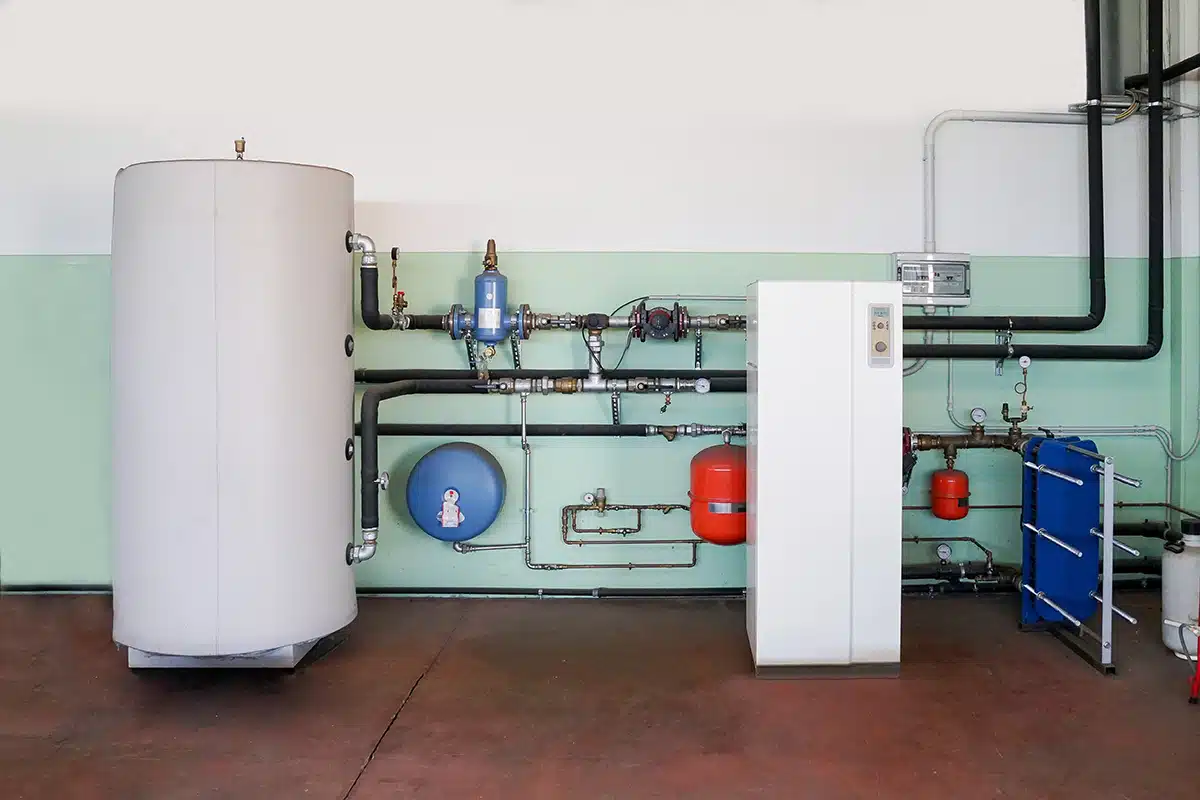
A geothermal heat pump for a commercial building, mounted next to a wall
Geothermal heat pumps can be more efficient than VRF-based versions, and work well even in cold climates.

Electrification

An energy-conserving trend in recent years has been the electrification of space heating and hot water systems, as these two systems represent about one-third of the total energy consumed by commercial buildings. Besides heat pumps, other technologies include electric boilers for hot water and heat pump-based hot water systems.

Eco-Friendly Refrigerants

Regulations for more eco-friendly refrigerants that would reduce greenhouse gas emissions were set to take effect in 2025, but the Department of Energy postponed their implementation. Facility managers should pay close attention to this regulatory situation. Also, be aware that HVAC experts warn that these new refrigerants have different characteristics than current products, including greater flammability. Businesses adopting the new refrigerants will need to be sure that their maintenance staff has been trained to install the equipment safely.

Indoor Air Quality and Health-Focused HVAC

Maintaining high indoor air quality promotes a healthier environment for occupants, reduces the risk of health conditions like sick building syndrome, and even enhances productivity. Here are some ways technology can help.

Advanced Filtration

Advanced air filtration technologies such as UV light filtration and multistage filtration processes gained popularity during the pandemic. These systems can remove pollutants, pathogens, and particulates from the air more efficiently than ever. In addition, UV light can be used to sterilize areas where mold easily breeds, such as cooling coils and air ducts.

Air Quality Monitoring

Indoor air quality monitors measure pollutants such as particulate matter, volatile organic compounds, and formaldehyde on a room-to-room basis. They can help determine if ventilation needs to be increased, air purifiers activated, or humidifiers turned off.

Smart Ventilation and Humidity Control

These HVAC technology systems use sensors and automated controls to monitor and dynamically adjust air humidity and ventilation. Exhaust fans or energy recovery ventilation systems, which exchange the energy contained in normally exhausted air to treat incoming outdoor air, can be helpful in high-humidity locales.

Responsive and Remote Operations

From AI-enhanced monitoring and predictive maintenance to advanced filtration and ventilation technologies, recent HVAC innovations are setting new standards in building health, efficiency, and environmental control. These and other smart HVAC technologies are leading the way to the future of HVAC systems. It’s a future in which facilities managers will be able to adjust their HVAC systems on a dime, without having to leave their offices.

For example, AI-powered direct digital controls allow the system to be monitored and controlled via a remote user interface which receives data from sensors and thermostats that measure temperature and humidity levels. Facility managers can monitor performance, detect potential heating or cooling issues early, and make adjustments remotely—long before these issues impact the comfort of building occupants. Automated systems may even be able to self-diagnose problems, allowing issues to be addressed promptly.

Many HVAC systems can now carry out text-based and voice-activated commands.

Even the HVAC control interface is changing. Many HVAC systems can now comprehend and carry out text-based and voice-activated commands. Voice assistants or mobile applications can be used by technicians to communicate with HVAC systems, making it easier and more convenient to change temperature settings, modify airflow, or keep track of energy usage. And natural language software, trained on tech support calls and other technical material, uses machine learning to help technicians solve complex problems.

Safer HVAC Maintenance

Advances in HVAC technology aren’t just increasing efficiency and enabling more precise control, they’re also making the workplace safer for HVAC technicians. Several new developments are making an impact on safety. These include:

  • Virtual reality training.
  • Automated lockout/tagout (LOTO) systems to ensure equipment is properly de-energized before work begins.
  • The use of drones for inspections in dangerous areas such as high rooftops or confined spaces.
  • Robotic arms and autonomous machines that can take over repetitive or potentially risky tasks such as tightening belts or greasing bearings.

Futureproofing Through HVAC Technology

The last 50 years have seen huge advances in HVAC technology, and these developments show no signs of slowing down. Here are a few emerging technologies that facilities managers can expect to see more of within the next few years.

Scalable Modular Systems

The use of modular HVAC systems is expected to grow in coming years. Because they are prefabricated, installation is often faster and simpler compared to traditional large-unit HVAC systems. These systems can also be customized to fit exact space requirements by adding or removing units as needed, making them highly cost-effective.

Innovative Materials

Researchers have found that polymer-based membranes (called polyimides) use less energy to dry air and are experimenting with this organic material to improve its dehumidification efficiency for HVAC use. Other new materials have the potential to significantly improve HVAC output. For example, aluminum oxide nanofluids can enhance heat transfer and improve air conditioner system performance by approximately 22 percent. These nanofluids could make it possible for facilities managers to improve HVAC performance without expensive system upgrades or replacements.

Cybersecurity for HVAC Technology

As in so many other situations, the increased use of connected devices has led to increased cybersecurity threats that exploit vulnerabilities in commercial HVAC systems. Cyberattacks on HVAC systems pose multifaceted risks to commercial buildings. These risks include unauthorized tampering with temperature and ventilation controls, disruption of critical HVAC functions, exposure of sensitive data, and in extreme cases, the compromise of entire building automation systems.

To prevent these attacks, HVAC systems under development today incorporate multiple cybersecurity technologies to restrict access to authorized personnel. These technologies include robust access control mechanisms such as multifactor authentication, role-based access controls, and secure user management systems.

HVAC Technology for Today and Tomorrow

HVAC technology has come a long way since Willis Carrier patented his “apparatus for treating air” in 1906. Today’s HVAC systems are far more efficient, responsive, and complex than their ancestors. Recent advances in technology have revolutionized commercial HVAC systems and will undoubtedly lead to even more innovations in the years to come.

An HVAC Expert You Can Rely On

Ready to take your facility’s HVAC system to the next level? With over 35 years of experience, PRIDE Industries offers tailored solutions that enhance efficiency, reduce costs, and ensure optimal comfort for your building’s occupants.