Packaging and Fulfillment

Don Nelson, Senior Vice President of Operations at PRIDE Industries, was interviewed recently by Electronics Manufacturing News. In Part One of this two-part interview, Don outlines the benefits of reshoring and the impact of tariffs. He also shares which factors to consider when determining whether or not to reshore manufacturing. Already know that your company needs to reshore? Then see Part Two of this interview to get actionable advice for successful reshoring.

To keep up with industry news and trends, subscribe to Electronics Manufacturing News.

Electronics Manufacturing News (EMN)
When does it make sense for a company to reshore?

Don Nelson
Put simply, it depends on the math.

The impact of tariffs has been a lot like COVID’s—they’ve shown just how shaky and unpredictable the global supply chain can be. And just like the pandemic, tariffs aren’t going away.

Part of what’s driving a return to domestic production is the fact that the incentives to offshore are so much less compelling than they were a decade or so ago. Twenty years ago, material and labor costs were markedly lower in some countries than in the U.S., and shipping costs were reasonable. And if you happen to be in an industry where that’s still the case, then maybe you don’t want to change anything.

But for most companies today, the math has changed. All those costs are higher now. And there are new complications—extreme weather, tariffs, and geopolitical uncertainty. In this type of environment, it makes sense for companies that sell a lot to the U.S. to move at least some production here if they can, so that they don’t have all their eggs in one basket.

EMN
What are some costs and risks of reshoring?

Don
Reshoring does have its risks, which is why manufacturers need to plan carefully. If you’re building factories, that’s a big capital investment. It may be simpler to start by using a domestic contract manufacturer, which lets you retain more flexibility, should you decide to offshore at a later date.

Another issue is the cost structure, which can be different domestically than abroad. Labor costs have generally been higher in the U.S. than in typical offshore countries, but that’s changing—foreign wages have been moving up in recent years, so that advantage is eroding.

There’s also the issue of supply chain realignment, finding new sources for materials and components. Here again, you can get around this problem by contracting with a manufacturer that’s already well-established in the U.S., so that you can take advantage of its existing labor and materials ecosystem.

EMN
Regulatory compliance must be easier with domestic facilities, right? And is it easier to control quality?

Don
Not necessarily. Look, there are plenty of good reasons to reshore, but I don’t think compliance is one of them. A product that’s sold in the U.S. has to meet certain standards whether it’s made here or in Vietnam.

It is true that—for some companies—quality control becomes easier when they reshore, if only because it’s a lot less hassle to fly to another state in the U.S. than to get your personnel halfway around the world for a product inspection at a contract manufacturer.

EMN
What are the most significant benefits that companies can reap when they reshore manufacturing, particularly in terms of mitigating the impact of tariffs on their businesses?

Don
I think there are a couple of things to keep in mind when it comes to tariffs. First, the impact of tariffs has been a lot like COVID’s—they’ve shown just how shaky and unpredictable the global supply chain can be. Second, just like the pandemic, tariffs aren’t going away. They’re pretty much the new normal now, popping up all over the world and making it tough to plan ahead.

Bringing production back closer to home lets companies avoid some of those tariff headaches. It also means they’re not as exposed to sudden cost spikes or new trade rules, so pricing is more stable and predictable. Plus, reshoring can give companies a lot more control over operations, which lets them react faster if something unexpected happens—even if that something is positive, like adjusting to unexpectedly high demand.

Another advantage of reshoring is greater control over shipping costs. Bad weather, geopolitical uncertainty, port delays—that can all make shipping expensive and unpredictable. Reshoring pretty much eliminates that headache. The bottom line is that reshoring makes supply chains stronger and more flexible. Keeping production close means companies are better able to ride out the next pandemic, or weather a catastrophe, or cope with a new tariff, or whatever. You’re just on a more solid footing.

Don Nelson
Don Nelson, Senior Vice President of Operations, PRIDE Industries

EMN
Let’s take a deeper dive into logistics. Specifically, how does reshoring help companies reduce logistics and shipping costs, and why is this especially important in a high-tariff environment?

Don
First off, if a company wants to cut shipping and logistics costs, reshoring is one of the most effective moves they can make. Bringing production closer to your main markets saves on the long-haul freight bills—that’s about 20–30% savings on transportation alone. It also avoids the headaches that come with unpredictable shipping schedules, port delays, and customs bottlenecks. In a high-tariff environment, this is even more critical—by manufacturing domestically, you sidestep those hefty import tariffs that can eat into your margins overnight.

Shorter supply chains also mean a company can run leaner on inventory. With faster lead times, you don’t need to tie up as much cash in safety stock or oversized warehouses. Inventory strategies run across a spectrum, from just-in-case to just-in-time. Reshoring lets a company move closer to a just-in-time approach, which lowers warehousing costs and reduces the risk of excess or obsolete inventory.

Another reshoring plus: Domestic facilities can leverage advanced automation and smarter layouts, so you get more out of every square foot of warehouse space. And going back to tariffs—don’t forget about free trade zones. Companies can leverage FTZs to defer or maybe eliminate certain duties on imported components. FTZs are another tool in the toolbox, and these days, companies have to use every tool at their disposal.

EMN
In your experience, how does reshoring improve quality control and compliance with local regulations compared to overseas manufacturing?

Don
I always say that reshoring isn’t just about geography, and that’s especially true when it comes to things like quality and compliance.

When companies decide to reshore their manufacturing, they often see a big boost in quality control and regulatory compliance. Think about it—having production closer to home means you can keep a much closer eye on things. Instead of relying on reports and delayed feedback from overseas factories, you’re right there, able to spot issues early and take corrective actions quickly. That kind of hands-on oversight really cuts down on defects and keeps quality consistent.

Plus, reshoring makes compliance with local regulations way more straightforward. Local teams and subcontractors already know the ins and outs of the regulatory environment—they understand the standards and expectations already—so there’s less guesswork and fewer surprises. And being able to work directly with local subcontractors means that communication is smoother, another thing that helps ensure everyone is on the same page regarding compliance and quality standards.

All of this adds up to a manufacturing process that’s more transparent, agile, and aligned with both quality goals and regulatory demands. So, reshoring isn’t just about geography—it’s a smart move for tighter control and peace of mind.

EMN
For executives considering reshoring, what are the most common pitfalls to avoid, and how can they set their reshoring initiatives up for long-term success?

Don
One of the biggest pitfalls executives face when reshoring is underestimating the true complexity of the transition. It’s not simply a matter of moving production back home; local supply chains, labor availability, and regulatory requirements can look very different from overseas operations. Many companies also overlook hidden costs—like hiring or retraining their current workforce, qualifying new suppliers, or investing in automation. Any of these factors can erode the expected gains if not accounted for early.

Another common misstep is treating reshoring as a one-time tactical project instead of a long-term strategic shift. That mindset often leads to piecemeal investments rather than building a resilient, future-ready operation.

The organizations that succeed are the ones that approach reshoring holistically. They map the full supply chain, model total landed costs, and build strong relationships with domestic suppliers before committing to large-scale moves. They also invest in technology—automation, data analytics, and digitalized operations—to offset higher labor costs and ensure consistent output. Perhaps most importantly, successful companies align their reshoring strategy with broader business goals, whether that’s improving customer responsiveness, strengthening resilience, or accelerating innovation. Reshoring done right isn’t just about geography; it’s about creating a manufacturing system that can scale, adapt, and compete in the long run.

EMN
Is there anything else you’d like to add? Any parting words of advice for electronics manufacturers who want to reshore manufacturing?

Don
Tariffs definitely play a role in reshoring decisions, but if tariff concerns are the main reason you’re thinking of reshoring, think again. Tariffs can create short-term cost pressures and uncertainty, but executives need to think long term. For many companies, it’s hard to justify uprooting global supply chains solely on the possibility of future tariff volatility.

The reality is that there are a lot of other good reasons to reshore. And in my opinion, lead time reduction is at the top of the list—being closer to end customers means faster response to design changes and smoother alignment with just-in-time production models. Supply chain resilience is another factor. The pandemic, port bottlenecks, and geopolitical tensions underscored the vulnerability of overextended supply chains. There’s no question that reshoring is a way to mitigate these risks.

In addition, labor dynamics are shifting. The wage gap between traditionally low-cost regions and North America has narrowed, while automation and advanced robotics are offsetting higher local labor costs. Finally, customer expectations around sustainability and traceability favor shorter, more transparent supply chains. The bottom line is, while tariffs are a consideration, reshoring decisions are really about strategic flexibility, risk management, and staying competitive over the long term.

Reshore with a Partner You Can Rely On

At PRIDE Industries, our US-based, state-of-the-art facilities minimize your risk of supply chain disruption, optimize manufacturing and fulfillment processing, and provide flexible, on-demand inventory schedules. Partner with us to better manage the unpredictability of tariffs, component availability, and shipping costs—while meeting customer demand for products made in the USA.

Over the past several years, a series of new technologies has revamped manufacturing and led to the creation of the smart factory. Now, similar technologies are remaking the logistics side of the manufacturing process, leading to the creation of the smart warehouse. Smart warehousing uses automation, real-time data, and interconnected systems to manage the storage and flow of materials and products—creating another way for companies to wring more efficiency from the manufacturing process.

What Is a Smart Warehouse?

Traditionally, warehouses have relied on manual labor, paper-based records, and reactive workflows. These old-school methods often led to slower processes, more errors, and the inability to pivot quickly when change became necessary.

Not only does a smart warehouse automate your inventory tracking, but it can also help accurately forecast the inventory you need.

Enter the smart warehouse. This technology-driven facility is more than just a modern storage space. It improves on traditional warehousing processes by automating tasks, providing critical data in real time, and streamlining operations. A smart warehouse is particularly efficient at managing inventory and supply chain operations using state-of-the art technology and processes like RFID tags, demand forecasting, AI, and automated workflows.

Smart warehouses are transforming how manufacturers store and move inventory, particularly in electronics and other high-value sectors where speed, precision, and visibility are critical. At the center of these facilities are automated storage and retrieval systems (AS/RS), which streamline material handling by locating and transporting items with accuracy and speed. For manufacturers managing thousands of SKUs, this reduces picking errors while improving throughput.

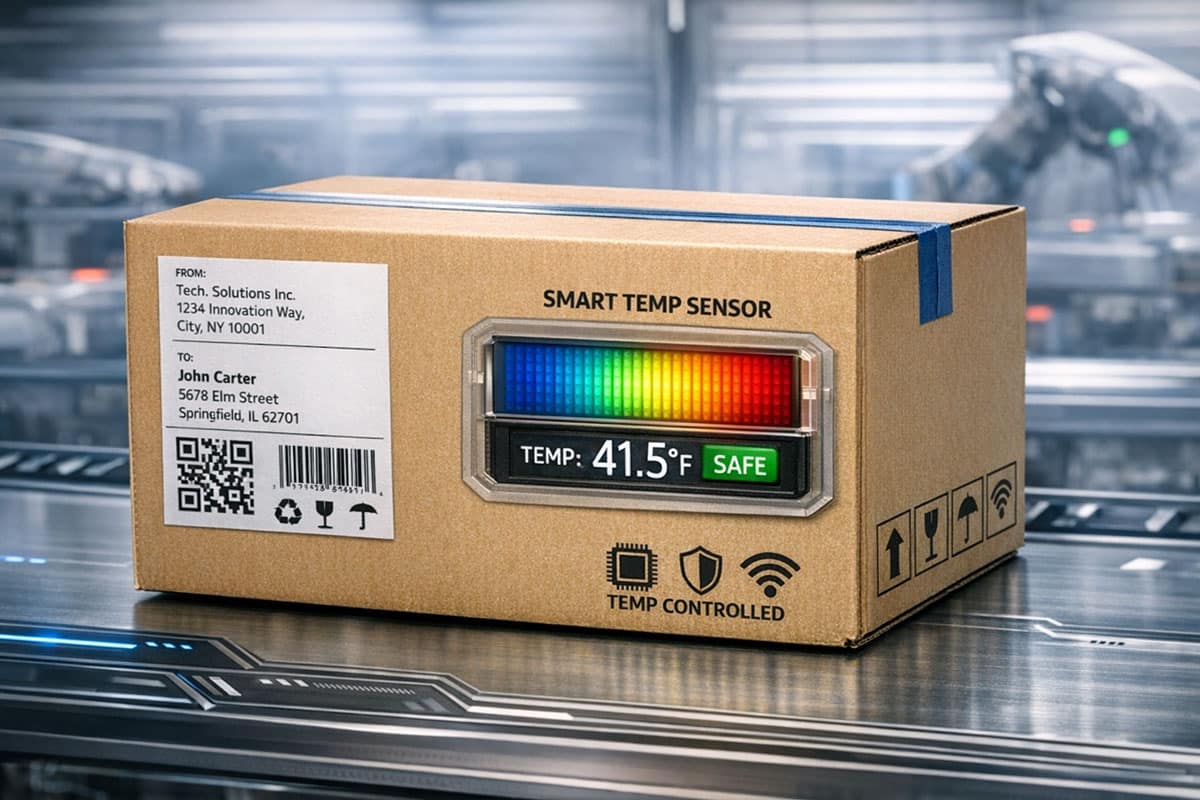
Supporting these systems are Internet of Things (IoT) sensors, which continuously monitor conditions such as temperature and humidity. This is especially important for sensitive components like semiconductors or PCBs, where even minor environmental fluctuations can cause damage. By maintaining strict oversight of climate conditions in real time, manufacturers can safeguard product integrity and reduce costly scrap or rework.

Another essential layer of smart warehouse operations comes from robots. Whether moving pallets, performing repetitive picks, or handling tasks considered risky to human operators, robots can improve efficiency while enhancing worker safety. Their ability to take on high-volume, routine jobs also allows employees to focus on higher-value activities. And for tasks that still require human judgement, cobots—collaborative robots designed to work with humans—are making it possible for workers to produce more than ever before.

Tying these technologies together is the warehouse management system (WMS). By coordinating inventory flow, worker assignments, and robotic activity, the WMS ensures seamless integration across the warehouse, enabling a more agile, responsive manufacturing supply chain.

Key Benefits of a Smart Warehouse

Perhaps no company is more associated with warehouses than Amazon. So it’s worth noting that the company has invested heavily in robotics, AI, and connected systems. These investments have enabled the retail giant to optimize its fulfillment centers around the world—enabling faster order fulfillment, fewer errors, and enhanced scalability.  But you don’t need to be a Fortune 500 company to benefit from a smart warehouse. Here are just some of the aspects of supply chain management that are enhanced by smart warehousing.

Improved Risk Management

According to McKinsey, over the course of a decade the average organization loses 45% of one year’s profits due to supply chain disruptions. A smart warehouse can improve these numbers by providing real-time monitoring and visibility across inbound and outbound flows. By identifying bottlenecks, disruptions, and anomalies early in the supply chain, companies can save time and money, and avoid unnecessary complications. For example, many manufacturers are now using real-time data, combined with AI-enhanced analytics, to mitigate risks from natural disasters and geopolitical disruptions.

Better Demand Planning and Inventory Control

Not only does a smart warehouse automate inventory tracking, it can also help accurately forecast inventory needs. By continuously analyzing past sales and industry trends, manufacturers can align product inventory with variable customer demand. These analytics-based adjustments to procurement and production schedules enable companies to streamline operations and lower costs.

Improved Order Fulfillment

Warehouse robots are no longer just unaware pallet movers. Modern robots, equipped with sensors and processing power, can now optimize their pathways across the warehouse, avoiding obstacles and following the shortest, safest path to their destination. This flexibility greatly improves order fulfillment. For example, according to Mind Studios (an international software engineering company), a smart warehouse can reduce pick-up time—the amount of time it takes to retrieve items from storage after order placement—by up to 50 percent.

Smart warehouses can also improve customer satisfaction by shortening product lead times. According to the Material Handling Institute, facilities that use warehouse robots have up to three times greater operational throughput (the number of finished items delivered over a given timeframe) compared to facilities without robots. Increased production and speed, however, are of little value if accuracy suffers. Fortunately, vision systems—an integral part of most smart warehouses—have been shown to significantly improve accuracy in order fulfillment.

Efficient Reverse Logistics

Using radio waves, RFID tags send item information to a scanner without direct contact. While this smart technology is primarily used to track products throughout production, storage, and distribution, it can also help with reverse logistics. The right software and systems can provide accurate, real-time tracking of your returns, and update the inventory database with any given product’s new location and status. Additionally, a smart warehouse enables the easy inspection of returned goods, streamlining the returns process and improving customer loyalty.

Other Major Benefits

The benefits of smart warehousing extend beyond storage, fulfillment, and shipping, and positively impact other aspects of warehouse operations as well, including:

  • Reduced waste, leading to cost savings
  • The ability to scale as needed for unexpected or seasonal demand
  • Improved energy efficiency
  • Improved regulatory compliance with automated reporting

In addition to improving logistics operations, smart warehouse technologies can also improve the operations of the warehouse facility itself. For example, smart technologies can automatically adjust lighting depending on occupancy or time of day, and track people entering or exiting the facility.

In a warehouse setting, a man wearing a hardhat and a yellow vest grabs his back in pain.
By reducing physical tasks, smart warehouses can help companies retain long-term employees and their valuable industry knowledge.

The Human Component

Transforming your facility into a smart warehouse does not mean eliminating humans.

The 2024 MHI Annual Industry Report, issued by MHI and Deloitte, concluded that new forms of AI work best when they are used to enhance and extend a human worker’s capabilities, enabling them to be productive and make better decisions. “The focus on technology in supply chains is undeniable. But supply chains are run by people, and human-centricity is the key,” said John Paxton, CEO of MHI.

Here are five ways that AI in a smart warehouse can enhance a worker’s productivity and improve the warehouse environment:

From Reactive to Proactive

Even a smart warehouse will experience disruptions. However, AI can allow warehouse workers to see a problem before it impacts operations. The ability to foresee and prevent issues elevates workers into more strategic roles. For example, a maintenance technician armed with AI-powered tools that predict necessary maintenance could schedule maintenance during downtime, rather than responding to an unexpected crisis during peak production hours. Not only does a proactive approach improve operations, it also creates a less stressful work environment for warehouse staff.

From Manual Entry to Smart Data Analysis

With a smart warehouse, workers are freed from the tedious job of logging inventory transactions. Instead, this information is captured by AI-powered systems automatically, freeing up warehouse staff to analyze and act on the data. For example, instead of transcribing shipment details, staff can use that time to analyze operational patterns and determine the source of any inventory anomalies identified by smart technology.

Reduced Physical Demands/Upskilled Opportunities

Historically, warehouse workers have retired young, due to the physical demands of their job. Today, a smart warehouse can eliminate many of the arduous physical tasks previously performed by workers. By reducing the physical toll workers face, companies with smart warehouses are better able to retain long-term employees with valuable industry knowledge. Instead of losing high-value employees, manufacturers can retrain them to oversee the robotic systems that now handle the physically demanding tasks they once did.

This dramatic shift away from manual labor is creating roles that are more technical, analytical, and supervisory. For example, in an electronics manufacturing smart warehouse, robotics process coordinators oversee robot integration, while AI/machine learning specialists develop algorithms to automate inventory and workflows.

Cross-Functional Collaboration

Traditionally, workers in warehouses have operated in silos with limited collaboration. Now smart warehouse systems are enabling greater collaboration across teams, leading to better problem-solving and improved employee morale.

Improved Safety

In today’s smart warehouse, specialized robots designed to work alongside humans, cobots, are taking over the hazardous, repetitive, and physically demanding tasks once performed by humans. This transition has significantly reduced the risk of workplace injuries, such as those caused by heavy lifting or other demanding physical tasks. According to SafetyIQ, a workforce safety software provider, using cobots can reduce workplace injuries by up to 72 percent.

Inside a warehouse, two men in hardhats and vests talk with a woman and a man in plain clothes, while they all look at a clipboard the woman is holding.
A smart warehouse can promote greater collaboration across teams.

Transitioning to a Smart Warehouse

The many tangible benefits of a smart warehouse are causing manufacturers to take notice. According to the MHI report, 55 percent of supply chain leaders are increasing their supply chain technology and innovation investments; 88 percent of these executives plan to spend over $1 million in the near future, and within that group, 42 percent plan to spend over $10 million.

Before spending significantly on smart warehouse technologies, however, it’s imperative to have a plan. Transforming a traditional warehouse into a smart, technology-driven space is a big task that requires careful preparation and execution. Here are a few steps to keep in mind.

Assessment

Your first step should be to evaluate your current warehouse processes to identify inefficiencies, pinpoint bottlenecks, and decide where automation can provide the most value. For example, look for processes where errors are common or insufficient data is leading to poor decisions. Your smart warehouse transformation goals should be specific and realistic. For example, are you trying to improve order accuracy, component quality, or lower costs? You may have multiple goals, but it is critical to prioritize. Clearly defining your goals and your priorities will give you direction for the decisions that follow, including selecting the appropriate technology.

Technology/System Selection

Once you have a plan, you can begin to evaluate technology and systems. Start by understanding the available technology. For example, there are AI tools that enable accurate demand forecasting. Since you likely won’t be replacing 100 percent of the systems you currently have, be careful to determine which new systems and technology are compatible with your existing warehouse management systems and technology. Also, remember that the perfect solution today may be outdated tomorrow, so build adaptability and flexibility into your decisions.

Deployment

A successful transformation requires a deployment plan, including a timeline for rollout. The plan should be built with input from all stakeholders, including operations, IT, and warehouse staff. Taking a collaborative approach at the planning stage means that roles will be more easily understood when it comes time for deployment.

Even with a detailed plan, hiccups will inevitably occur with your deployment. So, before rolling out your new systems and technologies, pilot them in a small area. A measured approach of gradually layering in technology not only makes it easier to pivot, it also maximizes your ROI. And be sure to build a small cushion into your budget for unforeseen developments.

Training

Your transformation will bring new roles, workflows, and system interfaces. For a smooth adoption with minimal disruptions, be sure to support your employees throughout the process with a cohesive training program that includes hands-on workshops, help desks, and real-life simulations. Prioritizing change management—helping people adapt and feel comfortable with change—will pay dividends in the long run.

Continuous Monitoring and Adaptation

Your transformation isn’t a static process. You should continuously gather data and analyze it, using that information for continual improvement. Fortunately, in a smart warehouse, advanced technologies such as RFID tags, IoT-enabled sensors, and centralized warehouse management systems make it easy to continuously monitor inventory, equipment, and environmental conditions in real time.

A Strategic Journey

With a smart warehouse, electronics manufacturers can unlock major benefits: real-time visibility, better risk management, accurate demand planning, faster fulfillment, and a safer, more productive workplace. However, your smart warehouse transformation must go beyond just installing new machines or software—it’s a strategic journey requiring clear goals, careful planning, strong change management, and a culture of continuous improvement. The work is significant, but so is the payoff—a warehouse solution that’s highly efficient, resilient, and scalable.

Your Smart 3PL Partner

Looking to level up your warehousing? PRIDE Industries has more than 30 years of logistics experience. Our in-house technical engineers and dedicated supply chain managers deliver tailored, tech-driven solutions across multiple industries. Contact us today to learn about our cost-effective supply chain solutions.

2025 has brought manufacturers both challenges and opportunities in warehousing. The shortage of workers continues to be an issue. Companies are feeling pressure from customers and the general public to “green” their operations, including warehouse management and maintenance. The artificial intelligence boom has kicked into high gear, causing massive changes in supply chain management—and warehousing is no exception. As companies seek to tackle these and other pressing issues, there are five key trends emerging in warehouse operations.

Automation and Workforce Management

Companies are embracing technology to enhance workforce productivity while prioritizing worker safety and efficiency. Transportation & Logistics International puts it this way: “Technological advancements and rising consumer expectations are reshaping traditional operations. Automation is leading this shift, ushering in a new era of efficiency, sustainability, and adaptability.” Here are a couple of ways that manufacturers are managing their warehouse operations.

The artificial intelligence boom has kicked into high gear, causing massive changes in supply chain management—and warehousing is no exception.

Specialized Robots

One way automation benefits both workers and employers is by taking over tasks that require heavy lifting. This both prevents debilitating injuries and allows workers to focus on higher-value, less-risky activities. Adding robots may also reduce the number of workers needed.

There are a variety of manufacturing robots in use today. Here are the types most commonly found in warehouses:

Automated storage and retrieval systems are robotic systems that use cranes or shuttles to move goods between storage locations and picking stations, which minimizes the need for manual labor. They also enable real-time inventory tracking, allowing supply chain managers to make informed, data-based decisions about when to order products.

Collaborative robots differ from traditional industrial robots in that they are intentionally designed to physically interact with humans in a common workspace. They augment human capabilities with extra precision, strength, and data capability, allowing humans to do more.

Autonomous mobile robots are a real game-changer for moving goods across the warehouse. They utilize AI and sensors to gather and analyze a range of geophysical variables, enabling them to transport items without needing set paths or the tracks used by their predecessors, automated guided vehicles. These AI-enhanced mobile robots maneuver around obstacles and can modify their routes in real time to deftly navigate congested areas.

Finally, robotic picking systems are becoming more prevalent, especially in e-commerce and fulfillment centers. They use AI and advanced vision technology to identify, grab, and sort items with high precision. These automated picking systems are gradually replacing the cranes, conveyors, and other fixed mechanical systems that have long been used in warehouses.

Workers Are Scarce, But Can Be Found

Finding—and retaining—warehousing workers remains a serious problem throughout the industry. Demographic shifts are changing the labor force: The current workforce is aging and there aren’t enough younger people entering the field to compensate. At the same time, the rise in e-commerce has increased the demand for labor.

While automation is a part of the long-term solution, humans are still essential to a functioning warehouse operation. So forward-thinking companies are taking steps to broaden their labor pool. In addition to traditional hiring and training efforts, they’re increasing their outreach to include people with disabilities. These companies have discovered what numerous studies have shown: Employing workers with diverse abilities consistently increases both productivity and profit margins, while absenteeism and turnover decline.

Inventory Control and Visibility

Warehousing professionals need to know where their inventory is located and how much of a product they have on hand. In addition, customers expect to know where their shipment is at all times, and when it will arrive. Fortunately, the Internet of Things (IoT) is making inventory control and tracking easier and more accurate.

Combatting Inventory Shrinkage

Keeping tabs on inventory has always been a struggle. Items get misplaced or damaged, and are occasionally stolen. But now, real-time tracking technologies can reduce losses and allow warehouse managers to maintain precise control over inventory. These are a few of the game-changing technologies:

  • RFID (radio-frequency identification) tags consist of a small chip and an antenna that transmits location information wirelessly. They can be placed on pallets and shipping containers to automatically track an asset’s location.
  • Smart sensors are used to monitor and track inventory levels and the movement of goods, as well as monitor the temperature and humidity levels where goods are stored.
  • Beacons use Bluetooth technology to transmit information to nearby smartphones and other devices so that warehouse workers can track the location of assets and inventory in real time.
  • AI-enabled cameras capture and analyze a wide range of visual data, enabling them to detect motion and recognize objects and faces. These cameras not only enhance warehouse security, they also enable more accurate tracking of goods within the warehouse.
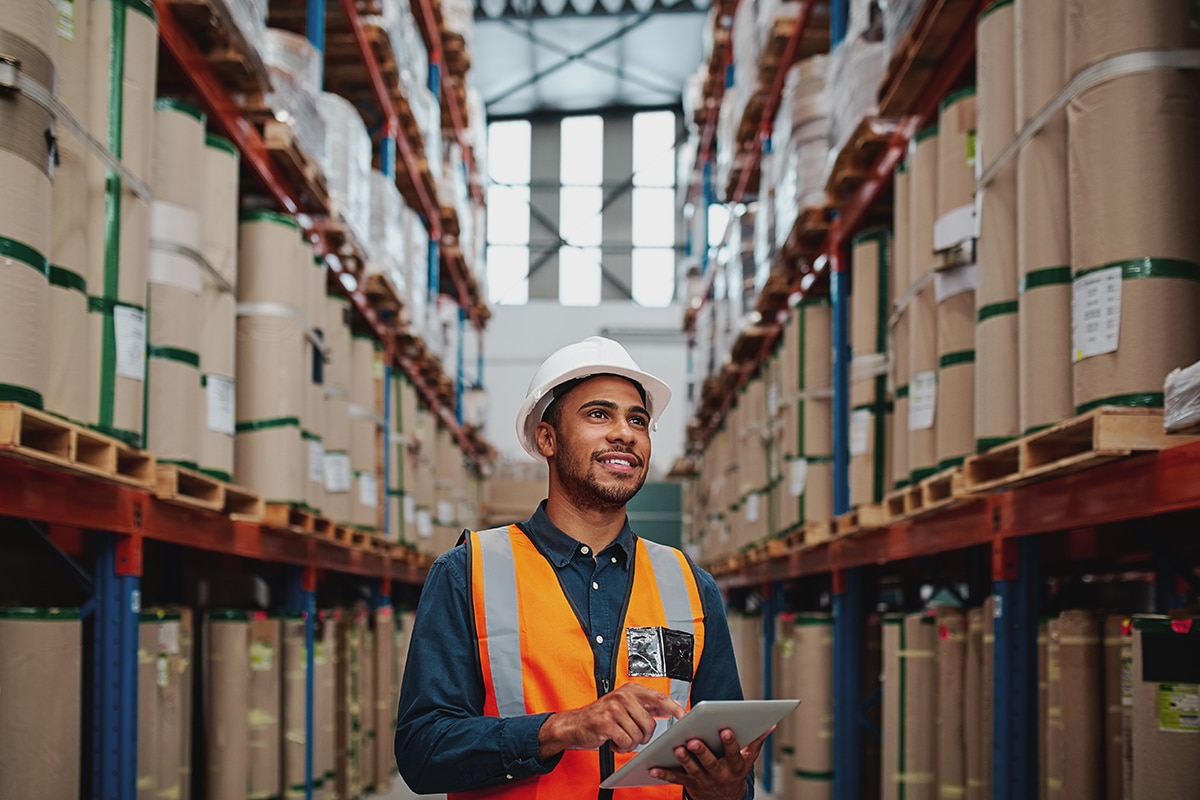
A warehouse worker stands in the middle of a warehouse, using a handheld device and looking up at stacks of products.
RFID and GPS technologies can track items throughout their journey from producer to warehouse to end user.

Used together, these tracking and control technologies make it possible for workers to quickly locate and transfer products. They also enable managers to monitor goods and determine if their movement is authorized or not, preventing theft and other forms of loss.

Advanced Monitoring of Shipping and Receiving

RFID and GPS technologies can also track items throughout their journey from producer to warehouse to end user. These devices offer real-time information about the item’s location, environmental conditions, and transit times. The data provided by these technologies enables workers to identify potential issues and take preventive measures when needed, leading to a better customer experience.

Blockchain Enables Supply Chain Transparency

As a digital ledger that records transactions across numerous computers, blockchain technology is most commonly associated with cryptocurrency. But the technology is increasingly important for supply chain management—including warehousing—because it allows manufacturers, retailers, and distributors to connect via a permanent digital record of every transaction throughout the supply chain. Blockchain technology also allows for “smart contracts”—computer programs that automatically execute actions based on predetermined rules. Smart contracts remove the need for paperwork and further automate inventory management.

Warehousing Sustainability

While the federal government is revisiting some environmental regulations, warehouse operations are nevertheless under pressure to implement sustainable practices in order to reduce pollution and increase the use of renewable energy. Manufacturers across multiple industries have made impressive strides toward those ends, and in many cases these changes make economic sense as well.

Eco-Friendly Warehousing Practices

There are many steps warehouse owners can take to improve sustainability. Among them are installing solar panels and better managing waste.

The large, flat roofs of modern warehouses are a perfect location for solar panels. Besides providing clean energy, an average warehouse can meet 176% of its annual electricity needs by fully building out its rooftop solar potential. Given the ever-rising cost of electricity, it’s an option worth considering on economic grounds as well.

Waste management, especially recycling, is another aspect of sustainability that receives a lot of attention. To optimize waste management efforts, companies clearly label recycling bins and place them in convenient locations. Depending on how ambitious a recycling program is, there can be several types of bins and distinct locations dedicated to different types of recyclable waste. Cardboard recycling, for example, requires large containers that can be easily moved up and down aisles, as well as balers and compactors.

Recycling is just one aspect of eco-friendly waste management. “Up-front” sustainability practices are just as important. For example, warehouses can use less packaging by making sure boxes are the right size for goods so that packing materials are minimized. In addition, some goods can be wrapped together or even placed directly into boxes. And some packaging materials can be reused numerous times, such as attached lid containers and pallets.

Circular Supply Chains

A growing trend in supply chain management is to create a closed-loop system where resources are continuously cycled back into production, minimizing waste and maximizing resource use. A key component of this is reverse logistics. And here warehousing plays an important role.

Reverse logistics involves collecting used products from customers and returning them to the supply chain through recycling, refurbishing, or repurposing. Warehouses can serve as hubs for collecting, sorting, and processing returned products. Adding these services can not only enhance a company’s reputation, but also create new revenue streams from the resale of refurbished goods and components.

Energy-Efficient Technologies

Energy costs continue to climb, providing warehouse owners with a compelling reason to explore ways to improve their buildings’ energy efficiency. The three areas where the most gains can be made quickly are lighting, powering equipment, and heating and cooling.

  • LED lighting. According to the U.S. Department of Energy, LED lighting uses at least 75% less energy, and lasts up to 25 times longer than incandescent lighting. Because it produces less heat than other lighting systems, LED lighting can also reduce cooling costs. In addition, LED lighting integrates well with smart lighting systems, which offer energy-saving features like occupancy sensors that automatically activate or deactivate lights in response to motion.
  • Energy-efficient warehouse equipment. As inventory is replaced, consider upgrading equipment to energy-efficient equipment like electric tugs, roller skids, and optimized aerial lifts. Newer models are generally better at performing tasks while saving money on energy bills.
  • Smart HVAC technology. Smart sensors and thermostats can determine which areas of the warehouse need to be heated or cooled, and when to do so, and newer heaters, air conditioners, and heat-recovery ventilators are more effective and use far less energy than older models. Another measure to consider in colder weather is air destratification. Warm air naturally rises to the top of the warehouse, where it serves no purpose. By pushing that hot air down to the floor where it’s needed—through large fans, for example—the HVAC system becomes more efficient, and workers are more comfortable.

On-Demand Warehousing

The same technology that enables ride share and vacation rental apps is fueling another rapidly growing trend: on-demand warehousing. This new approach lets businesses rent warehouse space and fulfillment services only when they need them. On-demand warehousing offers numerous potential benefits, including:

  • Faster shipping and fulfillment. For example, online retailers can ramp up for a busy holiday season by accessing additional space and logistical support for a set period of time.
  • Reduced fixed-operating costs. While traditional warehouses usually require long-term leases and investments in equipment, maintenance, and labor, with on-demand warehousing, companies only pay for the space and services they need.
  • Time to focus on core competencies. Warehousing management takes up time and resources. By outsourcing those functions during peak periods, companies can focus instead on higher-impact operations to help grow their bottom line.
Two men, wearing dress shirts and hardhats, look at paperwork as they walk together through a warehouse.
On-demand warehousing services can be a good solution for businesses that have fluctuating inventory and logistics needs.

Predictive Analytics and Maintenance

More and more warehousing operations are leveraging predictive analytics and maintenance to avoid expensive emergency repairs and extend equipment lifespans, achieving significant cost reductions. It also frees warehouse staff from performing important but repetitive and time-consuming work such as scheduling repairs and assigning technicians.

Predictive maintenance is made possible by sensors that monitor variables like temperature, vibration, and pressure levels, making it possible to assess the condition of crucial assets like forklift engines, conveyor belts, and automatic picking systems, and automatically triggering alerts when abnormal patterns are found.

The data gathered by warehouse sensors can be fed to a CMMS (computerized maintenance management system) or other software tool to determine when maintenance should be scheduled and automatically generate work orders. This allows maintenance to be performed based on need, not at fixed intervals, and provides maintenance teams with real-time information about the condition of a warehouse’s assets, enabling faster response times and better decision-making.

Like other warehousing trends, predictive maintenance is helping manufacturers streamline operations and reduce costs, and is part of the reason why today’s warehouses are so much more than just distant storage facilities. Modern warehousing is linked more closely than ever to the manufacturing process, providing valuable data that can help further streamline operations and provide insights into distribution and other issues.

Your Warehousing and Logistics Partner

Looking to optimize your inventory management? PRIDE Industries provides full-service solutions, including kitting and assembly, order fulfillment, forward and reverse logistics, and back-end warehousing. Let’s streamline your warehouse needs together.

Across industries, efficient warehouse management is more critical than ever. Gone are the days of relying on reams of paper to keep records and manage workflows. Technology has transformed warehouse operations, automating every step from receiving and storage to picking, packing, and shipping. This makes processes faster, more accurate, and cost-effective. And at the heart of it all is the warehouse management system.

What is a Warehouse Management System?

SAP defines a warehouse management system (WMS) as a software-driven solution that helps companies control and optimize daily warehouse operations, from the moment goods arrive at a distribution or fulfillment center until they leave. More than just an inventory management system, a WMS enhances picking and packing processes, resource allocation, analytics, and overall operational efficiency, making it an essential tool for effective supply chain management.

More than just an inventory management system, a WMS enhances picking and packing processes, resource allocation, analytics, and overall operational efficiency.

The modern WMS interfaces with multiple software programs, all from within a single platform and with a single sign-on. It quickly and efficiently runs inventory reports, sets up shipping labels, and automates monthly customer billing charges. People no longer need to do these tasks one at a time—a process that is slow, arduous, and prone to error.

The History of the Warehouse Management System

The first warehouse management system was created thousands of years ago, when the rise of agriculture led to a need for storage facilities. The Romans took the concept to another level by building large warehouses near ports to store products brought in from their far-flung empire. Since paper hadn’t been invented yet, merchants likely used papyrus scrolls or wax tablets to keep track of their stores of olive oil, wine, food, clothing, and other commodities.

In the early 1900s, as the second industrial revolution brought exponential increases in production, new technologies like forklifts and motorized carts came along to aid workers. A hint of today’s technologies was launched in the 1950s when the first automated guided vehicle—essentially a tow truck that followed a track of wires embedded in the floor—entered service. But inventory was still controlled on paper.

That began to change when the automated storage and retrieval system, or AS/RS, was developed in the 1950s to manage and optimize warehouse storage efficiently. The first fully automated warehouse using this technology was built in 1962 to manage nearly seven million books in a 65-foot-high facility in Germany. Soon after, in 1975, the first true warehouse management system was developed for department store chain J.C. Penney. The software-driven system was able to update stock inventory in real time, which greatly streamlined operations.

Since then, technology has grown by leaps and bounds. Today’s warehouse management system is an online hub connecting inventory to all areas of the supply chain. It stores warehouse information in a central location, easily accessed by people from terminals spread throughout a company’s operational sites. This eliminates multiple manual paper processes, reducing the time lag for recording interactions with and within a warehouse by ten-fold, and saving companies thousands of labor hours each year.

5 Key Warehouse Management System Benefits

Warehouse management systems are becoming essential for large and mid-sized companies because they deliver five key benefits:

  • Improved operational efficiency: A WMS automates workflows, reducing inefficiencies, minimizing picking and shipping errors, and eliminating redundant tasks. This allows businesses to handle more orders with greater speed and accuracy.
  • Reduced waste and costs: For businesses handling perishable or time-sensitive goods, a WMS ensures that products are picked based on expiration dates or sales priorities, reducing waste. It also optimizes warehouse space by strategically placing inventory and by mapping the most efficient travel paths for workers.
  • Real-time inventory visibility: With barcoding, RFID tagging, sensors, and tracking tools, a WMS provides real-time inventory insights as goods move through the warehouse and beyond. This enables more accurate demand forecasting, supports just-in-time inventory strategies, and improves traceability—critical for recalls and compliance.
: A worker in a hardhat and orange vest, looking bored, leans against a piece of equipment
A WMS eliminates redundant tasks and reduces picking and shipping errors.
  • Optimized labor management: A WMS helps forecast labor needs, streamline scheduling, and assign tasks based on employee skill sets, location, and workload. This creates a more organized and less stressful work environment, improving employee morale and productivity.
  • Stronger customer and supplier relationships: Customers benefit from faster order fulfillment, fewer errors, and more reliable deliveries, leading to higher satisfaction and stronger brand loyalty.

Types of Warehouse Management Systems

There are three main types of warehouse management systems. The kind that suits your operations best will depend on your company’s size and the types of products you offer.

  • An ERP module-based system features a WMS module within a broader ERP software system which integrates and manages core processes such as finance, HR, and procurement. This system integrates easily with other systems and likely will allow support, updates, and maintenance to be performed by a single vendor. If your company already has an ERP system, this could be a cost-effective choice for you. However, ERP-based systems can lack the inventory control and labor management tools that benefit large distribution center operations.
  • A supply chain module-based WMS includes a WMS module within a broader supply chain management (SCM) system that comprehensively manages the flow of goods, information, and finances as they move through the supply chain. It integrates neatly with the broader SCM system but could lack advanced inventory control and labor management tools.
  • A standalone system focuses solely on managing warehouse operations. These systems are typically highly specialized and include advanced features not found on the two more common systems. High-volume operations and those spread across multiple locations can often benefit from this customized solution. The downside is that the system could have difficulties integrating with existing enterprise resource planning (ERP), customer relationship management (CRM), or e-commerce platforms. It will likely cost more as well.

Regardless of the platform, warehouse managers must also decide whether to use an on-premises or cloud-based WMS application. A cloud-based system is usually more accessible offsite and from mobile devices, generally has reduced upfront costs (since it likely operates on a subscription model), and reduces a company’s IT burden. An on-premises system may make it easier to comply with strict regulatory compliance requirements in industries such as healthcare, finance, energy, defense, and others where sensitive data is stored and accessed. Companies doing business in the European Union may also face stringent compliance requirements.

When to Upgrade Your WMS

Cloud-based WMS systems provide real-time accessibility.

Given that the modern warehouse management system has existed since the 1970s, many companies have at least a rudimentary WMS. Or maybe your company acquired a system within the last few years. In either case, because warehousing technology is evolving rapidly, at some point your WMS will need to be upgraded. But when? A 2024 survey of third-party logistics providers (3PLs) found several factors that indicate it’s time for an upgrade:

  1. Too much reliance on manual processes. If too many functions still rely on manual processes, it may be time to consider an upgrade.
  2. Need for more real-time inventory visibility. Real-time tracking provides clear insights into incoming orders and current inventory levels and includes predictive analytics tools to forecast customer demand and avoid stockouts or oversupply issues.
  3. Few integrations with e-commerce platforms. Online sellers and retailers rely on third-party logistics providers. A WMS that doesn’t integrate with popular platforms makes it nearly impossible to keep up with a retailer’s demands.
  4. Poor scalability and flexibility. Predicting market changes and customer demand is tricky. In the worst cases, managers may rely on manual processes and spreadsheets to make predictions. The latest WMS systems include AI fulfillment management tools to help spot early trends.
  5. Too many order fulfillment and shipment mistakes. Too many errors can damage relationships with customers and supply chain partners. Newer WMS systems utilize operational data to manage packing procedures and reduce manual mistakes.
  6. Inadequate reporting and analytics. Older WMS systems have outdated dashboards with limited functions. Newer systems with powerful data management features can streamline processes and make accessing data easier.
  7. High operational costs. Over time, older WMS systems can become costly to maintain, and with an in-house system, managers may struggle to find software technicians with the skill set to maintain it. While investing in a new system may require a sizable up-front cost, the return on investment can be significant.

The Future of Warehouse Management Systems

As warehousing technology continues to evolve and expand, what will tomorrow’s WMS systems look like? While it’s impossible to predict the future, the same changes that are sweeping through other areas of manufacturing and logistics will affect the warehouse management system as well.

Expect greater integration with physical tools like drones and collaborative robots (cobots). Cloud-based systems will continue to gain popularity due to their scalability, flexibility, and cost-effectiveness. Artificial intelligence will be applied to more and more aspects of the WMS, improving predictive analytics, demand forecasting, and process optimization. And all of these developments will require greater attention to cybersecurity.

These and other changes will continue to drive efficiencies in warehouse operations, lowering costs for companies of all sizes. The days of hand picking and taking notes on paper are coming to an end, and the warehouse management system is making that possible.

Inventory Management You Can Rely On

Looking to optimize your inventory management? PRIDE Industries provides full-service solutions, from kitting and assembly to order fulfillment and back-end warehousing. Let’s streamline your supply chain together.

The first manufacturing robot was installed in a General Motors plant in 1961. Called Unimate, it was able to stack hot die-cast metal pieces accurately, but that was all it could do. Since then, robots have come a long way, taking on jobs previously done by humans: precisely building small electronic components, washing windows on high-rise buildings, or assisting surgeons in the operating room. Purina even fittingly employs a quadruped “dog” robot, dubbed Spot, that can literally climb stairs as it makes routine inspections. Now collaborative robots (cobots), which are designed to work alongside humans, are taking robotics in yet another direction. Cobots in manufacturing are boosting flexibility, productivity, and safety—often at a fraction of the cost of traditional manufacturing robots.

With their flexibility, affordability, and ease of use, cobots can be a powerful manufacturing solution for companies of all sizes.

Because of their ability to work alongside humans and enhance human output, cobots in manufacturing are a fast-growing segment of the robotics industry. Fueled by shortages of qualified workers as well as increasing labor costs, the cobot market is expected to explode from $1.5 billion in 2023 to $23.5 billion by 2033, according to Tech Target. Automation—especially in the industries of healthcare, manufacturing, and logistics—is one of the primary drivers for the growth of these collaborative machines.

When is a Robot a Cobot?

While they are a segment of the robotics industry, cobots are different from traditional industrial robots. Cobots, by definition, are collaborative, intentionally designed to physically interact with humans in a common workspace. While a traditional robot may be designed to replace a human, a cobot is made to augment human capabilities with extra precision, strength, and data capability. Simply put, cobots allow humans to do more.

Cobots have many of the capabilities of traditional robots, with the addition of enhanced safety features that make them suitable for collaborative applications. These features include one or more of the following:

  • Safety Monitored Stop—enables the cobot to halt motion when safety parameters are triggered
  • Hand-Guided Programming—allows an operator to program the cobot by manually guiding it
  • Speed and Separation Monitoring—enables the cobot to adjust its speed based on its proximity to humans
  • Power and Force Limiting—triggers a drop in the cobot’s power or force to prevent harm to humans or objects

5 Advantages of Cobots in Manufacturing

Cobots in manufacturing usually have an arm with joints that allow the arm to bend, rotate, and extend. These cobots are ideal for assembly, machine tending, and product quality inspection and control, and they offer many advantages over traditional robots.

  • Safety: Traditional robots routinely work at high speeds and quickly perform repetitive tasks. Unfortunately, these speeds can pose immense danger to humans, necessitating safety measures like fences to keep humans separate—and safe—in their presence. In contrast, cobots are specifically designed to collaborate with humans and comply with enhanced safety standards. For example, fenceless cobots, also known as speed-and-separation cobots, have laser scanners that create safety zones around their workspaces. These scanners detect when a person is nearby so that the cobot can stop or slow down to avoid an accident. Likewise, speed limits, power limits, and ergonomic designs all contribute to the safety of cobots.
A closeup of a cobot working on a device assembly.
Cobots cost less than traditional robots, with payback periods measured in months not years.
  • Flexibility: Cobots are much more flexible than traditional industrial robots. For example, they can more easily be re-programmed to perform different tasks. Likewise, their smaller size makes them adaptable to multiple workspaces. This flexibility can be especially useful for mid-sized businesses that might not have a level of production that justifies large, dedicated automation systems. For these businesses especially, flexibility helps justify an investment in robotics.
  • User-Friendly: Gone are the days when you needed to be a technical expert to take advantage of digital technology. Today, an iPhone can act as a human-machine interface for your glucose monitor, your washing machine can send you a text for required maintenance—and an average factory worker can reprogram a cobot. To do this, a worker simply guides the cobot through the required paths and positions to complete the new task. The cobot literally learns by doing. Hand-guided programming is one of the breakthroughs that has made cobots practical. And it’s especially useful in situations where a cobot needs to move between stations to accomplish different tasks, as it eliminates the extensive downtime traditionally required for reprogramming.
  • Lightweight and Compact: Cobots are lighter than traditional robots, allowing them to be easily moved and positioned. Likewise, they are more compact, enabling them to fit into tight workspaces and existing workstations. These attributes make it easier for manufacturers to integrate automation into an existing workspace, without the need for major modifications to a facility. 
  • Cost/Return on Investment: Automate.org reports that the positive cash flow from robotic systems can turn a $250,000 investment into approximately $1.5 million of positive cash flow by the seventh or eighth year, primarily through labor savings and productivity gains. Yet, despite the exponential payout from robotics, not all companies desire—or have the means—for the large initial investment required of traditional industrial robots. Cobots, however, cost a fraction of their traditional robotic counterparts, meaning payback periods are measured in months not years. So, while a fully automated smart factory may be the ideal for a large company, cobots are leveling the playing field for medium-sized companies.

Cobots in Manufacturing are Boosting Efficiency

Cobots in manufacturing are bringing increased efficiency to many industries. In the car industry, for example, cobots are the newest automotive technology to be added to the factory floor. Passenger safety is a top priority for car manufacturers, and even a small misalignment on a critical part during assembly can compromise a car’s safety. Cobots, working alongside humans, can add precision and accuracy that are beyond human capabilities.

One example of cobots in action is at BMW Group’s Spartanburg site in Greer, South Carolina. At this manufacturing plant, four cobots equip the insides of the BMW X3 model door with sound and moisture insulation. Previously, workers used a manual roller to adhere the insulation. This highly labor-intensive task is now performed by systems with roller heads on robot arms. The cobots can handle the job with much more precision—better protecting the electronics in the door and the entire vehicle against moisture.

“Robots that assist production workers by assuming labor-intensive tasks will characterize the factory of the future,” explains Harald Krüger, member of the Management Board of BMW AG. “Their benefits are strength and mechanical accuracy—and they perfectly complement humans’ flexibility, intelligence, and sensitivity.”

5 Tips for Integrating Cobots in Manufacturing

Before investing in cobots, it’s important to make a detailed plan for implementation, and to develop well-defined protocols for equipment maintenance. Here are five issues to keep in mind when developing your plan.

  • Set Goals and Key Performance Indicators: Before jumping in with a cobot purchase, you need to define clear goals and key performance indicators. What will success look like? What are you trying to accomplish? In setting your goals, remember to include qualitative as well as quantitative goals. For example, in addition to setting a goal for an increase in units produced, set goals like improved employee safety or increased employee satisfaction.
Hand-guided programming means factory workers need only minimal training to reprogram cobots.
  • Understand the Limitations: According to Ron Potter, Director of Robotics Technology for Factory Automation Systems, Inc., “many people don’t understand that collaborative robots are not a direct replacement for conventional robots.” While cobots have many unique advantages, keep in mind that cobots can’t compete with traditional robotic systems in some areas. For instance, your company needs to set realistic expectations for payload and speed when working with cobots in manufacturing.
  • Choose the Right Cobot: Cobots in manufacturing vary in size, power, price, precision, and functionality. The right cobot for you will likely depend on your budget and the problems you are trying to solve. If the world of automation is new to you, you may want to consult with a robotics specialist or an experienced integrator.

    Keep in mind when choosing a cobot that you aren’t just planning for the present. You need to account for compatibility with future expansions as well as existing systems. Fortunately, the versatility of cobots in digital manufacturing—the integration of digital technologies into the manufacturing process—can make the transition process less painful. Since cobots can easily be reprogrammed, they make it simple to meet changing production needs without significant additional costs or downtime.
  • Involve your current employees: In your automation journey, it’s important to involve your current employees. Your transition will go more smoothly if you emphasize that automation is not about employee replacement. Instead, it’s a way to allow employees to focus on higher value-added activities rather than the manual, repetitive, mundane tasks that can be given to robots. Another way to gain employee buy-in is through employee feedback. For example, most companies will need to analyze current manufacturing processes before choosing a cobot. Therefore, if you are doing a time-and-motion study to identify bottlenecks, don’t forget to solicit employee input. Employees can be one of the best resources for identifying tasks that are repetitive, dangerous, or labor-intensive—and therefore possibly a good fit for a cobot.
  • Develop a Detailed Road Map/Plan: You will need a detailed plan to keep all parties coordinated throughout the implementation process. This plan should include a timeline, a clear definition of roles and responsibilities, and steps to address potential risks. Your plan should also outline the parameters for a simulation test. Fortunately, specialized software is available that will allow you to create realistic simulations of your production process without risking production delays or defective products as you prepare for full cobot integration.

    Your road map should also include instructions for the actual integration, including proper employee training. And your plan shouldn’t end at cobot integration. Be proactive in monitoring and maintaining your new robotics system—establish a schedule for preventive maintenance and address problems promptly.

Because of their ability to leverage the best of humans and robots, cobots are here to stay. Through seamless integration with human workers, cobots are enhancing safety, productivity, and efficiency. With their flexibility, affordability, and ease of use, they are providing powerful solutions for companies of all sizes that are seeking to take advantage of the world of automation. Manufacturers that develop a detailed cobot integration plan—and prepare their human workers in advance—will be poised to take advantage of the cobot evolution that is underway.

A Manufacturing Partner You Can Rely On

PRIDE Industries offers an in-house design team, certified engineers, and a dependable workforce. Learn how you can receive all the benefits of automation and skilled labor—without unnecessary capital outlays.

Hippocrates, famous for the Hippocratic Oath, urged doctors “namely to do good or to do no harm.” This admonition—routinely paraphrased as “first do no harm”—is also a good adage for medical device manufacturers to keep in mind, as the practice of medicine relies more than ever on the devices they make. But while most medical device manufacturers are careful to ensure that their products are safe and reliable, they don’t always give medical device packaging the same careful attention.

That oversight can have serious, even fatal, consequences.

7 Common Mistakes in Medical Device Packaging

There are two main purposes for medical device packaging: protecting a product so that it arrives intact and in good working order, and maintaining a sterile environment. Contamination is an especially urgent concern. According to the U.S. National Library of Medicine, viral and bacterial infections are among the ten leading causes of morbidity and mortality in the United States.

One way to prevent contamination—and the subsequent recall—of medical devices is with reliable, high-performance packaging. According to the U.S. Food and Drug Administration (FDA), packaging and labeling issues account for 13% of all medical device recalls, which is why some experts assert that medical device packaging is nearly as important as the device itself.

According to the U.S. Food and Drug Administration (FDA), packaging and labeling issues account for 13% of all medical device recalls, which is why some experts assert that medical device packaging is nearly as important as the device itself.

Now more than ever, healthcare organizations are working hard to reduce the number of hospital-acquired infections. And to help their customers achieve these goals, savvy medical device manufacturers have learned how to avoid the seven most common packaging pitfalls.

Mistake #1: Losing Sterile Integrity

Ensuring the sterility of medical devices is critical for reducing infection, yet it is the most common defect found in medical device packaging. Unfortunately, some medical device manufacturers fail to create a truly sterile barrier system (SBS) in which to encase their products for transport. This means that in some cases, when their products arrive at the point of use, they fail to meet the aseptic standards required by FDA and International Organization for Standardization (ISO) regulations.

While nonsterile packaging can be the result of contamination at the packaging site, often the issue is more fundamental—the design of the packaging itself. It’s important to keep in mind that packaging can only be made sterile on the inside. A package’s exterior will always arrive at its destination in a nonsterile state. This means it’s essential to design packaging that can be opened without introducing contamination.

So, how can you design your package to limit contamination? The National Library of Medicine found that pouches that had outward-curling seals had significantly lower contamination rates. In other words, if the exterior of a package curled away from the interior as the package was opened, it was far less likely that the outside of the package (the nonsterile surface) would come in contact with the interior’s sterile contents.

Mistake #2: Not Accounting for the Device’s Entire Journey

A sterile barrier system is only useful if it stays intact for its entire journey, which is why your package design must include protective material to shield the SBS from the time of assembly to the point of use. Many sterile packages are damaged due to pinholes, slits, cuts, and tears. To avoid these outcomes, wise manufacturers design an entire packaging system that protects the device—and its SBS—throughout the journey from factory to hospital. This means designing resilient packaging that can withstand exposure to road vibration during long hours of transportation. Packaging must also be strong enough to survive warehouse mishaps like a fall to the ground.

Mistake #3: Ignoring Best Practices for Medical Device Packaging

A medical device wrapped in a sterile pouch, part of a sterile barrier system
To keep your product free of contaminants, avoid folding, wrinkling, or creasing the sterile pouch.

Whether you’re shipping something as simple as a box of bandages or as complex and delicate as a tracheotome, your packaging is critical. Both the United States and Europe have stringent regulations for medical device packaging. Yet not all manufacturers adhere to best practices and regulations when it comes to certain aspects of their product packaging.

Some manufacturers, for example, fail to get their medical device packaging properly validated. It’s true that validation is an extensive and at times complex process. But the regulations serve a purpose. Rigorously testing your proposed packaging will ensure that it provides an effective barrier against microbial ingress, moisture, and environmental contaminants. Furthermore, a good validation process does more than ensure your packaging meets regulatory requirements. It also guarantees that your device gets to your customer in sterile condition, able to perform as advertised right out of the box. This preserves your brand reputation, and eliminates liability headaches as well.

Of course, your efforts to comply with FDA and ISO regulations can be negated if your product is contaminated by a vendor. So, if you’re working with third-party contractors, be sure to screen them carefully to ensure they’re also adhering to best practices for medical device packaging and shipping.

Mistake #4: Using the Wrong Packaging Material

Many medical devices are packaged using thermoform trays—plastic trays that are made by heating plastic sheets and molding them into the desired tray shape. But there is a wide range of plastic available for this purpose, and choosing the wrong one can lead to packaging failure. For example, if you’re packaging a medical device with a lot of mass, you might need a high-impact plastic such as polycarbonate to reduce fracturing during distribution and handling.

The design of the thermoform tray is also critical. The tray or case must be tight enough to hold the medical device firmly in place. Otherwise, a loose product could jettison through the tray lid and fracture the plastic casing from the inside out. Conversely, packaging must have a bit of give, so that it doesn’t damage sensitive sensors or other high-tech components. A good package design strikes the right balance between these two extremes.

Mistake #5: Using the Wrong Container

In addition to using the right packaging material, you need to choose the right size and strength for your exterior shipping box. For example, if you are using an outer carton to protect your sterile pouch, you need to avoid squeezing the pouch into a too-small carton. You should choose a container that avoids any folding, wrinkling, or creasing of the ends of your sterile pouch. Otherwise, the vibrations of a moving truck could lead to pinholes at the junctures of the creases or folds of the pouch. Complex pouch folds are even more problematic, as they form a concentrated point of stress at the juncture of the materials.

When it comes to the sterile pouches themselves, however, bigger isn’t always better. Some research has found that increased contamination rates are associated with larger pouches versus smaller ones. Unfortunately, the reason for this is not entirely clear. One theory is that larger pouches require more hands-on repositioning to open, and that this increased handling offers more opportunities for contamination.

Product trays should hug—not squeeze—the items they were molded to protect.

Mistake #6: Inadequate Testing

Just as it’s important to test and inspect your product, you need to test the effectiveness of your packaging material—and package design—to ensure that the SBS and the outer carton will protect the device as it travels from assembly to customer to storage.

Testing might reveal, for example, that a single sterile barrier is not sufficient to maintain a sterile environment for a product that might sit in a hospital storeroom for up to a year; instead, a double barrier is needed. Real-time aging testing like this will enable you to see how your medical device packaging holds up under storage conditions in which both temperature and humidity can fluctuate widely, especially over an extended period of time.

But what if you’re trying to beat a competitor to market? Or more importantly, get a life-saving medical device to patients as quickly as possible? That’s where testing via accelerated aging—elevating temperatures to artificially speed up the aging process—can be useful. For example, subjecting a sterile barrier system to 40 days of +55°C temperatures has roughly the same effect as storing the SBS at +23°C for a year. That’s a huge time savings.

There is a caveat, however. Using temperatures that are too high—in the hopes of cutting a few more days off the testing process—can cause a package to melt or warp in a way it never would under real-world conditions, negating the purpose of the test. So, exercise caution when applying accelerated aging techniques. Or work with a laboratory that specializes in testing via accelerated aging.

Mistake #7: Neglecting to Develop a Recall Protocol

In addition to protocols for testing, manufacturers should develop specific protocols in case the need for a recall arises. Such a protocol might involve plans for recall initiation, reporting, execution, and monitoring. Recall protocols are especially important right now, as medical device recalls are on the rise. Between 2012 and 2022, recalls increased by 125%. (And medical device adverse event reports increased by over 500%.)

Having protocols in place means you’ll be better prepared to initiate a voluntary recall, which will do less damage to your business reputation than a forced recall. That was the case for medical manufacturer Nurse Assist, LLC. In November 2023, the company issued a voluntary recall on its saline and other water-based products over concerns of compromised sterility. These included various bottles, spray cans, cups, and syringes. When the recall was initially released in November 2023, no adverse effects had been reported. And while the FDA has since received reports of adverse events, Nurse Assist’s prompt, voluntary action has enabled the company to mute the damage to its brand.

Diligence is Needed in Medical Device Packaging

As healthcare providers continue to prioritize infection reduction, and medical device recalls continue to rise, designing and deploying effective medical device packaging is more important than ever. Avoiding the seven pitfalls outlined here is the first step in making sure that your packaging performs in a way that increases patient safety—and enhances your company’s reputation.

A Packaging Partner You Can Rely On

Are you looking for a medical device manufacturing and logistics partner you can count on? At PRIDE Industries, our trained engineers can customize a turnkey manufacturing solution for your unique product. And our specialized knowledge doesn’t stop there. We’re also experts in medical device packaging, warehousing, and shipping. Discover what PRIDE Industries can do for you.