Packaging and Fulfillment

It’s no secret that artificial intelligence (AI) and machine learning are infiltrating the way we do business—as well as our personal lives—in multiple ways. Uber uses AI to forecast the number of ride requests for different locations. Social media platforms customize user content by applying AI algorithms. And manufacturers across a variety of industries are using AI to take predictive maintenance to a new level, analyzing historical and real time data to anticipate failures and repair or replace machinery before something breaks. So it’s no surprise that electronics manufacturers have found yet another use for AI: optimizing electronics packaging.

The global market for AI-facilitated packaging is expected to grow at a compound annual growth rate (CAGR) of 55.2 percent from 2021 to 2026, according to Global Market Estimates, a market research and consulting company. This rapid increase in the use of AI to optimize packaging is no surprise, as improved packaging offers many benefits, from better product protection to improved brand positioning.

Because electronic devices tend to be fragile and prone to damage during transit, AI can be especially useful in optimizing their packaging.

Important Considerations in Electronics Packaging

Because electronic devices tend to be fragile and prone to damage during transit, packaging must be optimized for specific products. So how does an electronics manufacturer choose the best packaging? Opting for the cheapest solution doesn’t always save money in the long run. Manufacturers have many factors to balance and questions to consider, including:

  • How well will the packaging protect the product?
  • Does stronger packaging justify a heavier weight and higher shipping costs?
  • Is there an acceptable level of returns for damaged products? If so, what is it?
  • What is the optimal balance between packaging price and performance?

In addition to the questions above, manufacturers need to think about customer perceptions, as people are becoming more concerned about packaging pollution. In a 2020 survey, McKinsey & Company found that 60 to 70 percent of consumers said they would pay more for sustainable packaging. AI can be used to analyze vast stores of internal and public data to optimize packaging so that it meets electronics manufacturers’ requirements for quality, safety, and sustainability, allowing them to quickly find the right balance between cost and effectiveness.

3 Ways AI is Improving Electronics Packaging

Successful electronics manufacturers are constantly evaluating new technologies and seeking ways to improve production. Across the nation, these savvy manufacturers are leveraging AI and machine learning to optimize their product packaging in three critical areas.

Design

AI can help companies optimize electronics packaging by analyzing data such as product type, weight, and fragility. It can also factor in other considerations such as company sustainability goals and shipping distance. AI can even be used to incorporate packaging considerations into the product design phase, helping engineers configure a product that costs less to ship and is more resilient in transit, resulting in fewer returns.

AI algorithms are now being used to customize packaging for a broad range of products. A TV, for example, may require a box with thicker corners for better edge protection. Other electronics packaging considerations include protection from falls, extreme temperature, vibration, humidity, sunlight, contamination, and water. To minimize vibration, containers sometimes include internal locking mechanisms. And to make product inspection easier, clear locking containers—such as those manufactured by U.S.-based Clamtainer—allow final inspection of a component without disturbing the packaging.

AI can also be used to determine the ideal packaging material for a particular product. This is especially important given the range of new materials available, which are far more diverse than traditional cardboard and polystyrene packing peanuts. Mushroom packaging, for example, is made from an organic material that’s literally grown to a precisely programmed shape using a process that takes just seven days. Other novel materials include bamboo, cornstarch, and seaweed—sustainable substances that win kudos from the general public, enhance a manufacturer’s reputation among consumers, and can even cost less than traditional packaging.

Another way that AI is impacting package design is by using 3D prototypes to speed up the time it takes to determine the optimal packaging for any given product. In the same way that 3D prototyping is used to test product designs, packaging options for the finished product can be tested and quickly modified using AI models and 3D printing technology—without the expense or time of producing the actual electronics packaging.

A packing container molded to fit an electronics device sits next to a large pile of mushrooms.
Mushroom packaging uses agricultural waste and mycelium to grow custom-shaped, break-resistant containers in as little as seven days.

Sustainability

Optimizing a product’s packaging should be part of any initial product design, especially if sustainability is important to your company—the European Commission estimates that more than 80 percent of all product-related environmental impacts are determined during the design phase. However, leveraging AI for sustainability goes beyond design. It can also help reduce waste, decrease shipment damage, and lower shipping costs. Amazon has been using an AI model that learns from real-world customer complaint data to accomplish these goals. Applying their machine learning model to hundreds of thousands of packages, they have been able to reduce waste, cut shipment damage by 24 percent, and reduce shipping costs by five percent.

AI can also help manufacturers design packaging with recycling in mind. This not only helps companies meet their environmental, social, and governance (ESG) objectives, it’s also becoming an essential objective now that more and more local governments are enacting extended producer responsibility (EPR) regulations. For example, California passed a law in 2022 that imposes new regulations and fees on manufacturers of single-use plastic packaging. Other states—including Maine, Oregon, and Colorado—have also passed strict EPR laws. And while many of these regulations primarily affect the makers of plastic forks, straws, and bags, they are expanding to include packaging for all kinds of products.

Supply Chain Management 

A man using plastic bubble wrap to cover a small cardboard box.
In some states, extended producer responsibility (EPR) requirements make plastic packaging an expensive option.

AI can also help in supply chain management, from production inspection to shipping improvements, enhancing or even replacing human efforts. Unlike a person, AI never gets bored or distracted—it doesn’t miss product defects. And unlike human brains, which have a tendency to fill in missing data and thus see things that aren’t there, an AI “brain” lacks this imagination, and so more accurately detects a product’s true state.  

AI can even improve on the traditional “machine vision” technologies that are used for inspections. Many current visual inspection technologies are capable of spotting variations from a programmed standard, but can’t determine if the variation is acceptable. For example, in the case of date labeling on a package, if a date is in a different font, many current inspection systems will reject it as an error. Harry Norman, founder of OAL, a British automation and robotics company, likens traditional machine vision to having vision without a brain. Incorporating AI into the system gives the machine a “brain,” one that can be trained to account for variation. For example, a date stamp with a tilted “2” that would have been rejected in the past with traditional visual inspection technology can now be recognized as acceptable.

Yet another way AI is strengthening the supply chain is by streamlining the shipping process. Manufacturers now have access to data-driven shipping automation platforms that include packing algorithms. According to ShipHawk, a U.S.-based provider of automated shipping solutions, companies can lower shipping-related costs by more than 20 percent with data-driven shipping. Machine learning algorithms can also be used to assign packages unique RFID tags so that products can be easily tracked throughout the entire supply chain.

Don’t Set It and Forget It

Keep in mind that AI is only as good as those who design, program, and monitor the technology. So be cautious about taking a hands-off approach. But with the right oversight, AI can transform electronics packaging. The technology’s ability to improve design, enable the use of novel materials, and make recycling easier means that manufacturers will undoubtedly continue to use AI to optimize their product packaging for years to come.

Kitting and Fulfillment Services with a Positive Social Impact

PRIDE Industries offers comprehensive packaging and fulfillment services that incorporate sustainability practices tailored to each customer’s needs. Our flexible approach, backed by a dependable and inclusive workforce, gives our customers both reliable service and a unique social marketing advantage.

Brewery Solves Labor Shortage with Employees with Disabilities

Jerry Moore acquired Knee Deep Brewing Company in 2010, initially using a contract brewing facility in South Lake Tahoe to make beer and ship kegs to bars and restaurants just over the Nevada border in Reno. Fast-forward to 2013, when operations moved to its current home, a 37,000 square-foot, 40 BBL brewhouse with multiple 120 BBL fermenters. Unfortunately, labor shortages have been a persistent challenge.

The Challenge: A Reliable Workforce

“We had trouble finding reliable, hardworking employees to do the work.”  

Like many front-line roles in the wake of the Great Resignation, the labor shortage faced by the brewering was real, and turnover was high and disruptive.

Moore came up with a novel solution. Just down the road from the Auburn, Calif., brewery was a job development center run by PRIDE Industries, training people with disabilities for real-world jobs. Moore reached out and a crew from the social enterprise started in 2020. It’s been a win-win relationship ever since.

“The first thing that surprised me was how happy they were to be here,” Moore said. “They show up on time, work hard, are a lot of fun, and have turned out to be a perfect fit.”

The Solution: Workers with Disabilities a Perfect Fit

Such a great fit that when Knee Deep launched its first special brew to call attention to Autism Awareness Month in April 2022, they named the beer Perfect Fit, complete with a PRIDE Industries logo on the cans to call attention to autism and promote the inclusion of people with disabilities in the workforce. The brewery made 10 barrels and sold out in a few weeks.

“It was an English-style IPA which people liked,” said Brewmaster Dean Roberts, “but I think people also liked the cause of autism awareness, and it gave them a reason to choose that beer.”

The PRIDE Industries team named the 2023 version of the April brew—Hoppy Roger—with a pirate-themed label that included caricatures of employees Aaron, Thomas, Zach, and Evan crewing the ship with a Knee Deep logo replacing the skull in the traditional Jolly Roger flag. This time the company made 30 barrels to satisfy demand. 

Knee Deep donates a portion of proceeds to The Michael Ziegler PRIDE Industries Foundation, which provides programs to help people with disabilities, veterans, and foster youth—like the team working at the brewery–become job-ready.

“Awareness is great, but we want to do more,” Moore said. “We see the power of acceptance and inclusion and want to spread to the news.”

The Result: Contagious Enthusiasm

Should other breweries consider hiring people with autism or other disabilities? Yes, but not just brewers. “It’s not that different from hiring anyone else,” Moore said. “It’s finding the right person for the right job. This job happens to work for these individuals, and they love it.”

Take crew member Zach, for example. Ask him if he likes his job, and he answers immediately: “I love it.”

“They’re happy to be here, and that’s contagious,” said Roberts. “We’re all one team, and everyone enjoys working together. You don’t even think about the disability part anymore.”

It helps that a PRIDE Industries job coach is on hand to make sure everything runs smoothly.

“I love working with this team,” said coach Aaron Cartwright-Vasquez. “They’re great workers—I have to make sure they have what they need and take their breaks.” Cartwright-Vasquez provides transportation for those who need it and ensures everyone understands their schedules, which can vary weekly. “They’re waiting for me every morning wearing smiles.”

Untapped Labor Source

“Knee Deep Brewing has always been proud to have the best people working for it,” Moore likes to say. “Without them, we would not be where we are today. With great people comes great beer!”

More than 15 million people of working age in the U.S. identify as having a disability, an Accenture study found. The study found that companies that actively recruit and manage employees with disabilities have 28 percent higher revenue, twice the net income, and 30 percent higher profit margins. “Persons with disabilities have to be creative to adapt to the world around them,” the study said. “As such, they develop strengths such as problem-solving skills, agility, persistence, forethought, and a willingness to experiment—all of which are essential for innovation.”

Services

  • Packaging and fulfillment

Knee Deep Brewing Logo

“The first thing that surprised me was how happy they were to be here. They show up on time, work hard, are a lot of fun, and have turned out to be a perfect fit.”

The concept of extended producer responsibility (EPR) is as simple as it is demanding. EPR adherents call for product manufacturers to shoulder responsibility for all the environmental costs associated with the entire lifecycle of the products they make—from sourcing raw materials to final disposal of the product. The concept of EPR was first introduced in Sweden in 1990, by Professor Thomas Lindhqvist, in a report that emphasized the responsibility of businesses to manage “the take-back, recycling, and final disposal” of the goods they produce.

It’s no surprise that in the intervening decades, the concept has grown in popularity. According to the Environmental Protection Agency, more than 14.5 million tons of plastic packaging was created in 2018. Of that plastic packaging, nearly 70% ended up in a landfill, where it will take 400 to 500 years to degrade. And packaging is just one facet of a product’s environmental impact, because the creation and disposal of the product itself creates a trail of waste that is harmful to the planet.

For a long time, both consumers and producers were able to ignore this fact, but with landfills filling up with electronic and other waste, the public—and the officials they elect—have taken notice. And both groups are putting pressure on businesses to develop EPR strategies.

Shifting Environmental Costs Upstream

The current model of “reduce, reuse, recycle” is a well-established approach to plastic pollution. EPR extends this approach considerably, shifting the environmental costs of a product upstream to the manufacturer and away from the public sector.

Up until now, Americans have focused primarily on downstream solutions to plastic waste—including waste collection, pre-treatment, and sorting. But “reduce, reuse, and recycle” has severe limitations. Voluntary recycling programs, for example, are notoriously ineffective.

According to research by the environmental group Beyond Plastics, in 2021 less than 6% of recyclable plastic was actually recycled. This means that 34 million tons of plastic went to landfills. Another four million tons were incinerated, releasing a considerable amount of air pollution, despite the scrubbers, precipitators, and filters found in today’s waste-to-energy plants. In 2016, for example, the incineration of plastic in the U.S. released 6 million tons of carbon dioxide into the environment.

Downstream solutions have another major problem: Local governments complain that this approach leaves them responsible for waste created by businesses that aren’t even based in their jurisdiction. Put simply, cities and states, and their residents, are tired of bearing the disposal costs of many consumer products, especially those with a high percentage of plastic. It’s this attitude that has led to the growing popularity of extended producer responsibility.

Global EPR Trends

As with so many manufacturing trends, this one is impacting every country a little differently.

Europe is on the forefront of EPR innovation. In member countries of the European Union (EU), producers are responsible for financing the collection, recycling, and end-of-life disposal of consumer products like batteries, tires, oil, paper, vehicles, and even construction and demolition waste. The EU is also encouraging businesses to take responsibility for the disposal of plastics, medicines and medical waste, chemicals, pesticides, lamps, and light bulbs.

The EU is tackling waste on the front end as well. In 2021, the organization banned the sale of many common one-use plastics, including plastic cutlery, straws, plates, and bottle caps. Styrofoam food and beverage containers are also out. This affects not only European producers, but any business that exports to Europe. Some companies are now faced with redesigning packaging specifically for the European market.

Canada, too, is implementing a variety of EPR-inspired policies. Like the EU, it’s banning both the production and import of many single-use plastics. This includes checkout bags, straws and stir sticks, and takeout containers. The focus right now is on food-related single-use plastics, but exporters shouldn’t be complacent. Plastic products—and plastic packaging—are also being looked at for possible regulation. According to Plastics Recycling Update, there’s talk of prohibiting manufacturers from making recycling claims on any product unless “at least 80% of Canadians have access to systems that accept the products and provide reliable end markets for them.”

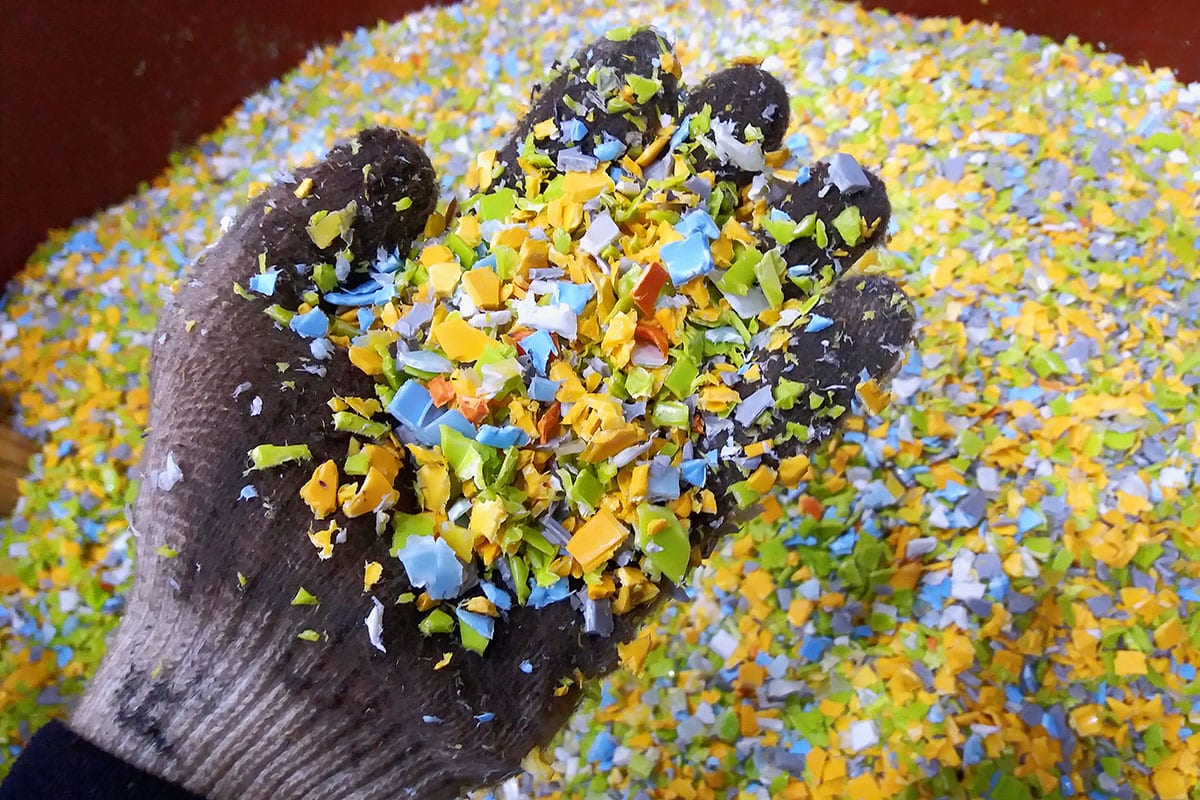
plastic waste
Nearly 70% of plastic packaging ends up in a landfill, where it will take 400 to 500 years to degrade.

Made in America: Extended Producer Responsibility in the U.S.

In the U.S., extended producer responsibility is handled less uniformly than in other countries. There is no federal legislation regulating EPR, but some states have been busy. In 2021 alone, more than 30 bills mandating extended producer responsibility were introduced at the state level, and EPR laws are already in place in several states.

California recently passed some of the most sweeping EPR legislation in the country. Senate Bill 54, signed into law on June 30, 2022, imposes new fees and regulations on manufacturers of single-use plastic packaging and single-use service ware. And the new law doesn’t just affect manufacturers. It also applies to the owner or licensee of the brand or trademark under which the product is sold in California. This all-encompassing definition means that if you sell any of these regulated products in California, you have to put an EPR program in place that meets the new state requirements.

The situation in California is not unique. Maine, Oregon, and Colorado have all passed stringent EPR laws, and the trend is growing. So far in 2022, 40 EPR-related bills have been proposed in 19 states, from New York to Hawaii. There are even two bills addressing producer responsibility under consideration at the federal level.

Corporate Stewardship: Complying with Extended Producer Responsibility Regulations

The EPR trend is gaining momentum. If your business hasn’t been impacted by producer responsibility laws yet, it will be soon. What does that mean?

Most likely, your company will be paying more to sell products in states with EPR laws, as the whole point of EPR is to compel manufacturers to share the financial costs of product recycling and disposal. In California, for example, the recently enacted single-use plastics law requires members of the plastics industry to contribute $5 billion over 10 years.

Fee structures will vary from state to state, but all states with EPR laws require some kind of payment. Most states also encourage (or even require) manufacturers to join a producer responsibility organization (PRO). The PRO is an entity that develops and runs a producer stewardship plan. PROs are required to be nonprofit organizations.

The advantage of joining a PRO is that it lets companies rely on a third party to manage the fiscal compliance relating to EPR. Most PROs also provide support with registration and reporting requirements and serve as a de facto voice for member businesses. So, while the state where you do business may not require your company to join a PRO, it may still be to your advantage to do so.

A Tool for Creating the Circular Economy?

Some business leaders have argued that PROs and other EPR requirements are in essence a stealth tax. But states and local governments have a ready response to that accusation: Make your products more sustainably, make them easier to reuse and less toxic to recycle, and then everyone’s costs will go down. In this way, government officials are pushing companies to deliver on their promises of a circular economy.

But whether a company’s leadership sees EPR as a tax or simply the cost of doing business, the phenomenon can’t be avoided. More than 30 states now have at least one EPR law on the books, and many have several. This is why now more than ever, designing products with sustainability in mind is essential to the bottom line.

Manufacturing Services for the Circular Economy

Are you looking for a manufacturing partner that can help you eliminate waste and pollution in your product’s lifecycle? At PRIDE Industries, our engineers are experts in streamlining product design for more sustainable manufacturing and end-of-life disposal. And our partner network of certified recyclers maximizes the recovery of useful material and ensures proper waste disposal.
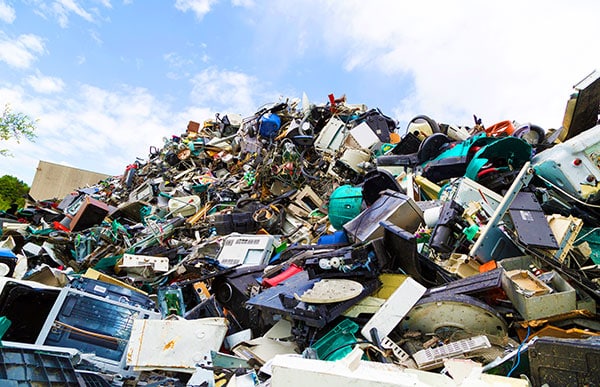
wasted materials in landfill
In 2021 alone, more than 30 bills mandating extended producer responsibility were introduced at the state level, and EPR laws are already in place in several states.

A 2020 survey by Boston Consulting Group found that 74 percent of consumers are willing to pay more for products that come in sustainable packaging. And 60 percent of consumers surveyed said they were less likely to buy a product if the packaging was not environmentally friendly. Electronics manufacturers are becoming increasingly aware of this consumer preference, and that awareness is driving the popularity of sustainable packaging materials.

Companies that provide green packaging can credibly claim to be environmental stewards and are viewed favorably by consumers. In addition, recyclable or biodegradable packaging is seen as forward-thinking and innovative—a positive association that can benefit electronics manufacturers, whose products must be perceived as original and inventive.

Consumer preference isn’t the only factor driving the trend in sustainable packaging. Governments, too, are demanding an end to plastic use. In California, a new law requires all packaging to be recyclable or compostable by 2032. And while certain plastics may be considered recyclable, the law was written with the specific goal of greatly reducing single-use plastic, and shifting the burden of plastic waste from consumers to companies—which is exactly what many consumers want.

Given these factors, switching to green packaging sooner rather than later can give electronics companies a competitive advantage. So why do some manufacturers hesitate?

According to Raconteur, 43 percent of brands cite cost as an obstacle to sustainable packaging. Over the past several years, however, the supply and diversity of environmentally friendly materials has increased dramatically, driving down costs and increasing options. Today, companies that choose to use green packaging materials have a wealth of options to choose from. Here are five of the most popular.

Cardboard – The Original Sustainable Packaging Material

Cardboard is one of the oldest of the eco-friendly packaging options. It’s been in use for decades, is easy to repurpose, and easy to recycle. And if the material comes from sustainable forests, then the carbon footprint for this material is low. In addition, used cardboard can be shredded, and gain new life as packing filler. And if the inks on the cardboard are also sustainable, the entire package can be composted.

Mushroom Packaging

Not just for spaghetti sauce anymore, mushrooms are one of the newest sustainable packaging materials to come on the market. To make this type of packaging, agricultural waste products like corn husks are first molded into the desired shape. Then mycelium—the part of a fungus that acts as its roots—is grown around the mold, binding the waste into a solid, break-resistant container. The containers take only seven days to grow, and can be made in bespoke shapes to fit just about any type of product, from small electronic devices to large appliances.

mushroom packaging
Mushroom packaging can be grown quickly into just about any shape

Bamboo – A Fast-Growing, Eco-Friendly Packaging Material

Bamboo is famous for its fast renewal rate—the plant grows up to one inch an hour. In addition, the plant is naturally strong, used for centuries to make everything from eating utensils to furniture. And now some electronics companies are using it for packaging. Dell Computer, for example, touts this “eco-friendly cushioning” to consumers, and claims to be the first in the electronics industry to make packaging from renewably sourced bamboo. While bamboo does not decompose as rapidly as other materials—it can take up to six months in a composting bin—it does not release any toxic materials into the environment as it breaks down, making it a reliable and popular choice among both consumers and manufacturers.   

Cornstarch-Based Foam

Foam packaging made from cornstarch is one of the most eco-friendly packing materials on the market. It’s sometimes referred to as “the new polystyrene” because it so perfectly mimics the traditional packing material. It even looks like polystyrene, and like the product it’s meant to replace, it can be made to order in any shape you need. For consumer products like electronics, cornstarch foam alone is all that’s needed for safe shipment. And once the product has been delivered, the consumer can dispose of the packing foam by composting it or dissolving it in water. Or the foam can simply be tossed in the trash, to safely biodegrade in the local landfill.

Seaweed – A Sustainable Packaging Material You Can Eat

According to the National Oceanic and Atmospheric Administration, eight million tons of plastic enter the world’s oceans every year, so it’s appropriate that one of the solutions to plastic pollution comes from the ocean itself. Growing up to one meter per day, seaweed is highly sustainable. It doesn’t compete with food crops, doesn’t need fresh water or fertilizer, and as an added bonus, it actively contributes to de-acidifying the ocean. Seaweed is now being used to make wraps, bottles, and other types of containers. The material is highly biodegradable, so much so that many of the containers made from it are in fact edible.

seaweed
Seaweed is one of the most eco-friendly packing materials available

Kitting and Fulfillment Services with a Positive Social Impact

PRIDE Industries offers comprehensive packaging and fulfillment services that incorporate sustainability practices tailored to each customer’s needs. Our top-quality work is performed by an inclusive workforce, giving our customers both reliable service and a unique social marketing advantage.

Tony Lopez, Vice President of Manufacturing and Logistics Services for PRIDE Industries, talks with Josh Santo of Conquering Chaos. They discuss the value of employing persons with disabilities and creating an inclusive work environment for companies and employees to thrive.

Josh Santo (JS): Today, approximately 30 million working-age people in the U.S. have a disability. 75% of them are unemployed. 


Our next guest, Tony Lopez, is committed to creating jobs for people with disabilities and is creating change in the contract manufacturing field. As the Vice President of Manufacturing and Logistics Services for PRIDE Industries, Tony oversees multiple lines of business, including electronics and medical devices, manufacturing, supply chain logistics, contract packaging, and fulfillment. 


Tony, tell us about PRIDE Industries, the communities that you serve, and your manufacturing solutions.


 Tony Lopez (TL): PRIDE Industries was founded in the basement of a church in 1966 by a group of parents who wanted to create jobs for their adult children with disabilities. We originally operated like a true nonprofit but found this wasn’t sustainable. So, PRIDE Industries became a social enterprise, which means we employ the same strategies as commercial businesses. The difference is that any profits or surplus go back into reinvesting into our mission to create employment for people with disabilities. 


We operate several different lines of business, including packaging and fulfillment, electronics manufacturing, and supply chain and logistics for companies like HP, Inc. We also do contract packaging and fulfillment, including for a large hospitality food provider that we’re projecting to fulfill 5,000 work orders.

Workplace Inclusion is Good for Business, Including Manufacturing

JS: Besides solving workforce and recruitment problems, how else can hiring people with disabilities help organizations?


TL: If you look at companies with high environmental, social, and governance (ESG) ratings—which take workplace inclusion into consideration—they have healthier cultures, lower turnover and absenteeism, and are more profitable. And consumers take positive notice when organizations become socially conscious.


In the manufacturing field, employees with disabilities have high productivity rates and lower levels of mistakes. Contrary to popular belief, people with disabilities take safety seriously—our safety incidents are 30% lower than the industry average. Overall, the key to success as an employer is to offer opportunity and support to all your employees—with and without disabilities.

Understanding Disability and Creating an Inclusive Work Environment

JS: Can you help us understand what constitutes a disability? 


TL: Disability is a broad concept that encompasses invisible and visible disabilities, intellectual disabilities, physical disabilities, and mental health and learning disorders. 


It’s important to realize that people aren’t just born with disabilities; some individuals develop them over the course of their lifetime. It might be harder for them to complete certain tasks, but focusing on their value is important. People with disabilities are capable, and often they just need the opportunity.


JS: What common misconceptions do you encounter about hiring people with disabilities?


TL: One is that people with disabilities can only do simple job tasks. However, we have seen that by adapting training and creating a supportive environment, you can allow an employee to thrive and learn new skills.


JS: What kind of culture is needed to recruit and retain workers with disabilities?


TL: Diversity and inclusion have to be part of the organization’s goals. To create a truly inclusive work environment, companies need to employ people with disabilities for all career levels—not just entry-level jobs. They can achieve this goal by assessing their workplaces and offering inclusivity training. 


JS: What kind of training and job coaching helps people with disabilities succeed?


TL: Onboarding is important. We start new employees by introducing our organization and culture, reviewing workforce inclusion support and accommodations, and explaining our learning and development opportunities. Training and support, including being provided with a job coach, is customized to each person’s skills and goals. 

We can help your business grow

We offer cost-effective manufacturing and logistics services in a wide variety of industries.

“In manufacturing, employees with disabilities have high productivity rates and lower levels of mistakes.”