People with Disabilities

For a long time, many businesses subscribed to the myth that changing the workplace to accommodate people with disabilities did not yield a good return on investment.  Fortunately, that view is changing, as more and more studies show the benefits of creating a diverse, inclusive workplace.

Low Turnover, Low Cost Benefits of Diversity and Inclusion in the Workplace

The data show that employees with disabilities have much higher job retention rates—eliminating the costs associated with frequent turnover:

“A three-year study at Washington Mutual, Inc. found a turnover rate of 8 percent among people with developmental disabilities, compared with an overall rate of 45% in the general population.”

Furthermore, it’s become clear that accommodations aren’t necessarily complex or costly. Companies are now discovering that with just a bit of imagination and effort, they’re able to attract and retain highly productive employees.


This is something that PRIDE Industries has known for decades. Over fifty years ago, our nonprofit was founded with a commitment to ensuring that all our employees have the tools they need to be fully productive and enjoy their work. This emphasis on person-centered training and tools has created an efficient and reliable workforce, and this, in turn, has resulted in consistently high customer satisfaction ratings. Here at PRIDE, we have experienced the benefits of diversity and inclusion at work firsthand.


Simple Solutions to Promote Inclusion

Contrary to myth, many of the inclusive practices that PRIDE has implemented to accommodate our employees have been simple and inexpensive. And PRIDE has been able to make these accommodations by following one basic rule: ask the employees what they need.


Ray Muro, a stock clerk at Fort Bliss in Texas, shows why this approach is so effective. Muro has worked at the base’s Self-Help shop since 2007, and is responsible for helping PRIDE’s military customers pick out needed parts such as paint and batteries. He also stocks new supplies and inputs customer information into the shop database.


Blind since birth, Ray is nevertheless able to retrieve parts and navigate the shop floor easily, thanks to the braille lettering he helped put up in the shop when he first arrived. This low-cost, inclusive solution enables Muro to be a productive employee, one who has received dozens of positive comments from both customers and supervisors.

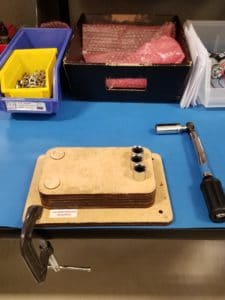
fixture can be used with one hand
This workstation can be used with one hand

Unforeseen Benefits of Diversity and Inclusion in the Workplace

Over the years, other PRIDE employees have developed similar approaches to overcoming workplace obstacles and promoting diversity and inclusion in the workplace. Sometimes the solutions are logistical, like instituting extra breaks, splitting jobs between two people, or offering ASL classes for better communication. Other solutions come ready-made, like providing day planners or phones with closed captioning.


Often, a modification made for one person ends up helping everyone on the team. When benches were lowered to accommodate people in wheelchairs, for example, employees discovered that everyone benefited by being able to sit when needed.


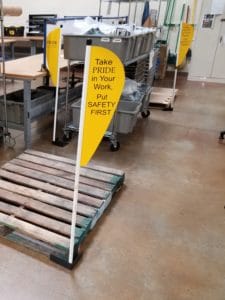
Sometimes the search for an effective accommodation leads to a useful invention. This was the case several years ago, when employees were looking for a way to keep people from tripping on empty pallets. Even though the pallets were always kept in designated areas, people sometimes forgot that a six-inch-high pallet was on the floor.


Then one day, an innovative employee created the pallet flag—a bright yellow banner atop a four-foot pole, with a base that can slide under a pallet to hold the flag in place. These flags serve as easy-to-spot reminders that a pallet is on the floor, and their widespread use in PRIDE facilities has virtually eliminated trips and falls.


Other easy inclusion practices include clamping tools to assembly workstations, thus allowing the user to tighten bolts and perform other operations with one hand. Likewise, workstation instructions are posted in plain view, and include photographs of each step of a production process, so that non-engineers can understand them.

pallet flag
PRIDE’s pallet flags greatly reduce trips and falls.

Diversity and Inclusion in the Workplace: A Wise Investment

Not all inclusive workplace practices are inexpensive, of course. PRIDE maintains its own fleet of buses to transport employees to and from work. And X-ray machines designed to help with inventory count can be relatively pricey. But PRIDE has discovered that even expensive machines pay for themselves by increasing productivity and ensuring a reliable workforce for our customers.


PRIDE’s state-of-the-art laser cutter is a case in point. Years ago, the company invested in this machine to allow employees to make tools like jigs, templates, and screw counters. These tools are customized to a particular person or task. The templates, for example, enable employees to label kit bags quickly, with the tag in perfect alignment. Screw counters ensure that the right number of parts go into every bag. Innovations like these make kitting fast, exact, and reliable.


PRIDE’s commitment to giving individuals the tools they need to succeed has enabled the company to build an effective, dedicated workforce that is highly ranked by our many customers. Our approach is validated by the results. PRIDE is the nation’s leading employer of people with disabilities, and we continue to grow our lines of business.


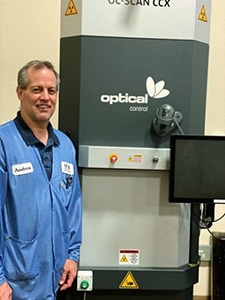
Andrew Williams, Engineering Manager at PRIDE’s Roseville facility, exemplifies the inclusive workplace philosophy that has made PRIDE both a sought-after employer and a successful vendor for over fifty years.


“Everyone knows what equipment they need to complete their work, and my job as a manager is to make sure they have what they need,” said Williams. “The tools that work best will vary from person to person. Whether they have a disability or not isn’t the issue. It’s about equipping every employee to work to their maximum potential.”

Benefits for your business

Wondering how your business can benefit from inclusive workplace practices?
Engineering Manager Andrew Williams

Assistive technology devices are nothing new. According to some scholars, for example, wheelchairs have existed in one form or another since classical times. So Plato may have been familiar with these devices. A variation of this tool—the self-propelled wheelchair—has been used since the seventeenth century. Though it has undergone significant enhancements over the past few centuries, its basic design is virtually the same now as it was when it was first introduced.


Like the wheelchair, many common assistive devices have a long history. Braille is one example. It’s been in use since the early 19th century, when a young man named Louis Braille realized he could use a secret military code as the basis for a new system of tactile writing. Similarly, in the early 1800s, some people used “ear trumpets” to focus and amplify sound. These devices, originally manufactured by companies that made musical instruments, represent one of the earliest forms of hearing aid.


But while assistive devices have existed for almost as long as civilization has, the number of new technologies available today is unprecedented. Thousands of devices have been developed in the just past few decades.

A New Era for Assistive Technology Device Manufacturing

Many of today’s assistive technology devices are made possible by recent advances in robotics and miniaturization, as well as human-computer interface technology. Other devices rely less on cutting-edge developments, and instead represent the clever application of existing technology in a new way. And some devices combine the two approaches.


Sip-and-puff (SNP) technology is one such example. SNP was first developed in the sixties. It has long been used to allow people to operate machines like motorized wheelchairs. Now it’s often paired with a computer, enabling the user to type, play video games, and fully utilize the computer’s functions. Adaptive keyboards are another useful computer interface technology, allowing people with limited muscle control to type using fewer keystrokes. Similarly, eye tracking devices allow people to manipulate their computers and mobile devices using only eye movements.

Low Tech Assistive Devices: A New Prosthetic

The synthesis of old and new is especially pronounced in the field of prosthetics. New materials bring greater functionality to a device that has been around for thousands of years.


Artificial limbs are one of the oldest types of assistive devices still in common use. For example, archaeologists recently unearthed a 3,000-year-old Egyptian mummy with an artificial big toe. The wooden toe was so well-designed that it could even bend, enabling the wearer to walk with it. Over the next few thousand years, prosthetics improved. The use of new materials like metal and leather made artificial limbs both durable and more flexible. In the early 20th century, aluminum replaced steel as the metal of choice, making artificial limbs lighter than ever before. A few decades later, plastics and composite materials were introduced, adding durability and spring to prosthetic devices.


Recently, artificial limbs have undergone another transformation, thanks to 3-D printing. This technology is especially useful for children, who outgrow their prostheses repeatedly during childhood. While 3-D printed limbs aren’t as functional as those made out of other materials, they are inexpensive. So they can be replaced frequently as children grow. Their low cost also ensures that far more children around the world now have access to prosthetics.

High Tech Assistive Technology: Sensory Aids

Like mobility aids, assistive technology devices designed to enhance the senses are also becoming more sophisticated. Braille, for example, is finding its way into new applications. Braille computer keyboards and text-to-speech technologies have been around for years. Now they’ve been joined by more advanced tools. Haptic technologies, for example, use electromagnetic vibrations and ferrofluids—liquid metals—to enable computer users to feel texture on their touchscreens, bringing Braille to a new medium.


New tablet devices are also aiding communication between deaf and hearing people. There are now tablets with software that can convert American Sign Language (ASL) to speech, and vice versa, allowing deaf and hearing people to hold conversations even if only one of them knows ASL.

Recognizing Personal Choice During Rapid Technology Device Development

So what does the future hold? There are currently hundreds of new technologies in development, designed to address a wide range of disabilities. Prosthetic arms that respond to the user’s thoughts, wheelchairs that can climb stairs, hands-free artificial larynxes, smart glasses that enhance limited vision, and a host of new developments are on the horizon.


But while most people agree that developing new tools is a worthwhile endeavor, disability activists have one caveat: assistive technology should never be considered mandatory. Put simply, it’s not up to individuals to conform to inaccessible situations.


Exoskeletons are great for those who want them, but that doesn’t change the fact that buildings need to be wheelchair accessible. And while cochlear implants are the preferred choice for some people, not every deaf person wants one. It’s still important to have interpreters available at public functions. In other words, assistive technology devices are wonderful, but no one should ever feel obligated to use these devices.


Gabrielle Hodge, a deaf post-doctoral researcher at the Deafness Cognition and Language Research Centre at University College London, made this point recently in an interview. In her critique of a new glove that translates sign language into speech, she said it’s important for inventors to remember that technology serves us best when it focuses “on user-driven and user-centered design.”

PRIDE Industry training services

PRIDE Industries provides evaluations, training, and other job assistance to help people with disabilities realize and achieve their full potential while pursuing satisfying careers.

“It’s important for inventors to remember that technology serves us best when it focuses on user-driven and user-centered design.”

July 26, 2020 marks thirty years since the passage of the Americans with Disabilities Act (ADA). These days, the ADA is considered by many to be a singular achievement in disability rights. Certainly, its importance in ensuring accessibility for all Americans is indisputable. But the fact is, the ADA didn’t happen overnight. Rather, it was the end result of decades of hard work by activists with disabilities and their allies.


In the United States, injured war veterans were among the first people to gain legal protections, and they set a precedent that later expanded to other groups of people with disabilities. For example, the Civilian Rehabilitation Act of 1920, which supplemented state funding of vocational services for Americans with disabilities, was modeled on the Soldiers Rehabilitation Act.

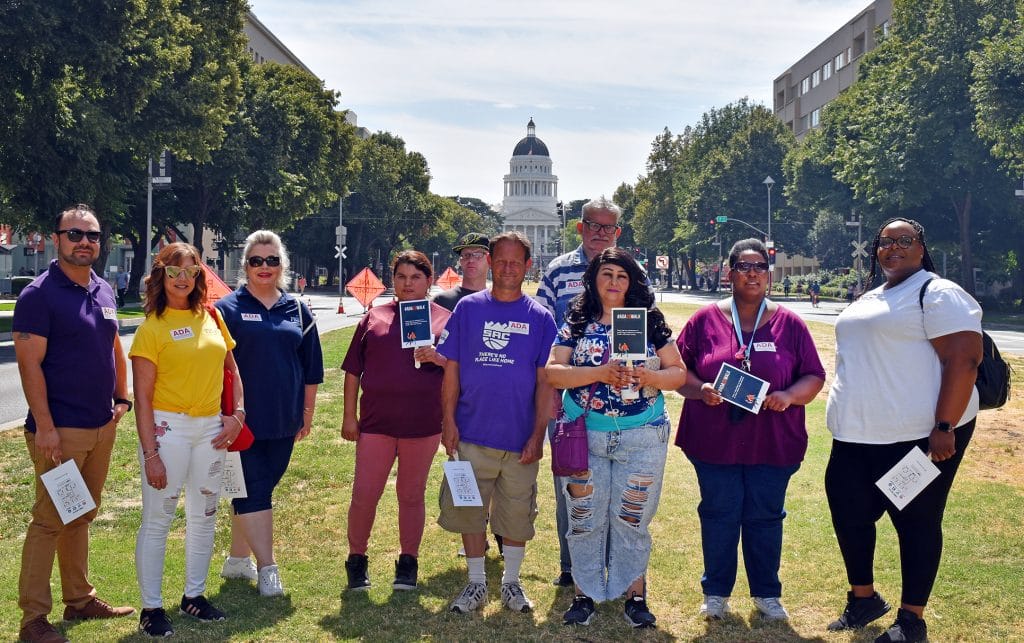
PRIDE employees in Sacramento participate in last year’s ADA Walk.

A New Era of Inclusivity Activism

The modern era of inclusivity activism began in the latter half of the 20th century, when a critical mass of people with disabilities began to challenge their second-class status in society. Up until then, society’s attitude towards those with disabilities was one of “out of sight, out of mind.” In the 19th and early 20th centuries, for example, children with disabilities were often removed from their families and sent to institutions where they spent the rest of their lives.


But in the 1960s, people with disabilities began to challenge society’s expectation that they remain hidden, and instead made themselves visible by demanding the right to participate fully in their communities. They staged sit-ins at federal and commercial buildings, blocked inaccessible buses, and marched through the streets with their allies to demand justice.


It took a few years, but eventually, the hard work began to pay off. One of the first achievements of the movement was the passage of the Rehabilitation Act of 1973. Section 504 of that act specifically banned discrimination on the basis of disability by recipients of federal funds.


Section 504 was significant not just for the rights it guaranteed people with disabilities, but also because its enactment signaled a shift in how the larger society viewed this group. For centuries, it was assumed that people with disabilities lacked employment and education because of their disabilities. Section 504 recognized that it was, in fact, systemic discrimination that kept these individuals out of the workplace.

Section 504: A New Beginning

Section 504 was a breakthrough, but it was only a beginning. Activists realized that this policy would only be as effective as the regulations that came out of it, and so they carefully monitored the government’s next steps.


The Department of Health, Education and Welfare (HEW) was in charge of creating the Section 504 regulations that would govern all federal agencies. Unfortunately, HEW did not prioritize these regulations, and some activists felt that the agency’s initial proposals were inadequate. Removing policy barriers was a good first step, but one that by itself would not significantly improve accessibility. It was important that the new regulations require positive action; architectural and communication barriers had to be removed to truly welcome individuals with disabilities into the wider society.


Recognizing this, people with disabilities set to work once again. They continued to write letters and organize protests, keeping the issue of disability rights in the public eye. Because of these efforts, a federal lawsuit was filed to force the HEW to implement Section 504 and issue appropriate regulations. In July 1976, a judge ruled in favor of individuals with disabilities, and stated that the regulations had to be issued “with no further unreasonable delays.” But even this was not enough to prompt action on the part of HEW.


Activists did not give up. Instead, they organized. For four years, they led sit-ins at HEW buildings all over the country. The letter-writing campaigns and direct lobbying also continued.


Also important was support from other interest groups. In San Francisco, a broad coalition of organizations, including the mayor’s office and even some of the HEW’s own staff, worked together to support the activists who had occupied the HEW offices. These groups provided the activists with food, mattresses, portable showers, and even phone lines, enabling them to continue their sit-in for 25 days.


The 504 Sit-ins didn’t end until their goal was achieved. On April 28, 1977, the head of HEW finally signed the regulations, effectively implementing Section 504. It is these regulations that form the basis of the ADA.


People with disabilities had won a significant victory. As Kitty Cone, one of the organizers of the 504 Sit-ins said, “We showed strength and power and courage and commitment, that we the shut-ins or the shut-outs, that we the hidden, supposedly the frail and the weak, that we could wage a struggle at the highest level of government and win.”


The years of activism by people with disabilities compelled the head of HEW to sign the regulations for another important piece of legislation, the Education for All Handicapped Children Act. These new regulations helped break down the barriers that had kept children with disabilities isolated from their non-disabled peers, and began the process of welcoming these children into mainstream public schools, finally granting them access to equal schooling.

Toward Independence and the Signing of the ADA

In 1986, the National Council on the Handicapped (now National Council on Disability, or NCD) issued its report Toward Independence, in which it recommended the enactment of a comprehensive equal opportunity law, which the report proposed calling “The Americans with Disabilities Act of 1986.” The ADA was first put to a vote in the 100th Congress of 1988, and was passed with wide margins of support in 1990. It was signed into law by President George H.W. Bush on July 26 of that year.


The ADA did not end all discrimination with its passage, or ensure full accommodation for people with disabilities. But it did provide a useful framework upon which to build, and activists have made good use of this important legislative tool since its enactment.


Like the 1973 Act that came before it, the ADA is only as useful as the regulations it engenders. But unlike the previous legislation, regulations came more quickly this time. The early nineties saw the promulgation of regulations pertaining to employment, accessible telecommunications, and public accommodations. These regulations took effect over the next several years, so that by the end of the millennium, they were making a real difference in the lives of people with disabilities.


But it wasn’t all smooth sailing. Around the turn of the century, a series of Supreme Court rulings narrowed the scope of the ADA. Again, activists set to work, and in 2008, the ADA Amendments Act (ADAAA) was signed into law by President George W. Bush. The ADAAA was specifically drafted to counteract the Supreme Court’s rulings and broaden the ADA to reflect its original intent.


In many ways, the Americans with Disabilities Act is just one step in what has been a long struggle for recognition of shared humanity. We celebrate the ADA not just because it is a landmark piece of legislation, but because it symbolizes this struggle, and the great strides that are possible when people unite for what is just. As the poet Bob Williams said, when commemorating the 25th anniversary of the ADA:

With all the laws,
All the gains, we press forward.


For equality of opportunity is not fated.
And, justice is not fixed.
They must be hard won.

Mat Baker’s career as a learning trainer began after joining PRIDE Industries’ job placement assistance program in 2018, which landed him a position at Amazon. The journey wasn’t always easy, as a severe anxiety disorder initially prevented him from interacting with others or seeking a job. Employment with Amazon gave Mat the confidence and skills to overcome these obstacles and earn several promotions.

Job Placement Assistance for People with Anxiety

Mat suffered from severe panic attacks and anxiety his entire life. This prevented him from interacting with others, especially in large crowds. “At the same time, staying at home in isolation gave me a feeling of inadequacy, causing more anxiety,” he said. “It was a vicious cycle that felt impossible to overcome.”  


Others with severe anxiety face similar challenges. For this reason, each of PRIDE’s job coaches works one-on-one with candidates to assess their needs, create a goal plan, and help them prepare for successful job placement.  


“Just two years later, so much has changed!” Mat said. “I am employed as a learning trainer at Amazon’s Sortation Center in Vacaville, CA. I feel comfortable in what is a very hands-on position—I help train new hires and manage 60 Ambassadors to coach other associates. I’m part of a large team; all of us work together to make sure our customers get their packages on time!”


Working closely with his job coach at PRIDE Industries made all the difference for Mat. “From day one, PRIDE provided the foundation for my amazing growth,” he said. “This journey would not have happened without their job coaches. They showed me exactly what to expect and checked on me every step of the way. Job Coach Jarmar Pearson advocated for me every day, and I can’t thank him enough!”

Mat’s Ongoing Growth After Job Placement

Since day one at his new job, Mat’s confidence has grown and he went on to earn a promotion. Every step of the way, Mat’s job coach advocated for him, ensuring he had the support he needed from PRIDE and from his new Amazon team.


“This was my first job, and at the beginning, it felt daunting having to work with so many people. And there was so much to learn!” Mat shared. “But using techniques from therapy, I was able to keep a positive attitude and overcome these challenges. I remember asking the learning trainers follow-up questions, and they were always patient with me, helping to build my confidence, and speak up more.”


Mat began to realize his hard work was paying off when managers began requesting him in their areas. “I knew I could move up. When a learning trainer asked me to become an ambassador, I signed up immediately. Since I had to interact with up to 10 new hires every day, I gradually felt less anxious around others.” Thanks to his determination and targeted job placement assistance from PRIDE, Mat was proudly overcoming his anxiety and thriving at work.

Continued Advancement and Career Success

Mat continued to make an impression on the leadership team at work. “The learning trainers and the learning coordinator encouraged me to apply for a job as a seasonal trainer. Despite the fierce competition for this position, I got the job. Even though I joined during our peak season, when Amazon hires thousands of people, I rose to the challenge and earned the respect of my team. I was hired permanently in February 2020. I am proud of my ability to overcome the difficulties related to my disability. It’s exciting to realize that two years ago, I was a nervous associate coached by a learning trainer; now, I am the one teaching others! This incredible experience has created positive changes throughout my whole life.”


“It’s been a long, rewarding road, and now the sky is the limit,” Mat said. “I plan on becoming a learning coordinator or an area manager. Trust me when I say I won’t be stopping here!”

Need employment placement support?

Contact our I AM ABLE Helpline to discuss your options.
Mat Baker
Mat Baker

“No words can express my gratitude for the support, the encouragement, and the hope that PRIDE has given other associates with disabilities and me. I love my job.”

In March 2020, Marcel Bobson reached a major accomplishment – he became a licensed journeyman plumber in the state of Texas. The path to this goal required patience and determination; Marcel completed 8,000 hours of training in four years, all while working a full-time job. The hard work and sacrifice paid off, however, when Marcel mastered the subject and passed the licensed plumber examination with flying colors.


Throughout this journey, Marcel knew he could count on the support of his co-workers at PRIDE, where he started as a Maintenance Trades Helper and now plies his trade as a certified plumber. “As a new journeyman plumber in these challenging times, it is my privilege to work with PRIDE Industries and to help keep our military families safe,” said Marcel.


The grit and perseverance required to reach his career goals were nothing new to Marcel, who has overcome many obstacles in his life. He grew up in the South American country of Suriname, and joined the Dutch Army after graduating high school. A military accident in 1982 caused him to completely lose hearing in his right ear and experience partial hearing loss in his left ear.


Because Marcel’s disability was newly acquired, he didn’t know sign language and struggled to communicate at first. Eventually, with the help of hearing aids, he regained the ability to speak with others.


About a decade after the military accident, Marcel moved to the United States. After meeting his future wife, who was stationed at Ft. Bliss, he moved to El Paso, TX. Marcel then enrolled at the University of Texas at El Paso (UTEP), where he took general courses in the Electrical Engineering Program for several months, but eventually decided to look for employment again.


For three years, Marcel searched for a permanent job position. Finding work seemed elusive, especially as his hearing loss began to worsen. Many employers were hesitant to hire someone with a disability. However, this all changed when Marcel joined PRIDE’s Ft. Bliss Commercial Facilities Management contract in 2014 as a Maintenance Trades Helper (following a referral from the Texas Workforce Commission) in the Electrical Shop. With Marcel’s impressive work ethic, the job proved to be a perfect fit, and he was promoted to General Maintenance Worker shortly after he started with PRIDE.


Marcel started an after-work apprenticeship program in 2015 which would make him eligible for the state plumbing exam. In 2016, he applied for and earned a General Maintenance Worker (GMW) position in the PRIDE-Ft. Bliss plumbing department. PRIDE’s Training Department paid for all his course fees, testing fees and his travel expenses related to his apprenticeship to help Marcel achieve his goal.


“As a GMW working with other plumbers, my daily job tasks include repairing plumbing fixtures, unclogging sewer lines, troubleshooting hot water heaters, installing sinks, and toilets. I find that plumbing is like solving a puzzle—I have to locate the leak or find which line is clogged up. At the end of the day, I like working with my hands and getting the job done!”


“A rewarding moment is when I was called to troubleshoot a building that had only hot water. A soldier personally thanked me for helping them out, and it felt great.”


While his professional career continued to prosper, Marcel’s hearing, unfortunately, continued to worsen. This factor made his job especially difficult since he could no longer understand instructions while in a warehouse environment. or during work service calls. To accommodate this change, PRIDE’s Vocational Rehabilitation department provided Marcel with a new cell phone with closed captioning, a larger screen, and notetaking apps. Marcel also started taking ASL sign language classes offered by PRIDE Job Coaches.


In 2018, Marcel learned that he qualified for cochlear implants, and decided to go through with the procedure. This process was an adjustment, as he initially experienced side effects of dizziness, and nausea.

“Despite the initial difficulty, I am now able to hear better. It took some effort, but with the continued help of my PRIDE Job Coach, I was ready to complete my job assignments again.”

Marcel never let any of these challenges get in his way of finishing his apprenticeship, and he ultimately passed the examination and was promoted to Plumber in March 2020.


“Marcel worked so hard for this accomplishment,” said Rehabilitation Counselor Shannon Bloxham. “He’s faced every obstacle that’s come his way with a positive attitude and persistence. I am proud of his accomplishments.”


Marcel is pleased with what he’s accomplished. But more than anything, he’s glad to be doing the work he loves, at a company where he has forged many friendships.


“My job means I can provide for my family while working in a career that I enjoy,” he says. “And I also like knowing that I’m contributing to PRIDE’s mission to help people with disabilities like me.”

Need employment placement support?

Contact our I AM ABLE Helpline to discuss your options.

“My job means I can provide for my family while working in a career that I enjoy. And I also like knowing that I’m contributing to PRIDE’s mission to help people with disabilities like me.”

As online applications become the standard, face-to-face introductions often give job seekers an edge. This option may be difficult for people who have challenges with verbal communication. PRIDE Industries’ disability job placement services and employment programs for people with disabilities is here to help navigate options and provide support. PRIDE Industries’ Job Developers reach out to businesses in the community to help place people with disabilities in the perfect job, creating the means for lasting employment success.


During the pandemic, PRIDE Industries’ Employment Services team remains hard at work to place individuals with disabilities in employment. Using videoconferencing, they are reviewing resumes, practicing online interviews, and focusing on placements for in-demand fields such as grocery stores, fulfillment, and custodial jobs.


Carlos Perez, one of PRIDE Industries’ Job Developers, places individuals in community employment and supports them through the process of getting an internship, a permanent job, and their first three months of employment. He shares his story with PRIDE below:

Disability Job Placement Services that Ensure Long-Term Success

“While studying Psychology at Sacramento State, I continued to work at Safeway as a Store Associate. I enjoyed mentoring those who were new to the job, including ways to help customers pick out the right produce and checking them out at the cash register.


During my time at Safeway, a few individuals from PRIDE’s Employment Services Program also worked at this store. In 2016, I met PRIDE Job Coach John Edwards, who explained PRIDE’s mission to create job opportunities for people with disabilities. I was so impressed by PRIDE’s work and employment services that when the opportunity came up, I took a chance and joined as a Job Coach in 2017.


Job coaches help ensure the long-term success of individuals with disabilities after job placement. I work with people with a variety of disabilities, including many on the Autism (ASD) spectrum. Everyone has their unique talents; for example, those with ASD often have excellent memory and organizational skills. However, all placements work hard to contribute to their position.

Job Placement for People Facing Barriers to Employment

After a year, I was promoted to Job Developer for PRIDE’s Youth Services program, focusing on placing young adults that have disabilities, who are emancipating from foster care, and survivors of sex trafficking into employment.


Getting to that final point can be a challenge, as it ranges from 4 to 7 months to place a person. Ultimately, it comes down to the individual’s persistence and willingness to continue.


Many of my clients have dealt with trauma. We are sensitive to their pasts and help them develop more confidence by creating their resumes and arranging for paid internships in community internships.


Retail jobs are my most frequent placements; it’s an excellent match for my clients as they are just getting into the job market and have the chance to build up necessary skills such as customer service.

Beyond Job Placement Services: Cultivating Vital Skills

Knowing how to talk to employers is tough for anyone, especially if you have a disability. Many of my clients communicate differently and struggle with eye contact and anxiety. PRIDE Employment Services provides training in skills that are necessary to succeed at work. Additionally, following up with the employer often helps. They are more willing to give the individual an opportunity once they learn that PRIDE is there to provide ongoing support.


When approaching a potential employer to help place an individual, I usually go in-person to introduce myself. Paper only gets you so far!


Along with job planning, I help my clients develop an education plan if they desire to attend college. I remind them that it is essential to focus on performing well at their jobs; it’s a good stepping stone to building a career. I use my previous experience at Safeway as an example, as it taught me a strong work ethic and customer service skills.


When my clients get jobs, and their families thank me, it’s truly priceless and the best part of my job. Helping one person might not change the whole world, but it could change the world for one person.”

Need employment placement support?

Contact our I AM ABLE Helpline to discuss your options.

“Helping one person might not change the whole world, but it could change the world for one person.”