People with Disabilities

For over 50 years, PRIDE has witnessed firsthand the benefits of a diverse workforce encompassing employees of all abilities. Ray Muro is one such outstanding employee. Ray has worked at the U.S. Army Post Fort Bliss in El Paso, Texas since 2007, where he is an important asset in the Self-Help warehouse.

Before joining PRIDE, Ray earned an Associate degree in Human Services and Liberal Arts and a Bachelor’s degree in Multi-Disciplinary Studies from the University of Texas, El Paso. Despite his qualifications and enthusiasm, Ray could not find a permanent job due to misconceptions about his disabilities.

Ray was born with Retinopathy of Prematurity (ROP), an eye disease common in premature babies. It causes abnormal blood vessels to grow in the retina and can lead to blindness, as it did with Ray, who has been blind since childhood. Working-age adults with significant vision loss have a 30% employment rate.

Hired as a Stock Clerk in the Self-Help shop, Ray manages the inventory of parts such as paint or batteries, registers customers into the database, and categorizes new supplies. To master his position and make it easier for him to navigate the shop, Ray spent two weeks labeling everything with braille stickers to serve customers faster.

“When I attended college, I didn’t have access to braille books, so I had to use speech technology or a reader,” said Ray. “But braille often works better. It’s such a powerful tool to help people who are blind navigate the visual world.”

Ray is an expert in the shop; he has the entire layout and inventory memorized. He knows all the stock numbers by heart and types them into a braille notetaker to track distribution and verify inventory during cycle counts. Another innovative technology, a computer screen reader that provides speech and Braille output for computers, lets him access all the applications he needs to do his job well.

“When I first joined PRIDE, I was impressed with how quickly Ray was able to find and retrieve items,” said Lorena Ramos, Warehouse Supervisor. “He recognizes every customer that walks in, and we always receive feedback for his friendly attitude and excellent work.”

Attention Employers

Need help hiring talented and motivated people with disabilities at your company?

October 2020 marks the 75th anniversary of National Disability Employment Awareness Month (NDEAM). Established by the Department of Labor in 1945, NDEAM celebrates America’s workers with disabilities and reminds employers of the importance of inclusive hiring practices.


This year’s NDEAM is especially significant, as 2020 also marks 30 years since the passage of the Americans with Disabilities Act (ADA). This act prohibited discrimination based on disability, including in the area of employment. It also mandated reasonable accommodations and accessibility for people with disabilities.


In recognition of the ADA’s 30th anniversary, this year’s NDEAM theme is “Increasing Access and Opportunity.” That’s a goal that PRIDE embraces heartily, as it has been part of our mission for more than 50 years.

A Mission of Inclusivity, A History of Success

PRIDE Industries was founded in 1966 as a nonprofit with a straightforward mission: to create jobs for people with disabilities. Since its beginning, PRIDE has adhered to this singular goal, but the paths we’ve taken to carry out our mission have evolved over the years.


When few businesses would hire people with disabilities, PRIDE’s founders decided to create the jobs themselves, making PRIDE a rare entity at the time. Years later, in the early 1980s, PRIDE began selling services to other companies, thus transitioning to a nonprofit social enterprise. We are one of the earliest organizations to demonstrate how effective the social enterprise model can be.


One of the first services offered by PRIDE was kitting and fulfillment. This business line is still important to the company, employing hundreds of people with disabilities, but it is no longer the only service we offer. Today, our employees work in various fields across the country, manufacturing medical devices, maintaining buildings, managing inventory, performing sustainable environmental and custodial services, and providing technical support.


As a nonprofit social enterprise, 100% of PRIDE’s revenue directly supports our mission, allowing us to provide employment services to even more people across the nation. The money earned by our lines of business serves two purposes. It enables us to pay desirable wages and maintain PRIDE’s infrastructure, and it funds our network of support programs for people with disabilities. Today PRIDE employs more than 5,600 people, including more than 3,300 people with disabilities, making us the country’s leading nonprofit employer of people with disabilities.


PRIDE offers a wide range of services to help people who face employment barriers, a population that includes service-injured veterans and former foster youth. We provide job training, employee recruitment, and on-the-job coaching for people of all skill levels. And our personalized approach means that everyone who joins us benefits from a program designed to maximize their success.

A New Path: PRIDE Introduces Inclusive Talent Solutions

At PRIDE, we’ve long known that employees with disabilities can be highly productive. And our employees—through their hard work and dedication—have proven this to our many customers.


But perhaps the biggest proof of our success is the number of companies now seeking our expertise to develop a more inclusive workforce. They’ve realized that employees with diverse abilities make many valuable contributions, and they’ve seen the studies showing that employees with disabilities have high retention rates, low absenteeism, and a positive effect on workplace culture.


But while many companies are now interested in the advantages conferred by an inclusive workforce, few know how to create and maintain a diverse employee base. They lack the workforce planning expertise, internal training tools, or regulatory knowledge needed to work with a diverse population. Because of this, some companies are hesitant to pursue the goal of an inclusive workforce, despite its many advantages.


In keeping with our mission, PRIDE created a new service to help these companies. Inclusive Talent Solutions (ITS) recruits, trains, and provides ongoing coaching for people with disabilities at our partner companies. Our goal is to make it easy for businesses to create an inclusive workforce and decrease the barriers to employment faced by people with disabilities.


ITS represents a new path for PRIDE. It’s yet another way for us to fulfill our mission to support even more people with disabilities. That’s why we’ve chosen to launch this new service in conjunction with the 75th anniversary of the NDEAM. The NDEAM is a celebration of the many contributions made by people with disabilities in the workplace. PRIDE is pleased to be able to help more companies benefit from these contributions.

The key to any successful workplace is open and efficient communication. Perhaps no one knows this better than Job Coach and ASL Translator Christina Alderete, who provides interpreting services for PRIDE Industries. Christina is an El Paso, TX native who works at PRIDE’s Fort Bliss contract. There, she delivers crucial communication to employees with her trilingual abilities in English, Spanish, and ASL. 


“In a border town like El Paso, TX, one is bound to be multicultural at heart,” Christina said. “Growing up bilingual in English and Spanish, I became a translator at an early age for my father and grandparents.”

Years later, the need for trilingual ASL interpreting services in the Hispanic Deaf population was growing. With this in mind, a friend encouraged Christina to learn ASL. So that’s exactly what she did.    


“In my ASL interpreter preparation program, you were highly encouraged to engage with the Deaf community, as you learn how Deaf people perceive signs and actions,” she said. “I became acquainted with the ‘Planet EYEth,’ a term the Deaf community sometimes uses to refer to themselves because they use their eyes instead of ears. This experience inspired me, and after graduating in 2014, I joined PRIDE Industries at Fort Bliss as a job coach and ASL translator.”

Providing ASL Services to Improve Employee Communication

Christina’s desire to bridge the communication gap in the Deaf community coincided with PRIDE’s goal to make every workplace more accessible and inclusive through ASL interpreting services and a wide range of other employment resources.


For example, many employees at PRIDE who are deaf or hard of hearing hold positions in technical departments, including electrical, HVAC, and plumbing. However, there are many industry specific terms and signs associated with these kinds of skilled trades. To streamline the training process and improve communication for everyone, the PRIDE Vocational Rehabilitation team consulted with employees. Together, they developed a work manual in English, Spanish, and ASL.


I truly enjoy using my trilingual abilities and feel privileged to assist both Deaf and hearing employees with interpretation services,” said Christina. “The deaf community at Fort Bliss has been very encouraging and provides excellent feedback to help me become a better interpreter.”  


Day to day, Christina enjoys the different ways she applies her ASL interpreting services for each employee. “The most powerful lesson that I have learned as an interpreter is that everyone is different; not all individuals sign the same. Some individuals are highly visual and lack literacy skills in English, so I help them develop strategies to work around that. During my six years at PRIDE, my greatest accomplishment has been observing the progress of the employees I have coached and seeing them succeed in their careers.”

Are you an employee in need of ASL services?

Find out how PRIDE Industries can help you bridge the communication gap at any stage of your employment journey.

“The most powerful lesson that I have learned as an interpreter is that everyone is different; not all individuals sign the same.”

It can be difficult for people who are deaf or hard of hearing to find jobs where they feel confident and understood. This is something PRIDE employee Rogelio Ibañez understands firsthand. In recognition of Deaf Awareness Month, he has shared his story with us. In his story, he also offers insight on how to communicate with those who are deaf or use sign language.

At Ft. Bliss, TX, many PRIDE employees are multilingual in both spoken and sign languages. This includes Rogelio Ibañez, who joined the team in 2011 and has continued to thrive in his job at Ft. Bliss, earning a promotion to General Maintenance Worker in 2015.

Helping Deaf People Find Jobs where Communication Isn’t a Barrier

Rogelio can communicate in four different languages: LSM (Lengua de Señas Mexicana), Spanish, ASL (American Sign Language), and English. His journey was one of perseverance.  

“I was born in Mexico to hearing parents and had three older hearing siblings and a younger one who was also Deaf,” he said. “My family initially didn’t know any sign language but communicated with me through gestures and lip-reading. When I moved to a mainstream school, they did not have an interpreter, so I learned both LSM and Spanish (both different languages in verb inflections, structure, and word order). One of my older siblings also learned LSM to serve as our family interpreter for school, church, and doctor visits.

“When I moved to the United States as a teenager, communication was an issue, as I only knew Spanish and LSM. I distinctly remember one time that the police stopped me, and I couldn’t talk to them because they didn’t know Spanish or LSM. Eventually, I met my girlfriend (who would eventually become my wife), and she taught me ASL and English, while I taught her LSM and Spanish. I began to attend Deaf coffee socials in Dallas to meet more people in the Deaf community and improve on ASL. English, however, is still something I am continuing to perfect.”

Rogelio faced communication challenges as he searched for work, but then he found PRIDE. In an effort to build an inclusive environment, PRIDE’s job coaches, ASL interpreters, and rehabilitation counselors translate between team members and customers, helping bridge the gap for employees who are deaf or hard of hearing. Assistive technology methods are also used to help employees overcome communication obstacles in their day to day jobs. This atmosphere of inclusivity and access was a true game-changer for Rogelio. 

Preparing Others in the Deaf Community for Job Success

In his spare time Rogelio helps teach a course at El Paso Community College where he  teaches basic signs in LSM and ASL to American students as well as Deaf students from Ciudad Juárez, Mexico. 

“It’s such an enjoyable experience to help connect with others who are looking to join this community,” he said. “We all share our goals and obstacles in a supportive environment.”

Rogelio offers advice for hearing people looking to improve their communication with those who are deaf, hard of hearing, or use sign language. “Utilize hand gestures or facial expressions. Of course, it depends on the individual’s preference; deaf and hard-of-hearing is not the same thing, and everyone has their own style based on how much they can hear.

Many Deaf people, including myself, rely on reading lips. During the COVID-19 pandemic, masks have sometimes been an obstacle, but wearing clear ones can help. Another option is to stand more than six feet apart so we can speak without covering our faces.”

Overcome barriers to achieve goals

PRIDE Industries offers a variety of employment services.
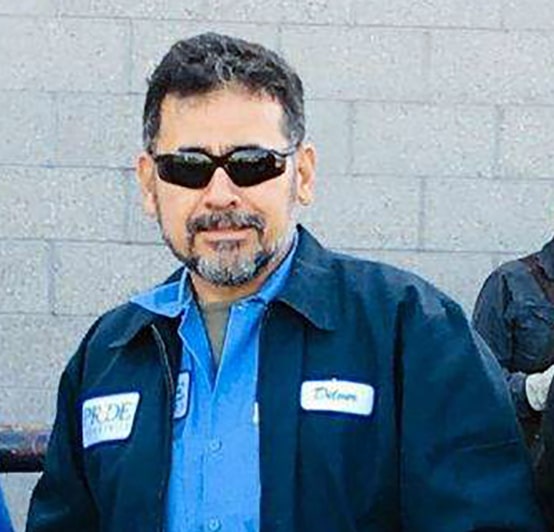
PRIDE employee Rogelio Ibañez

“In former positions, I felt out of place and became frustrated. Joining PRIDE Industries made a difference, as now I am comfortable with the work and can easily speak to my team”.

On July 16, PRIDE CEO Jeff Dern had the opportunity to interview California’s Secretary of State, Alex Padilla, about voting in California. In a wide-ranging conversation, they explored issues of voter accessibility, the importance of having a voice in government, and how to vote safely in the era of COVID-19. Their talk, edited for brevity and clarity, follows below.


DERN: Welcome, Secretary of State Alex Padilla. I’m so pleased to be able to speak with you today. As you may know, PRIDE Industries is the nation’s leading nonprofit employer of people with disabilities. And as the company’s CEO, accessibility issues are very important to me. That’s why I’m excited to hear what you have to say in regards to voting. Thank you for joining me today, sir.


PADILLA: Thank you for the opportunity to have this important conversation. The November 2020 election will be here before we know it, and there’s a lot at stake.


DERN: I agree. So let’s begin: As California’s Secretary of State, you’re the state’s chief elections officer. You oversee the Voting Accessibility Advisory Committee, which aims to ensure that all Californians can vote. Since we’re celebrating the 30th anniversary of the Americans with Disabilities Act (ADA) this month, it seems fitting to start our conversation by asking you about voter accessibility in the state of California.


So my first question is: Why is voting so important to all Californians, including people with disabilities?


PADILLA: I think a great example of why voting is so important is the ADA itself. Its passage 30 years ago is a prime example of how our votes matter. Our political voice matters. Because it doesn’t just determine who our representatives are at all levels of government, but also what their priorities are, and—by extension–what policy actions they choose to take.


Those folks who fought for disability rights over 30 years ago, whose work led to the passage of the ADA, they knew that political action was required not just on Capitol Hill, but in election after election. They knew they had to create an environment that would enable legislation like the ADA.


It’s as simple as recalling our high school government class, when we’re taught that our democracy works best when as many eligible people as possible choose to participate. To be eligible to vote, you need to be at least 18 years old and a citizen of the United States. Period. This means voters of all abilities have the right to vote. And I believe we all have a civic responsibility to register and make our voices heard in the political process. Again, our participation determines not just who our representatives are, but by extension, their policy priorities in Congress and statehouses and at the county, city, and even school-board level.


My job as Secretary of State is to ensure that our elections in California are as accessible as possible—both on the voter registration side and on the voting side, with multiple options for how to cast your ballot in every election.


DERN: That’s wonderful to hear. So now, let’s talk about practical issues. The fact is, people with disabilities face obstacles to getting out, registering, and voting. What can the state of California do to assist with this process?


PADILLA: As in many states, California citizens have a range of different abilities. California is also the most populous and diverse state in the nation. That’s why we provide multiple ways for our citizens to register and vote, so that we can accommodate a variety of abilities and needs.


If you prefer to register to vote on a paper form, you have that option in multiple languages, including braille. Or, if you prefer to register online, you can do that. In addition, people can register to vote or update their voter registration record at the Department of Motor Vehicles (DMV). So when they’re at the DMV applying for or renewing their driver’s license or their state ID, they can handle their voter registration needs at the same time. And now, our citizens have the option of same-day registration in the days leading up to Election Day, and even on Election Day itself.


When it comes to actually casting a ballot in California, we’ve been on the forefront of expanding voting options for all eligible citizens. We start by ensuring that voting locations are accessible in every sense of the word. Physical accessibility is paramount, in addition to geographic accessibility. Voting locations must be close to public transit, for example. Many counties are also increasing the number of days on which you can vote, and my advice is: If you can vote early, do so.


The vote by mail option certainly helps accessibility, and more and more people are choosing that option. California’s officials have recognized the popularity, convenience, and safety of voting from home, so we’ve pioneered some of the first remote accessible vote by mail systems in the country. Whatever your abilities, we’ve tried to ensure that there’s an option that allows you to exercise your right to vote. And I encourage everyone to use that right.


DERN: I second that advice. It’s incredible to see how many options are available to make voting and registration accessible to everyone. I can’t help but recognize, however, that this year we have a new issue that complicates accessibility—the pandemic. So I have to ask: Given the environment we’re in today with COVID-19, what specific plans does the the state have to address voter turnout and accessibility?


PADILLA: That’s an important conversation that we’ve been having at the capitol. Because it’s not a matter of if there’s going to be a general election. It’s not a matter of when there might be a general election. We’re not going to cancel it. And we’re not going to reschedule it, no matter what may be happening statewide or nationwide. Election Day is Tuesday, November 3, and we’re working hard to ensure that it is accessible, that it is secure, and that it is safe for everybody involved—for voters and election workers alike.


That’s why we’ll be sending ballots to every registered voter in advance of the November general election; and we’re encouraging people who can vote from home to do that. There’s no safer or more convenient way to vote than from the comfort of your own home. But as I mentioned earlier, California is the largest and most diverse state in the nation, and we have a lot of people who either prefer—or frankly need—an in-person voting option. They may need to replace a lost ballot, or perhaps they made a mistake filling it out. Or maybe they need to register and missed the deadline.


There are many valid reasons to choose in-person voting. That’s why we’re working hard to ensure that there are many safe, accessible, in-person voting opportunities, both on and before Election Day. So while my first recommendation is to vote by mail if you can, my second piece of advice is that if you prefer to vote in person, consider voting early.  Because the more Californians who vote early, whether it’s by mail or in person, the shorter the lines will be and the smaller the crowds, which will help ensure a safe experience on Election Day.


DERN: In speaking with you today, it’s clear how much thought and energy has gone into making voting more accessible here in California. PRIDE Industries encourages all of its employees to take advantage of this accessibility, and to get out and register to vote on or before Election Day. As you mentioned earlier, the anniversary of the ADA reminds us how exercising voting rights can lead to significant change in our country. Again, Secretary Padilla, thank you for taking the time to share your insights on this important issue. It’s been an honor to speak with you today.


PADILLA: Thank you for letting me talk about something so important to all of us. Let me just end with this final piece of information: If anybody has questions about what we’ve talked about today, please visit us at vote.ca.gov.


DERN: And once again, folks: However you do it, make sure to vote.

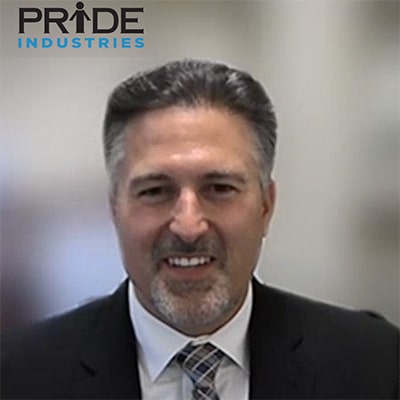
Jeff Dern
Jeff Dern, PRIDE Industry CEO & President
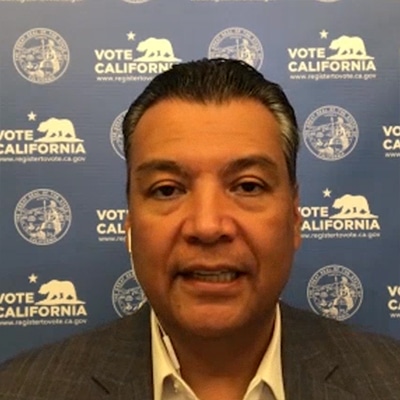
Alex Padilla
Alex Padilla, CA Secretary of State
Media Contact
Kat Maudru

PRIDE Industries is a social enterprise delivering business excellence to public and private organizations nationwide.

Independent living is essential for all adults, including those who have a disability. The chance to live on one’s own, hold employment, and independently complete routine tasks — all of this contributes to a person’s dignity. That’s why access to supports, resources, and assistive technology is so crucial for creating a more accessible society. 


One of the signature achievements of the Americans with Disabilities Act (ADA) was to drive inclusion and spark the creation of tools and policies that enable people with disabilities to integrate into everyday life. These developments include accessible housing and employment accommodations and the invention of a wide range of adaptive devices.


In the early 1900s, in contrast, expectations and accessibility for people with disabilities were quite different. Though some efforts had been made to accommodate veterans injured by war, there was still much stigma, exclusion, and ignorance that kept wounded soldiers from fully integrating into society.

This began to change around the mid-1900s when people with disabilities and their allies began organizing to fight these restrictions, demand access, and create more opportunities for independent living.

Bessie Blount: Hero for People with Disabilities

One of the individuals working to help people with disabilities participate in society was Bessie Blount, a physical therapist, nurse, inventor, and forensic scientist. Blount had an inventive mind and a strong desire to make a difference. Over the years, this combination enabled her to improve the lives of many people with disabilities and pave the way for thousands of other innovations.


Bessie Blount (Griffin) never forgot receiving punishment from a school teacher when she was seven years old in the 1920s. Her infraction at the time? Only using her left hand to write, which was considered unacceptable. However, Blount didn’t just stop when she learned to write with her right hand; she also taught herself to write with her mouth and feet. Later, the skills she learned during this youthful rebellion would enable her to help others to great benefit.


Living in a time with incredible societal obstacles for African Americans, Blount was a true trailblazer. After she finished the sixth grade, she had to develop her own education plan, as there were no schools that offered higher education to Black children in her Virginia hometown. Furthermore, she lived in an era in which women didn’t often get to attend college. But Bessie was set on becoming a physical therapist, and through sheer force of will, she managed to attend both the Panzar College of Physical Education and Union Junior College.

Groundbreaking Innovations for Independent Living

Blount started her career during World War II. Many veterans returned from the war with disabilities; limb amputations were especially common. When Bessie encountered these soldiers during the course of her physical therapy work, she immediately set to work looking for ways to restore a sense of independence and self-esteem to them. Blount soon developed an innovative technique for teaching patients how to conduct ordinary tasks, such as writing, with their feet or mouths. Some even learned how to read Braille with their feet. According to her son, Philip Griffin, Blount also set aside a special room in their home to work with patients.


As cited by the Afro-American Newspaper, a doctor suggested to Blount that in order to help veterans genuinely have a sense of autonomy and live more independently, she should make something that would help them eat independently, rather than rely on support staff to feed them. Deciding to take on the challenge, Blount worked tirelessly in her kitchen, using a file, an ice pick, a hammer, dishes, and boiling water to melt plastic into a mold. The end result was the first prototype of a self-feeding device, which delivered individual bites of food from an attached machine with a simple bite on the tube.


For her efforts, Blount earned a patent. But she didn’t stop there. Four years and $3,000 of her own funds later, Blount created an improved model, made of stainless steel, that included built-in support for a food holder. The debut invention earned Bessie another patent and a standing ovation when she demonstrated the device at a New Jersey hospital.


Even though these apparatuses had the opportunity to change many people’s lives, the American Veterans Association declined to purchase any of the devices, preferring instead to use caregivers. Undaunted, Blount donated the patent rights to both her inventions in 1951 to the French government. “I wanted to show that a colored woman can invent something for the benefit of humankind,” she told Afro-American Newspaper in 1952.

Contributing to Independent Living Today

Blount’s legacy helped pave the way for the myriad of tools and supports that exist today to help people with disabilities complete everyday tasks. More importantly, Bessie’s example has inspired many within the disability community. More and more people are creating their own inventions to overcome obstacles, including self-feeding devices.


Ryan Hines is one of these modern inventors. Unable to eat easily due to arthrogryposis (a congenital condition that causes underdeveloped arm and leg muscles, incorrectly formed joints, and a limited range of motion), Ryan decided to take matters into his own hands, and following in the footsteps of Bessie Blount, created his own device. He explained its significance in 2016: 


“The Bear Paw self-feeder is important to the very small portion of the community who can’t use their hands well enough to feed themselves and their caregivers. To me, it’s essential to have the choice of independence – regardless if the person you rely on is a loving family member or spouse.”


No doubt Bessie Blount would have agreed with that sentiment.

More information about our services

In the spirit of Bessie Blount, Ryan Hines, and other pioneers for independent living, PRIDE Industries provides employment opportunities and more for people with disabilities.
Bessie Blout
Bessie Blount Griffin (1914 - 2009)

“The Bear Paw self-feeder is important to the very small portion of the community who can’t use their hands well enough to feed themselves and their caregivers.”