Our Stories

Don Nelson, Senior Vice President of Operations at PRIDE Industries, was interviewed recently by Electronics Manufacturing News. In Part Two of the two-part interview, Don gives valuable advice for reshoring manufacturing successfully. Not sure whether or not your company should reshore operations? See Part One of the interview.

To keep up with industry news and trends, subscribe to Electronics Manufacturing News.

Electronics Manufacturing News (EMN)
What are some strategies for reshoring manufacturing?

Reshoring manufacturing operations back to the U.S. requires a multi-faceted strategy that addresses logistics, weather, labor, and warehouse operations.

Don Nelson
First, you need a plan, one that has input and buy-in from all the relevant stakeholders, including engineers, supply chain managers, and execs. Then, if the feasibility studies and risk assessments yield a green light, you can start slowly.

For most companies, it makes sense to take a phased approach. Like a hybrid model, where you start by reshoring IP-sensitive or high-value production first and then expand the products you make domestically as your production capabilities increase.

Similarly, depending on why you’re choosing to reshore, you may not need to come all the way back to the U.S. You can solve a lot of shipping and weather problems by nearshoring to a place like Mexico. Of course, even with nearshoring, you still have the issue of tariffs.

If you bring production back to the U.S., then I recommend investing in cutting-edge automation. That will help reduce labor costs, and can also improve quality and efficiency over what you had before. Reshoring manufacturing gives you a clean slate; I’d make the most of it by setting up state-of-the-art systems.

And finally—and this is actually something I’d do at the planning stage—make sure you investigate grants, tax breaks, and other government incentives for bringing your manufacturing back onshore. Federal, state, and even local governments sometimes offer these economic incentives, and the terms usually aren’t onerous, which makes these incentives a good deal. Never leave money sitting on the table.

EMN
When does it make sense to use a contract manufacturer as a way to reshore? How do you determine when to do it yourself and when to rely on a third party?

Don
There are certain situations where a lot of risk can be avoided by using a contract manufacturer. Companies that have variable production volumes, for example, can get a lot of benefit from this kind of partnership, because contract manufacturers are equipped to efficiently manage fluctuations in demand—whether it’s ramping up a new product or scaling down during a slow period.

Contract manufacturers also bring deep expertise in regulatory compliance, and can help their partners navigate local and international standards like UL, FCC, or RoHS. This expertise is crucial for avoiding legal pitfalls and ensuring a smooth market entry.

Another advantage companies get in this type of partnership is the ability to leverage their contract manufacturer’s infrastructure and supply chain relationships, which can significantly speed up the time to market for new products. This is especially valuable in the fast-paced electronics sector, where being first to market can be a major competitive advantage and a real incentive for reshoring manufacturing in the first place.

EMN
What strategies would you recommend for companies to ensure a smooth and cost-effective transition when reshoring manufacturing operations back to the U.S.?

Don
Reshoring manufacturing back to the U.S. requires a multi-faceted strategy that addresses logistics, weather, labor, warehouse operations, and robust management systems.

Start with thorough logistics planning. Given tariff policy shifts and changing trade routes—including potential disruptions around key passageways like the Panama Canal—evaluate alternate distribution methods and secure partnerships with logistics specialists who understand U.S. regulations and geography. Integrate advanced logistics management (LM) systems and IoT-enabled platforms to optimize supply chain routes, predict delays, and maintain real-time visibility into goods movement.

Weather remains a critical factor: U.S. regions face diverse climates, and manufacturing hubs in the Southeast or Midwest may encounter hurricanes, storms, or winter delays. Use predictive analytics within LM systems to build contingency plans around severe weather, including dynamic rerouting and warehouse stock adjustments.

Also, be sure to assess labor market conditions by focusing on strategic recruitment, workforce training in automation, and upskilling existing employees to collaborate with robotics and AI-driven equipment. Persistent labor shortages demand creative workforce solutions, like investing in competitive compensation packages and automation to offset gaps.

Warehouses should be re-evaluated for scalability, flexibility, and sustainability. Implementation of advanced warehouse management systems (WMS) supports inventory controls, lean operations, and rapid order fulfillment. Consider green building standards and energy-efficient upgrades to minimize overhead costs in new facilities; this also helps companies future-proof against energy price shocks and respond to demands for sustainable operations.

Finally, integrate a comprehensive quality management system (QMS) to drive consistency and compliance from day one. A well-documented QMS ensures process control, traceability, real-time quality monitoring, and rapid problem resolution—all of which are crucial during the turbulence of relocation and startup. By combining tech-enabled management systems, strategic workforce planning, climate-aware logistics, and agile warehousing, companies can significantly mitigate risks, streamline costs, and position themselves for sustainable growth in the reshored U.S. manufacturing landscape.

EMN
How important is having a trained workforce for successfully reshoring manufacturing, and what steps should companies take to build and retain a skilled workforce?

Don
A trained workforce is absolutely critical to the success of reshoring in electronics manufacturing. While bringing production back to domestic soil involves investments in facilities and technology, the human element remains the backbone of sustainable operations. A skilled workforce not only ensures smooth production processes but also drives the innovation and operational efficiency that’s essential for competitiveness.

To build and retain this workforce, companies should start with comprehensive training programs. Deploying structured training, including continuous improvement methodologies like Six Sigma and Kaizen, sharpens process quality and problem-solving skills. And partnerships with trade schools, community colleges, and technical institutions can foster talent pipelines and keep operations resilient. These collaborations also help fast-track apprenticeships and certifications tailored to modern manufacturing technologies. Finally, as a leader of a social enterprise with a mission to provide jobs for people with disabilities, I also recommend that companies look beyond their traditional hiring pools to include overlooked groups like people with disabilities and military veterans.

Beyond initial training, continuous employee development is essential. Leveraging modern training technologies like VR simulations and e-learning platforms enhances workforce readiness for complex manufacturing environments. Companies should also foster a culture of innovation and learning, and offer growth opportunities that boost retention.

Investing in competitive compensation, wellness programs, and flexible work arrangements also plays a crucial role in attracting and keeping skilled workers. Strong workforce development efforts reduce turnover and enhance safety, which are significant operational advantages.

Ultimately, successful reshoring requires a strategic emphasis on workforce capabilities. That means building and nurturing a skilled, motivated team backed by institutional partnerships, ongoing training, and continuous talent pipeline development. This approach not only bridges the critical skills gap but also ensures that reshored operations are efficient, innovative, and competitive.

EMN
What role does investing in advanced technologies, such as automation or AI, play in making reshoring both viable and competitive?

Don Nelson
Don Nelson, Senior Vice President of Operations, PRIDE Industries

Don
Investing in automation and AI are crucial for reshoring manufacturing successfully. Reshoring can sometimes bring higher labor costs compared to offshoring, so for reshoring to make sense, it must make companies more agile and efficient. Automation helps by taking over repetitive, dangerous, or precision-based tasks, boosting productivity and reducing labor costs. AI enhances automation by enabling smarter, adaptive systems, like AI-driven collaborative robots (cobots) that work safely alongside humans to improve speed, quality, and flexibility on production lines.

AI is particularly valuable for benchmarking and forecasting. By analyzing real-time production data and market trends, AI systems create digital twins that enable manufacturers to simulate and optimize operations before implementing changes. This supports better demand forecasting, inventory management, and resource allocation, which reduces waste and downtime. However, for AI to be truly effective, you have to ask the right questions and define relevant objectives. Without clear direction, AI’s predictive and analytical capabilities can be underutilized or misapplied.

Together, AI and automation form a powerful combination. Automation executes physical tasks efficiently; AI continuously learns from data to optimize processes, predict maintenance needs, and adapt workflows dynamically. This synergy allows reshored manufacturing operations to achieve the flexibility, quality, and cost-effectiveness that companies need to compete globally. And that’s what bridges the gap between higher domestic costs and supply chain resilience. When companies embrace these technologies, then reshoring becomes a true competitive advantage.

EMN
What advice would you give for building strong relationships with domestic suppliers to ensure a resilient and efficient supply chain after reshoring manufacturing?

Don
I think the basis for any good manufacturing partnership is transparency. That means sharing accurate forecasts, production schedules, and potential challenges early. This fosters trust and allows suppliers to plan proactively. Equally important is clear, consistent communication at multiple levels—from strategic leadership meetings to operational check-ins—so issues are addressed before they become disruptions.

Approach the relationship as a partnership, where both sides commit to long-term success rather than short-term transactions. In this model, companies and their suppliers share mutual risk for mutual gain. That’s why I recommend collaborating on product development and inventory management, and even investing jointly in new technology.

A resilient relationship also depends on a willingness to compromise. Lead times, pricing, or minimum order quantities may need adjustment as domestic supply chains scale. Finding balanced solutions ensures both parties remain profitable and competitive.

The fact is, in the most successful partnerships, suppliers are treated as strategic allies, not interchangeable vendors. When you combine transparency with open communication and a shared risk-reward commitment, you get a partnership that can weather market fluctuations, accelerate innovation, and secure your reshoring investment for the long term.

EMN
Could you talk about a specific tactic for building a strong partnership with a domestic supplier?

Don
Sure. I can give you three.

First, make sure you engage suppliers early and regularly in collaborative strategic planning sessions, so you can align goals, expectations, and performance metrics. This includes sharing forecasts, capacity plans, and ideas for reducing costs and improving quality. Jointly setting measurable KPIs and mutual success targets builds shared accountability and trust, which embodies the “mutual risk for mutual gain” philosophy.

Second, establish structured communication channels and meeting cadences—ranging from executive-level relationship reviews to day-to-day operations check-ins. Openness about challenges or potential disruptions encourages problem-solving rather than finger-pointing. This transparency helps you anticipate risks and develop contingency plans together, which strengthens your supply chain.

Third, develop mechanisms for shared investment in process improvements, technology upgrades, or capacity expansions that benefit both you and your supplier. Adopt contract terms that reflect a willingness to compromise on lead times, pricing, or order sizes as market conditions evolve. This encourages a true partnership mindset where both sides balance risk and reward, fostering long-term stability and innovation.

Following these tactics with your supplier lets you transform a transactional relationship into a trusted partnership that supports efficiency, flexibility, and mutual growth.

EMN
When choosing a third-party manufacturing contractor in the U.S., what key factors should executives consider in order to ensure a reliable partnership?

Don
When you’re choosing a manufacturing partner, you really have to look at it from both a strategic and a practical angle. The first thing I tell companies is: Check the contract manufacturer’s track record. How long have they been doing this, and who have they worked with? That tells you a lot about their staying power and reliability.

Just as important is experience in your specific industry. You want a partner who understands your regulatory requirements and the quality standards you’re held to. Any potential partner should be able to show you its certifications, audit history, and the quality systems it has in place.

But technical capability isn’t the whole story. Flexibility is huge. Demand shifts, designs evolve, and supply chain surprises happen. The right contractor can flex with those changes without blowing up your schedule or your budget.

And then there’s cultural fit, which I think is often underestimated. Do they communicate in a way that works for your team? Do they approach problem-solving and accountability the same way you do? That alignment makes a big difference when challenges come up. At the end of the day, the strongest partnerships blend operational excellence with adaptability and a shared way of doing business.


A Reshoring Partner You Can Rely On

At PRIDE Industries, our state-of-the-art facilities minimize your risk of supply chain disruption, optimize manufacturing and fulfillment processing, and provide flexible, on-demand inventory schedules. Partner with us to better manage the unpredictability of tariffs, component availability, and shipping costs—while meeting customer demand for products made in the USA.

“I’ve always seen myself as an underdog, which is why I’m passionate about empowering others like me through youth advocacy— uplifting people and reminding them that they, too, can be big in their own way.”

Erica Barnes has always been a force of nature, whether on the basketball court, in her time as a probation officer at a youth detention center, or now as a Workforce Inclusion Supervisor at PRIDE Industries. Her journey is one of transformation and a deep commitment to empowering others.

How Basketball and Family Shape a Lifetime

Growing up, Erica didn’t realize she was a gifted athlete until a friend invited her to play basketball in elementary school.

“From that day on, my life changed,” Erica said. “I wasn’t like other kids who hung out or dated—I was always practicing. At one point, I ran stadiums every day before school.”

Her dedication paid off.

“My dad and basketball instilled a lot of work ethics in me,” said Erica. “It’s how I got into the University of Arizona and then eventually in 2014 continued my professional basketball career overseas.”

But Erica’s passion extended beyond the court. Inspired by her father and uncle, both probation officers, she transitioned into youth advocacy.

From Athlete to Advocate

After returning to Sacramento, California, Erica became a probation officer at a youth detention facility.

“Since childhood, I’ve been passionate about working with youth, especially those who are justice-impacted or at risk,” she said. “Basketball shaped me into the woman I am today, and it helped me discover purpose in youth advocacy and giving back to my community.”

Her career took an unexpected turn during defensive tactics training when she sustained an injury that led to auditory processing disorder (APD).

“My life changed forever after the injury,” Erica said. “I had to relearn how to care for myself and be gentler with my body, mind, and spirit.”

Finding a New Purpose at PRIDE Industries

After her injury forced Erica to make major changes in her life, she discovered a new way to make an impact, one that would change not only her career but her sense of belonging. A recruiter introduced Erica to PRIDE Industries.

“Joining PRIDE Industries was a breath of fresh air,” Erica said. “The support and love, especially from my director, Andrea Rogozinski, made me feel at home. They were so understanding while I was going through audiology appointments, telling me, ‘You’re in control of your calendar.’ I’d never experienced that before, and it was such a shock, in the best way.”

Her dedication didn’t go unnoticed. Within two years, Erica advanced from Employment Specialist to Workforce Inclusion Supervisor, leading initiatives that empower youth with disabilities.

“I feel supported, I feel seen, and I can be me. We all have a light, and I’m able to be me and shine my light on others.”

Erica expanded her passion for youth advocacy by helping plan and execute PRIDE Industries’ Career Launchpad Summer Camp. As a mentor and guest speaker at the camp, Erica helped inspire more than 100 high school campers with disabilities, who had come to explore career readiness and post-secondary pathways.

“Helping Andrea bring our vision to life was incredible,” said Erica. “From planning to graduation, I felt like I was on cloud nine. Seeing the impact on the youth—the way it truly changed them—was beyond rewarding.”

Unfortunately, Erica’s journey took another turn when her stepmother passed away in a car accident just two months after she joined PRIDE Industries. But that never stopped Erica; in fact, it pushed her further.

“Losing her ignited something in me, it gave me my voice,” Erica said. “I was shy before, but now you can’t get me to be quiet. Her passing gave me even more purpose.”

A Growing Career in Youth Advocacy

Drawing strength from the passion of her stepmother, the mentorship of her father, and the work ethic of basketball, Erica continues to work hard in her support of youth. She sees a bright future for PRIDE Industries’ YES! Program, a service that supports opportunity youth in Sacramento and Placer counties, enabling them to gain the skills they need to succeed in their chosen careers and to live independently.

“I see our YES! Program and team continuing to grow and I’m excited to be a part of that,” she said.

“I want to help, heal, and support youth. Life can be tough, but you can’t give up. Success is possible, and there are people here to help you.”

Her message to youth is simple yet powerful.

“I hope my story empowers and inspires you. You have a light—let it shine.”

This is Part Two of a two-part series on ways to enhance facility security. This blog focuses on improving IoT cybersecurity. For a concise overview of protocols and tools for maximizing physical building security, read Part One.

During the past decade, the Internet of Things (IoT) has proven to be a game changer in facilities management. But as with any technology, there are also downsides that must be addressed, especially regarding IoT cybersecurity.

The benefits of incorporating interconnected devices into operations are well known. The International Facility Management Association (IFMA) lists predictive maintenance, energy optimization, improved occupant experience, enhanced security, and streamlined asset management as the technology’s top five benefits.

But because these sensors, connected cameras, and automated systems help manage everything from access control to HVAC to lighting and elevators, a successful cyberattack can wreak havoc—disrupting operations, compromising sensitive data, and even risking physical safety.

IoT cybersecurity protocols in many facilities are too lax or outdated to effectively protect the many linked devices spread throughout the facility.

Why Are IoT Devices Targeted by Hackers?

One reason cybercriminals are increasing their attacks on IoT devices is simply because there are so many of them, and their use is expanding. There are nearly 19 billion IoT devices in use today, and that number is expected to hit 40 billion by 2030.

But it’s not just their ubiquity that makes IoT devices such popular targets. Many of these devices have weak or no security, making them a preferred doorway into corporate building systems. IoT cybersecurity protocols in many facilities are too lax or outdated to effectively protect the many linked devices spread throughout the facility. For example, a recent assessment by Building Cyber Security, a nonprofit dedicated to securing the nation’s critical infrastructure, found that 80% of commercial real estate organizations have no network security at all, and only 5% meet reasonable security requirements.

A lax attitude to cybersecurity can come with a high cost. A Verizon Business survey found that 66% of respondents who suffered a cybersecurity attack deemed the resulting impact as “major.” Of these affected businesses, 59% suffered downtime, 56% lost data, and 29% faced regulatory penalties.

And it’s not just cameras and sensors that are being attacked. Internet-connected devices as ordinary as washing machines have been compromised. Even the smart TV in the boardroom can be a security threat.

Understanding IoT Cybersecurity Threats

Most companies have robust security systems in place to shield their computer networks and protect sensitive data. But this cyber-diligence doesn’t always extend to the devices that are part of the company’s buildings. A high percentage of the IoT devices in use today are susceptible to a wide range of cyberattacks due to weak authentication, outdated firmware, and insecure network configurations. Attackers target these devices not only for direct exploitation but also as entry points to broader networks.

7 Common Types of IoT Cyberattacks

There are several types of cyberattacks that can be employed against IoT devices. These are the most common:

  1. Botnet and DDoS Attacks – IoT devices such as routers and smart cameras are frequently hijacked and added to botnets, which are then used for large-scale distributed denial of service (DDoS) attacks.
  2. Exploitation of Default Credentials and Outdated Firmware – According to Fortinet’s 2025 Global Threat Landscape Report, attackers routinely exploit default passwords and unpatched vulnerabilities in routers and cameras. Around 20% of global exploitation attempts in 2025 targeted IoT devices.
  3. Man-in-the-Middle (MitM) and Eavesdropping Attacks – Attackers can intercept communications between IoT devices and servers, enabling them to monitor or alter transmitted data. These MitM attacks are particularly effective in poorly encrypted or insecure network environments.
  4. Brute-Force Password Attacks – Many IoT devices still rely on highly guessable credentials. Hackers using automated programs can try thousands of passwords in a short amount of time, using this brute-force technique to gain unauthorized access to a single device that then gives them access to an entire corporate network.
  5. Privilege Escalation and Remote Code Execution – Exploiting software vulnerabilities in IoT operating systems allows attackers to gain higher-level permissions or execute malicious code remotely. Once inside, they can manipulate firmware, reconfigure devices, or pivot laterally into enterprise networks.
  6. Physical Tampering and Data Theft – IoT devices deployed in public or industrial settings—such as lobbies, hallways, or kiosks—face risks of direct tampering. Attackers can physically access interfaces or ports to install malware or extract sensitive data.
  7. Ransomware and Supply Chain Attacks – According to cybersecurity firm DeepStrike, ransomware attacks targeting IoT and operational technology (OT) environments increased by 46% in 2025 over the previous year.

Because IoT devices are becoming so common, and because most of them are only weakly secured, they are an appealing target for cybercriminals. Common vulnerabilities like poor authentication, misconfiguration, and lack of patching continue to drive a wide range of cyberattacks.

IoT Cybersecurity Threats to Commercial Buildings

Building control and management technologies used to operate in silos. But today’s smart buildings are integrated into multi-use, internet-based networks. A comprehensive building automated control system (BACS) can include any number of interoperable IoT elements, including:

  • Building and energy management systems (BMS/EMS)
  • Lighting control systems
  • Security systems (such as CCTV) and automated access control systems
  • Vertical transportation systems, such as passenger/goods lifts and escalators
  • Automated parking systems
  • Wayfinding systems
  • IT infrastructure hardware and devices

A cyberattack can allow a threat actor to take control of a critical system and gain the ability to change settings, turn off components, or make equipment operate outside of normal parameters.

Even seemingly harmless devices pose risks, as a North American casino discovered when it installed an internet-enabled fish tank. The tank’s connectivity allowed facilities personnel to automate feedings and remotely adjust temperature and salinity. But that same connectivity let hackers use the tank as an opening to steal and transmit 10 gigabytes of data.

How to Improve IoT Cybersecurity

A close-up of a fish tank in the hallway of an office building
Even a fish tank can be used to steal data, if it’s connected to a network.

Updating and maintaining your IoT cybersecurity is an ongoing process. Recommendations from cybersecurity experts vary, but almost all include the following steps.

Update Building Software Systems

Your facility’s software systems should be regularly updated and patched. Start this process by taking inventory of all your digital components: building management systems, surveillance systems, fire controls, and others. Make sure each system has the latest firmware or software installed and set up a schedule to check for and install upgrades. If your system is so old that it no longer receives patches, it’s time to replace it.

Secure Your IoT Devices and Building Equipment

Every IoT device is a tiny computer that can be hacked if not secured. Even something as ordinary as a smart thermostat can be a doorway into your company’s network. Hackers know the factory default settings and passwords of thousands of devices from dozens of manufacturers. For this reason, whenever an internet-enabled device is installed, part of the installation process should be to change the default password to a strong, unique password.

Strengthen Access Control and Authentication

More than one-third of network breaches involve stolen credentials. To reduce this risk, be sure to require strong and unique passwords and multifactor authentication. Limit permissions to those personnel who truly need access to the system and train all employees in how to spot phishing attacks. Physically secure spaces with sensitive data via keycards or biometrics; and promptly revoke access when staff or vendors leave.

Segment Networks

Consider putting IoT devices on a separate network, so that even if a device is compromised, the hackers can’t jump to your company’s primary data network. And be sure to monitor IoT devices for unusual behavior. Many hacks involve marshalling hundreds of devices into a botnet to stage a denial-of-service attack. If a normally quiet sensor starts sending out large amounts of data, it could be a sign that it’s been compromised.

By separating your building systems network from your corporate and tenant networks, you don’t just protect access to the main network. You also prevent attacks from that network, such as from an infected laptop, that could compromise building operations.

Finally, the firewall and intrusion detection protocols that are applied to your IoT cybersecurity should be just as robust as the cybersecurity protocols used to protect the company network. A strong intrusion detection system can alert you if someone on a guest network, for example, is trying to ping your elevator control. And if vendors need to access the building management system remotely, require them to go through a secure VPN into that network, so that even if an attacker compromises the vendor’s credentials, they won’t be able to easily access your systems.

Protect Tenant and Sensitive Data

Many facilities are the custodians of a wide range of tenant data. In these cases, even a single security breach can be devastating to the facility’s reputation—and its bottom line. In 2023, the average cost of a data breach was an attention-grabbing $4.45 million.

To protect proprietary data, use HTTPS/SSL for web portals or online services, so that data is encrypted as it moves over the network. In addition, be sure to regularly back up and encrypt sensitive data. And impose strong access controls so only staff who absolutely need access to tenant information have it.

Train Your Team and Tenants on Security Measures

According to IBM, 95% of cybersecurity breaches are due to human error, such as clicking on a malicious email link or using a weak password. That’s why IoT cybersecurity training is a must for everyone.

Start by incorporating general cybersecurity awareness training for all employees and contractors who access your systems. Teach employees to:

  • Spot phishing attempts, like emails sent from spoofed sender addresses or urgent money requests. You might use phishing simulations—sending fake emails to employees to see if they click—as a teaching tool, followed by guidance on red flags they missed.
  • Handle passwords safely. Teach employees not to share passwords or write them on sticky notes. Make it clear that no IT staff will ask for someone’s password over the phone.
  • Report suspicious activity immediately. Send a message to employees that all such reports are appreciated, even those that turn out to be false alarms.

Finally, educate staff and tenants about the simple steps they can take to protect your company’s physical and cyber systems. Prohibit tailgating, a practice in which someone follows a worker through a secure door without badging in. Restrict access to sensitive areas to essential, known personnel. And make sure that visitors are accompanied by company personnel at all times.

Manage and Vet Third-Party Vendors

Vendors are an integral part of building operations, but each third-party relationship is another avenue for risk, especially as these workers have physical access to your IoT devices. In fact, a 2024 survey found that 61% of companies experienced a data breach through a vendor.

Therefore, it’s important to vet vendors before and during the relationship. Ask about their cybersecurity policies. What kind of security certifications do they have? Do they conduct employee background checks and security training? Include security requirements in your contracts and limit a vendor’s access to the minimum needed to perform their work.

Assess each vendor periodically to see if there have been any security incidents; confirm that their privileges are still appropriate for the work they are doing. And encourage vendors to let you know when a staff member has left the company to allow you to promptly revoke their credentials.

Implement Continuous Monitoring and Incident Response Plans

On average, it takes companies 204 days to identify a breach, and another 73 days to contain it. But this time can be shortened considerably through vigilance. Facility managers should deploy tools that scan for unusual activity 24/7, and they should have a comprehensive response plan in place. With continuous monitoring, you can significantly reduce the time that attackers are able to lurk unnoticed. And with a rehearsed incident response plan, you ensure that if there is an intrusion, you can quickly retake control of your systems and act decisively to mitigate damage. It’s like having smoke detectors and a fire mitigation plan in place, but for cybersecurity incidents.

Integrate Physical Security with IoT Cybersecurity

Anything in your building that’s smart or connected can be leveraged in an attack, and not all attacks come through a network. An intruder posing as a delivery person, for example, could slip into a restricted area and insert a malware-laden USB stick into a server or a device. Both cyber and physical security must be top notch.

This is why the most secure companies have chosen to break down the silos between their building and IT security teams. Working together, these two groups are able to devise security protocols that combat both physical and cyber intrusions.

Having IT experts team up with security personnel increases security for server rooms, security control centers, and other sensitive spaces. Working with IT also helps building personnel ensure that IoT devices like cameras, badge readers, and alarm panels are secured with passwords, updates, and network segmentation.

Integrating security efforts helps close the gap in the gray area between physical and IoT cybersecurity. It ensures that personnel don’t overlook the wi-fi security of the network port in the lobby or the smart lighting panel in the conference room.

IoT Cybersecurity in Action

The cybersecurity risks posed by IoT devices are increasing. Now more than ever, it’s important to fold IoT devices into your company’s security efforts. FM and IT personnel, working together, are the ideal team to tackle this security issue. And to get the most from these efforts, security experts recommend a five-step process:

  • Gather information. Determine whether specific responsibilities are already assigned, identify all assets and their configurations, review your existing security policies and procedures, and examine records of any past incidents or breaches at your facility.
  • Assess your position. Identify potential risks and evaluate your current security posture. You may need to bring in a specialist to provide additional expertise.
  • Make a plan. Set clear security objectives, perform a gap analysis, outline corrective measures, and assign ownership for each action.
  • Take action. Implement the necessary improvements and create mechanisms to track emerging developments and new technologies.
  • Review. Revisit and update your risk assessment, audit your current environment, and monitor industry trends, incidents, and evolving threats.
The ideal IoT cybersecurity team includes both FM and IT personnel.

Finally, remember that maintaining IoT cybersecurity is a never-ending process. Hacking techniques evolve constantly, and so must your defenses. For facility managers, the first step is simple: Treat every connected device as both a valuable tool and a potential target.

Secure Facilities Management

At PRIDE Industries, we offer deep expertise and decades of experience in preventive and predictive maintenance, custodial services, engineering services, energy systems maintenance, project services, grounds and landscaping, and environmental management. Learn how partnering with us can enhance efficiency, increase security, and lower costs.

Don Nelson, Senior Vice President of Operations at PRIDE Industries, was interviewed recently by Electronics Manufacturing News. In Part One of this two-part interview, Don outlines the benefits of reshoring and the impact of tariffs. He also shares which factors to consider when determining whether or not to reshore manufacturing. Already know that your company needs to reshore? Then see Part Two of this interview to get actionable advice for successful reshoring.

To keep up with industry news and trends, subscribe to Electronics Manufacturing News.

Electronics Manufacturing News (EMN)
When does it make sense for a company to reshore?

Don Nelson
Put simply, it depends on the math.

The impact of tariffs has been a lot like COVID’s—they’ve shown just how shaky and unpredictable the global supply chain can be. And just like the pandemic, tariffs aren’t going away.

Part of what’s driving a return to domestic production is the fact that the incentives to offshore are so much less compelling than they were a decade or so ago. Twenty years ago, material and labor costs were markedly lower in some countries than in the U.S., and shipping costs were reasonable. And if you happen to be in an industry where that’s still the case, then maybe you don’t want to change anything.

But for most companies today, the math has changed. All those costs are higher now. And there are new complications—extreme weather, tariffs, and geopolitical uncertainty. In this type of environment, it makes sense for companies that sell a lot to the U.S. to move at least some production here if they can, so that they don’t have all their eggs in one basket.

EMN
What are some costs and risks of reshoring?

Don
Reshoring does have its risks, which is why manufacturers need to plan carefully. If you’re building factories, that’s a big capital investment. It may be simpler to start by using a domestic contract manufacturer, which lets you retain more flexibility, should you decide to offshore at a later date.

Another issue is the cost structure, which can be different domestically than abroad. Labor costs have generally been higher in the U.S. than in typical offshore countries, but that’s changing—foreign wages have been moving up in recent years, so that advantage is eroding.

There’s also the issue of supply chain realignment, finding new sources for materials and components. Here again, you can get around this problem by contracting with a manufacturer that’s already well-established in the U.S., so that you can take advantage of its existing labor and materials ecosystem.

EMN
Regulatory compliance must be easier with domestic facilities, right? And is it easier to control quality?

Don
Not necessarily. Look, there are plenty of good reasons to reshore, but I don’t think compliance is one of them. A product that’s sold in the U.S. has to meet certain standards whether it’s made here or in Vietnam.

It is true that—for some companies—quality control becomes easier when they reshore, if only because it’s a lot less hassle to fly to another state in the U.S. than to get your personnel halfway around the world for a product inspection at a contract manufacturer.

EMN
What are the most significant benefits that companies can reap when they reshore manufacturing, particularly in terms of mitigating the impact of tariffs on their businesses?

Don
I think there are a couple of things to keep in mind when it comes to tariffs. First, the impact of tariffs has been a lot like COVID’s—they’ve shown just how shaky and unpredictable the global supply chain can be. Second, just like the pandemic, tariffs aren’t going away. They’re pretty much the new normal now, popping up all over the world and making it tough to plan ahead.

Bringing production back closer to home lets companies avoid some of those tariff headaches. It also means they’re not as exposed to sudden cost spikes or new trade rules, so pricing is more stable and predictable. Plus, reshoring can give companies a lot more control over operations, which lets them react faster if something unexpected happens—even if that something is positive, like adjusting to unexpectedly high demand.

Another advantage of reshoring is greater control over shipping costs. Bad weather, geopolitical uncertainty, port delays—that can all make shipping expensive and unpredictable. Reshoring pretty much eliminates that headache. The bottom line is that reshoring makes supply chains stronger and more flexible. Keeping production close means companies are better able to ride out the next pandemic, or weather a catastrophe, or cope with a new tariff, or whatever. You’re just on a more solid footing.

Don Nelson
Don Nelson, Senior Vice President of Operations, PRIDE Industries

EMN
Let’s take a deeper dive into logistics. Specifically, how does reshoring help companies reduce logistics and shipping costs, and why is this especially important in a high-tariff environment?

Don
First off, if a company wants to cut shipping and logistics costs, reshoring is one of the most effective moves they can make. Bringing production closer to your main markets saves on the long-haul freight bills—that’s about 20–30% savings on transportation alone. It also avoids the headaches that come with unpredictable shipping schedules, port delays, and customs bottlenecks. In a high-tariff environment, this is even more critical—by manufacturing domestically, you sidestep those hefty import tariffs that can eat into your margins overnight.

Shorter supply chains also mean a company can run leaner on inventory. With faster lead times, you don’t need to tie up as much cash in safety stock or oversized warehouses. Inventory strategies run across a spectrum, from just-in-case to just-in-time. Reshoring lets a company move closer to a just-in-time approach, which lowers warehousing costs and reduces the risk of excess or obsolete inventory.

Another reshoring plus: Domestic facilities can leverage advanced automation and smarter layouts, so you get more out of every square foot of warehouse space. And going back to tariffs—don’t forget about free trade zones. Companies can leverage FTZs to defer or maybe eliminate certain duties on imported components. FTZs are another tool in the toolbox, and these days, companies have to use every tool at their disposal.

EMN
In your experience, how does reshoring improve quality control and compliance with local regulations compared to overseas manufacturing?

Don
I always say that reshoring isn’t just about geography, and that’s especially true when it comes to things like quality and compliance.

When companies decide to reshore their manufacturing, they often see a big boost in quality control and regulatory compliance. Think about it—having production closer to home means you can keep a much closer eye on things. Instead of relying on reports and delayed feedback from overseas factories, you’re right there, able to spot issues early and take corrective actions quickly. That kind of hands-on oversight really cuts down on defects and keeps quality consistent.

Plus, reshoring makes compliance with local regulations way more straightforward. Local teams and subcontractors already know the ins and outs of the regulatory environment—they understand the standards and expectations already—so there’s less guesswork and fewer surprises. And being able to work directly with local subcontractors means that communication is smoother, another thing that helps ensure everyone is on the same page regarding compliance and quality standards.

All of this adds up to a manufacturing process that’s more transparent, agile, and aligned with both quality goals and regulatory demands. So, reshoring isn’t just about geography—it’s a smart move for tighter control and peace of mind.

EMN
For executives considering reshoring, what are the most common pitfalls to avoid, and how can they set their reshoring initiatives up for long-term success?

Don
One of the biggest pitfalls executives face when reshoring is underestimating the true complexity of the transition. It’s not simply a matter of moving production back home; local supply chains, labor availability, and regulatory requirements can look very different from overseas operations. Many companies also overlook hidden costs—like hiring or retraining their current workforce, qualifying new suppliers, or investing in automation. Any of these factors can erode the expected gains if not accounted for early.

Another common misstep is treating reshoring as a one-time tactical project instead of a long-term strategic shift. That mindset often leads to piecemeal investments rather than building a resilient, future-ready operation.

The organizations that succeed are the ones that approach reshoring holistically. They map the full supply chain, model total landed costs, and build strong relationships with domestic suppliers before committing to large-scale moves. They also invest in technology—automation, data analytics, and digitalized operations—to offset higher labor costs and ensure consistent output. Perhaps most importantly, successful companies align their reshoring strategy with broader business goals, whether that’s improving customer responsiveness, strengthening resilience, or accelerating innovation. Reshoring done right isn’t just about geography; it’s about creating a manufacturing system that can scale, adapt, and compete in the long run.

EMN
Is there anything else you’d like to add? Any parting words of advice for electronics manufacturers who want to reshore manufacturing?

Don
Tariffs definitely play a role in reshoring decisions, but if tariff concerns are the main reason you’re thinking of reshoring, think again. Tariffs can create short-term cost pressures and uncertainty, but executives need to think long term. For many companies, it’s hard to justify uprooting global supply chains solely on the possibility of future tariff volatility.

The reality is that there are a lot of other good reasons to reshore. And in my opinion, lead time reduction is at the top of the list—being closer to end customers means faster response to design changes and smoother alignment with just-in-time production models. Supply chain resilience is another factor. The pandemic, port bottlenecks, and geopolitical tensions underscored the vulnerability of overextended supply chains. There’s no question that reshoring is a way to mitigate these risks.

In addition, labor dynamics are shifting. The wage gap between traditionally low-cost regions and North America has narrowed, while automation and advanced robotics are offsetting higher local labor costs. Finally, customer expectations around sustainability and traceability favor shorter, more transparent supply chains. The bottom line is, while tariffs are a consideration, reshoring decisions are really about strategic flexibility, risk management, and staying competitive over the long term.

Reshore with a Partner You Can Rely On

At PRIDE Industries, our US-based, state-of-the-art facilities minimize your risk of supply chain disruption, optimize manufacturing and fulfillment processing, and provide flexible, on-demand inventory schedules. Partner with us to better manage the unpredictability of tariffs, component availability, and shipping costs—while meeting customer demand for products made in the USA.

This is Part One of a two-part series on ways to enhance facility security. This blog focuses on building security as regards physical infrastructure. For an overview of protocols and digital tools for securing the IoT devices within facilities, read Part Two.

Physical security is a basic human need. In our personal lives, we lock our doors, check expiration dates, and make sure our children are secure in their car seats. The same need for security exists at our workplaces. We want to protect against intrusion, theft, vandalism, and workplace violence. Fortunately, there is a wide range of building security tools available for today’s facilities managers.

Experts group security tactics into five areas, often referred to as the five D’s—deter, detect, delay, deny, and defend. The most secure buildings have tools in place to perform each of these functions:

Not every facility needs a Fort Knox level of security, but all facilities require a multilayered security system that reduces the chance of unauthorized access.

  • Deter. Bright lights, signage announcing the use of security cameras, and similar tactics can discourage potential threats.
  • Detect. Alarm systems allow security staff to quickly respond to a breach.
  • Delay. Physical barriers and access control mechanisms can impede intruders and provide additional time for security or law enforcement personnel to respond to incidents.
  • Deny. Passcodes and biometric access control can prevent intruders from gaining access to sensitive areas or valuable assets.
  • Defend. Comprehensive training programs can prepare facility staff to respond effectively and quickly before law enforcement arrives.

Every facility is unique, and its building security needs are as well. Here’s a look at some important factors to consider when seeking to make your facility more secure.

Perimeter Security

When devising a plan to improve building security, one of the first areas to focus on is your facility’s perimeter. A well-designed perimeter can keep unwanted visitors from gaining access to your facility in the first place, which is why it’s important to consider security goals when planning or redesigning the exterior of your buildings.

For example, if your facility has outdoor storage or equipment areas, electrified security fences can be effective in preventing theft and vandalism.

Of course, it doesn’t make sense to erect electrical fencing around office, medical, and many other types of buildings. But that doesn’t mean they can’t be fortified through the design choices you make. Architectural and landscape design that factors in security concerns will maximize visibility, remove potential hiding places, and establish designated entry points that can be easily monitored. Security-based designs also call for uniform lighting to illuminate walkways and entry points.

Building Security Upgrades

Upgrading existing facilities can require a different approach. If your facility has large ground-level windows, for example, you may want to add security bollards to prevent vehicles from gaining entry by ramming through windows. Fortunately, today’s bollards come in a variety of styles and sizes; and whether a metal pole or a concrete structure, many bollards can serve a dual purpose—as a decorative planter, for example. This allows you to add security without sacrificing aesthetics.

Even smaller windows can make a commercial building vulnerable, if they’re easily broken and large enough for an intruder to slip through. One easy and fairly inexpensive way to protect these windows is to add security bars or grilles. These deterrents can be customized and are highly effective at keeping intruders out.

The side of a glass office building with well-trimmed landscaping and lots of exterior lights
Discourage intruders with well-lit exterior areas and landscaping that provides clear visibility.

But grillwork has its disadvantages, and perhaps the primary one is simply that these additions can be unattractive and make buildings look less inviting to visitors. Bars and grilles can also prevent firefighters from accessing a building—a serious safety issue. They also don’t work well on historic buildings.

For these reasons, facilities managers are turning to more aesthetically pleasing solutions, like window security film. Nearly invisible to the naked eye, this film is typically applied to the inside of a window, and serves two important security functions. It can help prevent flying glass shards from forced entry, vandalism, and even explosions. Window film can also delay intruders, helping to protect occupants (and assets) and giving police and security personnel additional response time.

Doors that Enhance Building Security

The type of doors used in your facility can also have a big impact on safety. Fortunately, there are even more safety options with doors than with windows. Security doors are available in wood, metal, and even reinforced glass. And all of these materials are available with different levels of strength. So, for example, you can choose metal-core doors for exterior purposes, and stick with plain wood for interior doors. There are specialized doors that can resist fire or gunshots, and some doors can shield against radiation—making them ideal for laboratories, data centers, and other sensitive areas.

Compared to reinforced security doors, traditional glass doors provide significantly less protection. Nevertheless, glass can be an appropriate material for low-security applications such as lockable office doors, where appearance is the biggest concern.

But even with glass doors, electric or magnetic strike locks are a must to achieve a reasonable level of security. In addition, doors and locks should be combined with access control systems, security cameras, sensors, and alarms to fully protect a facility.

Lighting and Environmental Design

Lighting and environmental design determine how your buildings look from the street. In many ways, they are your facility’s aesthetic. But these two elements also play an important role in building security.

Lighting is particularly important from a security standpoint. In a randomized controlled study of 80 public housing developments with elevated crime levels in New York, about half received new, temporary street lights and half did not. The study’s authors found that developments that received the new lights experienced crime rates significantly lower than predicted by past history.

Proper outdoor lighting not only deters antisocial behavior, it also makes your cameras and physical security more effective and provides an additional element of protection that helps secure every corner of your property. And these improved security results can be obtained without keeping the lights on 24/7. Motion sensors ensure that lights come on only when needed, saving energy—and even taking a potential intruder by surprise.

High-resolution security cameras provide clear images and video footage under a variety of lighting conditions.

Well-planned exterior lighting is such an effective security tool that it’s included as a key component of Crime Prevention Through Environmental Design (CPTED, often pronounced “sep-ted”). CPTED is a multi-disciplinary approach to building security that leverages architectural design along with careful management of built and natural environments to achieve high levels of security at a reasonable price. The basic principles of CPTED include:

  • Natural Surveillance – using good lighting and trimmed landscaping to increase visibility.
  • Natural Access Control – directing people and vehicles through designated areas.
  • Territorial Reinforcement – personalizing areas with gardens or artwork to signal ownership.
  • Regular Maintenance – keeping spaces well-maintained in order to signal constant occupancy and vigilance.

Technology Plays a Key Role in Building Security

Doors, locks, and other physical barriers are the elementary building blocks of building security. But for higher-level security you need to incorporate technology-based systems—for surveillance, access control, and intrusion alarms—to provide truly comprehensive security. As with all things technological, these systems have grown more sophisticated in recent years.

Surveillance Systems

Surveillance cameras are everywhere. Video doorbells and dash cams can be found all around the world, in major urban areas like London and New York, in suburban areas across the country, and even in rural towns. And this is especially true for commercial buildings.

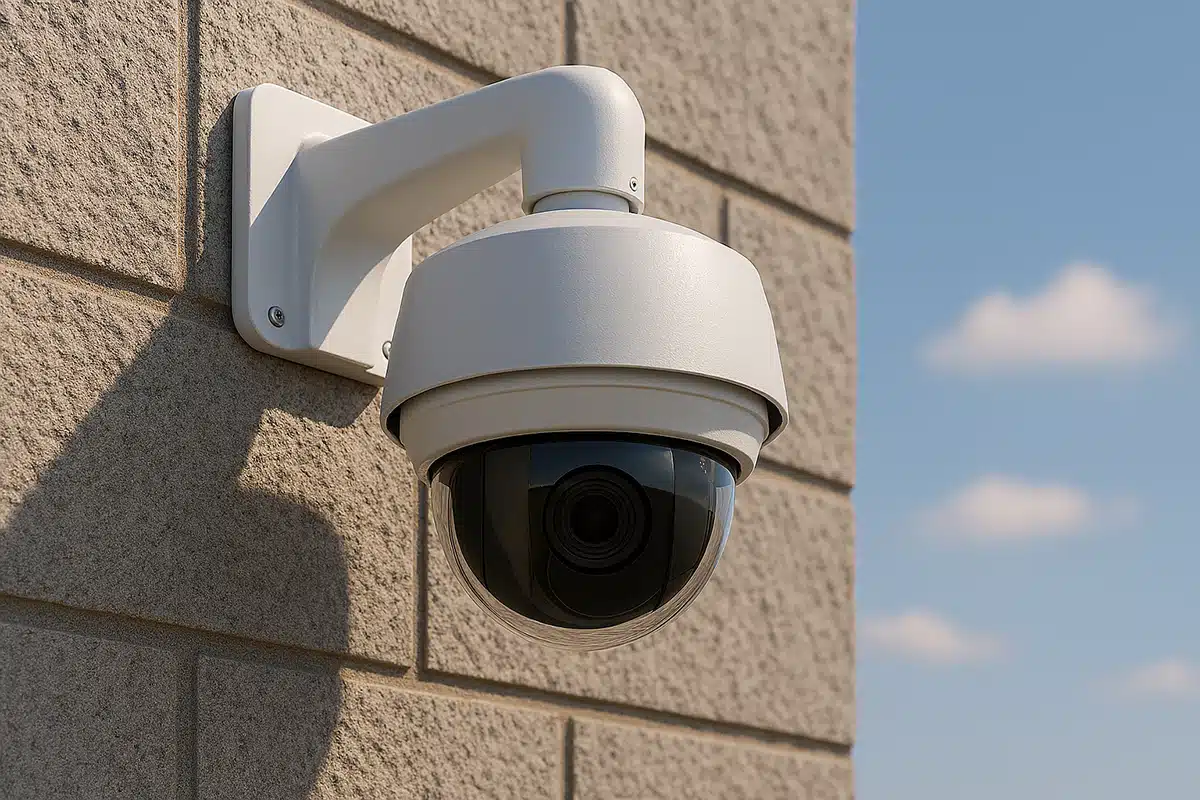
Offices and other business facilities were among the first places to get surveillance technology. For commercial facilities managers, these tools—and the high-quality images they capture—are essential. Surveillance cameras help building personnel keep tabs on entrances, high-traffic areas, storage spaces, and other key locations, simply by monitoring a video feed in an office.

This is why security experts recommend utilizing high-resolution cameras that provide clear images and video footage in a variety of lighting conditions, and work well with systems that allow for remote monitoring. Camera systems today can also be enhanced with advanced analytics software, allowing them to detect specific objects and types of potential physical threats, so they can alert security personnel before the threat is obvious.

Before installing surveillance systems in and around your facility, however, it’s essential to be familiar with state and federal laws governing workplace surveillance. Generally, employers have the right to monitor workplace activities to ensure security, but there are limits. Certain spaces, such as break rooms and restrooms, are almost universally off limits. Employers must also notify employees about the presence of surveillance technology and the extent of the surveillance.

Access Control Systems

Access control systems manage access to buildings and sensitive areas through smartphone apps, physical credentials like keycards and ID badges, or even (in particularly sensitive areas) through biometrics such as fingerprints, iris patterns, and facial features.

These systems are not restricted to doors. They can also be used to manage access to elevators, gates, lockers, and even printers. Besides preventing unauthorized people from entering your building or certain designated areas inside, the systems can also help manage visitors by setting access schedules and limits for specific groups, such as full-time employees, contractors, and vendors.

Intrusion Detection Systems

As with fire safety systems, a vital part of comprehensive building security is ensuring that any unauthorized access is detected and triggers an alarm. This serves as a deterrent to potential intruders and immediately warns facility staff, a security monitoring center, or law enforcement that there’s an intruder. Sensors can detect if doors are opened, windows are broken, or motion is detected in a particular area. Alarms can be set to silently alert security personnel, or ring loudly, alerting everyone in the vicinity of the intrusion.

A newer type of security, known as thermal perimeter detection, leverages state-of-the-art thermal imaging technology and intelligent analytics to protect facilities from intrusion, theft, and even exterior vandalism—a growing concern for some businesses.

Preventing Vandalism

Even if intruders don’t enter your facility, they can still cause extensive damage through vandalism. The Houston Chronicle reports that a single incident of vandalism costs small businesses an average of over $3,300. And organizations of all sizes are currently coping with an epidemic of copper theft from wiring and pipes. Given the high price of copper, it’s likely this metal will remain a popular target for quite some time.

How can facilities managers deal with this exterior threat?

Among steps that can be taken to prevent vandalism are installing surveillance cameras in parking lots and outdoor storage areas, ensuring that your lighting system covers these areas, and using anti-graffiti coatings on walls and other structures. Protective security patrols can also help.

Maintenance also plays a key role. Security experts warn that vandalism must be repaired quickly, as criminals look for easy opportunities, and signs of graffiti and other types of vandalism can encourage further attacks.

Improving Your Building Security

With any major project, knowing your facility’s existing condition is an essential first step. Before embarking on a building security upgrade, it’s important to conduct a comprehensive audit to identify vulnerabilities, evaluate the existing system, and uncover areas that need improvement.

Key elements of an audit include:

  • Environmental components. The facility’s location and terrain can help or hinder security. Could your existing landscaping and external design features serve as hiding places or means of access?
  • Physical barriers and access points. If the property has gates, are they secure and working properly? Can all access points—doors, windows, and turnstiles—be locked and secured? Be sure to also evaluate bollards, reinforced glass, doors, and hinges.
  • Lighting. Is everything working properly and providing adequate light? Do you have back-up lighting in case of a power failure?
  • Surveillance and intrusion detection. Do you have video cameras monitoring entrances, exits, stairwells, and other access points? Is the footage continually monitored? Do you have ID readers and sensors at all access points to detect forced entry, and are all alarms working properly and tested regularly?
  • Procedures and training. Do you have documented procedures for your program as a whole and for individual, key sectors? Do you have an ongoing training program for security staff? And do your employees understand the need for the security systems, as well as their own security obligations?
  • Emergencies. Do you have procedures in place to respond to natural disasters like fires, floods, and earthquakes, or incidents of workplace violence? In the event of an emergency, will your security personnel be immediately notified? Is there a training protocol in place to conduct regular drills and ensure that all staff know their evacuation routes, roll call practices, and emergency contacts?

An audit should provide information about the state of the systems you have in place and where security may be lacking. To optimize your audit, you may want to consult with external security experts as part of the review process.

Conducting a yearly assessment ensures that your security systems and protocols are effectively safeguarding your facility, people, and assets. Such a review might reveal a need to change safety or maintenance protocols, or invest in new technology. Keep in mind that while installing and maintaining high-quality security systems can be expensive, the cost of not doing so can be even higher.

21st Century Building Security

Unfortunately, building security threats are constantly evolving. To keep up, facility professionals must remain vigilant and be prepared to incorporate new defense protocols and technologies. Not every facility requires a Fort Knox level of security, but all facilities require a multilayered security system that reduces the likelihood of unauthorized access to the facility as a whole, as well as additional security in the interior for particularly sensitive areas.

Of course, in the 21st century, physical security is only half the battle. As every aspect of our lives becomes more intertwined with IoT technology, building cybersecurity has become just as important as physical building security—which is why it’s the topic of Part Two of this series.  

Your Partner in Building Safety

If you need to upgrade your facility’s infrastructure, PRIDE Industries can help. We bring decades of expertise in maintenance, engineering services, and facilities management to every customer we serve. Our comprehensive programs, combined with solutions-oriented management, enable us to deliver exceptional results every day to over 140 million square feet of facilities, from commercial and government buildings to medical centers and manufacturing plants. Contact us to learn what we can do for you.

Over the past several years, a series of new technologies has revamped manufacturing and led to the creation of the smart factory. Now, similar technologies are remaking the logistics side of the manufacturing process, leading to the creation of the smart warehouse. Smart warehousing uses automation, real-time data, and interconnected systems to manage the storage and flow of materials and products—creating another way for companies to wring more efficiency from the manufacturing process.

What Is a Smart Warehouse?

Traditionally, warehouses have relied on manual labor, paper-based records, and reactive workflows. These old-school methods often led to slower processes, more errors, and the inability to pivot quickly when change became necessary.

Not only does a smart warehouse automate your inventory tracking, but it can also help accurately forecast the inventory you need.

Enter the smart warehouse. This technology-driven facility is more than just a modern storage space. It improves on traditional warehousing processes by automating tasks, providing critical data in real time, and streamlining operations. A smart warehouse is particularly efficient at managing inventory and supply chain operations using state-of-the art technology and processes like RFID tags, demand forecasting, AI, and automated workflows.

Smart warehouses are transforming how manufacturers store and move inventory, particularly in electronics and other high-value sectors where speed, precision, and visibility are critical. At the center of these facilities are automated storage and retrieval systems (AS/RS), which streamline material handling by locating and transporting items with accuracy and speed. For manufacturers managing thousands of SKUs, this reduces picking errors while improving throughput.

Supporting these systems are Internet of Things (IoT) sensors, which continuously monitor conditions such as temperature and humidity. This is especially important for sensitive components like semiconductors or PCBs, where even minor environmental fluctuations can cause damage. By maintaining strict oversight of climate conditions in real time, manufacturers can safeguard product integrity and reduce costly scrap or rework.

Another essential layer of smart warehouse operations comes from robots. Whether moving pallets, performing repetitive picks, or handling tasks considered risky to human operators, robots can improve efficiency while enhancing worker safety. Their ability to take on high-volume, routine jobs also allows employees to focus on higher-value activities. And for tasks that still require human judgement, cobots—collaborative robots designed to work with humans—are making it possible for workers to produce more than ever before.

Tying these technologies together is the warehouse management system (WMS). By coordinating inventory flow, worker assignments, and robotic activity, the WMS ensures seamless integration across the warehouse, enabling a more agile, responsive manufacturing supply chain.

Key Benefits of a Smart Warehouse

Perhaps no company is more associated with warehouses than Amazon. So it’s worth noting that the company has invested heavily in robotics, AI, and connected systems. These investments have enabled the retail giant to optimize its fulfillment centers around the world—enabling faster order fulfillment, fewer errors, and enhanced scalability.  But you don’t need to be a Fortune 500 company to benefit from a smart warehouse. Here are just some of the aspects of supply chain management that are enhanced by smart warehousing.

Improved Risk Management

According to McKinsey, over the course of a decade the average organization loses 45% of one year’s profits due to supply chain disruptions. A smart warehouse can improve these numbers by providing real-time monitoring and visibility across inbound and outbound flows. By identifying bottlenecks, disruptions, and anomalies early in the supply chain, companies can save time and money, and avoid unnecessary complications. For example, many manufacturers are now using real-time data, combined with AI-enhanced analytics, to mitigate risks from natural disasters and geopolitical disruptions.

Better Demand Planning and Inventory Control

Not only does a smart warehouse automate inventory tracking, it can also help accurately forecast inventory needs. By continuously analyzing past sales and industry trends, manufacturers can align product inventory with variable customer demand. These analytics-based adjustments to procurement and production schedules enable companies to streamline operations and lower costs.

Improved Order Fulfillment

Warehouse robots are no longer just unaware pallet movers. Modern robots, equipped with sensors and processing power, can now optimize their pathways across the warehouse, avoiding obstacles and following the shortest, safest path to their destination. This flexibility greatly improves order fulfillment. For example, according to Mind Studios (an international software engineering company), a smart warehouse can reduce pick-up time—the amount of time it takes to retrieve items from storage after order placement—by up to 50 percent.

Smart warehouses can also improve customer satisfaction by shortening product lead times. According to the Material Handling Institute, facilities that use warehouse robots have up to three times greater operational throughput (the number of finished items delivered over a given timeframe) compared to facilities without robots. Increased production and speed, however, are of little value if accuracy suffers. Fortunately, vision systems—an integral part of most smart warehouses—have been shown to significantly improve accuracy in order fulfillment.

Efficient Reverse Logistics

Using radio waves, RFID tags send item information to a scanner without direct contact. While this smart technology is primarily used to track products throughout production, storage, and distribution, it can also help with reverse logistics. The right software and systems can provide accurate, real-time tracking of your returns, and update the inventory database with any given product’s new location and status. Additionally, a smart warehouse enables the easy inspection of returned goods, streamlining the returns process and improving customer loyalty.

Other Major Benefits

The benefits of smart warehousing extend beyond storage, fulfillment, and shipping, and positively impact other aspects of warehouse operations as well, including:

  • Reduced waste, leading to cost savings
  • The ability to scale as needed for unexpected or seasonal demand
  • Improved energy efficiency
  • Improved regulatory compliance with automated reporting

In addition to improving logistics operations, smart warehouse technologies can also improve the operations of the warehouse facility itself. For example, smart technologies can automatically adjust lighting depending on occupancy or time of day, and track people entering or exiting the facility.

In a warehouse setting, a man wearing a hardhat and a yellow vest grabs his back in pain.
By reducing physical tasks, smart warehouses can help companies retain long-term employees and their valuable industry knowledge.

The Human Component

Transforming your facility into a smart warehouse does not mean eliminating humans.

The 2024 MHI Annual Industry Report, issued by MHI and Deloitte, concluded that new forms of AI work best when they are used to enhance and extend a human worker’s capabilities, enabling them to be productive and make better decisions. “The focus on technology in supply chains is undeniable. But supply chains are run by people, and human-centricity is the key,” said John Paxton, CEO of MHI.

Here are five ways that AI in a smart warehouse can enhance a worker’s productivity and improve the warehouse environment:

From Reactive to Proactive

Even a smart warehouse will experience disruptions. However, AI can allow warehouse workers to see a problem before it impacts operations. The ability to foresee and prevent issues elevates workers into more strategic roles. For example, a maintenance technician armed with AI-powered tools that predict necessary maintenance could schedule maintenance during downtime, rather than responding to an unexpected crisis during peak production hours. Not only does a proactive approach improve operations, it also creates a less stressful work environment for warehouse staff.

From Manual Entry to Smart Data Analysis

With a smart warehouse, workers are freed from the tedious job of logging inventory transactions. Instead, this information is captured by AI-powered systems automatically, freeing up warehouse staff to analyze and act on the data. For example, instead of transcribing shipment details, staff can use that time to analyze operational patterns and determine the source of any inventory anomalies identified by smart technology.

Reduced Physical Demands/Upskilled Opportunities

Historically, warehouse workers have retired young, due to the physical demands of their job. Today, a smart warehouse can eliminate many of the arduous physical tasks previously performed by workers. By reducing the physical toll workers face, companies with smart warehouses are better able to retain long-term employees with valuable industry knowledge. Instead of losing high-value employees, manufacturers can retrain them to oversee the robotic systems that now handle the physically demanding tasks they once did.

This dramatic shift away from manual labor is creating roles that are more technical, analytical, and supervisory. For example, in an electronics manufacturing smart warehouse, robotics process coordinators oversee robot integration, while AI/machine learning specialists develop algorithms to automate inventory and workflows.

Cross-Functional Collaboration

Traditionally, workers in warehouses have operated in silos with limited collaboration. Now smart warehouse systems are enabling greater collaboration across teams, leading to better problem-solving and improved employee morale.

Improved Safety

In today’s smart warehouse, specialized robots designed to work alongside humans, cobots, are taking over the hazardous, repetitive, and physically demanding tasks once performed by humans. This transition has significantly reduced the risk of workplace injuries, such as those caused by heavy lifting or other demanding physical tasks. According to SafetyIQ, a workforce safety software provider, using cobots can reduce workplace injuries by up to 72 percent.

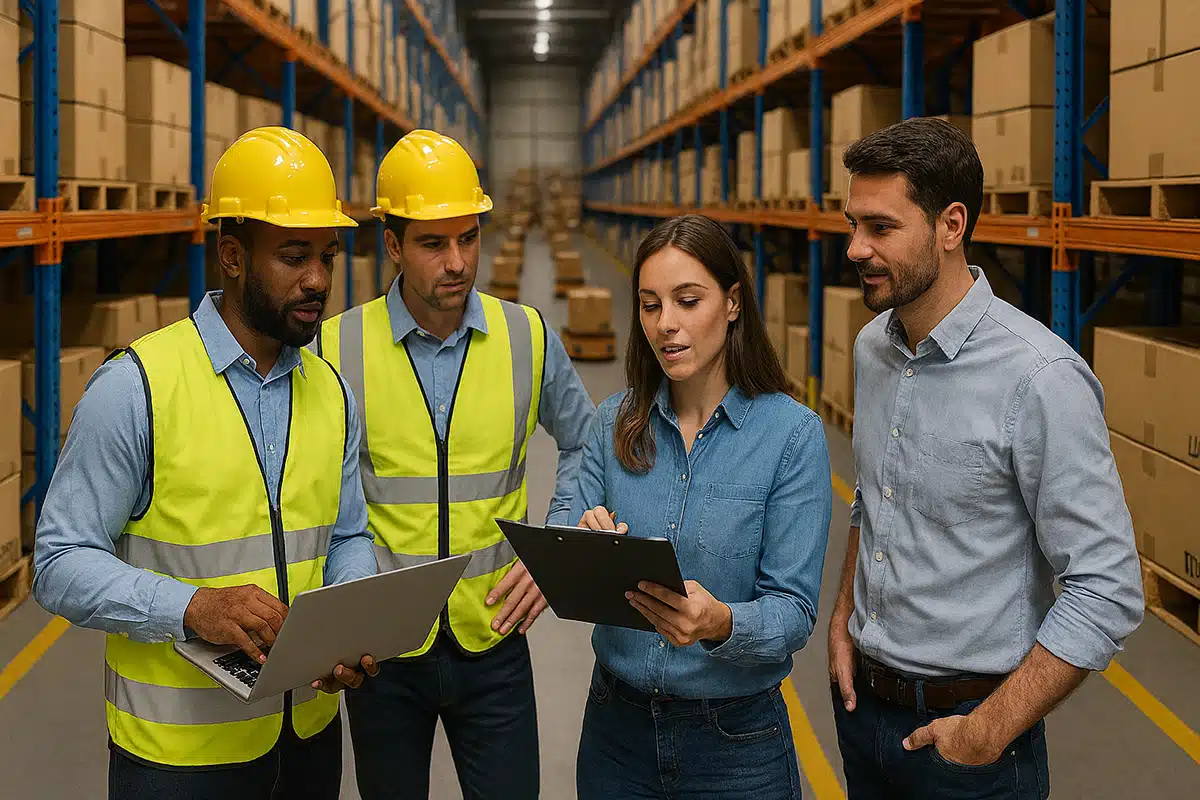
Inside a warehouse, two men in hardhats and vests talk with a woman and a man in plain clothes, while they all look at a clipboard the woman is holding.
A smart warehouse can promote greater collaboration across teams.

Transitioning to a Smart Warehouse

The many tangible benefits of a smart warehouse are causing manufacturers to take notice. According to the MHI report, 55 percent of supply chain leaders are increasing their supply chain technology and innovation investments; 88 percent of these executives plan to spend over $1 million in the near future, and within that group, 42 percent plan to spend over $10 million.

Before spending significantly on smart warehouse technologies, however, it’s imperative to have a plan. Transforming a traditional warehouse into a smart, technology-driven space is a big task that requires careful preparation and execution. Here are a few steps to keep in mind.

Assessment

Your first step should be to evaluate your current warehouse processes to identify inefficiencies, pinpoint bottlenecks, and decide where automation can provide the most value. For example, look for processes where errors are common or insufficient data is leading to poor decisions. Your smart warehouse transformation goals should be specific and realistic. For example, are you trying to improve order accuracy, component quality, or lower costs? You may have multiple goals, but it is critical to prioritize. Clearly defining your goals and your priorities will give you direction for the decisions that follow, including selecting the appropriate technology.

Technology/System Selection

Once you have a plan, you can begin to evaluate technology and systems. Start by understanding the available technology. For example, there are AI tools that enable accurate demand forecasting. Since you likely won’t be replacing 100 percent of the systems you currently have, be careful to determine which new systems and technology are compatible with your existing warehouse management systems and technology. Also, remember that the perfect solution today may be outdated tomorrow, so build adaptability and flexibility into your decisions.

Deployment

A successful transformation requires a deployment plan, including a timeline for rollout. The plan should be built with input from all stakeholders, including operations, IT, and warehouse staff. Taking a collaborative approach at the planning stage means that roles will be more easily understood when it comes time for deployment.

Even with a detailed plan, hiccups will inevitably occur with your deployment. So, before rolling out your new systems and technologies, pilot them in a small area. A measured approach of gradually layering in technology not only makes it easier to pivot, it also maximizes your ROI. And be sure to build a small cushion into your budget for unforeseen developments.

Training

Your transformation will bring new roles, workflows, and system interfaces. For a smooth adoption with minimal disruptions, be sure to support your employees throughout the process with a cohesive training program that includes hands-on workshops, help desks, and real-life simulations. Prioritizing change management—helping people adapt and feel comfortable with change—will pay dividends in the long run.

Continuous Monitoring and Adaptation

Your transformation isn’t a static process. You should continuously gather data and analyze it, using that information for continual improvement. Fortunately, in a smart warehouse, advanced technologies such as RFID tags, IoT-enabled sensors, and centralized warehouse management systems make it easy to continuously monitor inventory, equipment, and environmental conditions in real time.

A Strategic Journey

With a smart warehouse, electronics manufacturers can unlock major benefits: real-time visibility, better risk management, accurate demand planning, faster fulfillment, and a safer, more productive workplace. However, your smart warehouse transformation must go beyond just installing new machines or software—it’s a strategic journey requiring clear goals, careful planning, strong change management, and a culture of continuous improvement. The work is significant, but so is the payoff—a warehouse solution that’s highly efficient, resilient, and scalable.

Your Smart 3PL Partner

Looking to level up your warehousing? PRIDE Industries has more than 30 years of logistics experience. Our in-house technical engineers and dedicated supply chain managers deliver tailored, tech-driven solutions across multiple industries. Contact us today to learn about our cost-effective supply chain solutions.