
This is Part One of a two-part series on ways to enhance facility security. This blog focuses on building security as regards physical infrastructure. For an overview of protocols and digital tools for securing the IoT devices within facilities, read Part Two.
Physical security is a basic human need. In our personal lives, we lock our doors, check expiration dates, and make sure our children are secure in their car seats. The same need for security exists at our workplaces. We want to protect against intrusion, theft, vandalism, and workplace violence. Fortunately, there is a wide range of building security tools available for today’s facilities managers.
Experts group security tactics into five areas, often referred to as the five D’s—deter, detect, delay, deny, and defend. The most secure buildings have tools in place to perform each of these functions:
Not every facility needs a Fort Knox level of security, but all facilities require a multilayered security system that reduces the chance of unauthorized access.
- Deter. Bright lights, signage announcing the use of security cameras, and similar tactics can discourage potential threats.
- Detect. Alarm systems allow security staff to quickly respond to a breach.
- Delay. Physical barriers and access control mechanisms can impede intruders and provide additional time for security or law enforcement personnel to respond to incidents.
- Deny. Passcodes and biometric access control can prevent intruders from gaining access to sensitive areas or valuable assets.
- Defend. Comprehensive training programs can prepare facility staff to respond effectively and quickly before law enforcement arrives.
Every facility is unique, and its building security needs are as well. Here’s a look at some important factors to consider when seeking to make your facility more secure.
Perimeter Security
When devising a plan to improve building security, one of the first areas to focus on is your facility’s perimeter. A well-designed perimeter can keep unwanted visitors from gaining access to your facility in the first place, which is why it’s important to consider security goals when planning or redesigning the exterior of your buildings.
For example, if your facility has outdoor storage or equipment areas, electrified security fences can be effective in preventing theft and vandalism.
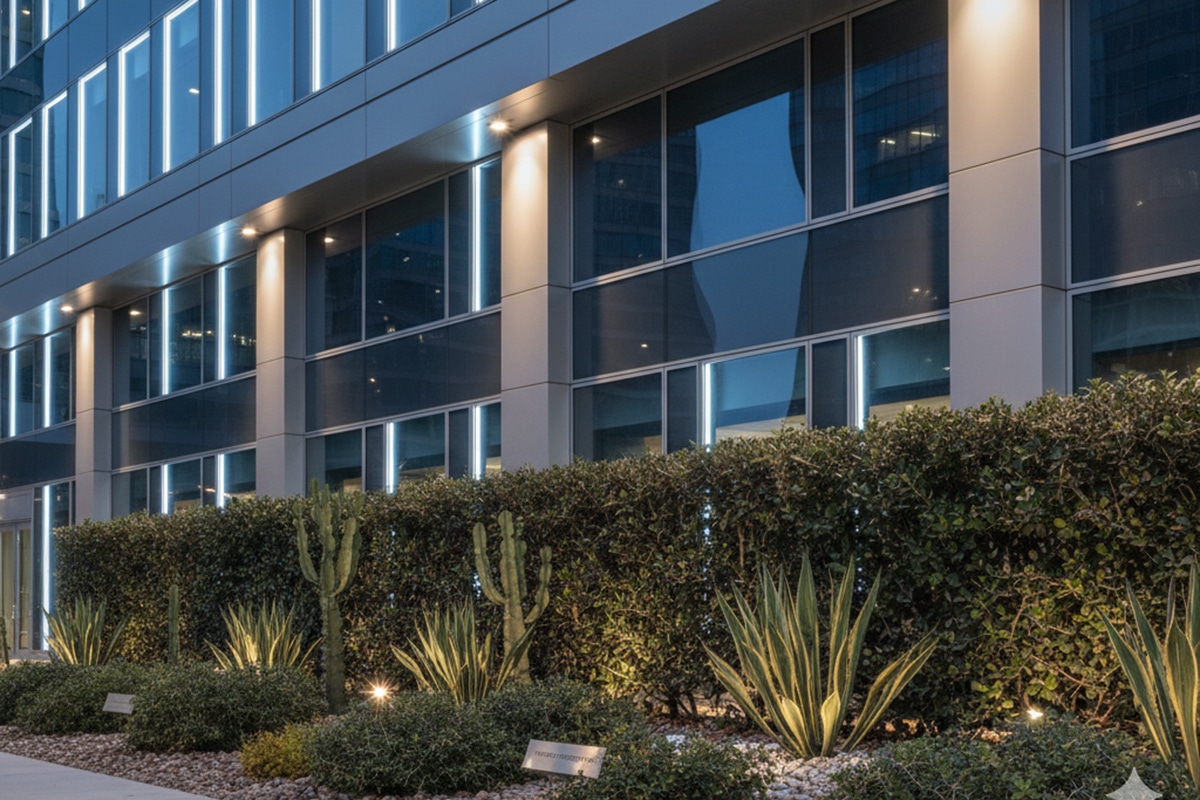
Of course, it doesn’t make sense to erect electrical fencing around office, medical, and many other types of buildings. But that doesn’t mean they can’t be fortified through the design choices you make. Architectural and landscape design that factors in security concerns will maximize visibility, remove potential hiding places, and establish designated entry points that can be easily monitored. Security-based designs also call for uniform lighting to illuminate walkways and entry points.
Building Security Upgrades
Upgrading existing facilities can require a different approach. If your facility has large ground-level windows, for example, you may want to add security bollards to prevent vehicles from gaining entry by ramming through windows. Fortunately, today’s bollards come in a variety of styles and sizes; and whether a metal pole or a concrete structure, many bollards can serve a dual purpose—as a decorative planter, for example. This allows you to add security without sacrificing aesthetics.
Even smaller windows can make a commercial building vulnerable, if they’re easily broken and large enough for an intruder to slip through. One easy and fairly inexpensive way to protect these windows is to add security bars or grilles. These deterrents can be customized and are highly effective at keeping intruders out.
But grillwork has its disadvantages, and perhaps the primary one is simply that these additions can be unattractive and make buildings look less inviting to visitors. Bars and grilles can also prevent firefighters from accessing a building—a serious safety issue. They also don’t work well on historic buildings.
For these reasons, facilities managers are turning to more aesthetically pleasing solutions, like window security film. Nearly invisible to the naked eye, this film is typically applied to the inside of a window, and serves two important security functions. It can help prevent flying glass shards from forced entry, vandalism, and even explosions. Window film can also delay intruders, helping to protect occupants (and assets) and giving police and security personnel additional response time.
Doors that Enhance Building Security
The type of doors used in your facility can also have a big impact on safety. Fortunately, there are even more safety options with doors than with windows. Security doors are available in wood, metal, and even reinforced glass. And all of these materials are available with different levels of strength. So, for example, you can choose metal-core doors for exterior purposes, and stick with plain wood for interior doors. There are specialized doors that can resist fire or gunshots, and some doors can shield against radiation—making them ideal for laboratories, data centers, and other sensitive areas.
Compared to reinforced security doors, traditional glass doors provide significantly less protection. Nevertheless, glass can be an appropriate material for low-security applications such as lockable office doors, where appearance is the biggest concern.
But even with glass doors, electric or magnetic strike locks are a must to achieve a reasonable level of security. In addition, doors and locks should be combined with access control systems, security cameras, sensors, and alarms to fully protect a facility.
Lighting and Environmental Design
Lighting and environmental design determine how your buildings look from the street. In many ways, they are your facility’s aesthetic. But these two elements also play an important role in building security.
Lighting is particularly important from a security standpoint. In a randomized controlled study of 80 public housing developments with elevated crime levels in New York, about half received new, temporary street lights and half did not. The study’s authors found that developments that received the new lights experienced crime rates significantly lower than predicted by past history.
Proper outdoor lighting not only deters antisocial behavior, it also makes your cameras and physical security more effective and provides an additional element of protection that helps secure every corner of your property. And these improved security results can be obtained without keeping the lights on 24/7. Motion sensors ensure that lights come on only when needed, saving energy—and even taking a potential intruder by surprise.
Well-planned exterior lighting is such an effective security tool that it’s included as a key component of Crime Prevention Through Environmental Design (CPTED, often pronounced “sep-ted”). CPTED is a multi-disciplinary approach to building security that leverages architectural design along with careful management of built and natural environments to achieve high levels of security at a reasonable price. The basic principles of CPTED include:
- Natural Surveillance – using good lighting and trimmed landscaping to increase visibility.
- Natural Access Control – directing people and vehicles through designated areas.
- Territorial Reinforcement – personalizing areas with gardens or artwork to signal ownership.
- Regular Maintenance – keeping spaces well-maintained in order to signal constant occupancy and vigilance.
Technology Plays a Key Role in Building Security
Doors, locks, and other physical barriers are the elementary building blocks of building security. But for higher-level security you need to incorporate technology-based systems—for surveillance, access control, and intrusion alarms—to provide truly comprehensive security. As with all things technological, these systems have grown more sophisticated in recent years.
Surveillance Systems
Surveillance cameras are everywhere. Video doorbells and dash cams can be found all around the world, in major urban areas like London and New York, in suburban areas across the country, and even in rural towns. And this is especially true for commercial buildings.
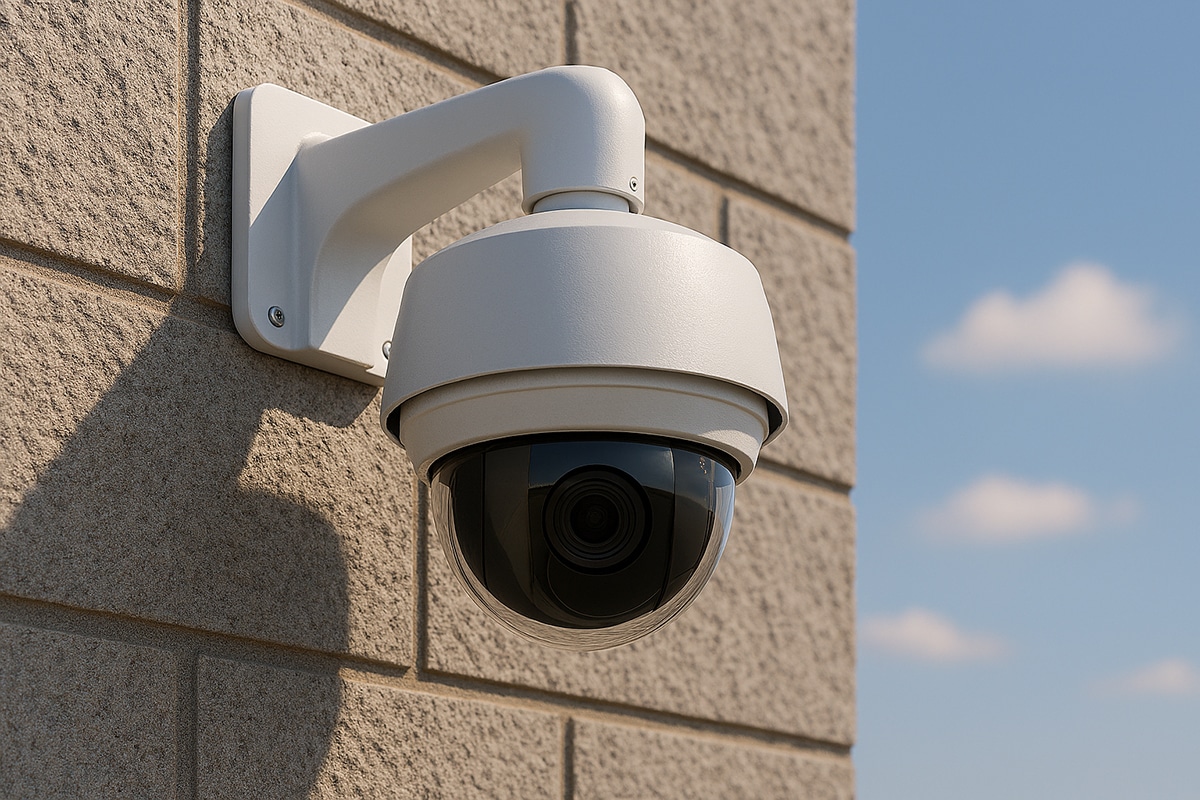
Offices and other business facilities were among the first places to get surveillance technology. For commercial facilities managers, these tools—and the high-quality images they capture—are essential. Surveillance cameras help building personnel keep tabs on entrances, high-traffic areas, storage spaces, and other key locations, simply by monitoring a video feed in an office.
This is why security experts recommend utilizing high-resolution cameras that provide clear images and video footage in a variety of lighting conditions, and work well with systems that allow for remote monitoring. Camera systems today can also be enhanced with advanced analytics software, allowing them to detect specific objects and types of potential physical threats, so they can alert security personnel before the threat is obvious.
Before installing surveillance systems in and around your facility, however, it’s essential to be familiar with state and federal laws governing workplace surveillance. Generally, employers have the right to monitor workplace activities to ensure security, but there are limits. Certain spaces, such as break rooms and restrooms, are almost universally off limits. Employers must also notify employees about the presence of surveillance technology and the extent of the surveillance.
Access Control Systems
Access control systems manage access to buildings and sensitive areas through smartphone apps, physical credentials like keycards and ID badges, or even (in particularly sensitive areas) through biometrics such as fingerprints, iris patterns, and facial features.
These systems are not restricted to doors. They can also be used to manage access to elevators, gates, lockers, and even printers. Besides preventing unauthorized people from entering your building or certain designated areas inside, the systems can also help manage visitors by setting access schedules and limits for specific groups, such as full-time employees, contractors, and vendors.
Intrusion Detection Systems
As with fire safety systems, a vital part of comprehensive building security is ensuring that any unauthorized access is detected and triggers an alarm. This serves as a deterrent to potential intruders and immediately warns facility staff, a security monitoring center, or law enforcement that there’s an intruder. Sensors can detect if doors are opened, windows are broken, or motion is detected in a particular area. Alarms can be set to silently alert security personnel, or ring loudly, alerting everyone in the vicinity of the intrusion.
A newer type of security, known as thermal perimeter detection, leverages state-of-the-art thermal imaging technology and intelligent analytics to protect facilities from intrusion, theft, and even exterior vandalism—a growing concern for some businesses.
Preventing Vandalism
Even if intruders don’t enter your facility, they can still cause extensive damage through vandalism. The Houston Chronicle reports that a single incident of vandalism costs small businesses an average of over $3,300. And organizations of all sizes are currently coping with an epidemic of copper theft from wiring and pipes. Given the high price of copper, it’s likely this metal will remain a popular target for quite some time.
How can facilities managers deal with this exterior threat?
Among steps that can be taken to prevent vandalism are installing surveillance cameras in parking lots and outdoor storage areas, ensuring that your lighting system covers these areas, and using anti-graffiti coatings on walls and other structures. Protective security patrols can also help.
Maintenance also plays a key role. Security experts warn that vandalism must be repaired quickly, as criminals look for easy opportunities, and signs of graffiti and other types of vandalism can encourage further attacks.
Improving Your Building Security
With any major project, knowing your facility’s existing condition is an essential first step. Before embarking on a building security upgrade, it’s important to conduct a comprehensive audit to identify vulnerabilities, evaluate the existing system, and uncover areas that need improvement.
Key elements of an audit include:
- Environmental components. The facility’s location and terrain can help or hinder security. Could your existing landscaping and external design features serve as hiding places or means of access?
- Physical barriers and access points. If the property has gates, are they secure and working properly? Can all access points—doors, windows, and turnstiles—be locked and secured? Be sure to also evaluate bollards, reinforced glass, doors, and hinges.
- Lighting. Is everything working properly and providing adequate light? Do you have back-up lighting in case of a power failure?
- Surveillance and intrusion detection. Do you have video cameras monitoring entrances, exits, stairwells, and other access points? Is the footage continually monitored? Do you have ID readers and sensors at all access points to detect forced entry, and are all alarms working properly and tested regularly?
- Procedures and training. Do you have documented procedures for your program as a whole and for individual, key sectors? Do you have an ongoing training program for security staff? And do your employees understand the need for the security systems, as well as their own security obligations?
- Emergencies. Do you have procedures in place to respond to natural disasters like fires, floods, and earthquakes, or incidents of workplace violence? In the event of an emergency, will your security personnel be immediately notified? Is there a training protocol in place to conduct regular drills and ensure that all staff know their evacuation routes, roll call practices, and emergency contacts?
An audit should provide information about the state of the systems you have in place and where security may be lacking. To optimize your audit, you may want to consult with external security experts as part of the review process.
Conducting a yearly assessment ensures that your security systems and protocols are effectively safeguarding your facility, people, and assets. Such a review might reveal a need to change safety or maintenance protocols, or invest in new technology. Keep in mind that while installing and maintaining high-quality security systems can be expensive, the cost of not doing so can be even higher.
21st Century Building Security
Unfortunately, building security threats are constantly evolving. To keep up, facility professionals must remain vigilant and be prepared to incorporate new defense protocols and technologies. Not every facility requires a Fort Knox level of security, but all facilities require a multilayered security system that reduces the likelihood of unauthorized access to the facility as a whole, as well as additional security in the interior for particularly sensitive areas.
Of course, in the 21st century, physical security is only half the battle. As every aspect of our lives becomes more intertwined with IoT technology, building cybersecurity has become just as important as physical building security—which is why it’s the topic of Part Two of this series.