Our Stories

A hundred years ago, indoor air quality solutions were easy to come by. Occupants of commercial buildings could access fresh air by simply opening a window. But as commercial buildings have changed, so has the concern about the air circulating inside these buildings.

When Honeywell surveyed 3,000 office workers in 2022, it found that 72% worried about air quality in their buildings, 90% wanted to be kept informed about indoor air quality (IAQ), and 62% would consider leaving a job if their employer failed to create a healthier indoor environment. The widespread concern regarding indoor air quality is shared by regulatory bodies as well. Standards and frameworks such as ASHRAE 62.1 and WELL are tightening expectations around ventilation, filtration, and continuous IAQ monitoring, raising the bar for compliance and documentation.

New indoor air quality solutions make it possible to not only meet, but exceed, even the most stringent regulatory requirements.

In today’s business environment, indoor air quality solutions are a top concern at many companies. Fortunately, by following best practices, it’s possible for facilities managers to meet these heightened expectations. By proactively managing IAQ, facilities teams can reduce risk, support regulatory readiness, and unlock advantages like higher occupant satisfaction and a more resilient building portfolio.

Common Indoor Pollutants

When the ventilation, filtration, or humidity control is not working well in a commercial space, indoor air quality can be compromised by a handful of common pollutants:

  • Particulate Matter (PM): Particulates may include dust, smoke, pollen, and other small solid or liquid particles that can be inhaled and cause health problems, such as worsening asthma or cardiovascular issues.
  • Volatile Organic Compounds (VOCs): These are airborne chemicals emitted from building materials (for example, paint), furnishings, and cleaning products. In addition to eye, nose, and throat irritation, long-term exposure to VOCs may increase the risk of cancer.
  • Biological Contaminants: Mold, bacteria, viruses, and dust mites can trigger allergies, asthma attacks, and other health issues. Biological contaminants often thrive when humidity control systems are not functioning properly.
  • Carbon Dioxide (CO2): At typical indoor levels, CO2 is not toxic. However, with inadequate ventilation, it can become elevated and cause drowsiness and impaired thinking.

In the U.S., the primary organization setting IAQ standards is the American Society of Heating, Refrigerating and Air-Conditioning Engineers (ASHRAE). The most significant ASHRAE standard related to commercial buildings is ASHRAE Standard 62.1.

Another important regulatory body is the Occupational Safety and Health Administration (OSHA), which is charged with ensuring safe and healthful working conditions. While OSHA does not have specific IAQ standards, it does set ventilation standards as well as standards surrounding some of the air contaminants that are often involved in IAQ problems.

IAQ guidance can also vary by state. For example, California has introduced assembly bills in recent years targeting indoor air quality at schools and workplaces. Additionally, California has a Green Building Standards Code, which establishes enhanced ventilation and pollutant control measures.

Other associations weighing in may include the Environmental Protection Agency (EPA), the Centers for Disease Control (CDC), the International WELL Building Institute (IWBI), and Leadership in Energy and Environmental Design (LEED).

Indoor Air Quality Solutions Through Technology

With so many organizations making recommendations and setting standards for IAQ, it can be a challenge to ensure that facilities meet all applicable requirements. Fortunately, new indoor air quality solutions are making it possible to not only meet, but exceed, even the most stringent regulatory requirements. These technologies make it easier than ever before to detect, block, and eliminate pollutants.

Detection and monitoring

The days of “set-and-forget” technology are over. Modern HVAC systems are evolving into active, data-driven platforms. Integrated into building management systems (BMS) and IoT platforms, these systems can sense, interpret, and respond to conditions in real-time. They are capable of monitoring CO2, total VOCs, and PM—often in one housing unit that also monitors temperature and humidity.

Filtration and Purification

Filtration is key to blocking pollutants from entering rooms and hallways. The use of high-efficiency filters (ideally, MERV 13 or higher) ensures that small particles like pollen, dust, and germs are captured before they can cause problems. And disinfection technologies like ultraviolet-C light (UV-C) can be used to inactivate airborne pathogens and reduce microbial growth on coils and other surfaces.

By combining mechanical, passive filtration (like activated carbon and HEPA) with active technology (such as ionization and oxidation), facility managers can take a more balanced, proactive approach to indoor air quality. And integrating AI into building management systems enhances these indoor air quality solutions even further by optimizing the balance of filtration and active purification based on real-time sensor data.

Close-up of a mold infestation on a ceiling of a commercial building.
Mold, bacteria, viruses, and dust mites can trigger allergies, asthma attacks, and other infections.

Pollutant Neutralization

Newer technology goes beyond capturing pollutants to actively destroy these harmful substances. For example, photocatalytic oxidation (PCO) systems use UV light with a catalyst, such as titanium dioxide, to break down microbes and VOCs into a harmless mixture of carbon dioxide and water. Another approach, bipolar ionization, works by attaching to airborne particles to neutralize harmful viruses, bacteria, and some chemicals—all without producing harmful ozone. 

As powerful as the above technologies are, ultimately they’re most effective when used as part of a comprehensive program. It’s also important to note that technology is only part of the solution. With that in mind, here are six best practices to help you get the most from the indoor air quality solutions you choose to use.

Control Pollution Sources

Less pollution created in and around a building means less pollution to filter, remove, and control. Prohibiting indoor smoking and addressing water leaks that can cause mold are obvious ways to cut down on pollutants. Likewise, low-VOC cleaning agents and paints are widely available to help address indoor air quality.

While some sources of pollutants are obvious, others are not. Frequently overlooked VOC sources include the adhesives, stains, varnishes, and composite wood often found in office furniture. Furniture made with pressed wood or treated with oil-based coatings is especially concerning, as it tends to off-gas higher levels of VOCs, including formaldehyde, benzene, toluene, and xylene. While these emissions gradually decrease over time, they can pose health risks in poorly ventilated indoor environments.

For these reasons, the American Lung Association recommends choosing solid wood furniture over pressed-wood furniture. If a company does choose pressed-wood furniture, carpet with flame-retardant materials, or other items containing VOCs, experts recommend unwrapping these items and letting them air out for a week or more before introducing them indoors.

Certain sources of pollution are unique to specific industries. For example, an electronics manufacturing facility may have indoor pollutants from soldering fumes, and a medical laboratory may have VOC pollution from formaldehyde and other chemicals.

Upgrade HVAC Systems

It’s crucial to regularly maintain and update a building’s heating, air conditioning, and ventilation systems. This includes routine duct cleaning and inspection, professional cleaning of components (coils, pans, blowers, etc.), and regular filter replacement. Keep in mind that if you choose to use higher-efficiency filters, you will likely need to change them more often compared to MERV filters with lower ratings. The finer filtration of high-efficiency filters traps more particles, but this quality also leads to faster clogging.

Ensure Adequate Ventilation

According to ASHRAE, enclosed spaces increase the spread of infection. Fortunately, fresh air can greatly mitigate this risk. Improved ventilation can often be achieved through simple steps, such as opening windows when the weather allows (if windows can be opened), adjusting mechanical systems for higher fresh air intake, or using an energy recovery ventilator. These ventilators improve air by exchanging stale indoor air with fresh outdoor air while also transferring heat and moisture. A system using these ventilators can prove highly efficient in winter by recovering heat from the outgoing warm indoor air and using it to preheat incoming cold air. In summer, the process is reversed—the coolness of the outgoing air is captured to pre-cool hot incoming air.

Photocatalytic oxidation (PCO) systems use UV light to break down microbes and VOCs.

Monitor Humidity and Dangerous Gases

Just as temperature must be continuously monitored, so should humidity. The EPA recommends maintaining indoor humidity levels between 30% and 50%. A humidity level above 50% promotes the growth of mold, which can damage building materials and lead to serious health issues for building occupants. Below are just a few of the risks associated with excess moisture:

  • Absenteeism due to illnesses such as asthma
  • Reduced employee productivity due to uncomfortable environments
  • Damaged furniture or supplies
  • Loss of building space during damage repair
  • Increased insurance and litigation costs related to moisture damage claims

In addition to controlling humidity, it’s important to monitor for gases that are known to cause health issues. These include carbon dioxide, particulate matter (PM 2.5 and PM10), and volatile organic compounds. Out-of-bound readings should be addressed immediately, even if that requires occupants to exit the building. Fortunately, modern systems provide real-time alerts that usually enable facility managers to detect problems long before occupants are impacted.

Partner with Building Occupants

Regular communication with building occupants is essential for maximizing indoor air quality solutions. Informing occupants about IAQ initiatives, maintenance schedules, and air quality test results is an excellent way to build trust. So is documenting and addressing any building concerns raised by occupants. Including building occupants in this way gives them a sense of ownership that makes them less likely to behave carelessly, for example by blocking vents or damaging a shared space. They’ll also be more likely to respect nonsmoking areas, and to report leaks, odors, or other issues that affect air quality.

Conduct Regular Audits and IAQ Assessments

Although an indoor air quality audit is not always part of a standard facility condition assessment (FCA), many organizations add this audit to the FCA process—especially to address recent regulatory compliance updates, occupant complaints, or as part of sustainability and health initiatives. The typical steps of an indoor air quality audit include:

Background Evaluation: Review occupant complaints and health concerns, maintenance records, and the building’s history.

Inspection: Walk through the facility and seek to identify possible sources of indoor air pollution, such as chemicals, mold, moisture, or emissions.

Ventilation Systems Evaluation: Evaluate the operation and conditions of the facility’s HVAC systems, including filters, ductwork, outside air intakes, and exhaust vents.

Testing: Test air samples for temperature, humidity, and the presence of pollutants—such as carbon dioxide, VOCs, and particulates—to identify areas of concern.

Data Analysis: Compare collected data with ASHRAE, OSHA, and EPA guidelines to diagnose problems.

Mitigation: Develop appropriate indoor air quality solutions such as system upgrades or other corrective actions.

Indoor Air Quality Solutions Require a Proactive Approach

Achieving superior air quality in commercial facilities requires a multi-pronged approach, one that includes proactive strategies and maintenance. It’s important to tackle obvious pollutant sources, such as smoking and chemicals, as well as not-so-obvious sources, like VOCs from furnishings and biological contaminants from poor humidity control. Common pitfalls—such as “set-and-forget” HVAC systems, irregular filter changes, and a lack of occupant involvement—can inhibit your attempts to improve the environment. Following the best practices outlined here, on the other hand, makes it easy to avoid these pitfalls and maximize the indoor air quality solutions you choose to implement. Facility managers who keep up with the latest regulations and technology can breathe a (clean) sigh of relief, knowing they are improving the health of building occupants—and their company’s bottom line.

Your Partner for ASHRAE-Compliant Indoor Air

Don’t let poor indoor air quality silently undermine your facility and jeopardize the health and productivity of its occupants. At PRIDE Industries, we have more than 35 years of HVAC and building maintenance experience. We can bring the right indoor air quality solutions to your facility, while making the most of your current systems.

Seventy years ago, doctors relied on crude, reusable steel needles and glass syringes that had to be boiled between patients—a far cry from today’s precision-engineered devices and smart, sensor-enabled tools. That evolution has transformed everything from cardiac care to minimally invasive surgery, but it has also come with a skyrocketing volume of single-use plastics and electronic waste. Now, a new generation of reusable medical devices is redefining what “state-of-the-art” means, combining advanced materials, automated reprocessing, and rigorous validation to deliver the same performance as disposables—while slashing waste, lowering costs, and stabilizing supplies.

Infection prevention is a major deciding factor for hospitals when choosing which reusable medical devices to adopt.

The Three Primary Benefits of Reusable Medical Devices

Hospitals and surgical centers are transitioning toward reusable medical devices because they reduce costs, waste, and dependency on fragile supply chains. By reusing devices safely across multiple procedures, healthcare organizations can spread costs over time and reduce procurement frequency. Reusable medical devices offer healthcare customers three distinct advantages:

Cost Efficiency

When hospitals adopt validated reprocessing programs, they often save 30–50% per device. For example, electrophysiology labs that sterilize and reuse catheters under FDA-approved protocols can save hundreds of thousands of dollars annually.

Supply Stability

During global supply disruptions—such as pandemics and international conflicts—reusable tools ease demand on the supply chain. Instead of waiting for backordered shipments, as with single-use instruments, hospitals can simply reprocess their existing devices.

Reduced Waste and Sustainability

Each reusable medical instrument eliminates dozens of single-use equivalents from the waste stream. This reduction in regulated medical waste not only lowers disposal fees, it also minimizes environmental impact.

Environmentally conscious hospitals also see reusable devices as central to achieving sustainability goals. The healthcare sector accounts for nearly 8.5% of U.S. greenhouse gas emissions, much of which stems from resource-intensive manufacturing and waste disposal. Reusable medical devices help healthcare providers align clinical excellence with responsible environmental stewardship.

Materials That Enable Reprocessing

Material selection is one of the most critical decisions in designing reusable medical devices. The materials must withstand repeated sterilization cycles, resist corrosion, and remain biocompatible throughout their lifespan. Fortunately, there are a broad range of materials that have proven to be effective in healthcare settings, including:

  • Medical-Grade Stainless Steel (316L)—Standard for surgical instruments due to its corrosion resistance, hardness, and durability under steam sterilization.
  • Titanium—Ideal for instruments or implants that require high strength and low weight. Titanium maintains mechanical integrity even after hundreds of autoclave cycles.
  • High-Temperature Polymers—Polymers like PEEK (polyether ether ketone) and PPSU (polyphenylsulfone) are gaining popularity due to their ability to tolerate up to 100 sterilization cycles without deformation.
  • Silicone Elastomers—Used for seals, handles, and tubing because they retain flexibility and biocompatibility under chemical disinfectants or dry heat.

Durability Testing and Validation

Before commercialization, materials must undergo rigorous validation testing. This includes exposure to sterilization agents such as ethylene oxide, steam autoclaving at 134 °C, or hydrogen peroxide plasma. To ensure that your medical device maintains mechanical strength and surface integrity throughout its intended lifespan, make sure your engineers or contracted manufacturer perform accelerated aging tests that simulate the years of clinical use that the device must withstand.

Leading manufacturers are known for their rigorous validation and testing protocols. Karl Storz and Olympus, for example, both test and validate their reusable laparoscopic instruments to endure hundreds of cleaning and sterilization rounds without compromising performance.

An old-fashioned glass-and-metal syringe lies next to a tray holding gauze and steel needles.
Early medical tools were sustainable and cost-effective, but required meticulous cleaning protocols.

Designing for Sterilization, Cleaning, and Infection Prevention

Infection prevention is a major deciding factor for hospitals when choosing which reusable medical devices to adopt. A poorly cleaned device can compromise patient safety, so design simplicity and cleanability are essential.

According to the U.S. Agency for Healthcare Research and Quality (AHRQ), roughly one in 31 hospital patients suffers a healthcare-associated infection. To minimize these risks, medical device manufacturers should follow these well-defined design-for-cleanability (DFC) principles:

  • Simplified Geometry—Avoid narrow crevices and hard-to-reach lumens. Where complex internal channels are unavoidable, design them for disassembly or easy flushing.
  • Smooth Finishes—Surface roughness should be minimized to prevent biofilm attachment. Polished stainless steel or coated polymers can help reduce residue buildup.
  • Compatible Materials—Choose resins and alloys that tolerate steam, detergents, or hydrogen peroxide plasma without degradation or embrittlement.
  • Color Stability—Materials that retain color through repeated sterilization help hospitals maintain device traceability and compliance.

Failure to follow these DFC best practices can have severe negative consequences. For example, flexible endoscopes, which have intricate channels and optics, have been the subject of FDA safety communications due to contamination challenges. Manufacturers are now redesigning these scopes with smoother interiors and disposable sheaths to ensure thorough reprocessing.

Navigating Regulatory and Validation Requirements

Compared to single-use products, reusable medical devices face much more complex validation and regulatory scrutiny. A solid understanding of standards like ISO 13485, AAMI TIR12, and FDA 21 CFR Part 820 is essential. In addition, manufacturers should keep in mind several distinct but complementary compliance considerations, as having well-designed validation processes will reduce costly regulatory setbacks and build trust with healthcare institutions that rely on consistent device performance. Compliance standards fall into four broad categories.

Quality Management Systems

ISO 13485 defines the framework for documenting design, testing, and quality assurance processes to ensure consistent product safety. Robust quality management also includes risk management planning, supplier qualification, and the use of validated software tools for manufacturing and inspection. Periodic internal audits and management reviews are also essential to ensure continuous improvement.

Cleaning Validation

Manufacturers must demonstrate that their cleaning instructions effectively remove bioburden. Validation includes simulated soiling with proteins and blood, followed by cleaning and analytical verification for residuals.

Sterilization Compatibility

Devices must tolerate the sterilization methods detailed in their instructions for use (IFUs). For example, some delicate polymeric instruments may require low-temperature sterilization cycles validated through AAMI ST79 or ST58 methods.

Labeling and Traceability

Reusable instruments must clearly display reuse limits and include understandable instructions in accordance with ISO 17664. Labels should include unique device identifiers (UDIs) for inventory tracking and recall management, while accompanying documentation should specify compatible cleaning agents and sterilization parameters to support proper reprocessing in clinical environments.

Designing Durable, Reusable Medical Devices

Over the course of hundreds of uses, reusable medical devices undergo non-trivial wear. Building longevity into the design helps reduce total cost of ownership and ensures consistent reliability. There are four design strategies that are a must for creating a successful reusable medical device:

  • Modular Architecture—Make sure that key subassemblies like tips, seals, and connectors can be replaced individually, so that medical providers don’t have to discard the entire instrument.
  • Standardization of Parts—Use interchangeable parts across product lines to reduce inventory costs and simplify maintenance training.
  • Diagnostic Accessibility—Include visible indicators or quick-access panels for inspection without specialized tools.
  • Durability Margins—Design for performance that slightly exceeds regulatory minimums to accommodate real‑world use variations.

Reusable electrosurgical handpieces are a practical example of a class of products that makes use of all four of these design strategies. These durable devices are built using standardized, modular stainless steel housings with replaceable electrodes. When a less durable part of the device wears out, medical staff can replace it quickly and easily without discarding the entire tool—substantially extending product life.

Servicing vs. Remanufacturing of Reusable Medical Devices

Because reusable medical devices are maintained over long lifespans, it’s vital to understand the difference between servicing and remanufacturing. Servicing includes preventive maintenance, calibration, or part replacement that restores original performance and safety. In contrast, remanufacturing involves modifications that change a device’s performance, intended use, or safety profile—potentially requiring a new regulatory submission.

To support safe servicing and avoid unintended remanufacturing, manufacturers should follow these service and maintenance best practices:

  • Build controls into both product design and quality systems.
  • Design with secure access points for routine maintenance, so technicians can reach worn parts without exposing or altering safety‑critical components.
  • Implement unique device identifiers (UDIs) and tamper‑evident seals to discourage unauthorized modifications and to trace who serviced the device and when.
  • Use encrypted, authenticated firmware update systems to prevent software tampering or the installation of unvalidated code.
  • Maintain detailed service documentation and clearly define what constitutes “remanufacturing” in IFUs and service manuals so that internal and third‑party technicians understand regulatory boundaries.
  • Incorporate a formal change management system to evaluate, approve, and record any product or process modifications. This ensures traceability, risk assessment, and regulatory compliance throughout the device’s lifecycle.

By separating authorized servicing from unregulated alteration, manufacturers protect patients, preserve device integrity, and ensure regulatory compliance.

Sustainability and Lifecycle Management for Reusable Medical Devices

One of the defining values of reusable medical devices is their ability to provide both high performance and sustainability. However, to make the most of this advantage, manufacturers should design and build with the entire lifecycle in mind—from materials procurement through end-of-life recycling.

One of the most effective strategies for effective lifecycle management is to make modularity a priority. A modular product design can drastically lengthen a device’s service life. Examples of successful modular design include dental handpieces with replaceable turbine heads and orthopedic drills with swappable battery modules. Modular design also supports upgrades, allowing hardware or firmware updates without discarding the entire tool.

Hybrid devices, which combine a reusable core assembly with disposable ancillary components, are becoming popular.

No matter how well-designed a durable device is, however, it will eventually reach a point beyond safe repair. Here again, great design matters. Healthcare institutions are responsible for the safe disposal of all medical devices, so a winning strategy for manufacturers is to make the decommissioning process straightforward and secure. Here are four best practices to accomplish just that:

  • Provide labeling and documentation that details how to safely dispose of hazardous components such as lithium batteries or embedded sensors.
  • Validate pre-disposal cleaning processes to minimize contamination.
  • Offer certified take-back or recycling programs for expired devices.
  • Implement secure data wiping for devices with digital patient data, ensuring HIPAA compliance.

Forward-looking companies are already building closed-loop recycling partnerships to recover valuable metals and polymers, further reducing the carbon footprint of medical technology.

The Role of Collaboration and Training

Design and validation mean little without proper education on reprocessing and maintenance. Hospitals depend on manufacturers for effective training and communication, so it’s important that IFUs be clear and complete.

A 2023 study by the Association for Professionals in Infection Control and Epidemiology (APIC) reported that 84% of respondents found medical device cleaning instructions unclear. Some respondents had to contact the manufacturer for clarification, and a few even escalated issues to the FDA. To avoid this type of complication, be sure to:

  • Standardize IFU formatting and simplify language for consistency across product families.
  • Provide detailed, illustrated reprocessing instructions that reflect real clinical environments.
  • Offer multilingual digital guides accessible via QR code or NFC tag right on the device.
  • Deliver comprehensive user training that includes cleaning, assembly, function checks, and troubleshooting.

Several successful orthopedic and endoscopic system manufacturers follow these best practices, and now offer augmented reality (AR)-based training modules that visually demonstrate proper cleaning steps—reducing errors and streamlining onboarding.

The Future of Reusable Medical Devices

According to Fact.MR, the global market for reusable medical devices is forecast to grow at a 14.2% CAGR through 2035. This growth is driven by mounting waste reduction mandates and by rising healthcare costs, but trade and supply chain uncertainty are reinforcing this shift as well.

In fast-evolving fields such as robotic surgery and intelligent monitoring, hybrid models—where reusable cores interface with single-use sterile covers—are becoming the norm.  The fully reusable devices of the 1950s are merging with the mostly disposable tools of recent decades to create a new model for medical devices that combines the best of both worlds.

Your Medical Device Manufacturing Partner

As an ISO 13485-certified manufacturer with a 30-year track record of success, we can help you take your medical device from design to manufacture to packaging and fulfillment. Contact us to learn how we can get your product to market quickly and reliably.

Since the initial adoption of “smart” building automation more than a decade ago, HVAC systems have become increasingly intelligent, connected, and efficient. Early advances such as variable refrigerant flow (VRF), which greatly improved HVAC efficiency, have helped organizations reduce energy use. But as energy costs continue to rise, and regulations tighten, these improvements are no longer enough. For this reason, today’s HVAC trends reflect a growing need to go beyond incremental efficiency gains. More than ever, facilities need HVAC systems that are not only more efficient, but also more resilient, adaptable, and aligned with a company’s long‑term ESG objectives.

Trend 1: Smart, AI-driven HVAC Controls

Fortunately, upgrading HVAC infrastructure doesn’t require replacing or retrofitting all the systems at once. Modern sensors and AI tools can connect to an existing building management system (BMS) to constantly measure, predict, and adjust how the building uses energy. For example, an IoT (internet of things) device can collect important information like occupancy or air quality data, and share it with AI tools that can analyze the data to detect patterns and discover areas for improvement. This information can then be shared with a facility’s BMS, enabling changes that improve both occupant comfort and energy efficiency.

Multi-site organizations are shifting from siloed, site-specific HVAC controls to centralized platforms, allowing facility managers to control dozens of sites simultaneously from a single dashboard.

Modern technology can also help with dynamic load management—shifting or trimming energy use when prices are higher or the grid is stressed. Thanks to machine learning, HVAC technology can learn over time which loads are flexible and how far they can be adjusted.

Trend 2: Electrification and Heat Pump Adoption

Until recently, facilities managers focused primarily on the efficiency of their HVAC systems. Traditionally, even smart HVAC systems often relied on fossil-fuel-driven solutions like gas heat or oil-fired boilers. Current HVAC trends, however, involve moving away from gas and toward heat pumps.

When integrated with AI and IoT-based controls, electrified heat pumps foster decarbonization and greater energy efficiency. Heat pumps can also be financially beneficial, as many government entities and utilities are offering generous tax credits, rebates, and low-interest financing on qualified units. These incentives, combined with continued technological improvements, are turning what were once prohibitively expensive technologies into a practical option for many companies.

There are two common types of heat pump systems that work particularly well in commercial buildings—water-source pumps and air-source pumps. Each type has distinct advantages and disadvantages:

  • Water-source heat pumps: Ideal for large high-rises with limited roof space, water-source heat pumps exchange heat via a central water loop. They offer higher efficiency through stable water temperatures.
  • Air-source heat pumps: Using a rooftop or ground-level unit, air-source heat pumps pull heat from or to outdoor air. These pumps are fairly easy to retrofit with existing systems, making them ideal for smaller commercial properties. However, they are less efficient in extreme cold.

Trend 3: Low-GWP Refrigerants and Regulatory Shifts

Many countries, including the United States, are phasing out high global warming potential (GWP) refrigerants in HVAC systems, mandating stepped schedules that limit how much of these gases can be produced or used in equipment over time. For example, current regulatory HVAC rules favor lower-GWP options—such as R-32, R-454B, or natural refrigerants—over high-GWP hydrofluorocarbons (HFCs) like R-410A and R-404A. The federal AIM Act seeks to phase down high-GWP refrigerants by directing the EPA to cut HFC production and consumption 85% by 2036. While new regulations do not require existing high-GWP systems to be retrofitted, over time facility owners will nevertheless have to replace or retrofit “stranded” assets when current refrigerants get prohibitively expensive or hard to source.

At the same time that regulations are tightening, consumer calls for sustainability are growing, and forward-looking businesses are heeding these calls. As many successful companies have discovered, there are practical, bottom-line benefits to having a clearly articulated ESG (environmental, social, and governance) strategy. According to a survey by PwC, consumers are willing to spend 9.7% more on sustainably produced or sourced goods—even during times of cost-of-living pressures. This reality has led companies of all sizes to follow several sustainable HVAC trends, including the use of recyclable materials, energy-efficient components, and enhanced heat recovery capabilities that minimize waste (and maximize performance).

Trend 4: Integrated IAQ and Energy Performance

One of the most important of the HVAC trends has come in the wake of the pandemic, which created a fundamental shift in how governments, businesses, medical communities, and the general public approach indoor air quality (IAQ). According to the 2025 GPS Air Indoor Air Quality Perception Report, 66% of Americans say they’re more cautious about indoor air since the pandemic. This puts pressure on facilities managers to demonstrably improve air quality. The challenge is to improve quality while meeting energy conservation and electrification targets.

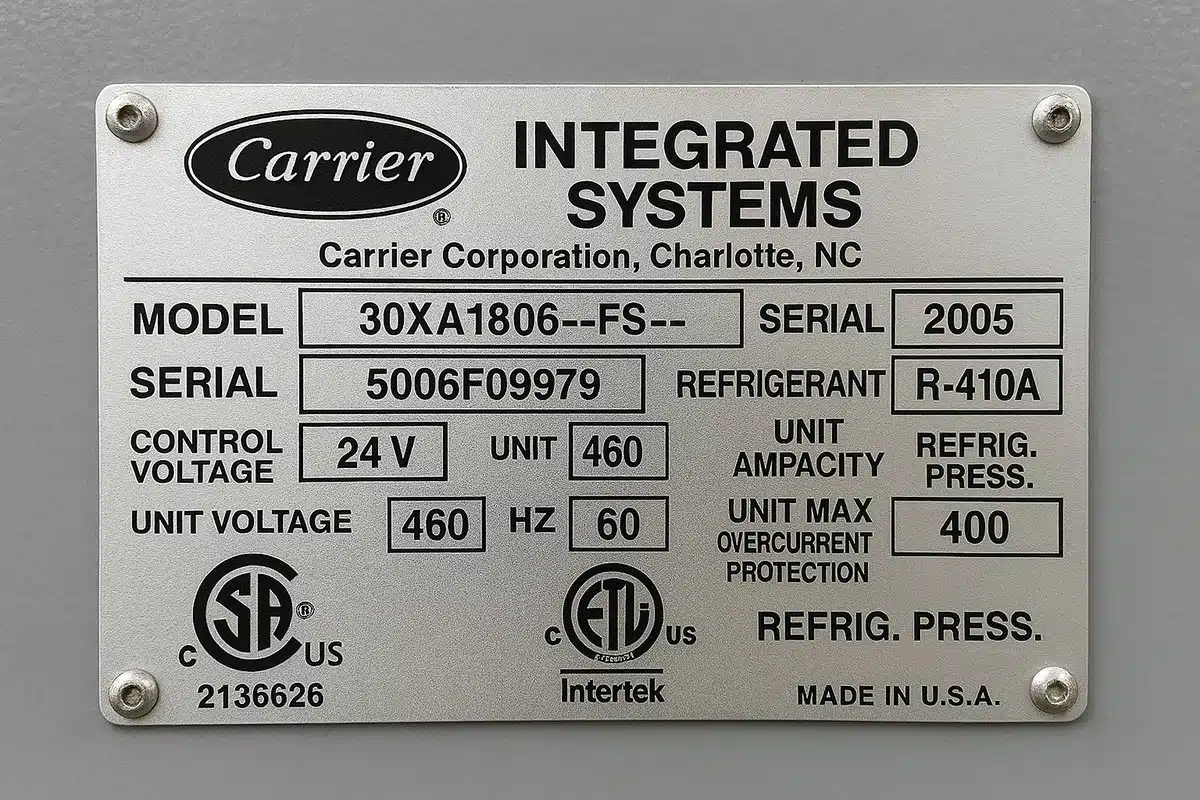
A close-up view of a data plate for a component of a Carrier HVAC system
Track refrigerants through data plates or service stickers on chillers, VRF systems, and rooftop units.

One way to achieve both quality and cost goals is to adopt demand-controlled ventilation (DCV). This feature uses CO2 and occupancy sensors to monitor how much air is being used so that outside air can be increased in busy rooms and decreased in lightly occupied areas. Companies can also add in-room filtration for high-risk or high-density areas, thus removing more fine particles without dramatically increasing fan energy.

Trend 5: Portfolio-level Centralization and Remote Management

A handful of emerging HVAC trends are specific to multi-site organizations. One of these trends is the shift from siloed, site-specific HVAC controls to centralized platforms that control dozens of sites simultaneously. Using sophisticated technologies like BACnet and IoT gateways, these platforms aggregate data from multiple building systems and present them in single dashboard, enabling facilities managers to control the HVAC systems of multiple buildings from one central location.

With these systems, facilities managers can see real-time metrics (including temperature, energy use, alarms, and building occupancy) for multiple locations on a single screen. Schedules, setpoints, and modes can all be adjusted remotely, leading to more efficient real-time management. Additionally, energy savings can be achieved through AI-enabled technologies that automatically adjust for factors such as occupancy or weather. Seeing all the data in one place allows for easy benchmarking across sites, faster response to alarms, and a reduction in “truck rolls,” (because more fixes can be handled remotely, thereby reducing the need to dispatch a technician).

It’s worth noting, however, that centralization does not come without risk. Compared to site-specific systems, centralized multisite platforms are more vulnerable to cloud outages and cyberattacks. And when a platform goes down, the impact can be felt across multiple sites. Fortunately, there are ways to mitigate these risks. Using redundant platforms (primary plus backup), for example, allows managers to override the centralized system and segment the network if needed.

Trend 6: Data-driven Maintenance and Workforce Gaps

As with other skilled trades, HVAC technicians are not as plentiful as facilities managers would like. Workyard, a field service management software company, reports that the industry is currently short 110,000 technicians; and 25,000 HVAC technicians leave the field every year. At the same time, the U.S. Bureau of Labor Statistics predicts 8% growth in the demand for HVAC workers between 2024 and 2034. These two opposing HVAC trends combine to create a difficult labor situation.

This is a serious issue for facilities managers. Fortunately, it’s not an insurmountable one.

Overcoming the skilled trades labor shortage requires a multi-pronged approach. One solution relies on a greater use of technology. IoT sensors and AI data analysis, for example, enable facility managers to adopt a predictive approach to maintenance, going beyond traditional preventive maintenance.

Rather than servicing equipment on a pre-determined schedule, predictive maintenance calls for determining service needs based on actual conditions. Because of this, organizations that adopt a predictive maintenance model can realize significant savings. For example, when St. Mary’s Regional Medical Center in Arizona transitioned to IoT-driven predictive maintenance for their critical systems, they achieved a 35% reduction in overall maintenance costs (saving over $2 million annually), a 47% decrease in emergency repair calls, and a 62% increase in equipment uptime.

But while technology can help offset the labor shortage, it is not yet a cure-all. This is why savvy companies are tackling the labor issue head on. They’re creating talent pipelines by building relationships with trade schools and junior colleges; they’re opening their own upskilling programs in house; and they’re looking beyond traditional labor pools.

Trend 7: Flexible Systems for Evolving Space Use

The relatively rapid shift in building use over the past few years may be the most impactful of all the HVAC trends on our list. As office, retail, and mixed‑use properties are reconfigured into coworking, medical, lab, residential, and “flex” spaces, HVAC is under pressure to serve more diverse loads within the same shell.

In this environment, the most effective HVAC systems are those that can adapt to different occupancies and tenant types. Heat recovery and hybrid VRF systems meet this demand for flexibility. Both types of system provide independent control of multiple zones and can deliver simultaneous heating and cooling, which is valuable when one tenant needs cooling while another in the same building needs heat instead. Hybrid VRF has the added advantage of limiting refrigerant in occupied spaces by using water on the distribution side.

Another technological breakthrough that increases flexibility is the modular HVAC system. Modular HVAC architecture allows owners to add, remove, or right‑size individual modules. This enables facility managers to respond quickly as tenants change and spaces are converted from low‑load uses (like storage) to high‑load uses (like kitchens, labs, or offices).

Taken together, these HVAC strategies and technologies give facilities teams the ability to respond to changing tenant loads, variable occupancy patterns, and new use types with targeted modifications instead of major central plant overhauls. But these gains don’t happen automatically, they must be planned for.

A good time to implement change is during tenant improvements or capital planning. These disruptions represent opportunities and are an ideal time to prioritize layouts that support clear, isolatable zones, with dedicated branch piping or duct risers, scalable modular capacity, and controls that can be easily reprogrammed as suites are combined or subdivided.

Turning HVAC Trends into Actionable Plans

Adopting the HVAC trends highlighted here does not require overhauling your entire facility overnight. Here are some practical steps you can take to future-proof your buildings:

Identify Fuels and Refrigerants

Before taking any action, be sure to conduct a careful inventory. Check your building’s records or equipment nameplates to identify whether you are currently heating with gas, oil, diesel, or electricity. On the cooling side, map your refrigerant inventory through the data plate or service stickers on chillers, VRF systems, and rooftop units (RTUs). After you have identified the refrigerants that you’re using, you can measure their GWP and rank systems from highest to lowest impact.

When upgrading your HVAC systems, consider making complementary upgrades to insulation, weatherstripping, and other parts of the building envelope.

Make a Plan and Set Goals for the Future

Align your capital plans with upcoming refrigerant milestones or requirements. For example, if new legislation is making your current systems obsolete or noncompliant, your priority is clear. If your systems are in compliance, the next priority is to establish clear, measurable goals, such as fewer comfort complaints and service calls, and lower energy use. And be sure to tie plans for any future projects to clear goals as well, such as reduced emissions, lower risk from future regulation, and better operating costs over time.

Improve Operations Today

While it’s often not practical to upgrade everything at once, there are ways to improve HVAC performance without a major upgrade. For example:

  • Fix known refrigerant leaks quickly.
  • Keep accurate leak logs.
  • Ensure any current sensors, filters, or controls are calibrated and maintained as a system, not in isolation.
  • Update your sequences of operations—the written and programmed files that tell an HVAC or building system exactly how to behave under different conditions—as needed. Updates are especially important when new regulations are issued. For example, new IAQ rules might require a change in the sequence of operations to ensure the system meets higher ventilation, filtration, or monitoring requirements.

Maximize Opportunity During Equipment Change-Outs

When a boiler or furnace reaches the end of its life, that’s the perfect time to evaluate other types of systems, like heat pumps. When replacing AC equipment, consider models that use low-GWP refrigerants and are capable of advanced leak detection.

It’s also important to make upgrades and other improvements holistically. The U.S. Department of Energy states that building envelope technologies account for as much as 30 percent of the energy consumed in both residential and commercial buildings. Therefore, when upgrading HVAC systems, consider making other, complementary upgrades to insulation, weatherstripping, or windows.

Bundling envelope improvements will allow you to install smaller, more efficient HVAC equipment—saving energy and money in the long run. Smart windows, for example, darken or lighten based on temperature and light fluctuations, and can greatly increase energy efficiency.

Adopting HVAC Trends to Future-Proof Your Building

The definition of “smart” buildings is constantly evolving. Taking practical steps today, facility managers can go beyond short-term efficiency gains or basic compliance with current regulations; they can future-proof their buildings for the years ahead. This year and beyond, success will come from being willing to pivot and adopt new technology. In other words, facilities managers need to be as flexible as today’s leading-edge HVAC systems.

HVAC Expertise You Can Rely On

PRIDE Industries has over 35 years of experience in facilities management, energy systems maintenance, engineering services, and preventive and predictive maintenance. We can help you optimize your facility’s current HVAC systems, lowering costs and increasing both efficiency and sustainability.

A Life Well Lived. A Legacy of Pride.

By all accounts, Ethan Herr was an exceptional human being—a loving son, a devoted brother, a loyal friend with a keen sense of humor, and a committed, hardworking employee. Many at PRIDE Industries were fortunate to share part of Ethan’s life. His positive impact on the organization continues beyond his passing, thanks to an endowment established in his honor by his family in 2010. 

Ethan was born with cerebral palsy, an umbrella term used to describe a group of chronic conditions affecting body movements and muscle coordination. From the very beginning, his supportive family encouraged his independence and taught him that he could accomplish anything. When doctors told him he would never ride a bike, Ethan was determined to prove them wrong. At age 12, he proudly pedaled his “Blue Thunder” down the street. In his early 20s, he earned his driver’s license and saved money to purchase a red Ford Aspire. Ethan wanted people to see beyond his disability and to recognize him as a successful, contributing member of the community.

Ethan joined PRIDE Industries in 1999. While he had previously been employed part-time, Ethan wanted to work full-time. At PRIDE Industries, he found a supportive environment and a shared commitment to helping individuals with disabilities overcome employment barriers and succeed in the workplace.

He began working as a custodian and found a champion in his supervisor, Karen Long. As Ethan expanded his skills and grew into new roles in other divisions of PRIDE Industries, Karen maintained close ties with him, and an exceptional friendship grew.

“Ethan was my best friend; he meant the world to me. He had the biggest heart and would do anything for the ones he loved,” said Long. “I sometimes think I got more out of our friendship than he did because he taught me so much about love and tolerance.”

Ethan worked in PRIDE Industries’ Manufacturing and Logistics Services before transferring to the Integrated Facilities Management division. As he progressed within the company, Ethan transitioned from receiving on-the-job training support to becoming a full-time employee. As his career grew, so did his independence. Ethan went from living at home to living independently in his own apartment.

At PRIDE Industries, we know that a paycheck is only one component of success for people with disabilities. The often unseen yet meaningful benefits include the independence and dignity that come with earning a living—something Ethan experienced firsthand.

“Working at PRIDE Industries helped Ethan grow,” said Linda Herr, Ethan’s mother, at the time of the endowment’s establishment. “He gained complete independence and made so many friends. It made us feel his future was secure, that he could be self-sufficient.”

In 2008, Ethan moved to PRIDE Industries’ Document Management Division, where he worked preparing documents for scanning until illness forced him to leave the company. He had thrived for almost a decade at PRIDE Industries. Ethan passed away in October 2008 at the age of 35.

Ethan Herr touched many hearts at PRIDE Industries. In turn, his family understood how profoundly Ethan’s life was enriched by the organization. They wanted his life to be a lasting legacy and to provide a path forward for others. Today, the endowment in Ethan’s name supports vital services such as job coaching, transportation assistance, vocational training, case management, the I AM ABLE Helpline, and more—resources that empower people with disabilities to pursue independence and meaningful employment, just as Ethan did.

“PRIDE Industries gave Ethan so much for so long,” said his sister, Cheryl Herr. “It just made sense to give back. We hope even one more person has the opportunity to reach their potential with the support of this endowment.”

Uncertainties like shifting tariffs, geopolitical changes, and extreme weather have made manufacturers well aware of the need for agile supply chains. But external supply chain management is only part of the logistics equation. Optimizing internal logistics, or intralogistics, is just as important for streamlining operations, improving efficiencies, and reducing costs. 

From the receiving dock to the point of picking, packing, and shipping, the systems and processes a company has in place to manage information and material flow can make or break a product line—or even the entire company.

Before advanced technology, a classic intralogistics nightmare was the infamous “lost pallet” scenario. Back when companies had to rely on manual logs and a worker’s fallible memory, pallets could disappear for weeks at a time. And while most businesses could overcome these mishaps decades ago, today’s companies face far more pressures than their predecessors did, including higher consumer expectations, globalization, e-commerce growth, and labor shortages—all of which demand more accurate and technologically advanced internal warehouse operations.

Automation and digital control can take intralogistics to another level, but they work best when layered onto sound processes, rather than used as a shortcut.

Meeting Manufacturing Challenges with Robust Intralogistics

Fortunately for manufacturers, digital technologies such as data analytics and AI are bringing greater precision and power to intralogistics, yielding a host of benefits, including:

  • Higher manufacturing line uptime and fewer stoppages caused by missing, late, or incorrect materials.
  • Reduced working capital through reduced excess inventory and more accurate stock levels.
  • Stronger quality control and compliance via better traceability, status monitoring, and environmental protection.
  • Safer, more ergonomic work environments with clearer flows and less manual handling.
  • Faster changeovers and greater flexibility to handle product mix, design changes, and demand shifts.

Achieving these benefits requires a deliberate intralogistics strategy, one that treats the internal flow of materials as an integrated system, connected to production planning, quality management, and regulatory requirements. In electronics manufacturing, such a system spans the movement of sensitive components from climate‑controlled storage to kitting and line‑side replenishment into final assembly and test. In medical device production, a comprehensive intralogistics system encompasses cleanroom access, sterile supply handling, and coordination with sterilization and packaging operations.

In both types of manufacturing, the goal is to ensure that materials are always in the right place, at the right time, in the right condition, and with the right documentation, so production can proceed smoothly and compliantly.​ The following seven best practices provide concrete actions to achieve these goals.

Synchronize Material Flow with Production

A core best practice is to keep material movements in step with the production plan rather than letting logistics and production run on separate tracks. Enterprise resource planning (ERP) systems set the overall plan, while manufacturing execution systems (MES) coordinate what is being built on the shop floor at any given moment. When intralogistics is linked to these systems, material tasks are triggered by actual demand instead of static schedules or ad‑hoc requests.​

In an electronics plant, a new build released in the MES can generate a precise list of components and timing for a specific line and shift. Logistics teams then work from clear tasks—preparing and staging kits at defined buffer locations just ahead of changeovers—rather than generic pick lists that may or may not match what the line really needs. If component usage deviates from plan, the system can trigger a top‑up rather than relying on operators to step away and search for parts.

In medical device environments, aligning flow with production often means tying kitting and material release to cleanroom schedules and sterilization cycles, so that materials arrive at controlled areas on time without sitting idle or drifting outside approved conditions.​

Minimize Line side and WIP Inventory

Another key practice is to strategically manage line‑side and work in progress (WIP) inventory, instead of letting it accumulate wherever there is space. Excess material at the line can hide problems, increase the risk of using the wrong or expired items, and make the floor harder to navigate. Well‑designed inventory buffers, on the other hand, make the process easier to see and control.​

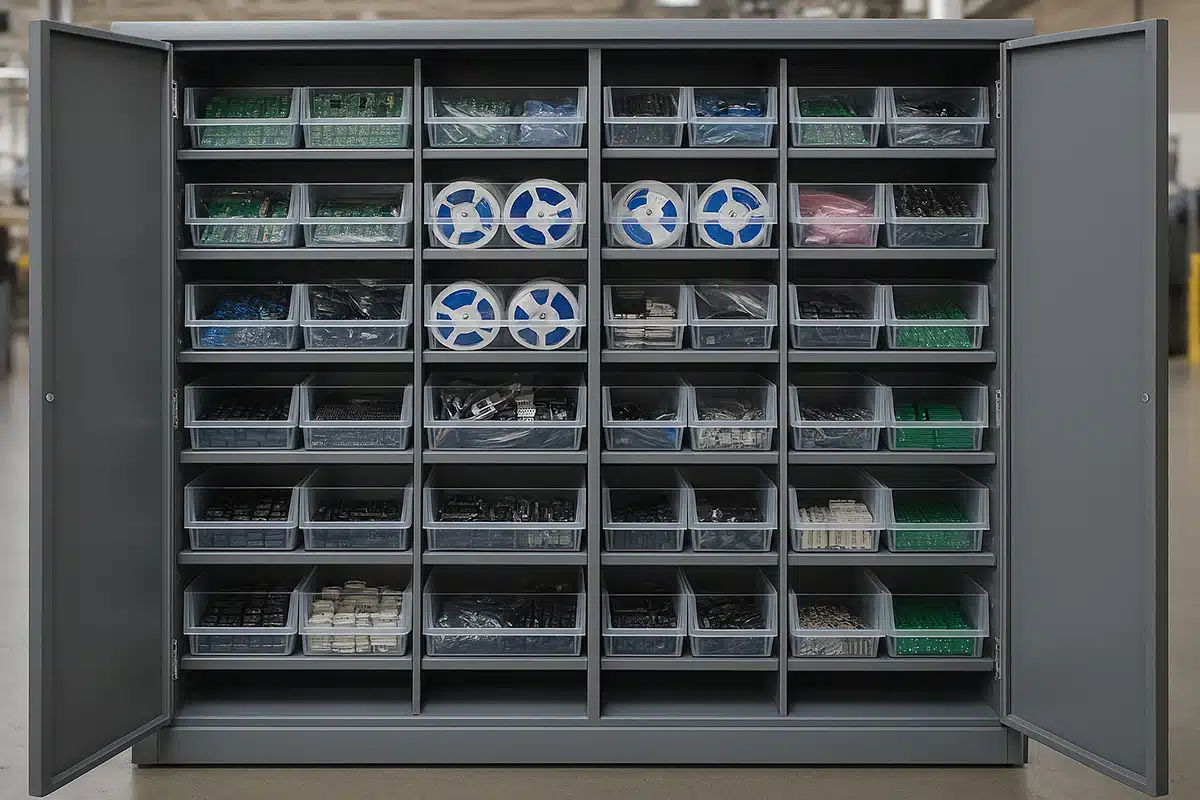
A large, open metal cabinet with rows of bins holding electronics components.
Internal “supermarkets” between the warehouse and production lines enable better component control.

Savvy electronics manufacturers use small internal “supermarkets” between the warehouse and production lines to achieve this inventory balance. These intermediate zones hold limited quantities of each component, usually sized to cover only a few hours of demand. When stock in a location drops below a defined level, a simple signal triggers replenishment of that specific item, keeping material flowing without flooding the line with excess parts.

In medical device production, similar buffer areas between assembly or test stages can be capped with clear capacity limits and first‑in, first‑out rules. This approach surfaces bottlenecks, cuts overproduction, and keeps the number of open lots on the move to a manageable level.​

Enforce Traceability and Status Control

For electronics used in critical applications and for medical devices, traceability and material status control are fundamental rather than optional extras. Quality system regulations such as 21 CFR 820 and standards like ISO 13485 require manufacturers to know which materials went into each product and to maintain firm control over material disposition. Robust intralogistics makes that control easy.​

Another best practice is to maintain a status‑driven warehouse, where every lot and location carries a defined quality status—such as quarantine, released, on hold, or rejected—and digital systems enforce which statuses can be picked for production. Newly received material goes to quarantine by default, only becoming eligible for normal storage and kitting after the inspection or release steps are complete. If a supplier issue or stability concern appears later, affected lots can be quickly identified, blocked, and physically moved to hold areas.​

In electronics destined for safety‑critical or regulated end uses, traceability should extend to the component lot or serial level. Each time components are kitted or assembled, identifiers can be scanned and tied into the device record, building a reliable genealogy. This combination of status control and detailed tracking supports faster, more targeted investigations and reinforces trust with customers and regulators.​

A close-up of the serial number on an electronics component.
Traceability should extend to the component lot or serial level.

Design Flows for Product Integrity

Another hallmark of good intralogistics is designing flows that actively protect product integrity, especially in the face of contamination risk for medical devices and electrostatic discharge (ESD) risk for electronics. These issues often do not show up immediately, but they can have serious consequences down the line if not handled correctly.​

In electronics manufacturing, end‑to‑end ESD control is an essential best practice. Store sensitive components in ESD‑safe packaging in controlled areas with suitable flooring, grounding, and handling equipment. Components should also stay in protective containers during transport, whether moved by cart or by an automated vehicle. Workstations and operators should maintain ESD protection all the way through assembly, so that there is no uncontrolled step in the journey.​

In medical device manufacturing, a similar best practice applies to contamination and sterility. Material routes should be planned around cleanrooms, controlled storage, and sterilization processes, with goods passing through defined airlocks into clean areas, in sealed containers that are opened only once and only inside the appropriate zone. Paths inside the controlled environment should be laid out to minimize cross‑traffic between cleaner and less‑clean areas, and procedures should spell out how long materials may remain outside controlled conditions and what to do if those limits are exceeded.

When companies build these processes into their intralogistics from the start, the result is fewer surprises during audits and fewer hidden quality risks.​

Standardize and Simplify Intralogistics Work

Standardization is another way to lift intralogistics from an ad‑hoc activity to a managed system. When each shift or area handles materials differently, performance varies, training takes longer, and errors are harder to prevent. Lean methods and workplace organization techniques like 5S (Sort, Set in order, Shine, Standardize, Sustain) fix this issue by creating stable, repeatable ways of working.​

In a medical device warehouse, standard work can define how materials are received, labeled, inspected, and stored, so they consistently land in the right category of location—quarantine, released, temperature‑controlled, and so on. Kitting areas can use common layouts so that parts always appear in the same positions, with clear documentation and visual cues to support quick checks.

In electronics plants, it’s important to bring this same type of discipline to line‑side areas. Storage positions should be labeled, obsolete items removed, and there should be a defined space for empty containers and nonconforming materials. These practices make departures from the norm easier to spot and simplify employee onboarding. They also support continuous improvement by enabling workers to focus on refining a shared baseline rather than on reconciling different local habits.​

Apply Automation and Digital Tools Selectively

Automation and digital control can take intralogistics to another level, but they work best when layered onto sound processes, rather than used as a shortcut. The main aim is to remove friction from routine handling, improve accuracy, and give better visibility into where materials are and how they move.​

In electronics environments, automated storage and retrieval systems or vertical lift modules can be used to handle high‑mix component inventories. These systems optimize storage, keep conditions consistent, and—when linked to warehouse and production software—can present required parts to operators in the right sequence for kitting or replenishment. That means less walking, fewer picking errors, and tighter control over sensitive components.​

In medical device plants, autonomous mobile robots (AMRs) increasingly handle moves between warehouses, cleanrooms, inspection areas, and sterilization units. A central control system assigns routes and priorities, reacting to changes in material status or production plans. When a lot is released, robots can automatically move it from quarantine to released storage; when a lot goes on hold, tasks can be stopped or redirected to bring material back to a hold area. Used in this way, automation supports stable flow, frees people from repetitive transport work, and generates data that can be used to spot bottlenecks or reliability issues.​

Build Quality and Regulatory Readiness into Flows

Well‑designed intralogistics does not defer quality and regulatory needs to the end of the production process; it weaves them into the design of every flow. This is essential in medical device manufacturing and increasingly common in electronics, especially where products serve safety‑critical or highly regulated markets.​

When new layouts or logistics processes are planned, cross‑functional teams can review them with an eye to where segregation of nonconforming materials is needed, how expiry and environmental controls will be handled, what must be recorded at each handoff, and how digital systems will support documentation and approvals. A new kitting process for sterile disposables, for instance, might include mandatory scanning of lot numbers and expiry dates, automated checks against approved status, and electronic records that flow directly into the quality system.​

Day‑to‑day operations can then reinforce this design with training, routine process checks, and clear expectations. This ensures that the people who handle materials understand not only what steps to follow but why actions such as scanning, labeling, and segregation matter for compliance. Internal audits and walk‑throughs can help ensure intralogistics practices stay aligned with regulations and that issues are detected early and corrected before they turn into bigger problems.​

Bringing Intralogistics Best Practices Together

Taken together, these intralogistics best practices form a practical framework for electronics and medical device manufacturing. Aligning material flow with production keeps lines supplied without drowning them in stock, while deliberate management of line‑side and WIP inventory makes operations more transparent and controllable. Strong traceability and status control, combined with flows designed for contamination and ESD protection, preserve product integrity and regulatory compliance.​

Standardized logistics work provides a stable base for performance, safety, and continuous improvement, and well‑chosen automation and digital tools extend that base by reducing handling effort and improving visibility. Underneath it all is a mindset that treats quality and regulatory readiness as part of intralogistics design, not external constraints to be worked around. In an industry landscape defined by increasing complexity and tighter expectations, intralogistics managed in this way becomes a quiet but powerful driver of throughput, cost control, and trust.​

A Contract Manufacturer You Can Rely On

PRIDE Industries combines decades of experience with a commitment to innovation. We’ll help you optimize your manufacturing operations through increased visibility and control, improved quality, and efficient supply chain management. Invest in a smarter, more resilient manufacturing future by partnering with us for our full suite of end-to-end electronics manufacturing services.

In 2026, one competitive edge for companies remains constant across industries: high workforce retention. Businesses that keep workers engaged and supported build momentum that no hiring campaign can replicate. When employees stay, companies gain experience, trust, and innovation, all of which strengthen performance and culture.

At PRIDE Industries, we’ve seen the transformative power of workforce retention firsthand. Through inclusive employment partnerships, our customers  are able to achieve what once felt out of reach: dependable teams, measurable growth, and workplaces built on purpose.

Productivity That Compounds Over Time

Operational consistency is one of workforce retention’s greatest rewards. Experienced employees know internal systems, so they’re better able to anticipate challenges and require less supervision. This efficiency compounds with every year of tenure.

The converse is also true—high turnover leads to inefficiency, as the data makes clear. A recent 2024 Gallup poll found that only 31 percent of employees in the U.S. are fully engaged in their work, creating a significant drag on company performance. It’s estimated that disengaged employees cost U.S. employers $1.9 trillion annually in lost productivity. And a McKinsey analysis shows that turnover at a typical mid-sized company can quietly drain $228–$355 million per year due to lost productivity and retraining. 

As these numbers make clear, retention is not just a cultural strength; it is a measurable financial advantage.

High Workforce Retention Yields Exceptional Customer Experiences

Increased productivity is not the only advantage of workforce retention. A consistent workforce also strengthens the relationships that determine a company’s reputation. 

At Eskaton Gold River, a senior living community, turnover in dining and hospitality roles was fueling tenant dissatisfaction. This situation is not uncommon in the hospitality industry, and is especially acute in the senior living sector, where consistency is highly valued. A 2021 study by the National Investment Center for Seniors Housing and Care (NIC) found that the annual turnover rate among senior living workers averages around 85 percent, making long-term staff stability a rare and valuable differentiator.

In an effort to address its staffing challenges, Eskaton entered into a partnership with PRIDE Industries. The strategy worked. By adopting an inclusive employment model, adding employees with disabilities supported by on-site job coaches, Eskaton created a reliable and consistent hospitality staff. The change greatly improved resident satisfaction.

“The residents really enjoy the presence of PRIDE Industries employees,” said Paul Nelson, Director of Culinary Experience. “The employees know residents by name, anticipate their needs, and create a welcoming atmosphere every single day.”

Workforce retention builds relationships, and those relationships build loyalty, which translates to bottom-line benefits for businesses.

A Culture of Inclusion, Dedication, and Pride

When teams are stable, culture deepens. Long-term employees foster trust and bring a contagious enthusiasm that lifts everyone around them.

Matsuda’s Nursery in Central California saw this transformation firsthand in 2018, in an industry rife with retention issues—nearly two thirds of respondents in a recent survey of horticulture companies indicated that they were unable to hire all the employees they wanted. Matsuda’s struggled with staffing gaps at a time of increasing demand for its products. That’s when the nursery partnered with PRIDE Industries to hire teams of employees with disabilities, mentored directly on site by expert job coaches.

“What PRIDE Industries brought to the table is a consistent, solid crew that will show up and do any task you ask—and do it day after day, correctly and efficiently, with a smile,” said Travis Gill, co-owner of Matsuda’s Nursery.

Over time, that dependable workforce became integral to Matsuda’s operations, taking on new responsibilities in planting, loading, and seasonal production. Many team members have been with Matsuda’s since 2018, a testament to both their dedication and the company’s inclusive environment.

“The biggest thing from an ownership perspective is morale,” said Gill. “The energy these employees bring every day is unmatched. It’s honestly been the greatest part of it all.”

High workforce retention doesn’t just sustain operations; it builds community energy that no short-term staffing solution can replace.

High Workforce Retention Improves Safety, Quality, and Operational Performance

High turnover increases safety hazards and operational errors. Inexperienced employees face steeper learning curves and are more prone to make mistakes, as is consistently shown in national safety data.

OSHA’s 2025 review found that approximately 36 percent of workplace injuries occur among employees with less than one year of tenure. In addition to the physical and emotional toll of serious injuries, there’s a financial burden as well. Businesses lose over $170 billion annually due to employee injuries or illnesses. Indirect expenses such as productivity loss, equipment damage, and legal fees can multiply total costs by a factor of ten.

Building a Workforce That Stays and Thrives

PRIDE Industries has decades of experience working with hundreds of businesses to provide turnkey, scalable staffing solutions. We make it easy to offer life-changing employment to individuals looking for long-term opportunities, helping companies reduce turnover while strengthening their operations and culture.

Partner with PRIDE Industries and build a workforce that stays, thrives, and powers your mission forward.