Our Stories

It’s no secret that artificial intelligence (AI) and machine learning are infiltrating the way we do business—as well as our personal lives—in multiple ways. Uber uses AI to forecast the number of ride requests for different locations. Social media platforms customize user content by applying AI algorithms. And manufacturers across a variety of industries are using AI to take predictive maintenance to a new level, analyzing historical and real time data to anticipate failures and repair or replace machinery before something breaks. So it’s no surprise that electronics manufacturers have found yet another use for AI: optimizing electronics packaging.

The global market for AI-facilitated packaging is expected to grow at a compound annual growth rate (CAGR) of 55.2 percent from 2021 to 2026, according to Global Market Estimates, a market research and consulting company. This rapid increase in the use of AI to optimize packaging is no surprise, as improved packaging offers many benefits, from better product protection to improved brand positioning.

Because electronic devices tend to be fragile and prone to damage during transit, AI can be especially useful in optimizing their packaging.

Important Considerations in Electronics Packaging

Because electronic devices tend to be fragile and prone to damage during transit, packaging must be optimized for specific products. So how does an electronics manufacturer choose the best packaging? Opting for the cheapest solution doesn’t always save money in the long run. Manufacturers have many factors to balance and questions to consider, including:

  • How well will the packaging protect the product?
  • Does stronger packaging justify a heavier weight and higher shipping costs?
  • Is there an acceptable level of returns for damaged products? If so, what is it?
  • What is the optimal balance between packaging price and performance?

In addition to the questions above, manufacturers need to think about customer perceptions, as people are becoming more concerned about packaging pollution. In a 2020 survey, McKinsey & Company found that 60 to 70 percent of consumers said they would pay more for sustainable packaging. AI can be used to analyze vast stores of internal and public data to optimize packaging so that it meets electronics manufacturers’ requirements for quality, safety, and sustainability, allowing them to quickly find the right balance between cost and effectiveness.

3 Ways AI is Improving Electronics Packaging

Successful electronics manufacturers are constantly evaluating new technologies and seeking ways to improve production. Across the nation, these savvy manufacturers are leveraging AI and machine learning to optimize their product packaging in three critical areas.

Design

AI can help companies optimize electronics packaging by analyzing data such as product type, weight, and fragility. It can also factor in other considerations such as company sustainability goals and shipping distance. AI can even be used to incorporate packaging considerations into the product design phase, helping engineers configure a product that costs less to ship and is more resilient in transit, resulting in fewer returns.

AI algorithms are now being used to customize packaging for a broad range of products. A TV, for example, may require a box with thicker corners for better edge protection. Other electronics packaging considerations include protection from falls, extreme temperature, vibration, humidity, sunlight, contamination, and water. To minimize vibration, containers sometimes include internal locking mechanisms. And to make product inspection easier, clear locking containers—such as those manufactured by U.S.-based Clamtainer—allow final inspection of a component without disturbing the packaging.

AI can also be used to determine the ideal packaging material for a particular product. This is especially important given the range of new materials available, which are far more diverse than traditional cardboard and polystyrene packing peanuts. Mushroom packaging, for example, is made from an organic material that’s literally grown to a precisely programmed shape using a process that takes just seven days. Other novel materials include bamboo, cornstarch, and seaweed—sustainable substances that win kudos from the general public, enhance a manufacturer’s reputation among consumers, and can even cost less than traditional packaging.

Another way that AI is impacting package design is by using 3D prototypes to speed up the time it takes to determine the optimal packaging for any given product. In the same way that 3D prototyping is used to test product designs, packaging options for the finished product can be tested and quickly modified using AI models and 3D printing technology—without the expense or time of producing the actual electronics packaging.

A packing container molded to fit an electronics device sits next to a large pile of mushrooms.
Mushroom packaging uses agricultural waste and mycelium to grow custom-shaped, break-resistant containers in as little as seven days.

Sustainability

Optimizing a product’s packaging should be part of any initial product design, especially if sustainability is important to your company—the European Commission estimates that more than 80 percent of all product-related environmental impacts are determined during the design phase. However, leveraging AI for sustainability goes beyond design. It can also help reduce waste, decrease shipment damage, and lower shipping costs. Amazon has been using an AI model that learns from real-world customer complaint data to accomplish these goals. Applying their machine learning model to hundreds of thousands of packages, they have been able to reduce waste, cut shipment damage by 24 percent, and reduce shipping costs by five percent.

AI can also help manufacturers design packaging with recycling in mind. This not only helps companies meet their environmental, social, and governance (ESG) objectives, it’s also becoming an essential objective now that more and more local governments are enacting extended producer responsibility (EPR) regulations. For example, California passed a law in 2022 that imposes new regulations and fees on manufacturers of single-use plastic packaging. Other states—including Maine, Oregon, and Colorado—have also passed strict EPR laws. And while many of these regulations primarily affect the makers of plastic forks, straws, and bags, they are expanding to include packaging for all kinds of products.

Supply Chain Management 

A man using plastic bubble wrap to cover a small cardboard box.
In some states, extended producer responsibility (EPR) requirements make plastic packaging an expensive option.

AI can also help in supply chain management, from production inspection to shipping improvements, enhancing or even replacing human efforts. Unlike a person, AI never gets bored or distracted—it doesn’t miss product defects. And unlike human brains, which have a tendency to fill in missing data and thus see things that aren’t there, an AI “brain” lacks this imagination, and so more accurately detects a product’s true state.  

AI can even improve on the traditional “machine vision” technologies that are used for inspections. Many current visual inspection technologies are capable of spotting variations from a programmed standard, but can’t determine if the variation is acceptable. For example, in the case of date labeling on a package, if a date is in a different font, many current inspection systems will reject it as an error. Harry Norman, founder of OAL, a British automation and robotics company, likens traditional machine vision to having vision without a brain. Incorporating AI into the system gives the machine a “brain,” one that can be trained to account for variation. For example, a date stamp with a tilted “2” that would have been rejected in the past with traditional visual inspection technology can now be recognized as acceptable.

Yet another way AI is strengthening the supply chain is by streamlining the shipping process. Manufacturers now have access to data-driven shipping automation platforms that include packing algorithms. According to ShipHawk, a U.S.-based provider of automated shipping solutions, companies can lower shipping-related costs by more than 20 percent with data-driven shipping. Machine learning algorithms can also be used to assign packages unique RFID tags so that products can be easily tracked throughout the entire supply chain.

Don’t Set It and Forget It

Keep in mind that AI is only as good as those who design, program, and monitor the technology. So be cautious about taking a hands-off approach. But with the right oversight, AI can transform electronics packaging. The technology’s ability to improve design, enable the use of novel materials, and make recycling easier means that manufacturers will undoubtedly continue to use AI to optimize their product packaging for years to come.

Kitting and Fulfillment Services with a Positive Social Impact

PRIDE Industries offers comprehensive packaging and fulfillment services that incorporate sustainability practices tailored to each customer’s needs. Our flexible approach, backed by a dependable and inclusive workforce, gives our customers both reliable service and a unique social marketing advantage.

When the original Star Trek series launched in 1966, Captain James T. Kirk was pressing buttons on his command chair as Mr. Spock turned dials at his science station. Just 20 years later, when Star Trek: The Next Generation aired, all those buttons and dials had been replaced with computer screens. Today, real planes are undergoing a similar evolution, and this increasing digitalization is just one of several game-changing developments in aerospace manufacturing.

According to McKinsey & Company, original equipment manufacturers (OEMs) in the aerospace industry are facing unprecedented uncertainty and challenges. Some of those include talent shortages, inflation, and supply chain worries. Yet despite these hurdles, inroads are being made. Read on to discover six trends moving the industry forward.

Additive Manufacturing

The aerospace industry is being transformed by additive manufacturing, also known as 3D printing. This new technology offers multiple benefits for aerospace manufacturing.

Rapid Prototyping

Using additive manufacturing, aerospace companies are able to take advantage of rapid prototyping—quickly fabricating a prototype to aid designers in visualizing, redesigning, and developing a part or component before mass production. Rapid prototyping reduces material waste while enhancing design options.

There is a continuous effort to miniaturize electronic components in order to make them both lighter and more compact, without compromising performance. This trend is crucial for aerospace applications since weight is a critical factor.

New Materials 

Additive manufacturing increases material options. New additive manufacturing methods, such as fused deposition modeling (FDM) and electron beam melting (EBM), enable the rapid fabrication of complex geometries, making it easier to use novel materials.

Lightweight components

By increasing the range of material options, additive manufacturing makes it easier to create lightweight components, fulfilling a crucial need in the aerospace industry for improved fuel efficiency, which saves money and reduces carbon emissions.

Lower Production Costs

In addition to the above benefits, additive manufacturing increases a manufacturer’s bottom line by reducing the time from design to production, minimizing waste, and streamlining aerospace supply chains.

Smart and Connected Systems

The integration of smart systems is becoming more prevalent in aerospace manufacturing. Smart and connected systems can enhance maintenance procedures and overall operational efficiency. This evolution involves incorporating sensors, Internet of Things (IoT) devices, and data analytics to monitor and optimize the performance of aircraft systems.

Internet of Things

Manufacturers are designing sensors and software that take advantage of the Internet of Things, making aircraft safer and more efficient by allowing aerospace companies to monitor and control systems and equipment in real time. For example, IoT devices can recognize potential safety issues before they become a reality and take proactive steps to remedy them. Another way these devices increase safety is by remotely monitoring hangars, reducing the risk of airplane tampering and improving on-ground security.

Big Data Analytics

Airplanes have long had numerous sensors to collect data in flight—such as speed, altitude, stability, and more. This data not only influences the plane’s operation, it can also trigger calls for maintenance once the aircraft is on the ground. Yet, traditionally, maintenance crews have taken a reactive approach to airplane maintenance. Now, the ability to quickly analyze large amounts of raw data makes it possible to discover even more nuanced patterns and trends, enabling ground crews to engage in predictive maintenance.

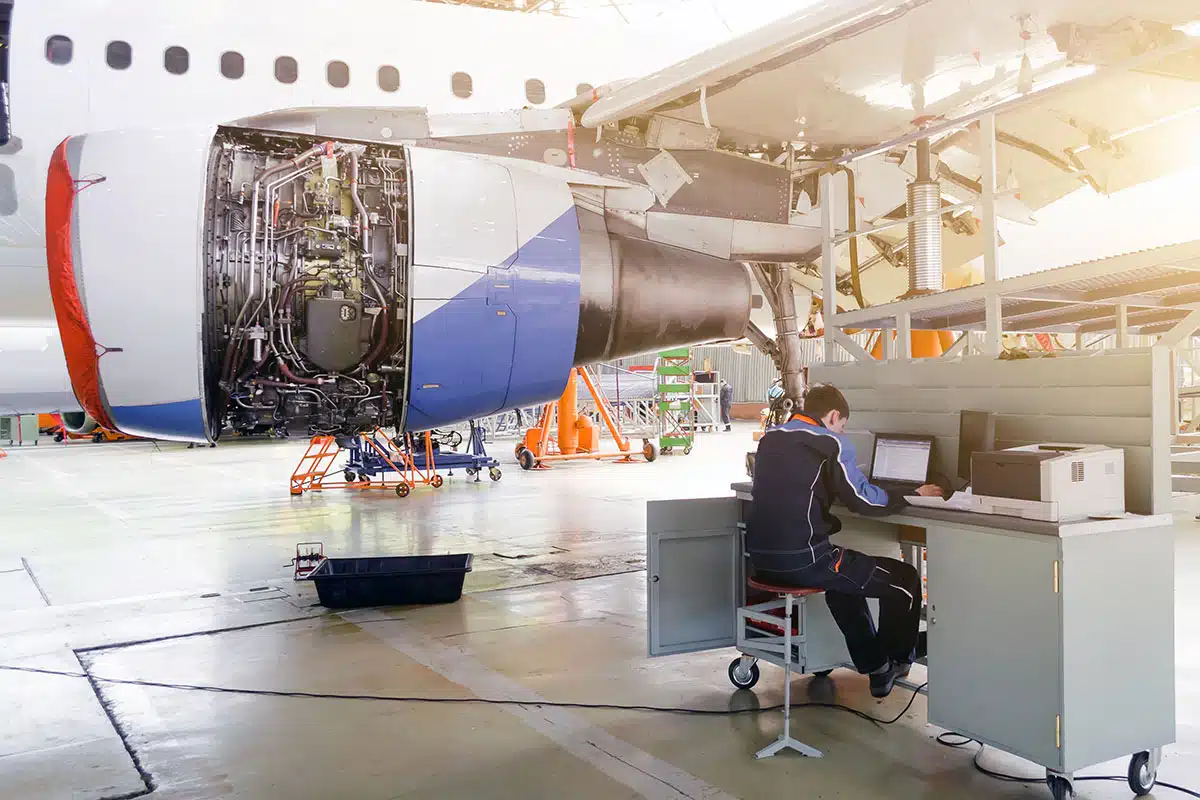
A technician at a workstation in an aircraft hangar, next to an airplane with the cowling removed from one engine.
Predictive maintenance reduces the time planes are kept out of service.

The large volume of raw data that can now be analyzed enables more precise monitoring of various parts and systems, so that any needed equipment replacements or upgrades can be made long before a failure occurs. This proactive approach to plane operation and maintenance reduces the time that planes are grounded, saving money and improving aircraft functionality. Of course, this increased connectivity comes with inherent cybersecurity risks to flight data and avionics systems. But companies are addressing these vulnerabilities with advanced encryption protocols and intrusion detection systems specifically tailored for aerospace applications.

Advanced Materials

An aerospace manufacturer faces many challenges unique to the industry: weight constraints for each component, demand for materials that can withstand high stress and temperature variations, and the need to avoid corrosion. For these reasons, engineers are constantly seeking novel materials that can meet these challenges, and they’re finding success with advanced materials like fiber-reinforced polymers and ceramic matrix composites. Compared to traditional metals, these new materials offer a superior strength-to-weight ratio and better corrosion resistance, enabling designers to reduce overall aircraft weight and improve fuel efficiency—all while increasing durability and maintaining structural integrity under stressful conditions.

When manufacturing space vehicles, materials challenges increase. For example, cosmic radiation can significantly influence electronics in space, which makes shielding a priority. Materials must also withstand the extreme cold of space and—on the other hand—the high heat and stress of atmosphere re-entry, while meeting the demand for high vehicle longevity. As with the aviation industry, manufacturers of space vehicles are turning to composite materials for solutions. For example, manufacturers are making electronics resistant to radiation by using field-effect transistors that incorporate carbon nanotubes as channel material, along with an ion gel as gate material.

Miniaturization of Electronics

There is a continuous effort to miniaturize electronic components in order to make them both lighter and more compact, without compromising performance. This trend is crucial for aerospace applications since weight is a critical factor in aerospace manufacturing. Manufacturers have developed miniaturized components for navigation, guidance and communication systems, cockpit displays, propulsion systems, and more.

This miniaturization is made possible by the new generation of high-performance microprocessors, which receive input from various sensors and navigational aids and then use that input to perform complex, real-time calculations to control the aircraft’s subsystems. Miniaturized ICs, for example, are enabling the replacement of traditional analog gauges with digital displays on high-resolution screens. These new display systems, which are collectively referred to as a glass cockpit, allow pilots to easily view real-time data, which in turn enables them to make better decisions.

Miniaturization is also affecting electromechanical systems. Sensors, actuators, and other machines are shrinking, even as they become more sensitive. Due to better sensing capabilities, these systems have higher accuracy—new accelerometers are bringing even greater precision to navigation controls, and temperature sensors are making air conditioning units more efficient. And with fewer moving parts, these systems are also more reliable.

The glass cockpit—which employs miniaturized integrated circuits—is replacing traditional analog gauges with digital displays.

Miniaturized components are introducing improvement across the industry. In aviation, airplanes are more efficient and safer thanks to these devices. In space, these devices are enabling the building of smaller, more affordable satellites and other space vehicles. And, in the military realm, these components are improving situational awareness, weapons systems, and communications.

Sustainability

Making the aerospace industry more sustainable requires a multi-pronged approach.

Electrification

Carmakers aren’t the only manufacturers who recognize the advantages of electrification. The aerospace industry is also taking notice. Emerging airplane designs replace conventional hydraulic, mechanical, and pneumatic systems with electric counterparts. For example, the Boeing 787 has already adopted electrified environmental control and wing anti-icing systems.

Going a step further, planes that are fully electric could provide a sustainable solution for the planet. According to a study by the University of Nottingham, conventional aviation powered by fossil fuels is responsible for 12 percent of the carbon dioxide emissions from all transport services. Electric planes, on the other hand, produce emissions that are near zero.

And carbon emissions aren’t the only pollution eliminated by electrification. Fully electric planes have the potential to significantly reduce noise pollution as well. The longtime concern of living too near an airport could become a worry of the past if electric planes take over. Additionally, with fewer moving parts, electric planes would be subject to less wear and tear, reducing the amount of landfill waste from expired parts.

Sustainable aviation fuel

In 2023, after five days of U.N.-led talks in Dubai, 100 countries agreed that by 2030 aviation fuel should be five percent less carbon intensive. One approach to address this goal is sustainable aviation fuel (SAF), a fuel made from non-petroleum feedstocks. According to the U.S. Department of Energy, this fuel is already being used in 46 different airports, mostly in Europe and the United States.

Improved Electronics

Perhaps the most effective way to make air travel less carbon intensive is to reduce weight and improve efficiency, and here electronics have a big role to play. For example, the miniaturization of components is allowing engineers to build smaller and lighter devices. This is a crucial development, as every ounce on a plane adds up: Did you know that every laptop on a flight costs the airline 33 cents? Furthermore, these new electronic systems also enable more precise navigation and route planning, enabling pilots to fly more efficiently and so reduce fuel waste.

New Training Methods for Aerospace Manufacturing Talent

Mechanics, aerospace engineers, and technicians are crucial to the aerospace industry, and workers for these jobs are in demand. A report from AAR Corporation forecasts that the global aviation market will need 34,500 new mechanics annually, and the U.S. Bureau of Labor Statistics says that the job outlook for aerospace engineers will grow by six percent in a decade (compared to the three percent average across all occupations).

Training all these new workers requires thinking outside the box. This is why some companies are beginning to use immersive technologies like virtual reality (VR) and augmented reality (AR) to enhance aerospace training using life-like scenarios. Likewise, savvy employers are thinking outside the box when it comes to recruiting. Companies that take a broad approach to hiring—for example, pulling from underutilized talent pools such as people with disabilities—have a greater chance of filling essential positions.

Meeting Challenges Through Technology

The aerospace industry is experiencing significant changes. Sustainability challenges, talent shortages, and new consumer demands will make tomorrow’s aerospace landscape look and operate very differently from today’s. Fortunately, solutions ranging from additive manufacturing to augmented reality are available to meet these challenges head on. With innovation, determination, and outside-the-box thinking, the future of the aerospace industry looks bright.

An Aerospace Manufacturing Partner You Can Rely On

Are you looking for a contract manufacturer who offers secure, state-of-the-art design and manufacturing services? At PRIDE Industries, our award-winning services and stringent quality control have made us a trusted manufacturing partner for more than two decades. Find out what we can do for you.

In today’s business climate, a solid employee retention strategy is more important than ever. Even as the Great Resignation has waned in some sectors, high employee turnover continues to plague organizations. It’s an issue that’s not going away anytime soon. In fact, advisory firm Forester predicts that employers will face more, not less, worker turnover long into the future. This is especially true of frontline workers—who already quit at a rate of 50 percent within the first three months. While some turnover is natural, excessive turnover can crush a business. Beyond the loss of valuable team members, the cost of replacing an employee can be staggering—from one-half to twice the employee’s salary. And the detrimental effects of high turnover extend beyond mere financial strain. Here are six ways that high turnover negatively impacts an organization.

Decreased Productivity

According to Gallup, employees who are considering leaving tend to become disengaged, and disengagement incurs a cost of between $450 billion and $550 billion each year in lost productivity. If workers do leave, the time it takes to train new employees—a minimum of three months by some estimates—further impairs productivity as managers are spending more time onboarding and training newcomers. Expedited training isn’t a viable solution. It can result in embarrassing, costly, or even dangerous mistakes that wind up taking even more time away from production.

Impaired Customer Relations

When employees are constantly new, lacking knowledge about products, services, and procedures, customers grow increasingly frustrated. Consulting firm Watermark found direct, negative correlations between companies’ employee retention rates and their Net Promoter Scores (a widely used measure of customer experience quality). High turnover led to low customer satisfaction. Especially in frontline industries, where courteous, skilled public-facing employees are vital to the customer experience, high employee turnover means bad online reviews and, eventually, lost customers.

Plummeting Morale

As employees watch their coworkers come and go, they become less likely to engage with new hires. Moreover, as coworkers leave, employees are more likely to consider the reasons why—ultimately leading to their own departures. Managers lose motivation, too, when it comes to implementing new initiatives or investing in employees’ growth. When morale is low among frontline employees, their customer service skills decline. In fact, a survey by Eagle Hill Consulting found that dissatisfied employees were more than 2.5 times more likely to say they do not provide excellent customer service. As mentioned above, indifferent customer service is contagious, leading to indifferent customers who will take their business elsewhere

Tarnished Reputation

High turnover makes businesses look bad. Those poor online reviews from disgruntled customers send a negative signal to both would-be buyers and potential employees. According to Forbes, negative online reviews deter 80% of viewers from contacting a business. And a Harvard Business Review study found that businesses with a poor reputation as employers had to offer at least 10 percent higher salaries to entice employees to join. A bad reputation can also discourage partners, investors, and lenders who view low employee retention as a sign of overall organizational instability.

Product Quality Issues

Whether the product is a clean, safe facility or a medical device, high turnover can negatively impact product quality. In the custodial industry, where turnover hovers around 200%–an entire workforce replaced twice in a year—turnover can turn into dirty, cluttered buildings. A poorly maintained building can deter potential tenants and visitors, as it’s often their first impression of a business. When it comes to manufacturing, poor employee retention can mean faulty products, leading to costly returns. A a research study by Informs found a direct link between turnover and product quality: “Despite the manufacturer’s extensive quality control efforts, including stringent testing, each percentage point increase in the weekly rate of workers quitting from an assembly line (its weekly worker turnover) is found to increase product failures by 0.74%–0.79%.”

Safety Concerns

High turnover decreases safety. According to OSHA, 40 percent of employees who are injured have been on the job less than one year. Not only is this statistic troubling when considering the human toll, but it’s also bad for a company’s bottom line. Businesses incur over $170 billion annually due to employee injuries or illnesses. Indirect expenses such as productivity loss, equipment damage, and legal fees can multiply total costs by a factor of ten.

Start with Recruiting the Right People for the Job

According to the Harvard Business Review, 80 percent of turnover is due to bad hires. Employee retention starts with recruiting and onboarding the right people. To do that, recruiters need to be crystal clear about their expectations and communicate them in an effective, accessible way. They also need to understand how much emphasis to put on hard versus soft skills—especially when it comes to frontline roles. In some cases, “trainable” is better than pre-trained. Finding the right people for the job also means widening the talent search to include innovative employment models and underutilized workforces. A 2020 study by Accenture and Harvard Business School coined the term “hidden workers”—an estimated 27 million people, including individuals with disabilities, who are eager to work, demonstrate numerous business benefits, and are statistically more likely to stay at a job.

Let Us Help You Reduce Employee Turnover

Turnover in frontline roles like retail, hospitality, manufacturing, and facilities maintenance is an ongoing challenge. Let us introduce you to a workforce that wants the jobs you sometimes find difficult to fill and retain. PRIDE Industries has decades of experience working with hundreds of businesses to provide turnkey, scalable staffing solutions. We make it easy to offer life-changing employment to individuals looking for long-term opportunities. Join us.

High employee turnover continues to plague companies—especially those that include frontline workers, and learning how to retain employees has become a business imperative.  While compensation certainly factors into low employee retention, departing employees cite other causes. Below, we summarize them, but, first, let us tell you about an innovative solution: supported work groups of employees with disabilities.

What is a Supported Work Group?

For hundreds of companies, the supported work group model answers the question of how to retain employees—but what, exactly is it? A typical work group is comprised of three employees with disabilities who have the desire and ability to work. Each group is supported onsite by a trained, dedicated employment coach supplied by the work group provider. The group is placed with employers whose jobs match the employees’ interests and skills.

The work group provider serves as the employer of record, taking on the recruiting, hiring, training, payroll, supervision, and quality control work—eliminating management overhead for the partner business. Supported work groups can be tailored for specific roles, offering flexible, scalable solutions while the pre-employment preparation process and on-the-job support ensure a workforce that’s both skilled and safe. What’s more, supported work groups directly solve many of the issues that lead to high turnover.

Causes of Employee Turnover and Work Group Solutions

Lack of a Sense of Belonging

When considering how to retain employees, first consider this: Belonging is the most basic of all human needs and is as important at work as anywhere else. A study by BetterUp and Harvard Business Review found that employees who feel they don’t belong have a 50 percent higher turnover risk than those who feel they do.

  • Solution: Lack of belonging is a fixable problem—one that’s built into the supported work group model. Because each work group is comprised of three eager employees with disabilities and one coach, a sense of community is established from the start. In some cases, transportation to and from work is included in the program, and the shared commute further increases comradery. Work group employees report looking forward to working each day.

Lack of Engagement

When belonging goes missing, so does engagement. A study by Qualtrics found that employees who don’t experience a sense of belonging are three and a half times less likely to engage—leading to a vicious cycle. Unengaged employees put in less effort, refuse extra responsibilities, cease to grow, withdraw from coworkers, and, ultimately, leave.

  • Solution: The work group is a team, and each day team members engage directly with each other and with their coach. The sense of belonging is inherent to the supported work group and fosters engagement. As a result, the disengage-withdraw-depart cycle is nipped in the bud.

Poor Communication

According to marketing research firm GITNUX’s 2024 Marketdata Report, inconsistent communication in the workplace increases employee turnover by 50 percent. It makes sense. Without consistent, effective communication, confusion reigns.

  • Solution: Key to the work group model are the skilled employment coaches who are trained to facilitate ongoing communication—not only among work group employees, but also with management. Employment coaches also help to prioritize and reprioritize employee’s tasks, tailoring them to an organization’s shifting needs.
paper with three boxes indicating level of satisfaction.

Lack of Goals and Purpose

Without goals, employees feel adrift. Without purpose, they feel like what they do doesn’t matter. Employees who are distanced from the big picture—including a company’s purpose, mission, and goals— lose enthusiasm and commitment. In fact, research by Great Place to Work found a lack of purpose to be one of three predictors for employee turnover, “regardless of generation or job type.” Similarly, employees without goals don’t know where to direct their efforts and are more likely to leave.

  • Solution: Purpose and goals are also critical components of supported work groups. From the employees to the coaches to the companies where work groups shine, everyone involved understands their goals and responsibilities. Goal setting starts pre-hiring, when employees with disabilities are matched with job opportunities aligned with their employment goals. Employment coaches work to help each work group member achieve their objectives on the job. Coaches also work with managers and co-workers to keep everyone aligned. Frequent check-ins mean that the employee receives regular feedback each step of the way.

Lack of Recognition

A survey by Indeed found that, for 30 percent of people who left a job within the first six months, recognition for their contributions could have made the difference—encouraging them to stay. Similarly, Gallup found that employee recognition results in employees who are 56 percent less likely to begin looking for a new job.

  • Solution: Employee recognition is integral to the work group model. Whether it’s quarterly attendance awards, luncheons for a job well done, or a shout-out in the company newsletter, work group leaders regularly celebrate the successes of the employees they train and work with.

Poor Training for Employees

Research shows that 40 percent of employees who don’t receive proper job training will leave their positions within the first year. According to LinkedIn’s 2018 Workforce Learning Report, 94 percent of employees said they’d stay at a company longer if it invested in helping them learn—another important metric to consider when discerning how to retain employees.

  • Solution: As employment coaches are constantly present, training is never a one-and-done proposition with supported work groups. Coaches are prepared to help employees learn new skills as needed, and coaches have the know-how and flexibility to tailor training to each individual’s learning style.

Unclear Performance Expectations/Lack of Manager Feedback

Jim Harter, Chief Scientist of Workplace Management and Well Being at Gallup, said, “the most fundamental engagement element is knowing what’s expected of you.” Gallup’s meta-analysis discovered robust correlations between clarity of expectations and organizational results, including employee retention.

  • Solution: Work group leaders provide documented performance expectations for the employees they work with, from pre-employment to on-the-job in real time, as well as feedback about performance. Moreover, the presence of employment coaches allows for expectations to be easily tailored and scalable in accord with a business’s needs.

How to Retain Employees: A Business Imperative

In today’s high-turnover climate, a good employee retention strategy will include innovation. This means that employers will need to consider previously underutilized talent pools and workforce structures. To be competitive, savvy organizations must invest in creating and fostering an inclusive work environment where employees feel seen, valued, and empowered.

Let Us Help You Reduce Employee Turnover

Turnover in frontline roles like retail, hospitality, manufacturing, and facilities maintenance is an ongoing challenge. Let us introduce you to a workforce that wants the jobs you sometimes find difficult to fill and retain. PRIDE Industries has decades of experience working with hundreds of businesses to provide turnkey, scalable staffing solutions. We make it easy to offer life-changing employment to individuals looking for long-term opportunities. Join us.

For facilities management, the switch from clipboards and paper to smartphones and tablets represents a huge leap forward in productivity. And an important player in this move to remote technology is mobile CMMS (computerized maintenance management system).

The primary advantages of a mobile CMMS are its flexibility and its centralized collection of information. Mobile CMMS provides a picture of operational data that can be viewed simultaneously by managers in the office and technicians in the field. This cloud- and device-based technology also allows updates in real time from any area in a facility, keeping everyone informed. And because it can be accessed through an integrated platform—allowing communication with other facility data and software—this mobile technology can be a game-changer, creating faster ROI by reducing downtime and increasing productivity.

It’s no secret that maintenance management software tools have been pivotal in increasing work order efficiency. Now, by extending data capture and management capabilities, mobile CMMS is providing facilities managers with an even more powerful tool for optimizing facility operations and maintenance.

Mobile CMMS provides a picture of operational data that can be viewed simultaneously by managers in the office and technicians in the field.

What Is Mobile CMMS?

CMMS is software designed to streamline and automate workflow and maintenance tasks. It focuses on MRO (maintenance, repair, and operations) for physical assets and equipment, including the oversight of an organization’s asset maintenance activities, scheduling, and ongoing expenses after installation. 

Mobile CMMS is a mobile field app, which means that it allows technicians to carry all the capabilities of desktop facilities management software with them into the field. The app equips field technicians with on-the-spot access to AI-powered tools and human-based assistance, enabling them to solve even the toughest of issues. It also makes work order progress and other critical information available for viewing in real time by managers in the office.

A robust mobile CMMS platform allows field technicians to input job status and other updates at any time and from anywhere using wi-fi or cellular connections. And if the connection is lost, the data is stored for upload as soon as connectivity is reestablished. Likewise, because the app also functions as a repository for essential information, field technicians always have access to critical data, even in the event of a network interruption. In this way, facilities personnel are always able to continue working, even during times of intermittent connectivity.

Efficient and Time-Saving Work Order Management

There are several ways that mobile CMMS can boost maintenance efficiency and allow facilities managers to follow maintenance best practices. One way is by giving facilities managers better control over scheduling and operations.

A Central Location for Work Orders

Mobile CMMS provides a centralized dashboard for creating, assigning, and tracking work orders. With accessible and easy-to-navigate work details available at the touch of a screen, supervisors can track work assignments from the office, and technicians in the field can see exactly what they need to work on next. Additionally, incoming requests for service can be automatically converted to work orders, streamlining maintenance management and optimizing operations.

Optimizing Schedules with Automated Work Orders

A robust mobile CMMS allows facilities managers to customize and automate processes to suit their needs, based on their facility’s unique features and management priorities. Maintenance schedules and work routing rules, for example, can be generated and relayed automatically to technicians, freeing up managers and supervisors to work on other tasks.

When an engineer or maintenance worker accesses or logs into the system, their assigned work is automatically displayed with touchpoints or stages lined up. Workflows can consist of as many or as few stages as each facility deems necessary. As an example, a work order process might look like this:

— Start Work
— Submit Labor
— Submit Work Log
— Submit Status
— Submit Inspection Results
— Submit Follow-up Work Requests
— Submit New Service Requests
— Submit Work Status Complete

Assigned work can be displayed in order of priority and progress can be easily checked as work proceeds, so that technicians spend less time on administrative tasks and are able to focus more on vital maintenance activities.

Scheduling Flexibility and Efficient Prioritizing

Instant and real-time access to work orders eliminates delays and bottlenecks in the maintenance process. Without the need to wait for prioritization decisions, work can continue uninterrupted, with job progress tracked and recorded on the asset’s history profile.

Real-time access also allows quicker response times to urgent matters. Emergencies can be dealt with promptly, preventing costly downtime due to equipment breakdowns or malfunctions. Because a mobile CMMS enables managers to see where technicians are located within the facility and what they are currently working on, it’s easy to determine which technician(s) to direct to an asset that needs urgent attention.

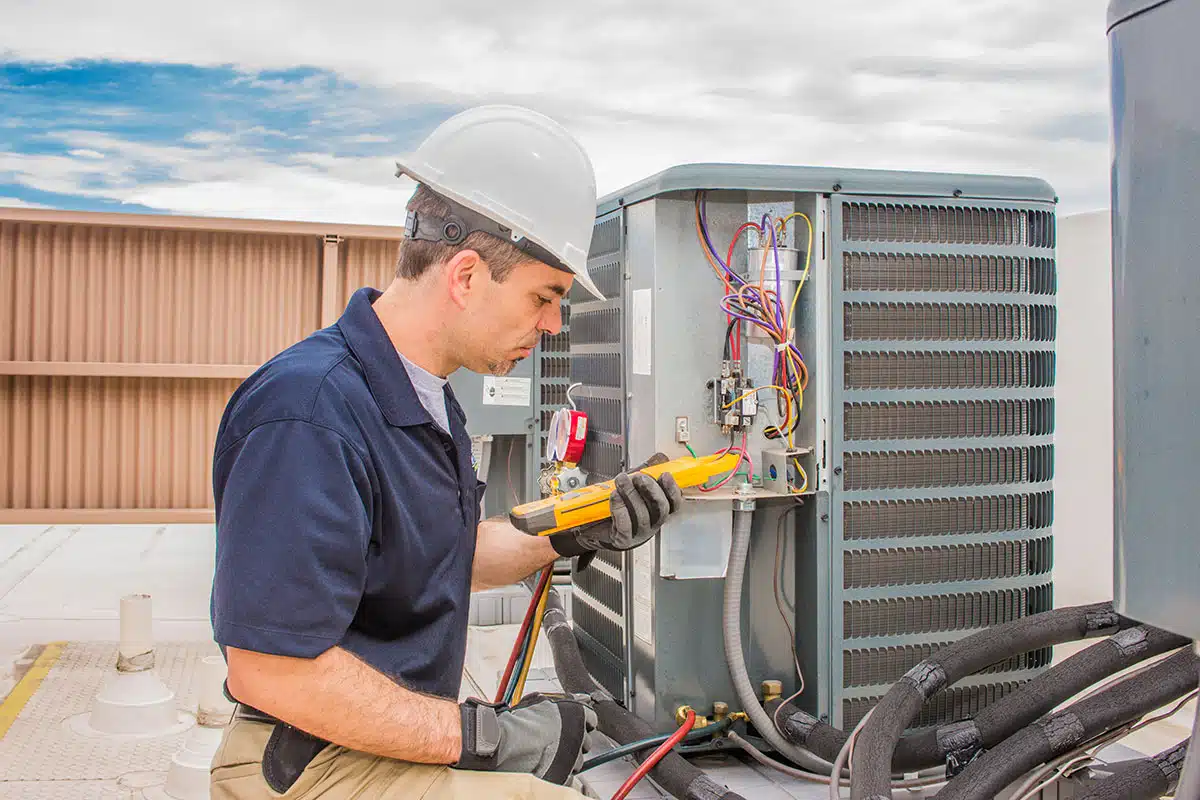
A man wearing a hardhat uses a handheld device to check an outdoor component of an HVAC system.
Real-time access to data enables technicians to respond more quickly to urgent repairs.

Once alerted, the maintenance worker can then retrieve the required service details on their device, including comprehensive information about the equipment malfunction. And because the asset’s location is provided through the app’s mapping features (for both indoor and outdoor locations), the technician knows exactly where to go, so that no time is wasted trying to locate the malfunctioning equipment.

Cost-Saving Maintenance Operations

Beyond scheduling features that streamline maintenance tasks, mobile CMMS contains tools that aid in lowering costs and improving productivity. These additional features can include:

Predictive Maintenance

Predicting maintenance and averting equipment failure is a cost-saver in any organization. With AI-enabled mobile CMMS, facility professionals can manage and utilize real-time data to create health and risk scores for facility equipment. Data such as unplanned downtime, mean time between failures, or failure rate by manufacturer can be compiled to identify problems and reduce downtime.

Centralized and presented in easy-to-view charts and scores, these insights can inform the technician in the field, automatically trigger preventive maintenance systems, and be viewed by reliability engineers whose job it is to monitor asset lifecycles. Together these data-driven insights can anticipate maintenance needs and potential problems, in addition to optimizing asset performance and extending equipment lifespan.

Cost-Saving Monitoring  

With powerful analytics, mobile CMMS can also monitor KPIs (key performance indicators) related to work order management, maintenance costs, and time to repair. Managers can set up customizable dashboards to immediately view current and historical trends and perform analyses to enable continuous improvement, optimize budgets, and enable informed decisions—all of which help keep costs in check.

Recordkeeping for Compliance and Accuracy

Accurate recordkeeping is not only vital for providing insights on performance and for predicting equipment lifespan, it’s also necessary in order to meet industry regulations. Mobile CMMS makes it easier to comply with regulatory standards by ensuring accurate recordkeeping and automating documentation.

With mobile CMMS, all the information gathered by technicians in the course of their work is compiled as it’s entered into their mobile devices, providing up-to-date access to technical and HSE (health, safety, environmental) information. A robust mobile CMMS can then use this information to automatically generate reports that meet compliance requirements.

Making Technicians and Engineers More Productive

It’s an unfortunate fact that just as more facility managers and engineers are retiring, buildings are becoming more complex. According to studies using data from the BLS (Bureau of Labor Statistics), the average facility manager is over 50 years old, and experts predict that approximately 60 percent of experienced facility staff will be retiring within the next seven years. Businesses are now facing a potential shortfall of qualified facility professionals.

By streamlining operations and centralizing information, mobile CMMS can mitigate this looming loss of knowledge and experience. With detailed information available through a handheld device, new and less experienced technicians can easily navigate maintenance complexities, enabling them to handle increasingly complicated and digitally dependent operations. By generating reports and making analyses created by more veteran engineers easy to access, mobile CMMS can be the expert looking over the shoulder of less experienced technicians, providing know-how that previously took years to acquire.

Information such as previous work records, diagrams of equipment (annotated with notes from experienced engineers) can make it easier to identify parts and devise fixes. And if human assistance is needed, the CMMS app enables technicians and engineers to collaborate remotely via phone or tablet. This empowers technicians to make more informed decisions and prioritize tasks, and allows organizations to exponentially leverage their engineers’ knowledge and skills.

Get the Most Out of Your Mobile CMMS

As with all data-dependent software, mobile CMMS comes with one caveat: You get out what you put in. The best results will always be gained when operators and staff have extensive knowledge of the software’s capabilities and functions. Users should also receive training at regular intervals, as mobile CMMS apps are upgraded frequently.

Anytime, Anywhere Facilities Management

Businesses are facing two difficult trends. Buildings are becoming increasingly complex to maintain, and experienced facilities managers are about to enter a retirement wave. But not all the news is bad. Mobile CMMS can help businesses deal with both these trends by making it easy to gather and analyze data from the field, and by helping less experienced technicians benefit from the wisdom of more experienced ones—even when the two are miles apart.

Experts predict that roughly 60 percent of experienced facility staff will retire within the next seven years.

A Facilities Management Partner You Can Rely On

Could you use a tech-savvy and budget-conscious partner for your organization’s facilities? PRIDE Industries has over 35 years of experience in operations and maintenance. No matter what the size of your facility, we can help you make the most of your existing assets.

In the array of daily tasks and skills required to ensure facility operations are streamlined, building energy management looms large. Energy is vital for a building’s ongoing security and asset operation, and poor or excessive energy use comes at a monetary and environmental cost.

Effective management of an organization’s energy also impacts tenant and market perceptions of a brand and its building operations. In fact, studies by ENERGY STAR have shown that when compared to typical buildings, energy-efficient buildings have a resale value that’s up to 31 percent higher and deliver rental premiums that are up to 16 percent higher.

Not only that, according to a 2024 joint report issued by PwC and the World Economic Forum (WEF), if organizations implement energy-saving measures (such as using AI to control existing lighting and HVAC systems) by the end of this decade, it’s possible to achieve up to a 31 percent reduction in global energy consumption. This reduction could result in annual savings of $2 trillion at current energy prices.

These numbers illustrate that energy-efficient improvements in processes and equipment can decrease energy intensity (the amount of energy used per unit of gross domestic product) by enabling over-utilized or wasted energy to be funneled into more productive activities. Using building energy management to facilitate the capture of wasted energy for productive use not only boosts economic growth but also saves money, strengthens competitiveness, and reduces carbon emissions.

Studies by ENERGY STAR have shown that when compared to typical buildings, energy-efficient buildings have a resale value that’s up to 31 percent higher and deliver rental premiums that are up to 16 percent higher.

So, what are the best ways to keep on top of building energy management? We take a look at this crucial area to see how you can start taking steps this year to optimize energy management in your building.

Building Energy Management: Modifications and Maintenance

Modifications that optimize building energy management range from moderate operations and maintenance changes that require little or no cost to large capital expenditures like replacing equipment.

Although it’s true that large energy savings can be gained from projects that require an upfront investment—such as replacing an HVAC system—small adjustments can also save energy, and a lot of small changes can add up to significant cost savings with minimal effort. To get you started, here is a list of energy-saving modifications and maintenance strategies that don’t require a huge dollar investment.

Lighting

  • Optimize daylight. Relying on daylight instead of electric lights can reduce costs by 10 to 40 percent, so make the best use of natural light by opening and closing blinds strategically.
  • Replacing fluorescent and incandescent lighting with LEDs can reduce energy consumption by up to 90 percent. And since LEDs last up to 50 times longer than conventional lightbulbs, you’ll also save on labor costs. Keep in mind that parking lot lamps and exit signs can also use LEDs.
  • Look at areas with low traffic use and install occupancy sensors. This can save between 15 to 30 percent in lighting costs. And make sure that light sources aren’t blocked by drapes, bookcases, etc.
  • Consider changing custodial schedules to reduce the hours per day that lights are turned on. In other words, consider having cleaning staff work during the day. Some facilities have found that cleaning a building during a time when occupants are in the building can actually help reduce tenant complaints—perhaps because tenants are more aware of the work being performed.
A man standing on a ladder, wearing a hardhat, goggles, and gloves, uses a screwdriver to remove the cover of a light fixture.
LED lightbulbs can reduce energy consumption by up to 90 percent and last up to 50 times longer than traditional incandescent lightbulbs.

Maintenance and Repair

  • Conduct a visual inspection of equipment insulation, ductwork, and piping, looking for tears, stains, etc. Repairing these will increase energy efficiency.
  • Check that vents are not blocked by furniture or other items. Efficiency can be reduced by as much as 25 percent when air vents are covered.
  • Ensure HVAC filters are changed regularly. When filters are dirty, the system must work harder, lowering indoor air quality and costing more to operate.
  • For a more efficient HVAC, install variable frequency drives (VFDs). VFDs allow better flow control, so the system doesn’t run at full throttle when it’s not needed.
  • Adjust building automation system (BAS) controls to automatically reduce the thermostat setting for times when the building isn’t occupied.
  • Take advantage of your facility’s energy management systems (EMS) by ensuring staff are fully trained in all control capabilities. If the system is only used to turn equipment on and off or for time-of-day control, you may be missing out on energy-saving strategies.
  • Regular HVAC check-ups are essential. An annual maintenance contract should include pre-season tune-ups, which will make the system more efficient and prolong its life.
  • Keep refrigerator condenser coils clean and maintain an air gap of at least three inches between the wall and the back of office refrigerators or water coolers.
  • Perform an afterhours/nighttime audit to find out which equipment is using energy unnecessarily. Then update the sleep settings on all office equipment to ensure that they automatically go into low-power mode when not in use.
  • Revisit equipment sequencing to optimize start-up and power-down times.

Consider Commissioning

Commissioning your commercial buildings is like tuning up your car. In the ordinary course of operations, building systems naturally “drift” from their optimal settings over time. Commissioning makes sure these systems—many of which impact energy costs—are running the way they should be.

Whether you conduct a retro-commission (for buildings that have never been commissioned) or a re-commission (if it’s been more than three to five years since the last commissioning), “tuning up” your facilities can yield substantial energy savings.

Measure Consumption

If you’re unsure which modifications to make and want to take a systematic and customized approach to saving energy in your facility, then an energy audit is a good way to start. A whole building energy audit can range from a walk-through assessment to an in-depth report that will include vendor quotes for large projects. ASHRAE (American Society of Heating, Refrigerating and Air-conditioning Engineers) has three levels of energy audits set out in their Standard 211:

  • Level 1 – This level is comprised of a walk-through that looks at the building envelope, HVAC, lighting, and water infrastructure. It also includes a utility bill analysis to understand historical energy consumption patterns. This level is a good initial assessment for small to medium-sized buildings, or if you have budget constraints. The audit typically results in a brief report that identifies energy-efficiency measures (EEMs), many of which will likely fall in the low- to no-cost category.
Assessing energy use is the first step in developing a building energy management plan.
  • Level 2 – With a Level 2 energy audit, auditors spend more time on site, speaking with facility staff and conducting a thorough building survey. This audit involves a detailed analysis of energy systems, historical data, and visual observations. The resulting audit report summarizes current energy consumption and costs and provides an analysis of recommended EEMs, including implementation costs, expected savings, and payback periods.
  • Level 3 – This type of analysis builds on the Level 2 energy audit and focuses on the feasibility of large capital-intensive projects that will save energy. The report provides engineering recommendations based on computer modeling, and includes a financial analysis (including lifecycle cost analysis and return on investment (ROI) calculations) of the benefits and risks associated with installing and maintaining energy-saving upgrades, such as new equipment.

ASHRAE audits take a “whole building” approach, but there are instances where you may have a more focused need—such as when an HVAC system is getting old and inefficient. In this case a targeted audit will reveal the best time to replace the system and how long it will take for the investment to pay off.

Alternatively, it’s possible to conduct an in-house energy audit. Keep in mind, however, that performing your own audit will require a detailed plan that clearly defines what data is needed, and a collaborative effort among employees to collect it.

If you choose to conduct an in-house energy assessment, consider using energy modeling tools such as those provided by the EPA’s ENERGY STAR. These tools will enable you to set and measure building energy targets in an apples-to-apples comparison against existing buildings from a national database. And if your city or state already requires energy benchmark reporting for your facility, you have a head start on your information gathering efforts.

Ongoing Monitoring and Building Energy Management Through Technology

Smart use of IoT and AI is the future of energy optimization in commercial facilities. Upgrading to AI-driven, smart equipment can increase energy efficiency by 30 percent, resulting in a payback period of fewer than 15 years, according to the PwC and WEF 2024 report.

A significant advantage of IoT in building energy management is its ability to continuously monitor systems and equipment, eliminating the need for a human to do physical checks. But to reap the benefits of smart systems, you’ll need to first choose the technology that’s right for your facility and invest in staff training to get the most from your system. Most importantly, you should understand what these new technologies can and can’t deliver. 

How do IoT and AI tools work to improve building energy management?

  • Connectivity: Through an infrastructure of information gathered by connected equipment, devices, and systems, IoT allows communication and information sharing in real time.
  • System Control: By using sensors and actuators (the components responsible for adjusting system parameters), IoT delivers more precise control of energy use.
  • Analysis: With AI, vast amounts of data can be analyzed, providing valuable insights that allow for informed energy-saving decisions to be made.

How do IoT and AI enhance building energy management?

  • Recognition of Energy Patterns: IoT platforms can identify when and how energy is used within a building. This information allows facilities managers to implement cost-reduction strategies, such as curbing energy consumption at peak times to avoid paying higher rates for electricity.
  • Occupant Activity Analysis: Understanding the behavior patterns, activity levels, and comfort preferences of occupants is crucial for optimizing energy efficiency. IoT can track and analyze occupants’ behavior, enabling tailored energy-saving measures.
  • Weather Data: Weather conditions directly impact energy usage, particularly with HVAC systems. IoT platforms can collect, analyze, and correlate weather data with other building information (such as occupancy levels) and adjust energy management strategies based on weather forecasts.
  • Total Energy Consumption: IoT technology can track the total energy consumption of a facility’s systems and equipment—for both systems that operate continuously and intermittently used assets—providing a clear picture of overall energy usage and the role of individual devices.

Using IoT and AI technology allows real-time data updates from sensors and fast action from actuators to provide occupants with the same level of comfort while using less energy.

Investing in Energy Efficiency Pays Off

Studies like the PwC/WEF analysis show that optimizing energy management translates to lower operating costs, increased tenant satisfaction, and a smaller carbon footprint. Taking the steps to measure, modify, and monitor your facility’s energy use will lower energy consumption, but there is no one-size-fits-all solution. Good building energy management requires an in-depth analysis of your facility’s unique characteristics and energy consumption patterns, as well as a customized plan to optimize energy use.

Fortunately, even small changes can yield savings. Every step counts, from simple interventions to building retrofits. Whether it’s optimizing airflow and daylight by rearranging furniture, or investing in sophisticated IoT and AI systems, improving energy efficiency is a win-win for your business and the planet.

An Energy-Saving Partner

PRIDE Industries has over 35 years of experience in facility management, energy systems maintenance, engineering services, and preventive and predictive maintenance. We can help you optimize your facility’s systems, lowering energy and other costs while maximizing operations and occupant comfort.