Our Stories

In 1954, the first robotics patent was filed by George Devol, affectionately known as the “grandfather of robotics.” In 1956, together with Joseph Engleberger, Devol founded the first robotics company, Unimation. Five years later, Unimation’s first robot—aptly named Unimate—was installed at a GM plant where it was programmed to retrieve and stack hot die-cast metal pieces, saving human workers from the risk of burns. Soon, Unimation expanded to include industrial robots that could print, weld, and assemble.  

Devol’s patent for a programmable robotic arm became the foundation of our modern robotics industry. Today, according to the International Federation of Robotics, there are approximately 3.9 million industrial robots worldwide. Statista estimates that the global robotics industry will hit $43.32 billion in revenue in 2027, compared to just $18.47 billion in 2016.

The Benefits of Industrial Robots in Electronics Manufacturing

Current trends point to electronics manufacturing becoming the largest market for industrial and collaborative robots in the near future.

The demand for industrial robots is rising in many industries, including electronics manufacturing, which currently accounts for 22% of total robot shipments. This is second only to the automotive industry, which accounts for 33%, according to Supplyframe. But while the automotive industry has been the major consumer of industrial robots for a long time, Supplyframe reports that current trends point to electronics manufacturing becoming the largest market for industrial and collaborative robots in the near future. This development is not surprising, as industrial robots offer electronics manufacturers a host of advantages.

Ability to Tackle Complex or Delicate Tasks

As components and circuits continue to shrink, and component density rises, human technicians are encountering physical limitations. Automated robots, on the other hand, support miniaturization. They can build connectors, subassemblies, display screens, and more—safely handling electronic components of any size. Robots equipped with force and tactile sensors, for example, can place even delicate components precisely and quickly, speeding up the coating and assembly of PCBAs and finished products.

Accuracy and Speed

For the moment, humans are still able to navigate the challenges of miniaturization, component fragility, and task-to-task variability. But they are often no match for robots when it comes to speed in assembly and testing. Humans are also more likely to introduce errors, waste, and inefficiencies. Industrial robots equipped with sophisticated imaging technology and AI software, on the other hand, can efficiently perform both inspection and pick-and-place operations with an extremely low error rate.

Consistency and Dependability 

Unlike humans, industrial robots can repeat the same task over and over without getting tired, taking a break, or making a mistake. They can also work beyond an eight-hour shift with no overtime pay required. Industrial robots are also more consistent, able to perform the same function over and over without variation—producing thousands of PCBAs, for example, that are identical.
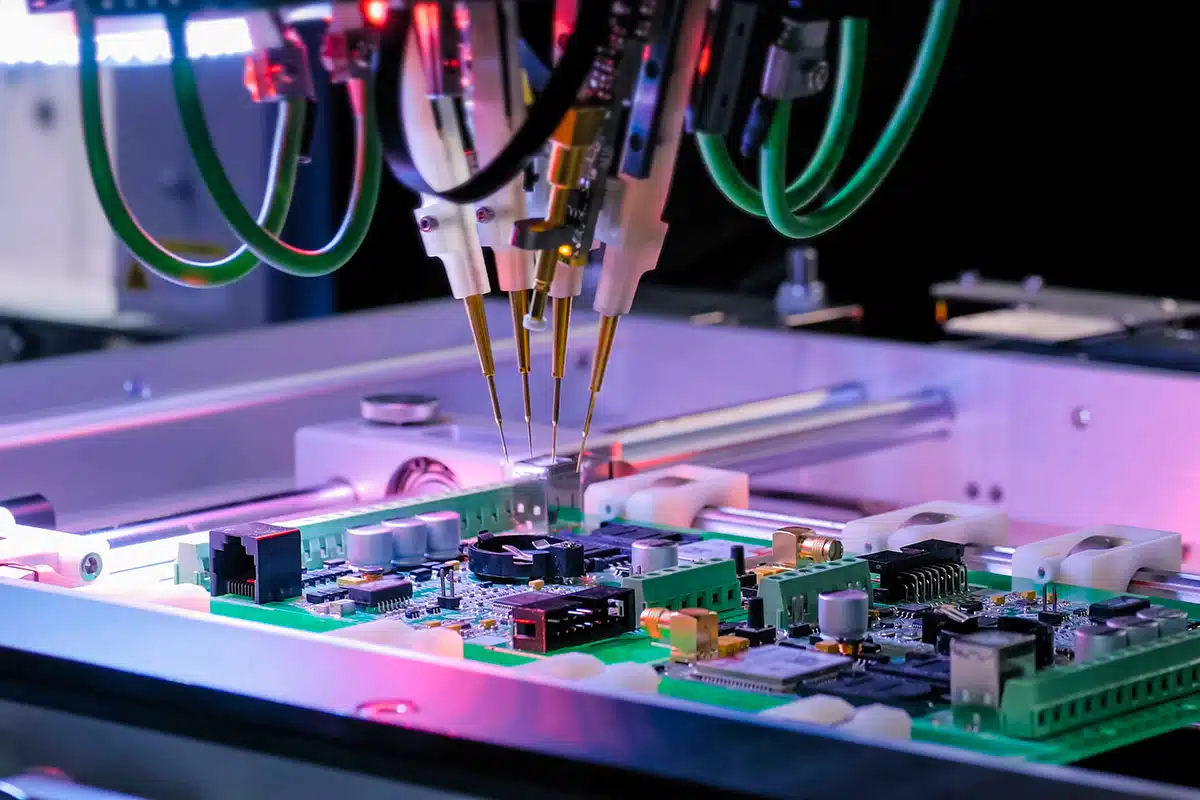
A close-up view of a robotic flying probe hovering over a printed circuit board assembly
Flying probe testing uses programmable robotic probes that move over the surface of the PCBA, contacting test points, components, and traces.

Flexibility

Modern robots aren’t just more precise than their predecessors—they’re also more adaptable. Today’s robotic arms are flexible and lightweight, and can easily adapt to multiple applications, saving manufacturers both time and space. When product designs change, smart robots don’t require replacing; reprogramming and swapping out a few parts, such as an arm attachment, is often all that’s required.

Workplace Safety

Workers can also benefit from automation, especially when it comes to workplace safety. Electronics manufacturing involves the use of numerous potentially hazardous heavy metals and other materials. Robots can help reduce workers’ exposure to these materials by taking over coating and other tasks that require the use of chemicals. And when it comes to assembling the finished product, robots can also eliminate the need for workers to repeat ergonomically problematic movements.

Cost  

Many steps in electronics production—including component fabrication, PCBA assembly, adhesive application, inspections, packing, etc.—are repetitive tasks. This makes them ideal for automation. Using robots to perform these functions doesn’t just save on labor costs; it also reduces the errors that lead to costly manufacturing waste.

Three Trends in Industrial Robotics

Human inefficiencies have a cost. So, an automated solution that can simultaneously improve product quality while lowering overall unit cost is a boon to manufacturers. In many cases, industrial robots provide that solution.

Electronics manufacturers are recognizing these benefits. In a survey of industry leaders by trend-spotting company Exploding Topics, 97% listed improved product quality as a clear benefit. Additionally, 95% mentioned faster production speeds, and 92% cited greater production capacity.

Around the world, companies are embracing automation. In fact, McKinsey & Company reports that many companies will dedicate 25% of their capital spending over the next few years to automated systems, with the goal of improving output quality, efficiency, and uptime. This global trend in robotics adoption is due to the expanding capabilities of today’s industrial robots, which are being fueled by three major technological advances.

The head and shoulders of a humanoid robot with a metal-and-silicone face
Some new robots have a more accessible, humanoid appearance.

Machine Learning and Artificial Intelligence (AI)

Sometimes the terms “AI” and “robotics” are used interchangeably, but they are two different technologies. Robotics is the science of designing and building physical robots to perform automation. AI, on the other hand, focuses on how to create machines and technology that mimic human intellectual capabilities.

The two worlds, however, have a lot of overlap. Some robots now allow users to program them using natural language instead of code. This advance is a big one, as it removes the need for workers with specialized programming skills. And in some cases, the need for humans is even further reduced. It’s possible to build a factory that’s so automated that a human need enter the premises only once every few weeks. Known as “lights-out manufacturing,” this approach to production is nearly fully automatic. For example, FANUC, a Japanese robotics company, operates a factory where robots can run unsupervised for up to 30 days at a time.

Cobots

Have you ever felt like you could use an extra pair of hands to perform a task? A cobot, also known as a collaborative robot, provides that option. Cobots are designed to work alongside humans and are one of the fastest-growing segments of the industry. They are especially useful for small companies that cannot afford or do not want to deploy a fully integrated robotic system.

Mobile Manipulators

Mobile manipulators—also known as “MoMas”—combine the mobility of robotic platforms with the dexterity of manipulator arms. The mobile platform extends the workspace of the arm, while the arm itself offers the necessary functional operations. Using cameras and sensors, these robots can perform maintenance tasks and inspections on equipment.

With their ability to support human workers, MoMas are being used across a large spectrum of industries. For example, in the aerospace and defense sector, they can perform such tasks as aircraft assembly, inspection, and maintenance. Some of their benefits in this sector include the ability to handle delicate components, maneuver in confined spaces, and perform precise operations.

MoMas are also bringing further automation to the car industry. As automotive electronics become increasingly sophisticated, car manufacturers are looking for ways to be more efficient. Mobile manipulators are ideally suited for such tasks as assembly, transport of components, and quality checks. Using this advanced technology, car manufacturers can improve product quality as well as production speed.

Given their myriad applications, and the ongoing labor shortage, it’s no surprise that MoMas are gaining in popularity across these and other industries.

When Not to Use Industrial Robots

While industrial robots bring many benefits, there are situations in which companies would be wise to think twice before investing in this capital-intensive technology. Here are a few caveats to keep in mind.

Cost

While industrial robots can certainly save money in the right situations, just the opposite is true in some cases. Companies, therefore, need to perform their due diligence by conducting a cost-benefit analysis. Humans can be less expensive—and reliable enough to produce a high-quality product. The fact is, installing industrial robots entails a high capital outlay. And in some cases, a cost-benefit analysis will reveal that the return on investment does not justify the expense incurred. In these cases, it’s good to keep in mind that there are other ways to save time and money in electronics manufacturing.

Complexity

A lack of experience with automation can pose a significant hurdle for many companies, especially those that are small or mid-sized. Even if you have the capital to install the system, do you have personnel with the expertise to operate and maintain such a system? While generally enthusiastic, McKinsey found several concerns about the adoption of industrial robots, including how to fit the machines into existing spaces, and the ability of the robots to interface with existing production processes.

Cybersecurity Risks 

Stories of cyberattacks, across multiple industries, are plentiful in the news today, leading to widespread concern about automation and the misuse of AI. According to the AIAAIC, the number of AI incidents and controversies recorded in its database is now 26 times greater than it was in 2012. And companies have noticed—McKinsey found that cybersecurity concerns sometimes deter manufacturers from the use of robotics.

Should You Invest in Industrial Robots?

So how does a manufacturer decide whether or not to pursue industrial robots as part of their manufacturing plan? As with so many things, it depends on your company’s unique situation. For some manufacturers, a more hands-on approach will be optimal. Depending on the manufacturing steps, humans may be able to move more efficiently from one task to another than robots that require refitting or reprogramming. If you manufacture a broad range of products, would automating your factory floor require a plethora of specialized robots?

It can take a lot to figure out the right balance between robots and humans. Fortunately, you may not need to decide. One way to keep it simple—and avoid a high capital outlay—is to hire a contract manufacturer who has already figured out how to get the job done in the most efficient and cost-effective way.
Reliable Electronics Manufacturing

Are you looking for a contract manufacturer that you can count on? Our in-house design team, certified engineers, and dependable workforce mean that you can receive all the benefits of automation and skilled labor—without unnecessary capital outlays.

In the wake of the pandemic, employee mental health is taking its rightful place as a business imperative. Not only are many companies implementing stigma-reduction initiatives, but they are also normalizing reasonable accommodations—most that wind up benefiting all employees. Here, we explore the top five, but first let’s bust a myth:

Myth: Accommodations are Expensive

Fact: In the Job Accommodation Network’s (JAN) most recent survey, almost half of employers said accommodations cost nothing, and 37 percent reported a median one-time cost of $300. Moreover, by law, accommodation cannot pose an undue burden to the employer.

Five Mental Health Accommodations and Their Benefits

Destigmatization Measures

Stigma thrives in silence. Fortunately, a 2022 Fisher Phillips survey found 60 percent of employers starting to have conversations about mental health—whether through ERGs or other workplace initiatives. That’s a good thing. Where stigma is sent packing, employees with mental health conditions are more able to bring their whole selves to the workplace—including the full range of their skills and talents. What’s more, in the absence of stigma, they are far more likely to ask for a simple accommodation that could allow their abilities to shine even more. Ultimately, employers will reap the benefits. Companies that prioritize inclusion of people with a variety of disabilities perform better than peer organizations that lack this level of inclusion.

Flexible Schedules

A 2022 study by McKinsey & Company found that, overall, employees and employers are already embracing flexible schedules and conditions—because it works. “Employers report many benefits from shifting to flexible schedules,” reported SHRM. “Ranging from making it easier to attract talent to increasing employee productivity, loyalty, and retention.” Similarly, a survey by LinkedIn Talent Solutions found 94 percent of employers reporting the same or higher productivity than with traditional 9-to-5 teams. Because flexible schedules remove stress around doctor appointments, therapy, or support group attendance, employees are better able to manage mental health disabilities and conditions—or even eliminate some of them.

Rest Area/Quiet Space

According to Mental Health America, “Employees should have access to safe, calm, and private space(s) at their company.” Brain science bears this out. Typical office distractions—pinging email and chat messages, office machinery, coworker discussion at volume, and multi-tasking—drench the brain in cortisol and adrenaline. In the short term, these chemicals fuel us through short periods of stress. However, long term, they can deplete the body of calming hormones like serotonin and dopamine—affecting everything from cognition to heart rhythm, breathing, sleep, and pain levels. Some companies are even incorporating meditation in their workplaces—an initiative supported by several studies, including a comprehensive 2016 analysis by Case Western Reserve University. Their research found that “injecting a corporate culture of mindfulness not only improves focus, but the ability to manage stress and how employees work together.” Google, Aetna, Mayo Clinic, and the United States Marine Corps, among others, are already doing this.

Identifying and Reducing Triggers

For conditions such as anxiety, panic disorder, and post-traumatic stress disorder, common triggers include excessive noise, pulsing light, crowded spaces, and spaces without easy exits. An individual recovering from PTSD, for example, may experience traumatic memories that involved being trapped. Similarly, an employee with panic disorder may be triggered in large groups. While some workspaces—a warehouse floor, for example—may not allow for trigger mitigation, many do. Simply allowing an employee to move to a different workstation could be enough to do the trick. In meetings, an individual may be allowed to sit near the exit, while another might have a schedule that places them at work when the office is less crowded. Such accommodations are easily implemented and cost nothing.

On-Site Support Person

Employees who live with mental health challenges tend to feel isolated in the workplace, so the presence of even one empathetic person can make all the difference. Many companies have begun implementing mental-health-focused ERGs, groups that encourage interpersonal connection through the safe sharing of personal stories. Similarly, some organizations have begun to implement mental health “buddy” or “peer” programs. In short, a mental health peer is an individual who has lived experience with a mental health condition. Identified workplace peers (or buddies) typically undergo training—including active listening, ethics, and boundary establishing—equipping them to be supportive in a peer capacity, rather than a clinical one. Multiple studies reveal that this strategy works. Employees engaged in a workplace peer support initiative experienced enhanced mental well-being, heightened job contentment, and even elevated productivity levels. 

Don’t Overlook One in Four Potential Employees

One in four adults in the United States lives with a diagnoseable mental health condition. They might be your grocer, accountant, custodian, physician, or CEO. They could be the next candidate you interview—the one who is a perfect fit but has a standing appointment on Wednesday afternoons. “The reality is that workers with mental illnesses are no different than your average employee,” reports Health Partners, citing that employers who hire people with mental illness say that they are as productive, punctual, dependable, and motivated as those who do not have a mental health condition. This finding is consistent with the data when it comes to employees with disabilities at large. In fact, a study by analyst firm Accenture found that companies that actively recruit and support people with disabilities, including mental health conditions, earn six times more revenue, 2.6 times more net income, and two times more economic profit than companies that don’t.

As labor shortages persist across industries, it’s imperative for employers to embrace the workability of one in four adults in the United States who live with a mental disability. PRIDE Industries has decades of experience helping companies leverage the talents and business advantages of employing people with mental health and other disabilities. This includes a broad range of expertise in identifying and incorporating accommodations that significantly enhance overall success.

Let Us Help You Build an Inclusive Labor Force

Inclusive workforces, including those that employ people with disabilities, boast 35 percent greater productivity. PRIDE Industries has helped hundreds of companies to make their teams more inclusive, helping recruit, hire, train, and support this reliable talent pool—free of charge to employers.

When it comes to workforce inclusion, significant progress has been made in hiring and retaining people with physical disabilities. To some degree, inclusion has extended to those who live with neurologically based disabilities as well. Amidst these strides, however, one group is often left out of the conversation: people with mental (or psychiatric) health conditions.

While 90 percent of Fortune 500 companies report that they’ve hired applicants with physical disabilities, only 20 percent say they’ve hired people with mental health conditions. Given that one in four adults in the United States lives with a mental health condition, that translates to a huge untapped workforce.

Fortunately, some business leaders are speaking up about this aspect of inclusion. “It’s simply silly” to think that employers would intentionally or unintentionally exclude such a significant percentage people from their workplaces, said Aubrey Blanch, VP of Equitable Operations at Culture Amp.

According to the Substance Abuse and Mental Health Service Administration (SAMSHA), people with mental health conditions tend to be just as productive and dedicated as other employees. Of those already in the workforce, SAMHSA notes, “Employers often do not know if someone has a mental health condition, but if the condition is known to the employer, they often report good attendance and punctuality as well as motivation, good work, and job tenure on par with, or greater than, other employees.”

As for accommodation costs, Blanch observed that they are typically nominal—a fact supported by data. She also emphasized that everyone needs specific support to succeed. Moreover, according to a survey by the Job Accommodations Network (JAN), accommodations for employees with disabilities make the workplace better for everyone.

What is a Mental Health-Related Disability and How Prevalent Are They?

A mental health condition becomes a disability when it substantially limits one or more major life activities. As mentioned above, roughly one in four adults in the United States lives with a diagnosable mental disorder in a given year. Anxiety and depression are the most prevalent conditions, followed by post-traumatic stress disorder (PTSD) and bipolar disorder. And high rates of mental health conditions aren’t limited to the United States. Studies predict that one out of every two people, worldwide, will develop a mental health disorder in their lifetime. By 2030, mental health will be the leading cause of disease, globally.

Given that so many people live with a significant mental health condition—and research shows that employment improves mental health—their inclusion in the workforce should be a given. So, why do these individuals face employment barriers?

The answer lies in stigma—negative attitudes, beliefs, and stereotypes that society attaches to certain groups. In the case of mental conditions, today’s stigma echoes draconian superstitions dating back centuries. Though time has marked incremental shifts in attitude, much work is still needed to dismantle long-held misconceptions.

The Workplace is No Place for Stigma

Kaiser Permanente found stigma to be prevalent in the workplace, with eight out of 10 employees afraid to mention their condition or seek accommodation. Lyra Health echoes this finding, citing that stigma silences employees, making them “less likely to take steps to support their mental health.” Stigma deters even eager, highly qualified job seekers who fear asking for even the simplest mental health accommodation.

In addition to harming employees and candidates, stigma deprives employers of able, skilled employees. A quiet space or flexible schedule, for example, may be all an employee needs to be a top producer. When fear of an employer’s judgment stops the accommodation discussion before it starts, valuable skillsets remain underutilized or untapped entirely.

Stigma is exacerbated by a limited understanding of mental health as a spectrum, according to stigma expert Professor Stephen Hinshaw. “We often go immediately to extreme cases…a tiny percent of people with very severe, untreated chronic mental illness.” Focusing on extreme cases perpetuates cultural ignorance and fear, silencing those with less severe conditions. To break this cycle, Hinshaw advocates for a shift in workplace culture to encourage open discussions about mental health without shame or fear of repercussions.

Links Between Mental Health Conditions and Excellence

Progress has been made, but lingering misconceptions about mental health continue to hinder workplace inclusion. The most damaging fallacies cast an entire person as wholly “mentally ill,” rather than simply as a person that lives with a mental health condition that affects a certain aspect of their life. But, just as Deafness doesn’t have to impair a person’s ability to communicate effectively, and wheelchair use has no bearing on managerial skills, limits posed by even a severe mental health condition don’t automatically translate to job performance. In fact, data underscores positive correlations between some types of mental illness and success.

In a 2015 study, researcher Dr. Michael Freeman found that 49 percent of entrepreneurs who start a company have experienced a mental illness. A 2016 study published in Molecular Neuropsychiatry revealed that people with bipolar disorder, in particular, possess several business-oriented personality traits, including drive and motivation, ideation originality, and cognitive flexibility. Still further research by Nassir Ghaemi, MD, found similar links between leadership qualities and mental conditions such as bipolar disorder, anxiety, and depression.

People with a tendency toward anxiety tend to also be detail oriented, organized, creative, and punctual. Data indicates that people with certain types of PTSD demonstrate heightened empathy—increasingly found to be an imperative business skill. Moreover, several researchers have found depression underlying the empathy expressed by the likes of Mahatma Gandhi, Abraham Lincoln, Martin Luther King, Jr., and other successful leaders. It’s hard to imagine a world where the skills and talents of these luminaries had remained unutilized.

Inclusion Works

Copious research finds several business benefits associated with including people with disabilities in the workforce. Among them are improved work culture, boosted productivity, and increased market appeal. A 2023 study by Accenture found that companies that actively employ and support people with disabilities achieve greater financial outcomes—1.6x more revenue, 2.6x more net income, and 2x more economic profit—compared to peer organizations. A National Institutes of Health review drew similar conclusions, adding increased safety, higher employee retention, better company image, and boosted customer loyalty to the list.

With mental health awarness on the rise, it makes sense for companies to extend inclusion efforts toward those who live with them. And this level of inclusivity “isn’t actually that complicated,” said Blanch. “It simply requires intentionality and effort (that’s rarely about any type of financial cost).”

A big part of that intentionality centers around creating a work culture that normalizes mental health challenges and disabilities. Some companies are already taking innovative approaches to this. In 2023, Mind Share Partners, for example, launched the Leaders Go First campaign—a national initiative that featured a collection of videos from C-level leaders sharing their personal mental health stories. Microsoft, Dove, Unilever, Bell, and Pinterest all feature robust mental health awareness initiatives as well. Still other companies have encouraged open disclosure for some time. Barclay’s “This Is Me” initiative has featured employees sharing their personal mental health jouneys since 2013.

Where stigma is reduced and a few basic accommodations implemented, organizations can reap the benefits of a truly inclusive workforce—one that includes skills and talents that would otherwise go untapped. With labor shortages impacting many industries, employers cannot afford to overlook the one in four adults in the United States living with a mental health condition, many of whom are willing and able to contribute to the workforce. PRIDE Industries has decades of experience helping hundreds of businesses tap the talents and the business benefits of employing people with disabilities, including mental health conditions.

Let Us Help You Build an Inclusive Labor Force

Inclusive workforces, including those that employ people with disabilities, boast 35 percent greater productivity. PRIDE Industries has helped hundreds of companies to make their teams more inclusive, helping recruit, hire, train, and support this reliable talent pool—free of charge to employers.

Professional facility managers know that regular commercial building inspection is not optional but crucial to ensure facility occupants are safe and all building structures are sound.

Although inspections vary in scope across industries, BOMA (Building Owners and Managers Association International) recommends an annual “roof to floor” inspection for building envelopes, and OSHA suggests quarterly, monthly, or even weekly “self-inspections” for buildings, depending on the industry and potential facility hazards.

Whether you inspect once a year or once a quarter, tackle the entire facility in one go or break it up into sections, it can take a lot of labor hours and experienced personnel to carry out a thorough inspection.

The good news is that innovative, time-saving tools are becoming more accessible for inspection tasks, enabling efficient, informative, and reliable checks and monitoring.

Here are some of the tools being used for building inspections by facility managers looking to stay current and ensure that essential inspections for safety and building longevity can be conducted effectively.

Some companies are capitalizing on the fact that FAA rules don't apply to indoor drone use, and using these devices for interior inspections of industrial plants, greenhouses, warehouses, and other buildings.

Thermal Imaging Inspections

Thermal imaging is a non-invasive infrared (IR) technology that has been around for decades, but now sophisticated handheld devices are readily available to assist facility technicians and maintenance workers in inspecting and troubleshooting building assets.

The technology works by picking up differences in temperature with the use of mid- or long-range IR waves and creating a visual heat map of the object it is pointed at. (This is different from IR imaging or night-vision cameras that use short-range infrared waves.) By measuring temperature variations, and showing results on the monitor, thermal imaging devices identify hot spots that can indicate overheating components, or cooler areas that may signal energy loss or water intrusion.

With handheld thermal imaging tools, technicians can simply point the device toward an asset—such as an HVAC system—to identify potential overheating. Directed at a building’s doorways, windows, or refrigeration entrances, the imaging tools can reveal insulation weak spots. Thermal imaging can even produce results in poorly lit areas, making it ideal for building diagnostics and commercial building inspection.

What are the Advantages and Disadvantages?

Speed -Thermal imaging is a great timesaving tool that can quickly identify problems not visible to the human eye.

Convenience – The technology can be used without operation disruptions and does not need direct contact with the asset, creating safer conditions around electrical inspections. 

Humans Needed – On the downside, it’s important to remember that it is only a tool, and still requires expertise from engineers or trained professionals for the best results.

Beyond handheld devices, thermal imaging can be even more effective when combined with another technology that’s rapidly gaining interest in commercial building inspection—aerial drones.

Commercial Building Inspection from the Top Down

Love them or hate them, drones—also known as unmanned aircraft systems (UAS)—are becoming increasingly useful as tools for commercial building inspection, due to their ability to access upper floors, rooftops, and other hard-to-reach places.

Now, the integration of AI software has resulted in smarter drones with expanded data collection and analytic capabilities. These newer drones can also handle larger payloads, enabling them to carry more equipment. And they can be equipped with thermal imaging systems, 4K aerial cameras, sensors such as LiDAR (Light Detection and Ranging, for use in surveying), and even robotic claws.

These capabilities are changing the nature of commercial building inspection. Equipped with thermal imaging, a drone can quickly scan a building’s facade and get up close to a suspected leak, for example, and take a picture at the optimal angle to provide a clear and unobstructed view of the problem area—something that is often difficult or hazardous for technicians to do from the ground, or even from a platform or window of the building.

Other tasks—such as conducting roof inspections to identify inadequate insulation, unwanted moisture, and structural damage—can all be done in minutes using drones. Areas such as parking lots and pools can be surveyed while simultaneously collecting and capturing data and images in real time.

But as with most technology, there are pros and cons.

What Are the Advantages and Disadvantages?

Safer – The power of accessibility that a drone brings to inspections eliminates many safety hazards. It saves technicians from climbing on to roofs using ladders or platforms, for example. Even single-story buildings can have different roof slopes, angles, and surfaces that create a hazardous terrain for technicians using binoculars and a camera, making drones a useful tool even for smaller facilities.

Speedier – The speed at which a drone can access a site and deliver information saves time and money. Using a drone, capturing images and analyzing them can take as little as a day, compared to weeks with traditional, human-only visual inspections.

Smarter – Enhanced with AI image processing capabilities, drones can provide real-time monitoring, analyze safety risks, and offer insights that can aid decision-making in determining budget or resource allocation.

The drone space is constantly changing, and with that will come improvements, but there are a few downsides to consider.

Expense – Hobby drones may be inexpensive, but the type of drones needed for commercial building inspection are not in the same league and do not come cheap. Add to that the cost of operator training, and taking on a drone program may be outside of many facility budgets.

Privacy – Most drones are manufactured in China, which may raise concerns about data privacy—and for good reason. It’s estimated that 80 percent of the commercial drones sold in the U.S. are made by Chinese companies. And some of the largest of these companies have been funded by the Chinese government—meaning that sensitive data on U.S. infrastructure may be making its way to Beijing.

This threat is being taken seriously by the U.S. government. In February 2024, the American Security Drone Act was signed into law, banning the federal government from buying Chinese or other foreign-made drones. Some experts argue that the business community would be wise to do the same.

Regulations and Restrictions – Commercial drones are considered aircraft and fall under the jurisdiction of the FAA. This means that businesses using drones for commercial building inspection must hire trained pilots that hold an FAA license and commit to abiding by the FAA’s rules on drone use.  

The use of drones indoors is an exception to the above rule, however, and some companies are capitalizing on this fact. Many businesses have found drones to be valuable tools for interior inspections in industrial plants, greenhouses, or warehouses. Drones can also aid in managing inventory, monitoring hazardous chemical areas, and even responding to medical emergencies.

But what if you want to use a drone for exterior inspections, and don’t want to hire a professional pilot? In that case, consider using a drone service to conduct inspections. Drones-as-a-Service (DaaS) providers offer turnkey services that include trained pilots, drones, ancillary equipment, and software to do the job you need. Of course, as with any service, be sure to thoroughly vet your DaaS provider, and be clear about liability and data privacy protections.

Indoors or outdoors, as a service or in-house, it’s worth bearing in mind that the lack of privacy and other regulations regarding the use of drones and AI leaves the door wide open for facility managers’ liability. So do your research, and proceed cautiously when using this technology for inspections.

Scoping Out Tight Spaces

While drones can fly into some difficult-to-reach spots, there are some spaces that are just too tight for even the smallest craft. In those cases, a different tool is needed.

Referred to as borescopes, endoscopes, video scopes or just “scopes,” these inspection devices, just like their medical cousins, are ideal for getting into narrow and difficult-to-access spaces. These devices have come a long way since the borescope was introduced in the 1960s, and are now an important tool in commercial building inspection.

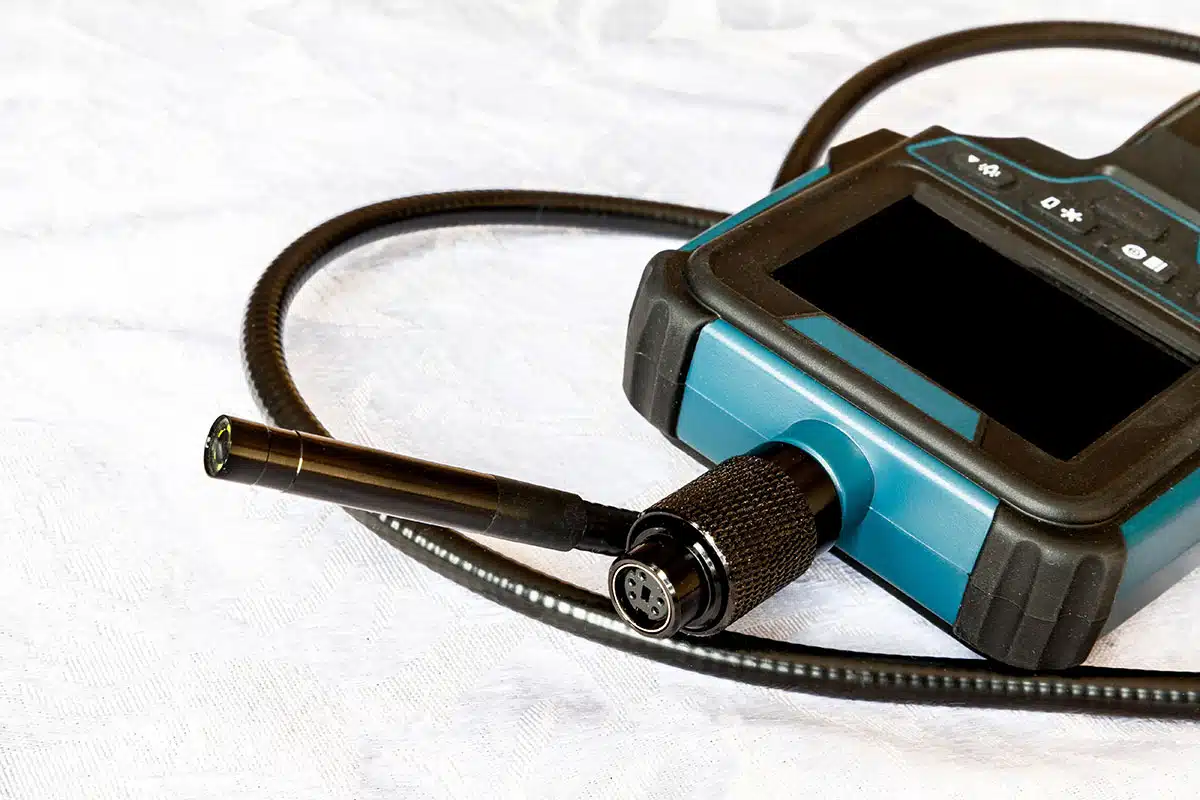
A scope consists of a long, flexible probe or rod that has a lens at one end and attaches to a handheld device or monitor at the other. (Technically, an endoscope has a flexible tube attachment, whereas a borescope can have a rigid or flexible attachment.)

A close-up of a borescope, showing its long, flexible rod and display screen
Borescopes and similar devices are ideal for inspecting narrow and difficult-to-access spaces.

The attachment probe can be pushed inside small and compact spaces. Technicians can then steer and control the direction and angle of the probe, allowing the tool to maneuver through tight and complex spots. With adjustable LED lights for better vision in dark areas, together with miniature, high-definition (HD) cameras, detailed visuals of the interior space can be seen on the monitor, allowing for a comprehensive inspection.

What are the Advantages and Disadvantages?

Flexibility – The ability to get visuals inside a wall cavity or conduits, to assess integrity and wiring reliability, to inspect ductwork, or identify the origins of piping or electrical issues without having to dismantle or tear down walls make the scope invaluable as a non-destructive inspection tool.

AI Provides Consistency – As with other tools, AI is being integrated into the various inspection scopes. The aircraft industry is already using borescopes that utilize AI algorithms for automated defect detection and analysis. AI-powered software can detect anomalies, such as cracks or corrosion, enabling objective assessment and consistent evaluation.

Handle with Care

Borescopes can be prone to damage if handled incorrectly inside metal pipes or across rough surfaces, so it’s important to use the device cautiously in these situations. And as with any technical device, a scope provides the greatest advantage when in the hands of an experienced technician.

Robotic Ground Inspections

When the space being inspected doesn’t warrant a tiny scope but is still too small or hazardous for humans, there are inspection robots. Referred to as bots, rovers, or unmanned ground vehicles (UGVs) these tools offer a safer and more efficient option than manual inspection.

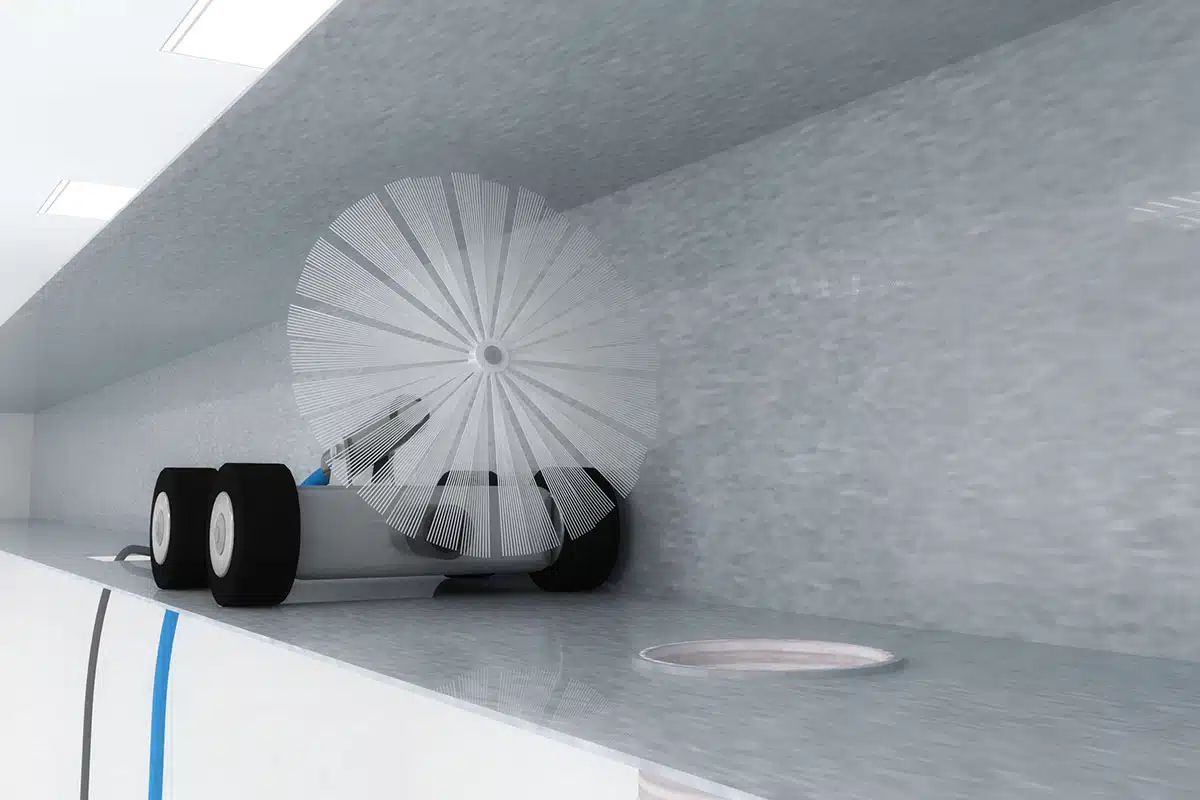
UGVs for commercial building inspection vary in type, function, and autonomy. For tasks such as inspecting HVAC ducts or entering crawl spaces under buildings, small 4-wheel drive or tracked (tank-like) vehicles (usually around 12–14 inches in length) are typically used for the job.

These rovers can be controlled remotely and run on batteries for several hours. They efficiently capture photos and video and are capable of zero degree turns—a big plus in tight spaces.  

What Are the Advantages and Disadvantages?

A close-up of a duct-cleaning robot as it travels through an air duct
Duct-inspecting and duct-cleaning robots can save hundreds of hours of labor.

Efficiency – Rover robots can travel through HVAC ducts faster than a human worker. They don’t get tired and can continue working without getting distracted.

Safety – Rovers can be sent into hazardous areas (where there may be unstable construction or toxic chemicals) and either survey the area before workers enter or take photos of damaged structures and other risks.

Limited Tasks – Currently most robots are designed for a particular monitoring or inspection task; not all types of inspection can be performed by the same robot. But that may be changing. Researchers and manufacturers are aware of this issue, and are developing multi-ability learning robots that can turn their hands (or wheels) to many tasks.

A Maintenance Partner You Can Rely On

Are you looking for a forward-thinking, tech-savvy partner for building inspections and maintenance? PRIDE Industries has been providing facilities services for over 35 years and continues to bring innovation and expertise to customers across multiple industries.

For much of human history, little was known about the spread of disease. In fact, modern germ theory wasn’t widely accepted until the late 19th century. Prior to this time, few doctors washed their hands between patients nor were hospital surfaces cleaned with disinfection in mind. Even at the start of the modern era, hospital cleaning services were about keeping up appearances, not mitigating disease.

Things have come a long way since then. Gone are the days when a mop bucket and a rag were all that was needed in a hospital cleaning toolkit. Today, hospital cleaning services use high-tech systems that not only target visible dirt and grime, but also the microscopic contaminants that hide beyond the naked eye.

Trends in Hospital Cleaning Services

Advances in technology and data-driven, targeted approaches to hospital cleaning can reduce the risk of healthcare-associated infections.

Advances in technology and data-driven, targeted approaches to hospital cleaning can result in reduced risk of healthcare-associated infections among both patients and staff. These advances, combined with a greater understanding of disease mitigation, are driving seven important trends in hospital cleaning services.

Targeted Pathogen Cleaning

Historically, cleaning and disinfecting environmental spaces in a hospital setting meant killing any and all potential pathogens, including viruses, bacteria, fungi, and others. However, the misuse of antibiotics has led to the rise of antibiotic-resistant pathogens, including Methicillin-resistant Staphylococcus aureus (MRSA) and Vancomycin-resistant Enterococcus faecalis/faecium (VRE). MRSA and VRE are especially concerning in a hospital setting, as both can be spread via contaminated objects. It’s essential to target these specific pathogens when cleaning.

Some of the most common chemicals that are approved by the Environmental Protection Agency (EPA) to kill both MRSA and VRE are quaternary ammonium, sodium hypochlorite (bleach) and hydrogen peroxide, all of which can be found in numerous brands of commercial cleaning products. These products have a minimum kill time for each pathogen, meaning they must remain on the surface for a specified amount of time in order to be effective, typically 2–10 minutes. Another common pathogen in a hospital setting is Clostridium difficile (C. diff). Outside the body, C. diff takes the form of spores, which can be killed with EPA-approved chemicals, including sodium hypochlorite.

Continuous Active Disinfection (CAD)

Traditional cleaning usually involves applying disinfectant to a surface and repeating as necessary. It comes as no surprise that in a healthcare setting, surfaces become re-contaminated very quickly, calling for frequent reapplication of disinfectants. This requires not only a great deal of labor, but also means the areas being cleaned must be off-limits during the cleaning time.

To address this challenge, many healthcare facilities have adopted continuous active disinfection (CAD) protocols. These protocols rely on the use of disinfectants that have been formulated to kill pathogens for up to 24 hours after application. (These disinfectants work by leaving behind a polymer-based, multi-layer pathogen-neutralizing film.) Because patient and procedure rooms are cleaned and disinfected between patients, these products are more likely to be used in common areas such as waiting rooms, which see higher use and where cleaning occurs less frequently.

If you want to know more about a particular cleaning product, the EPA has a tool that can be used to look up an individual product by its registration number, which is required on all packaging. The tool includes data about the product’s EPA test results for specific contaminants, recommended contact times, and uses. The EPA has only recently released guidance for products adding residual efficacy claims, so that data may not yet be available for all listed products.

Advances in UV Technology

The use of ultraviolet light in hospital disinfection isn’t new. One technology—ultraviolet germicidal irradiation (UVGI)—has been around for more than a century. This technology uses specialized lamps to administer UV light (more specifically, UV-C light), which damages the DNA of bacteria, viruses, and other pathogens.

In the early 1900s, UVGI was used to disinfect the water supply in Marseille, France. In the 1930s, it was used in Philadelphia schools to disinfect the air and prevent a measles outbreak. It has also been used in hospital settings to prevent tuberculosis. This particular UVGI application, known as upper-room UVGI, uses specialized UVGI devices to eradicate airborne pathogens. With this technique, air flows into UVGI devices from fans or open windows (or today, from HVACs). The UV energy kills the airborne pathogens and returns the clean air to the space.

Historically, UV light has been administered via low-pressure mercury-vapor lamps. But advances in technology mean it can now be administered via light-emitting diodes (LED), which are believed to be safer. It should be noted that UVGI does not replace traditional cleaning methods; rather, it complements them.

Robots and Automated Systems

One of the challenges of effective hospital cleaning is ensuring every nook and cranny is cleaned and disinfected. Cleaning robots have made this easier, as these machines can be used for cleaning floors, ducts, windows, and more. In a hospital setting, disinfection robots can also be used to get to spots that human beings can’t. These programmable, remote-controlled devices can use chemicals or UV light to disinfect areas with potential pathogens without risking the health of cleaning personnel.

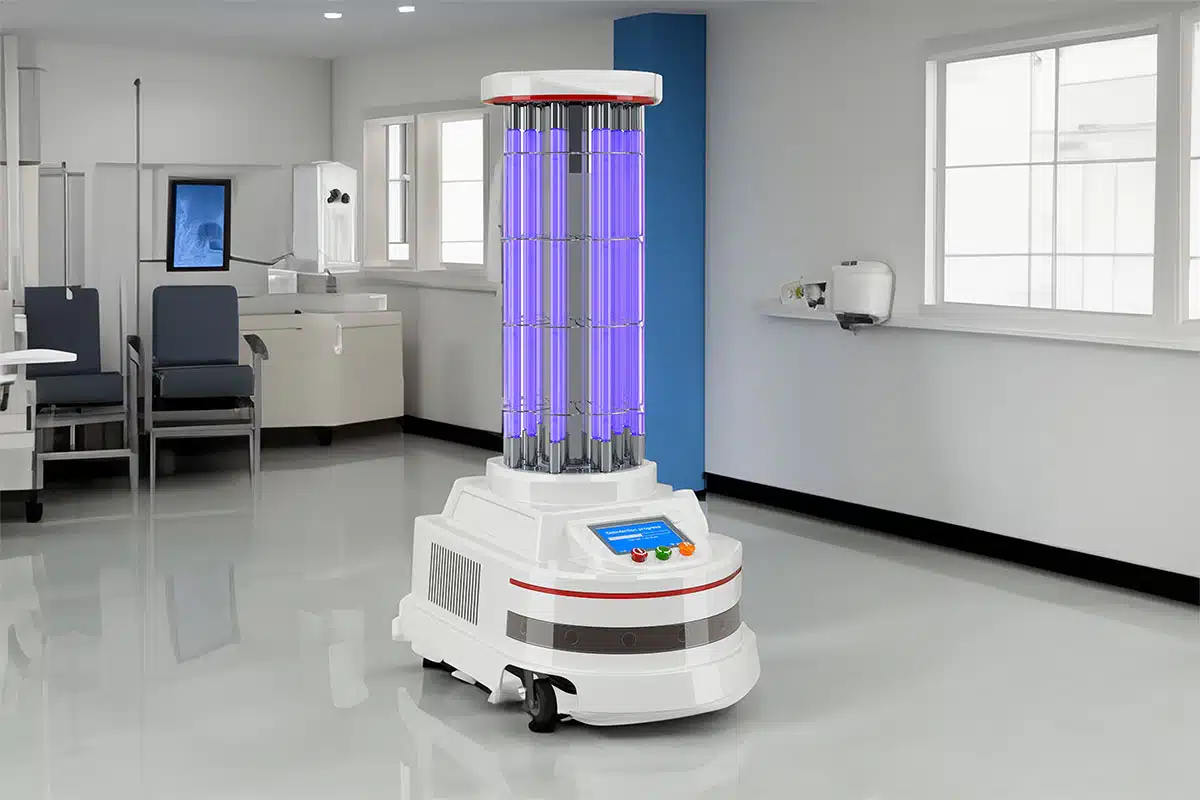
For example, some hospitals now use rolling, autonomous towers equipped with circulating, vertically set UV-C lamp tubes on all sides to destroy pathogens via ultraviolet radiation. These towers have a wheeled base that enables them to roll through patient or procedure rooms on their own, eliminating any potential risk of UV light to humans. Similarly, programmable, fog-disinfection robots use a retractable, chimney-like spout to spray a fine disinfecting mist throughout a space.

A tower-shaped cleaning robot, with long purple bulbs mounted on a rolling base.
Automated robots use sophisticated technology to clean and disinfect hospital labs, procedure rooms, and patient settings.

Data-Driven Hospital Cleaning Services

Despite all of the advances in technology, the use of solid data to inform cleaning procedures remains one of the most important trends in hospital cleaning services. Having the proper procedures in place is essential, but understanding whether those procedures are working is even more important. Internet-connected cleaning devices, facility management software, and other smart technologies work in unison to provide real-time information and improved efficiency.

High-tech dispensers can notify staff that hand soap is running low in a restroom, providing key data on usage and traffic patterns. Admissions and discharge records can indicate when patient rooms are vacant and therefore available for cleaning. This real-time data can help facilities managers adjust staffing and prioritize tasks, thus reducing the frequency of static cleaning in disused areas.

Eco-Friendly Options

“Eco-friendly” isn’t a term typically associated with cleaning chemicals. But in truth, the two aren’t mutually exclusive. Concerns over the environmental and health impacts of traditional products has led to a rise in the number of eco-friendly products on the market. Many of today’s products are nontoxic and biodegradable, while maintaining the disinfecting properties of their more toxic counterparts. These products are free of ammonia, phosphates, and volatile organic compounds.

Citric acid, for example, is an effective disinfectant against MRSA and VRE, but isn’t harmful to humans. It’s also rapidly biodegradable in water and soil. Hydrogen peroxide is similarly safe for humans and the planet; it’s a powerful disinfectant but poses no danger if used correctly.

Electrostatic Spraying/Misting Systems

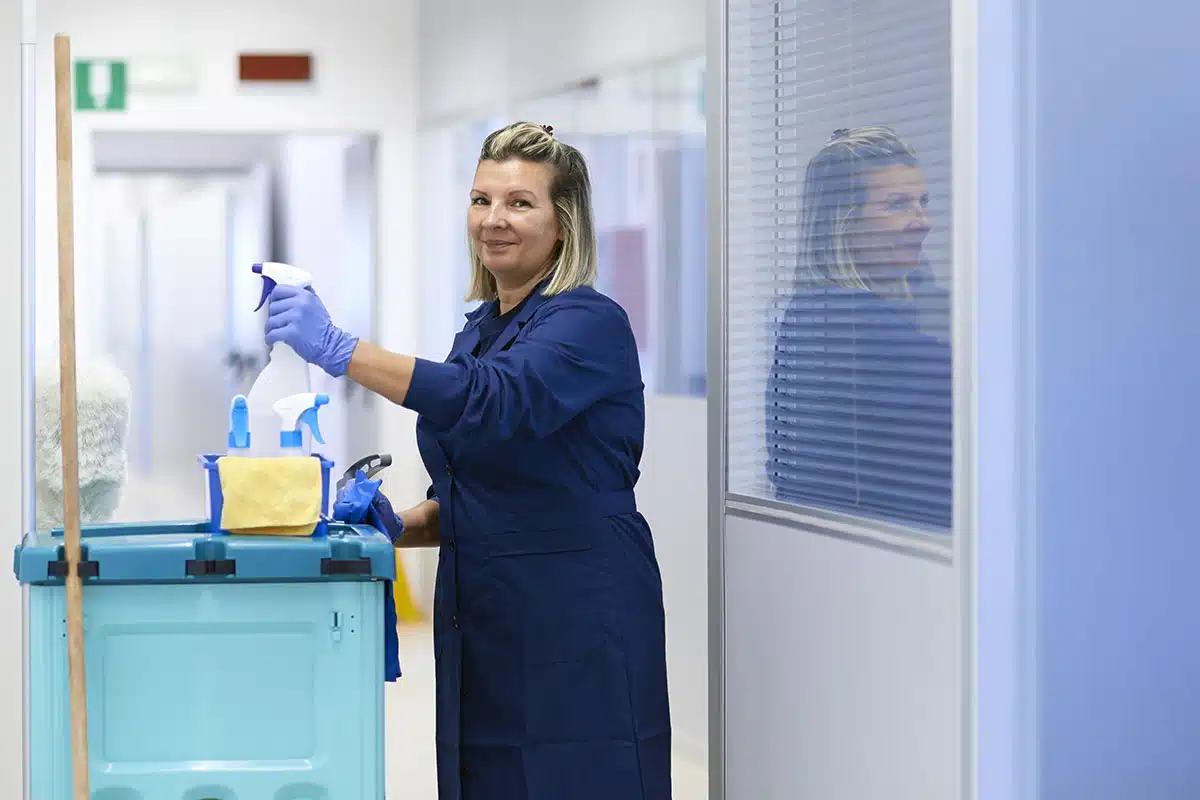
A woman wearing gloves and a hospital custodial uniform, standing next to a cleaning cart, holding a spray bottle.
Today’s hospital cleaning products not only kill dangerous viruses and bacteria, they’re also made with sustainable, nontoxic ingredients.

Increasing efficiency and reducing the likelihood of human error is essential in hospital cleaning, and electrostatic spraying checks both boxes. Unlike dry dusting or wet cleaning, electrostatic spraying uses an atomized mist that adheres to surfaces, even in hard-to-reach spots.

The mist can be applied manually by a technician (using a handheld sprayer) or by machine. One system consists of a box-like fogging device that can be placed in a room and turned on remotely. Still others take the form of robots, which can be programmed to move throughout a room while expelling the disinfecting solution.

What to Look for in Hospital Cleaning Services

As cleaning technologies have evolved, so have hospital cleaning services. So how can you find the right service for your healthcare facility? Here are some factors to keep in mind when looking for a cleaning partner.

State-of-the-Art Products

The best hospital cleaning services use modern cleaning products and equipment. Disinfectants must be EPA-registered to kill both bacteria and viruses, including COVID-19. Services should use the latest cleaning technology and all equipment should be in excellent working order.

Sustainability

Cleaning products don’t have to be toxic to be effective. When possible, they should align to the EPA’s Safer Choice criteria to be free of ammonia, phosphates, and volatile organic compounds. In addition, custodial and cleaning protocols should be certified by the Cleaning Industry Management Standards for Green Buildings. And it’s even better if they can help organizations earn points toward Leadership in Energy and Environmental Design (LEED) certification.

Experience and Expertise

Want the job done right? Hospital cleaning providers should have plenty of experience working in a range of hospital settings. With this experience, of course, comes expertise. Staff should be continuously trained in the latest trends in hospital cleaning and safety, including bloodborne pathogen disposal, proper handwashing, two-pass disinfection protocols, and airborne and contact precautions. They should also be HIPPA-compliant, if and when appropriate.

Hospital-Grade Cleaning with a Positive Social Impact

Looking for a healthcare cleaning service with a proven track record for safety, reliability, and cost-effectiveness? At PRIDE Industries, we clean more than 26 million square feet of facilities every day, from emergency rooms to neurosurgery centers to correctional healthcare facilities. Call today to see what we can do for you.

Chelsea Davis’s New Beginning: How Employment Services for People with Disabilities Can Change Lives

In late 2019, Chelsea Davis was undergoing inpatient treatment for drug addiction. She was also suffering from severe bipolar depression and anxiety. For these reasons, Chelsea believed that employment was, for her, out of reach.

Then a relative told her about PRIDE Industries and its employment services for people with disabilities.

“I never thought I could get a job, let alone keep one, after living the life I chose for so many years,” Chelsea said. “PRIDE Industries gave me that chance.”

After learning about PRIDE Industries, Chelsea found its website and began searching for open positions.

“I was hesitant at first—applying at such a big company,” said Chelsea. “It was PRIDE Industries’ mission that got me to apply. I realized they help people who’ve experienced things like anxiety and depression.”

A few weeks later, while still in rehabilitation, Chelsea interviewed for a position as an EVS tech at the California Department of Corrections and Rehabilitation California Health Care Facility (CDCR-CHCF). Days later, when she found out she’d gotten the job, she was thrilled.

“PRIDE Industries accommodated my schedule during my entire time in rehab,” Chelsea said. “This allowed me to take time off for doctor appointments and to manage medication changes.”

Chelsea has been working at the facility as a PRIDE Industries employee ever since—exhibiting leadership skills from the start, even as she navigated early recovery.

“PRIDE Industries leadership and HR took me in,” said Chelsea. “They taught me, and they cared about me while I was still learning to care for myself. I had no work ethic and no hope to gain any, but they changed all of that for me. They have basically raised me in this area of my life.”

Lauri Alsup, Environmental Services Director at CDCR-CHCF, is one of the PRIDE Industries leaders who saw Chelsea’s potential.

“Right off the bat when I met Chelsea, I was blown away by her personality and positivity,” said Lauri. “I could recognize right away that she was going places.”

And go, Chelsea did. After just nine months in her entry-level position, Chelsea was promoted to Assistant Operations Manager. From there, she skipped the next step up, and, in June 2022, moved into the role of Acting Operations Manager for the facility’s third watch (swing shift). That November, she was placed into the role permanently. As she did in each of her previous positions, she has excelled in this one.

“Chelsea has all those unteachable skills,” said Lauri. “You can learn operational flow and workflow, but she has people skills.”

Those are skills Chelsea draws on every day at CDCR CHCF, a 1,200-bed, 1.4 million-square-foot men’s correctional facility that specializes in mental health. Chelsea’s day there starts with three security checks, after which she meets with her operations manager. Then she huddles with her team for what’s referred to as the “pass-down.” During the pass-down, Chelsea gets notified of any pending issues, injuries, or emergencies that transpired during the previous shift.

“Let’s say an inmate decided to stuff his toilet with bedding and flush it a hundred times,” Lauri said. “Chelsea will figure out what needs to be done there.

Employment Services for People with Disabilities, Perseverance, and People Skills: A Perfect Combination for CDCR-CHCF

From creative problem-solving to training and coaching employees with disabilities to advocating for them in their interactions with the inmates, Chelsea’s people skills are among her greatest strengths.

“Maybe that’s where my past has helped me,” she said. “I can understand where some of the inmates come from. People assume they’re all there for big things, but it’s not always that way, and we can’t know their backgrounds.”

This attitude exemplifies another trait of Chelsea’s that enables her to interact effectively with people: Empathy—the ability to place one’s self in another’s shoes. Often honed through adversity, empathy is increasingly recognized as an imperative when it comes to leadership. And, when it comes to her team, Chelsea has it in spades.

“I won’t ever forget what it’s like to be out there cleaning up some of the things my team has to,” she said. “I love them and appreciate all they do.”

At the end of the day, a quote Chelsea recently found sums up her leadership philosophy: “Build a team so strong that you don’t know who the boss is.”

Continuing Achievements

On March 7, 2024, Chelsea reached another major milestone: Five years clean—and all of the personal and professional good that comes with it.

“I still struggle on some days,” said Chelsea. “But, with PRIDE Industries, I have support and a sense of purpose—the desire to keep moving forward.”

When asked what she most enjoys about her job, Chelsea is quick to say it’s about giving back.

“I’m in a position to give others the individual accommodations, guidance, and support they need to be successful,” she said. “Everything that was given to me, I’m able to give back to other people.”

When it comes to employment services for people with disabilities, we at PRIDE Industries understand that this is a people-first proposition. All human beings have unique abilities to bring to the workforce. Sometimes, all they need is a little help to get started . . . and then, as is the case with Chelsea, the sky is the limit.

Make a social impact

PRIDE Industries builds inclusive, diverse work environments where people with disabilities can thrive. Is your company seeking well-trained, reliable employees? Join our Employment Partner Network today.

“I never thought I could get a job, let alone keep one, after living the life I chose for so many years. PRIDE Industries gave me that chance.”