Our Stories

The humble cable harness is an unsung hero of electronics products, quietly doing its work to keep wires connected to power sources and linking components to ensure smooth, reliable, continuous operation. Cable harnesses organize and streamline wires within products and are critical to long-term performance. Cable harnesses may seem simple, but as products become more sophisticated and components continue to shrink in size, they are becoming more complex, able to work in challenging environments that require corresponding sophistication in design and assembly.

Benefits of Cable Harnesses

Cable harnesses are common in electronics products because of their many benefits. Well-designed and manufactured harnesses improve product production and performance in the following ways:

Choosing a strong cable harness manufacturer is critical to overall product quality and performance. Here's what to look for.

  • Decrease cost compared to manually installing wires one at a time.
  • Reduce installation time for projects involving extensive networks of wiring or cabling.
  • Improve the organization of cables, making identifying and maintaining connections easier.
  • Protect conductors from the elements outdoors or from chemical and moisture exposure indoors.
  • Reduce strain and stress on connections by supporting the weight of cables.
  • Improve safety by minimizing the risk of shorts or electrical fires.
  • Decrease installation and maintenance time by minimizing the number of connections and organizing components in a logical configuration.

Simple design principles amplify the benefits of wire harnesses. Sheaths protect wires against abrasion or exposure to hazards, minimizing the risk of failure. Connectors, clips, lacing, and other organizational elements reduce the space that wiring needs and ensure that technicians can easily locate components when needed.

Given the important role the cable harness plays in electronics devices, choosing a strong cable harness manufacturer is critical to product quality and performance. Here’s what to look for in a manufacturing partner.

Cable Harness Manufacturing Experience

No surprise here. The best cable harness manufacturers are usually the most experienced. While that may seem obvious, not all experiences are equal. For example, different industries have different safety and compliance requirements. Cable harnesses in the medical device industry must use approved components (wires, cables, interconnects, terminals, etc.) and meet high quality and performance standards. The automotive industry has its own material requirements for harnesses, due to high-temperature engine applications and the presence of corrosive gases and liquids, vibration, and exposure to outdoor elements like rain and snow. So make sure that your cable harness manufacturer has experience and a strong track record in your industry.
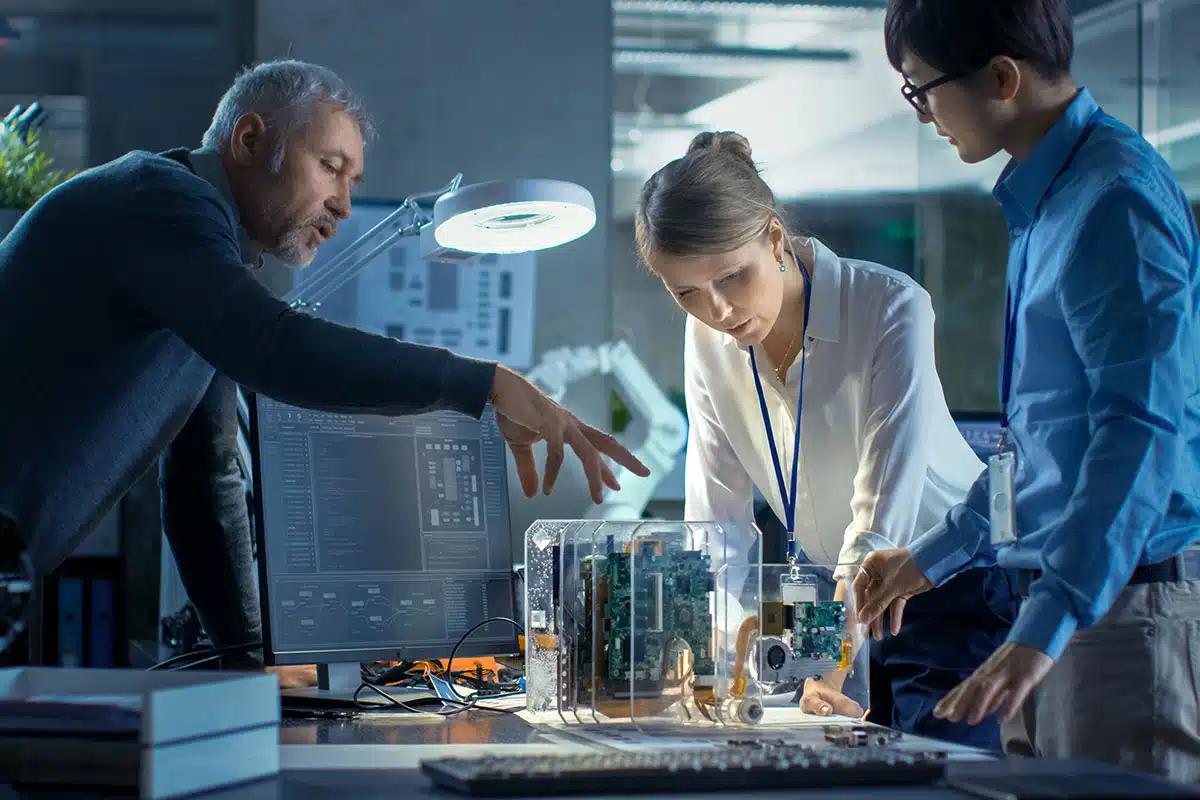
An electronics engineer talking with two customers as they stand at a worktable looking at a prototype electronic device
Your cable harness manufacturer should have experience and a strong track record in your industry.

Cable Harness Manufacturing Certifications

Close behind experience comes certifications as an important consideration for selecting a cable harness manufacturer. Manufacturers must comply with the markets’ regulations and demonstrate a track record of creating products that pass industry testing labs. You should expect your manufacturer to have the necessary certifications for producing the type of cable harness you need. These include: 

  • IPC: IPC is a trade association and standards body for electronic equipment and assemblies’ production requirements. IPC/WHMA-A-620 is the international standard for best practices and requirements for manufacturing cable harness.
  • ISO 9001: This is the international standard for a quality management system (QMS) in multiple industries, including cable harness.
  • UL/CUL: Underwriters Laboratories (UL/CUL in Canada) verify that products comply with safety standards for the United States and Canada, respectively. UL/CUL is the largest and oldest independent testing lab in the U.S. and its certifications are recognized by OSHA.
  • ETL: The Electrical Testing Lab (ETL) is another private lab recognized by OSHA that ensures products meet quality, health, environmental, safety, and social accountability standards.
  • ISO 13485: ISO 13485 is the international standard for quality requirements for medical device manufacturing.
  • TL9000-H 6.0/5.0: This is the quality management system for the telecommunications industry.
  • AS9100 REV D: The quality management system for aerospace manufacturing products.
  • ITAR: For aerospace and defense products, the International Traffic in Arms Regulations (ITAR) control the sale, manufacture, and distribution of defense and space-related services and materials on the United States Munitions List (USML).
  • RoHS: The Restriction of Hazardous Substances Directive (RoHS 1) guides the restriction of hazardous substances in electrical and electronic equipment in the European Union.

IPC/WHMA-A-620 is the most widely recognized standard for cable harness manufacturing and the most important certification for a manufacturer. Adhering to this standard ensures product quality, reliability, and consistency. 

Cable Harness Components

While a cable harness may look like little more than a bundle of wires, it is, in fact, an intricate system of components—a subsystem within electronics products. Key components include:

  • Wires: Also called conductors, wires (usually copper) transit electrical signals and power. The choice of wire gauge, insulation material, and strand count can significantly impact the harness’s performance and flexibility.
  • Connectors: Fasteners that simplify the connection between wires and other components, acting like plugs to ensure secure connections.
  • Terminals: Metal components attached to the end of the wires that link to connectors to complete the connection.
  • Sleeving: Coatings protect wires from external elements, abrasions, and other potential damages.
  • Ties and Clamps: Straps that organize and support the wires within the device to reduce strain and facilitate maintenance when needed.
  • Ferrules: Tubes crimped over stranded wires to secure the strands within a screw terminal.

Cable Harness Wire Connections

Cable and harness assembly typically requires connecting different wires to enable electrical current to travel through the connection. The most common methods of connecting wires are soldering and crimping. Both processes help create secure connections for cables, and they produce long-lasting and high-performing cable connections.

Crimping

Crimping is the process of installing connectors on the ends of cables using a crimping tool, and involves stripping, cutting, and crimping terminals on either side of the wires. Whether manual or automated, proper wire crimping requires specialized tools and materials and must follow certain steps. High-quality crimps form gas-tight joints, which result from compressing specially designed splice bands or crimp terminals with cables and wires. Gas-tight connections prevent corrosion from moisture and oxygen.

Terminal crimping reshapes the strands in a wire to form a low-resistance electrical connection. The connections must be strong, with a single joint that has no breaks or segments, and the crimp must meet the height and width specifications established by the terminal manufacturer. It is important to avoid overly tight connections, as this can reduce the cross-section of the wire.

Soldering

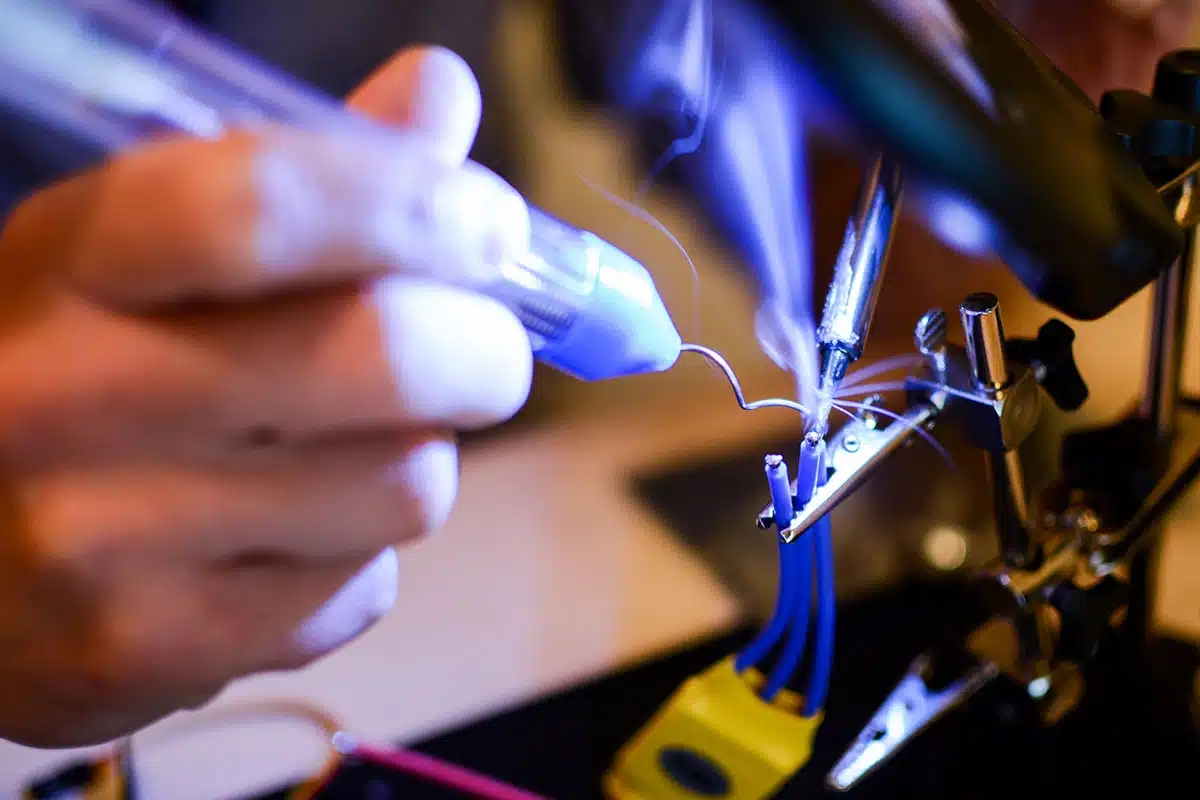
Soldering is a traditional wire termination method and can be more cost-effective than crimping. With this method, alloys of tin, silver, or lead are heated and used to create durable joints that connect contacts to wire conductors. Soldering is commonly used in applications that require dependable power and signal connections.

While soldering offers certain benefits such as affordability, some disadvantages of soldering include:

  • Risk of heat-related damage in the connector, contacts, and cables
  • Risk of compromised connections due to vibration and corrosion
  • More time consuming than crimping
Traditional soldering can be more cost-effective than crimping.

Cable Harness Manufacturing Design

Make sure the manufacturer you choose has an experienced engineering and production team capable of producing cable harnesses that meet design specifications and maintain high-quality standards. For example, one of your first decisions is whether to use automated or manual cable harness assembly. You can automate some steps in cable harness manufacturing, but manual production remains common. Automation is used more often when manufacturing at high volumes and using standard connections. However, complicated or non-standard connections can be produced more cost effectively by hand. Knowing your electronics manufacturer has the tools, know-how, and flexibility to design and produce the right cable harnesses for your device is critical to the success of your product.

Cable Harness Materials

The specific material used in a harness largely depends on its surrounding environment. If the wires are in an environment where moisture is present, for example, the harness should be of a material that is water resistant, such as polyethylene. Cables exposed to vibration or movement that might cause abrasion should be enclosed in a harness with a heat-shrink coating to minimize the effects of chafing. Some of the most common cable harness materials include:

  • Polyvinyl Chloride (PVC): PVC is a popular choice for low and medium-voltage wires and is common on indoor telecommunication cables due to its resistance to heat and moisture.
  • Fluorinated Ethylene-Propylene (FEP): FEP is tough and weather resistant, yet flexible. It’s also heat resistant, has dielectric properties, and is chemically inert.
  • Polyethylene: Polyethylene is lightweight, chemically inert, and ideal for high voltages. Polyethylene is available in different densities and has dielectric properties.
  • Nylon: Nylon is a popular choice because it resists weather elements, moisture, abrasion, and chemical reactions.
  • Thermoplastic rubber: A rubber material that stretches easily and returns to its previous state after stretching. It is also usable in high temperatures and resists damage from weather, chemicals, and aging.

There are many more options. Your manufacturer should be knowledgeable about cable harness materials and guide you to the right one for your application. 

Cable Harness Supply Chain

Supply chain concerns impact every aspect of electronics manufacturing, including cable harness manufacturing. Make sure your cable harness manufacturer has access to the parts you need. Verify delivery times and costs. Check to see if they have multiple sources in multiple geographies to hedge against political, social, or climate disruptions. Supply chain management is another area where a design team can add value. Design engineers can propose alternative parts that are more widely available, cost less, or are less at risk of supply chain disruptions.

Cable Harness Testing

Bundling and connecting cables in harnesses creates multiple points of potential failure, making testing and inspecting finished products crucial to ensure consistent, reliable performance. Your cable harness manufacturer should have a robust testing and quality control process in place that includes:

  • Incoming material inspection: Make sure all materials received are in good condition. Defects to look for include:
    • Damaged insulation
    • Incorrect cable sizes
    • Corrosion
    • Moisture
  • Design testing: Ensure that the components in the harness assembly are suitable for the harness design.
  • Label verification: Check that the cables are properly labeled to avoid incorrect connections.
  • Hipot testing: Verify a cable’s ability to withstand high voltages.
  • Voltage Standing Wave Ratio (VSWR) testing: For RF and coaxial assemblies, check that radio frequencies don’t change when passing through the assembly.
  • Continuity testing: Test for circuit opens and shorts to ensure end-to-end signal integrity.
  • Resistance testing: Make sure resistance remains in acceptable ranges.

Critical Role of the Cable Harness

Cable harness assemblies are critical to electronics manufacturing. They are the vital conduits for electrical signal and power transmission and are integral to the functionality of every electronics product, from simple transistor radios to sophisticated spacecraft. The stability and reliability of wire connections keep products operating and safe. In short, electronic products are only as good as the performance of their components and the cables that connect those components. 
Harness Excellence in Electronics Manufacturing

PRIDE Industries has years of experience in electronics manufacturing and cable and harness assembly across multiple industries. We have in-house engineers who can advise when certain crimp terminals would be better done manually due to the intricacy of the terminal or production volume. With a large library of manual and automated tools and customizable facilities, we can offer versatility and cost savings for prototyping and low-volume requirements. And because we set our standards high with IPC inspections and ISO certifications for quality control, you can rely on us to get your product right.

When you think of a car, you may picture the chassis, the wheels, the headlights, the steering wheel, and more. Perhaps you see a busy mechanic, wrench in hand, under the hood. However, your vision of the industry is likely to undergo a considerable change in the next decade. The automobile industry is experiencing a dramatic shift as the integration of more sophisticated automotive electronics and software picks up speed. There is now even a term—software-defined vehicle (SDV)—to describe a car in which software significantly impacts a user’s experience.

Software and automotive electronics systems are impacting new cars in multiple areas: navigation, power management, and infotainment. Even recalls are different for SDVs. For example, Tesla’s recent mass recall would traditionally have required in-shop visits for two million cars—causing a great inconvenience for Tesla owners and costing the company billions of dollars. In this case, however, owners never needed to visit a shop; an over-the-air software update was all that was required. And software updates go beyond recalls. With SDVs, car manufacturers can fix motor issues, software bugs, and even add new features without requiring a visit to the mechanic.

Software and automotive electronics systems are impacting new cars in multiple areas: navigation, power management, and infotainment.

Six Trends in Automotive Electronics

Automated recalls are just one convenience made possible by more sophisticated automotive electronics. Read on to discover how advanced technologies are reshaping the car to meet consumer demands for greater control, ease of use, and safety.

Connectivity:

Utilizing advanced connectivity, next-generation cars can update features over the air as well as provide drivers with real-time information to make in-the-moment decisions. One advanced connectivity feature is Vehicle-to-Everything (V2X) technology, which leverages high-bandwidth, low-latency connectivity such as 5G. With V2X, there is a constant, two-way information flow between a car and its surroundings. The car can even share information from its sensors, cameras, and internal systems with other vehicles, nearby pedestrians, road infrastructure, and smart city systems. The benefits of this connectivity include optimizing energy use and improving road safety. V2X technology also adds to driver convenience, enabling drivers to pay automatically for parking and tap into other driver services.

Human Machine Interface/Augmented Reality:

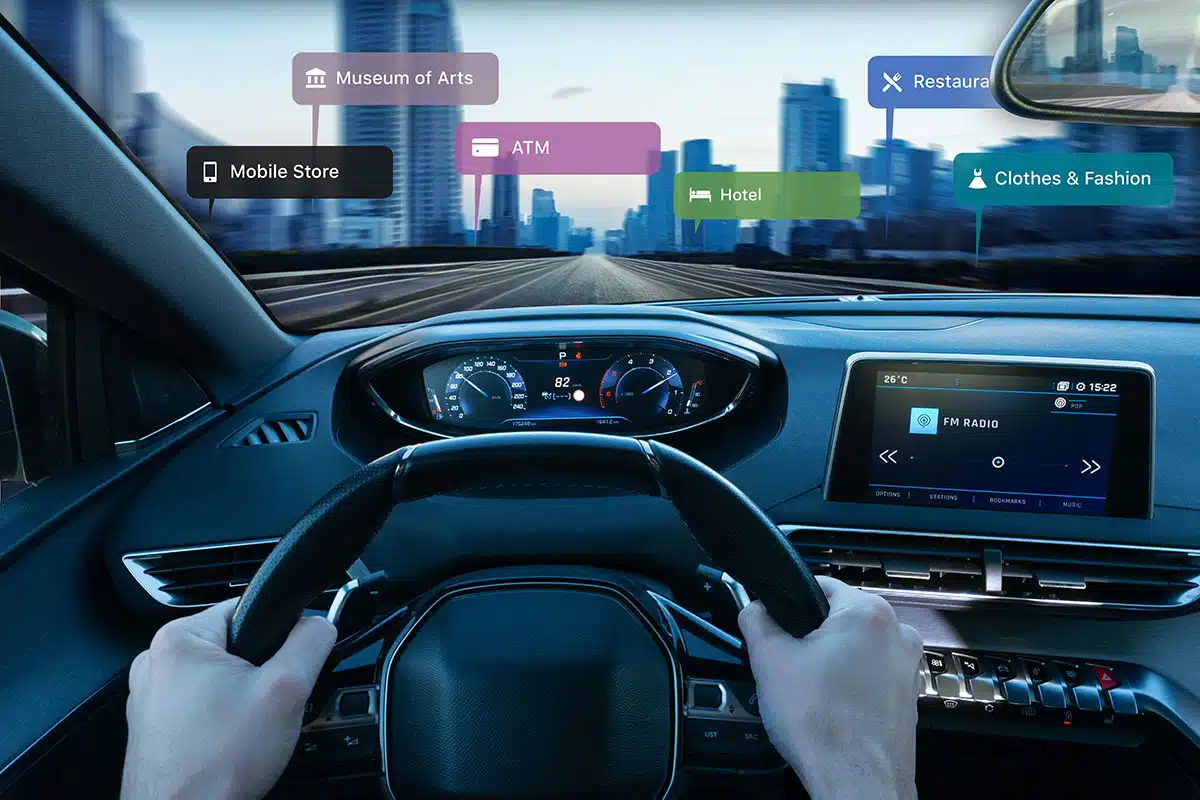
Augmented reality (AR) is an overlay of digital information onto the real world. In the case of automotive electronics, AR uses a dashboard-mounted camera to obtain images of the road ahead, then projects digital information—such as speed, navigation, fuel levels, and other important data—where the driver can easily view it without looking away from the road. These AR software systems are also customizable. If, for example, a driver prefers to see real-time traffic updates and navigation in AR but use traditional gauges for the speedometer and fuel usage, the system can easily accommodate those preferences.

Advanced Driver-Assistance Systems (ADAS):  

Cruise control is no longer enough for consumers. They are demanding adaptive cruise control, an advanced driver-assistance system that can automatically adjust speed to make sure a car maintains a safe distance behind another vehicle. Some other ADAS systems include lane departure warning, adaptive light control, automatic emergency braking, blind spot detection, driver drowsiness detection, and tire pressure monitoring.

A driver’s view of an augmented reality dashboard, in which information is projected in front of the driver.
Augmented reality uses a dashboard-mounted camera to superimpose digital information onto the driver’s view of the road.

In-Cabin Artificial Intelligence and Machine Learning:

In a step beyond ADAS, artificial intelligence is allowing new and upcoming car models to provide drivers with advanced monitoring, predictive maintenance, and personalized in-car experiences. More significantly, advances in AI are playing a crucial role in the evolution and increasing adoption of driverless vehicles.

Sustainability:

A Gartner study predicts that more than half of all vehicle models will be electric by 2030. The increasing popularity of these cars is due in part to consumer demand for more sustainable transportation. According to the EPA, electric vehicles have a smaller carbon footprint than their gasoline counterparts, even when accounting for the electricity required for charging, the mining of minerals for batteries, battery production, and battery recycling. Integrated microcontrollers (read more below) in next-generation cars can provide efficient power management in electric and hybrid vehicles—extending vehicle range and further reducing environmental impact.

Cybersecurity:

Progress almost always includes risks, and the advancements in automotive electronics are no exception. Since a software-defined vehicle can be accessed remotely, it is subject to the same malware attacks that have been common in corporate networks and with personal devices. Fortunately, according to Blackberry, there have been no publicized incidents of cyberattacks occurring outside of a controlled experiment. But as with other industries, cybersecurity remains a concern. A moving car suddenly losing its driving functionality—or worse, being controlled by someone other than the driver—is a catastrophic scenario that cannot be ignored. This is why car manufacturers are developing new anti-hacking protocols. Get ready for biometric access and multifactor authentication in future car models.

Two Technologies Behind Automotive Electronics

The trends above are made possible because of recent advances in both hardware and software technologies. And for cars, the two most significant advances are in the areas of printed electronics and microcontrollers.

Microcontrollers:

Microcontrollers—compact integrated circuits comprised of a processor, memory, and input/output peripherals—are found in many automotive parts and are essential to developing smarter, safer, and more connected vehicles. They perform various functions, often in real-time, such as braking, engine management, airbag control, power window operation, and infotainment tasks. The car industry has become a major user of these devices. According to Allied Market Research, a global provider of market intelligence, the automotive segment currently represents 25% of global microcontroller industry revenue. And this trend is expected to continue, driven by consumer demand for cars with increased comfort, safety, and entertainment options.

Flexible Electronics:

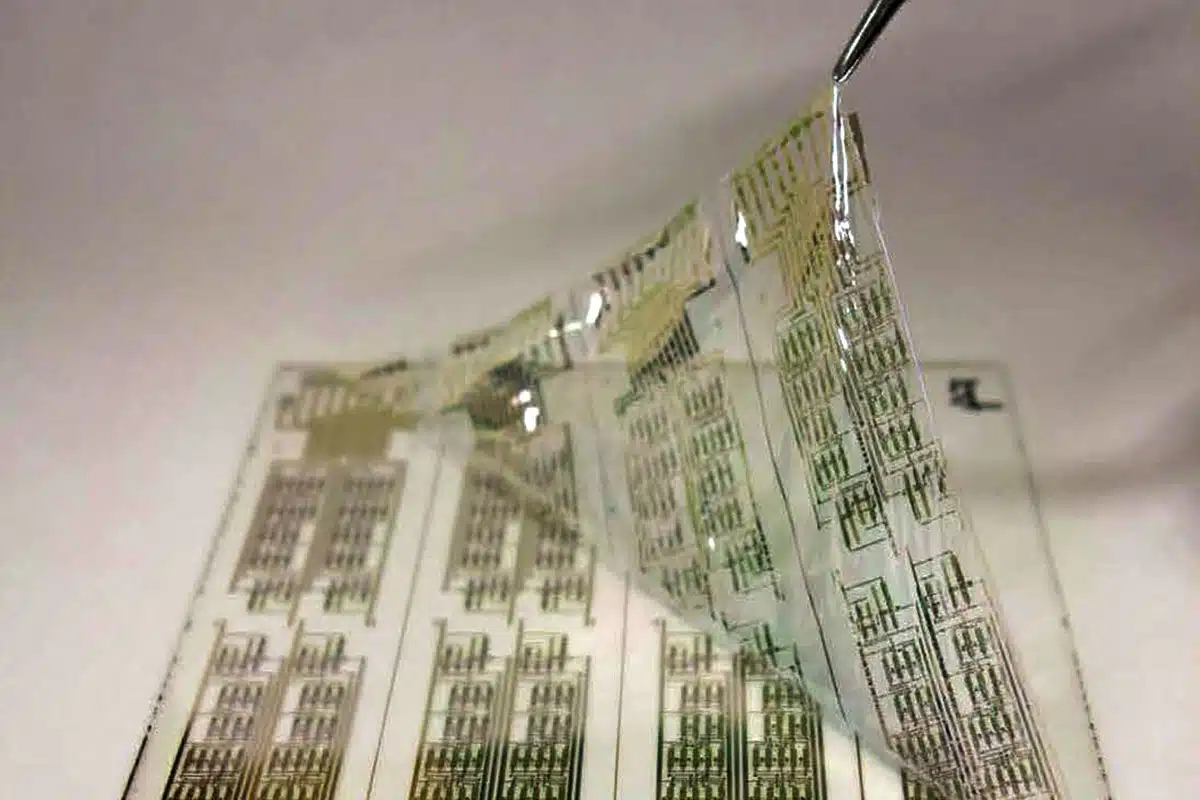
The advent of plastic and organic semiconductors has ushered in an era of thin, flexible electronic components. This new technology, combined with innovative designs that incorporate origami principles, is allowing car makers to offer more streamlined, driver-responsive interiors. And because flexible electronic components are also more cost-efficient, car manufacturers are now able to offer drivers greater convenience and improved aesthetics at a lower cost, which is why manufacturers like BMW are using this technology to reshape the car dashboard, integrating curved displays that unobtrusively provide essential information and control.

A close-up of a circuit that’s been printed onto a flexible material.
Flexible circuits enable car manufacturers to add curved displays to a vehicle’s interior.

The Future of Automotive Electronics

More and more, real-time automotive solutions are powered by software, saving car manufacturers both time and money while making vehicles more driver responsive. By further decoupling hardware and software functionalities, manufacturers will be able to make cars that are more hack-proof and easily controllable. They will be able to scale and adapt automotive electronics systems to improve safety, increase functionality, and release features faster to consumers. Today your image of a tech company may be limited to Microsoft or Apple. But with the self-driving vehicle, IBM predicts automotive OEMs will become software companies. Buckle up!

Automotive Electronics Design and Manufacturing Services

Our flexible, customized electronics manufacturing is supported by highly skilled engineers and driven by a commitment to quality and exceptional customer service. From streamlining product designs for greater efficiency, to high-precision manufacturing, to end-of-life product management, our team can help you get the most from your product’s lifecycle—whether you’re building a Class II medical device or a next-generation automotive component.

Misconceptions abound when it comes to employment for people with disabilities despite growing awareness and efforts to promote inclusivity in the workplace. These myths often stem from a lack of understanding and can hinder businesses from tapping into a diverse and talented workforce. In this article, we aim to debunk the most common myths surrounding the employment of individuals with disabilities.

Myth 1: People with disabilities aren’t qualified.

Facts: There are many qualified candidates with disabilities that have the necessary education and experience for a variety of jobs. In fact, employees with disabilities often bring innovative, efficient approaches to tasks, offering fresh ideas and methods.

An individual’s disability may have nothing to do with the job they’ve applied for. Moreover, people with disabilities, like any other group, are not a homogenous population. They are simply individuals whose abilities often face societally created barriers.

Quoted in a recent Forbes article, former Connecticut state senator, past Chair of the American Association of People with Disabilities, and disability attorney, Ted Kennedy Jr. said, “For too long, people with disabilities—individuals who are perfectly qualified and overwhelmingly willing to work—face enormous barriers to being offered a job.” Kennedy cited a recent study by Accenture which provides “compelling evidence” of the many benefits employees with disabilities bring to the workforce, including an acceleration of overall business performance.

Myth 2: Reasonable accommodation is costly.

Facts: The Americans with Disabilities Act (ADA) stipulates that employers must provide “reasonable accommodation” for people with disabilities. Many employers wrongly assume such accommodations are prohibitively expensive. The truth is that accommodation is surprisingly easy in most cases. In a survey of 3,528 employers by the Job Accommodation Network (JAN), 49.4% reported that the accommodations for employees with disabilities “cost absolutely nothing.” For employers that incurred a one-time cost to accommodate employees with disabilities, the median expenditure was just $300.

Many accommodations for people with disabilities—ramps, close captioning, quiet spaces—also benefit employees without disabilities as well as customers. And, when employees see employers cultivate a sense of belonging, they feel better about coming to work—even when they’re not the ones being accommodated.

The late disability rights advocate Judy Heumann put it this way, “Disability only becomes a tragedy when society fails to provide the things we need to lead our lives—job opportunities or barrier-free buildings, for example.”

At the same time, companies who hire people with disabilities are eligible for tax credits and other government initiatives that can totally offset, or even surpass, the cost of accommodation.

The Work Opportunity Tax Credit, for example, is a federal program that provides employers with tax credits for hiring individuals from certain target groups that have faced barriers to employment, including people with disabilities. Tax credits are also available to improve architectural accessibility, and several states offer their own incentives related to hiring people with disabilities and creating accessible workplaces.

Myth 3: Managers can’t expect the same level of performance from employees with disabilities.

Facts: Job performance of people with disabilities has proven equal to, if not better than, that of workers without disabilities—a fact underscored by studies dating back decades.

In 1990, DuPont surveyed 811 employees with disabilities, finding that 90 percent rated average or better in job performance. Similar studies in 1973 and 1981 found employees with disabilities rated higher than their peers without disabilities. A 2002 study by Virginia Commonwealth University’s Rehabilitation Research and Training Center found that employees with disabilities “are as capable and productive” as employees without disabilities, including in the areas of timeliness, punctuality, task consistency, and work speed.

Not only are employees with disabilities highly productive on an individual level, but according to the Bureau of Labor Statistics, businesses that include employees with disabilities see a 72 percent increase in employee productivity.

Myth 4: Companies that hire people with disabilities are less competitive.

Facts: This myth is not only false, the opposite is the case—companies that actively hire people with disabilities perform better than peers. According to Accenture’s groundbreaking research, companies that actively employ and support people with disabilities achieve 1.6 times more revenue, 2.6 times the net income, and twice the economic profit compared businesses that do not.

Similarly, a National Institutes of Health Review of 6176 studies found that companies that employ people with disabilities see “improvements in profitability” stemming from profits and cost-effectiveness; low turnover and high retention; high levels of reliability, punctuality, and employee loyalty; and an enhanced company image.

Myth 5: People with disabilities don’t apply for jobs at my company.

Facts: Some employers assume that people with disabilities aren’t interested in working at their companies because few apply. In fact, many online job applications aren’t accessible to people with disabilities. According to a survey by the Partnership on Employment & Accessible Technology (PEAT), 46 percent of respondents rated their most recent attempt to apply for a job online as “difficult to impossible.” Color-reliant applications, poor contrast, mobile device incompatibility, screen reader incompatibility, and rapid auto-timeout presented the biggest challenges.

Ableist language in job ads can discourage people with disabilities from even attempting to apply. Boilerplate verbiage like “must be able to lift 50 pounds”—which may have nothing to do with actual job duties—may deter a highly qualified candidate with physical challenges. While some jobs do require physicality, words matter when it comes to specific physical requirements. For example, will an employee truly need to “walk” or “crouch”? Or will they simply need to be able to move from point A to point B?

The ADA requires employers to provide equal opportunity to people with disabilities, beginning with the application process. The World Wide Web Consortium has published Web Content Accessibility Guidelines (WCAG) to help businesses evaluate their website’s accessibility, including online job application functions. When it comes to advertising jobs, The Employer Assistance and Resource Network on Disability  Inclusion (EARN) recommends creating job announcements that emphasize the specific outcomes a job requires, rather than how the duties should be accomplished.

Employment for People with Disabilities: Like Hiring Any Employee

Employment for people with disabilities is like employment for anybody else. Each individual is equipped with strengths, weaknesses, goals, and needs. Much the same as it is with any employee, leveraging the capabilities of an employee with a disability is about identifying strengths and abilities and providing the tools and support they need to be successful.

Let Us Help Solve Your Labor Shortages

The US Chamber of Commerce recommends that businesses turn to experienced partners to tap the many benefits—including tax incentives—of employing people with disabilities. PRIDE Industries has helped hundreds of companies do just that, helping recruit, hire, train, and support this growing and reliable talent pool—free of charge to employers.

Companies of all kinds are in the midst of a persistent labor shortage, and the  need for a talent pipeline is acute for many employers. The U.S. Chamber puts it this way: “We hear every day from our member companies—of every size and industry, across nearly every state—they’re facing unprecedented challenges trying to find enough workers to fill open jobs.” To solve this problem, employers are seeking innovative staffing solutions, but there’s one that may not be on employers’ radar: Work groups comprised of employees with disabilities.

What Are Work Groups?

Hundreds of companies have partnered PRIDE Industries for work groups for a reliable talent pipeline. In a nutshell, work groups are comprised of three employees with disabilities who are placed at a business, in accordance with the workplace’s staffing needs. Each group is supported onsite by a trained, dedicated employment coach.

PRIDE Industries serves as the employer of record, taking on the recruiting, hiring, training, payroll, supervision, and quality control work—eliminating management overhead for the partner business. What’s more, the program can be tailored for specific roles, offering flexible, scalable solutions while the pre-employment preparation process and on-the-job support ensure a workforce that’s both skilled and safe.

“They are the most can-do group I've ever been around, and they elevate the attitudes of everyone around them. They're happy to be here, and if I could have a hundred of them, I would.”

Business Benefits of Work Groups as a Talent Pipeline

As the nation’s leading employer of people with disabilities, PRIDE Industries has been successfully utilizing the work group model as a talent pipeline for nearly two decades. It’s a staffing solution that’s proven effective across industries, offering numerous business benefits.

  • Pre-screened, qualified applicants.
  • Tailored and scalable to a variety of shifts, schedules, and seasons.
  • Supervision by a trained employment coach.
  • Guaranteed consistent staffing levels.
  • Payroll, Workers’ Comp, and liability insurance are covered.
  • Option to convert work group employees to direct hires if desired, and the hired employees are still eligible for job coaching.

Benefits of Employing People with Disabilities

In addition to the business benefits of the work group employment model, businesses that actively include people with disabilities enjoy additional proven outcomes.

  • The retention rate for employees with disabilities is higher and absenteeism is lower—a huge plus in today’s high-turnover climate.
  • The presence of employees with disabilities boosts overall company morale. When employees see their workplace embracing inclusivity, the sense of belonging for all employees is enhanced.
  • Businesses that employ people with disabilities have growing appeal to today’s customer. A 2018 study by analyst firm Accenture found that 62 percent of consumers globally prefer to buy goods and services from companies that “stand for something bigger.”
  • Companies that employ people with disabilities enjoy a better bottom line, according to Accenture—with 1.6 times more revenue, 2.6 times more net income, and 2 times more economic profit than peer organizations.

What Types of Businesses Can Benefit from Work Groups?

The short answer is “most.”

From manufacturing to facilities management; food services to retail; landscaping to packaging; work groups do it all and do it well.

Packaging

According to Food Logistics Magazine, “quiet quitting”—employees unwilling to go above and beyond the scope of their regular responsibilities—has plagued the packaging industry.

At Knee Deep Brewing, where a PRIDE Industries work group helps package the brewery’s artisan beers for shipment, the opposite rings true.

“I’ve been extremely pleased with our PRIDE Industries team members,” said Jerry Moore, Owner and CEO of Knee Deep. The company was so impressed with the work ethic and positivity of its PRIDE Industries work groups that, for two years in a row, it created a season beer dedicated to them.

“The partnership with Knee Deep has been a perfect fit for our employees,” said PRIDE Industries Workforce Inclusion Manager Melissa Sweet. “They are always excited to get to work every day, as shown by a stellar attendance record!”

Hospitality

Some 80 percent of hotels are experiencing staffing shortages, according to the American Hotel and Lodging Association (AHLA)—all the more troubling with room demand reach record highs.

Meanwhile, at Thunder Valley Casino Resort, “elite” laundry work groups have managed 10,000 pounds of laundry per day since 2019. The teams’ work has proven so impressive that Laundry Manager Khawar Qureshi has called on other teams to “step up and learn” from them. “They are very productive,” said Qureshi. “And they do quality work.”

Director of Hotel Operations, Brant Kelly, concurs. “It’s a great workforce,” he said, adding that working with them has been “nothing but a pleasure.”

Manufacturing

Turnover on manufacturing floors is typically around 40 percent. At San Diego golf manufacturer Acushnet, parent of Titleist and FootJoy brands, that’s not the case. Employees with disabilities build packages for thousands of products, day in and day out.

“They are the most can-do group I’ve ever been around,” said Director of Manufacturing Doug Jacot.  “And they elevate the attitudes of everyone around them. They’re happy to be here, and if I could have a hundred of them, I would.”

Custodial

Whether it’s dealing with a messy corporate lobby, overflowing trash in a break room, or dirty hallway floors, it’s no secret that the custodial industry is struggling with staffing shortages and retention. Not so at the U.S. Forest Service’s Regional Headquarters on Mare Island, where a work group keeps the organization’s facilities clean and tidy.

“The Forest Service throws parties for our employees out there,” said Workforce Inclusion Employment Coach Assistant Manager Sean Sharpe. “Because they keep the place immaculate.”

Immaculate, indeed. This past December, a customer inspection of the facility rated the team’s work at a nearly perfect 99 percent. “The employees really know what they’re doing,” said Sharpe. “They could train me on the job.”

An Available Talent Pipeline

Ongoing labor shortages—there are more than 8 million unfilled front-line jobs—has experts like business consulting firm Gartner and employers like Google, IBM, and Salesforce urging companies to expand their talent search to include people with disabilities. “For years, organizations have talked about the strategic value of expanding and diversifying their talent pipelines,” said Gartner analyst Emily Rose McRae. “Organizations can no longer meet their talent needs solely through traditional sourcing methods and candidate pools.”

Over 10 percent of working-age Americans have a disability. Many who are currently unemployed are both skilled and eager to work. Through work group employment, they have the opportunity to let their abilities shine, giving smart employers that diverse talent pipeline that they need.

Let Us Help Solve Your Labor Shortages

The US Chamber of Commerce recommends that businesses turn to experienced partners to tap the many benefits—including tax incentives—of employing people with disabilities. PRIDE Industries has helped hundreds of companies do just that, helping recruit, hire, train, and support this growing and reliable talent pool—free of charge to employers.

Most people don’t give commercial elevator technology much thought, unless they get stuck in a lift or spend several minutes waiting for a car that never arrives. For facility managers, of course, it’s a different matter. For them, elevator function is often front of mind, as the need for safe, quick, and reliable transportation up and down a building is vital for occupants.

Elevators are quite literally at the core of high-rise commercial and residential buildings, and their function is integral to tenant mobility and comfort. Yet despite their vital importance, the fundamental systems and technology behind this transportation mode haven’t radically changed since the first commercial elevator was installed in 1857.

But now that’s about to change.

From Ropes to Magnets

Elevator technology is steadily moving into the digital age, incorporating IoT and AI technologies to make its functions safer, customizable, and efficient.

In 1854, at the Crystal Palace Emporium in New York City, an engineer named Elisha Otis stepped on to an open-air elevator cab. His assistants then hoisted the cab up above the crowd before unexpectedly cutting the rope that was holding it up. But instead of crashing to the ground, the elevator cab stayed where it was, and Otis proved his point: His innovative brake design worked.

In addition to showing off his new invention, Otis’ stunt was designed to set aside public fears that elevators were dangerous (which they certainly had been up to that point). His safety mechanism worked, and now, more than 160 years later, Otis’ invention—the traction elevator—can be found in buildings all around the world.

Since Otis’ famous demonstration, the commercial elevator has undergone multiple improvements that have made it more comfortable and easier to operate. But its fundamental mechanics have remained the same—until now. Today, companies are developing new and revolutionary vertical transportation systems that could render both traction and hydraulic elevators a thing of the past.

TK Elevator (TKE) is at the forefront of making this new technology a reality. Instead of using cables and pulleys like a traction elevator, or the pistons and cylinders of a hydraulic elevator, the company’s system relies on linear drive technology, which harnesses the power of magnets to move the elevator car. This technology, also known as maglev (short for magnetic levitation) is the same technology used in some high-speed trains, such as the Shinkansen—or bullet train—in Japan.

The maglev elevator system works like a continuous train but with the ground-breaking ability to alternate from vertical to horizontal travel. By using swivel points (like those found in a railway turntable) that can rotate the cab when it stops at a floor, the traveler has the option to go in any one of four directions: left, right, up, or down. Routes can be planned and monitored by software, avoiding congestion and bottlenecks.

The same technology that powers bullet trains is being tapped to take the commercial elevator in a new direction.

This new elevator design is a game changer for commercial buildings. With this system, cars can operate independently of one another. This allows more than two cabins per shaft, increasing capacity by up to 50%. Maglev elevators also offer designers and architects greater flexibility in building design, and even enable buildings to be connected via elevator skybridges. Now offices can connect directly to transportation, hotels, or restaurants.

Not only that, but this multi-directional elevator also works with smaller cars that can run simultaneously in a single shaft. And the option of multiple shafts (or tracks) within a building enables even greater choice and mobility.

Another advantage of maglev elevators is their ability to travel far higher than conventional elevators, which are limited to approximately 150 stories. Past this height, the load is too heavy for traction elevators (and not an option for hydraulic elevators, which are best suited to low-rise applications).  That’s why, currently, taller skyscrapers add additional shafts, requiring passengers to change elevators midway in order to get to the top of the building.

TKE’s system, called MULTI, is currently undergoing safety tests in the company’s 807-foot-high elevator test tower in Germany. The company has announced plans to install a working system in their U.S. offices in the near future.

Smart Tech and the Commercial Elevator

Enabling elevator cabs to move sideways is undoubtedly the most noticeable shift in elevator technology. But it’s not the only one. Even conventional traction and hydraulic elevators are undergoing significant changes. Elevator technology is steadily moving into the digital age, incorporating IoT and AI technologies to make elevators safer, customizable, and efficient. Here are seven developments to look out for.

Digital Twins

Facility engineers are replacing the clipboard and wrench for an iPad, and this trend is likely to pick up speed as digital twin technology is more widely implemented.

Digital twins are already making an impact in other sectors (such as electronics manufacturing) and could be a game-changer in elevator maintenance as well. Digital twin technology involves creating a virtual replica, or twin, of the physical elevator, allowing technicians to monitor and analyze its performance in a virtual environment.

Digital twins facilitate predictive maintenance by simulating potential problems, enabling technicians to identify and address issues before they manifest in the physical system. This not only reduces downtime but also optimizes maintenance schedules, leading to cost savings and enhanced elevator reliability.

Smart Equipment Monitoring

Advanced sensors are rapidly becoming standard elevator equipment, enabling real-time monitoring and smart diagnostics. These sensors collect data on various components, from motors and cables to control systems, providing a comprehensive view of the elevator’s health. Data can then be analyzed for anomalies, enabling the early detection of potential issues. This improves diagnostic accuracy and allows maintenance practices to shift from reactive to proactive interventions, thus ensuring that elevators consistently operate at peak efficiency.

Traffic Control and Destination Dispatch Optimization

Sophisticated software is now available to optimize elevator traffic, increasing energy efficiency and reducing passenger wait times. Destination dispatch systems are one of these new developments. These systems operate by having occupants input their destination floor at a lobby console, which uses software to group passengers with the same or neighboring destinations, so that they share the same elevator.

By strategically grouping individuals heading to the same or nearby floors, and intelligently assigning elevator routes, this technology minimizes unnecessary stops and decreases wait times—an improvement any passenger can appreciate. The system is also ADA-aware and can accommodate people with disabilities by allocating lifts that are equipped with ramps, have wider doorways, and will hold the cabin doors open longer.

In addition to reducing passenger wait times, this same software reduces elevator energy consumption by managing traffic flow during peak usage intervals. Motion, temperature, and vibration sensors gather occupancy information, enabling AI software to predict which floors will be busy at any given time. By monitoring this real-time data and adjusting elevator availability and location, these new systems can mitigate unnecessary stops and adapt to passenger demands, reducing both occupant travel time and energy consumption.

Smart Cabin Sensors

Sensors also play a pivotal role inside the elevator cabin, enabling additional energy efficiency and optimizing the user experience. Advanced sensors can detect whether an elevator is in use or idle, allowing for intelligent adjustments to lighting and ventilation. These sensors utilize motion detection technology to identify the presence of passengers, triggering changes in the elevator’s environment. When the elevator is unoccupied, for example, lights are dimmed and the ventilation system is switched to energy-saving mode. These adjustments can significantly reduce energy consumption, without compromising the occupant experience.

Biometrics

The biometric market is expected to grow to $82.9 billion by 2027, and the commercial elevator is sure to be part of this market growth. Cutting-edge biometric systems, such as fingerprint and retina scanners, are already being used in some elevators to confirm identities and grant access to authorized individuals. These systems add an extra layer of building security beyond traditional keycards and passcodes, ensuring that only approved personnel can access specific floors or areas within a building.

Other biometric technologies are on the horizon. Facial, palm print, and even vein pattern recognition technologies are being explored as possible modes of access control for elevators. And as AI continues to advance, it’s expected that biometric systems will become more adaptive and capable of identifying and responding to subtle changes in user biometrics over time—compensating, for example, for a new scar or other facial change an employee might experience. These biometric developments will not only enhance elevator security but also reflect the ongoing evolution toward more seamless and personalized systems.

Voice Recognition

AI advancements in language processing make voice recognition a promising user interface technology—one that can certainly enhance elevator functionality. By allowing users to control elevator functions, provide building information, and answer questions in a hands-free manner, this technology could be particularly beneficial for individuals with mobility challenges, or anyone carrying packages.

There are challenges, however. Voice commands are sometimes processed inaccurately, especially in noisy environments. There are also privacy and data security concerns. As with any AI technology, the success of voice recognition in elevators hinges on continuous improvement, addressing these challenges, and ensuring a balance between convenience and user privacy.

Virus Mitigation

Given the safety and reliability of modern elevators, the greatest danger they pose to occupants is likely viral. Businesses are aware of this and are taking steps to mitigate this health issue. While it’s not possible to ensure that elevator cabins are 100 percent virus free, new technologies make it possible to significantly reduce viral transmission.

In addition to biometric devices that enable voice and face recognition, there is software available that lets elevator occupants use their smart phones to select the floor they want, eliminating the need to touch a public panel. And even the button panels themselves are becoming touchless. Screens are being developed that incorporate infrared sensors in the interface, allowing passengers to select a floor by simply hovering a finger a few centimeters in front of the panel. And for areas where touchless screens are not viable, the commercial elevator of the future will be fitted with walls and handles that are made from natural antimicrobial materials such as copper.

Finally, thanks to research by NASA, air purification systems (some of which use photocatalytic oxidation) have been approved by the FDA and are now being incorporated into elevator cabins.

Phone apps are just one type of touchless elevator call system.

The Commercial Elevator Is Leveling Up

Once Elisha Otis convinced the public that the commercial elevator was safe to use, it quickly  transformed the urban landscape. Structures could now reach up towards the sky, enabling taller office buildings. Even residential real estate was turned on its head, as the cheap apartment at the top of the stairs became the desirable penthouse with a view away from the smells and noises of the city.

Now innovative technologies appear set to make similar radical changes to the commercial elevator. In the near future, both office employees and apartment dwellers will have the ability to move horizontally as well as vertically, and for greater distances than currently possible. This development could, conceivably, allow you to move from your office, up to and across a skybridge to your apartment building, then down to your apartment’s floor—without ever leaving the elevator cabin. That change in living would likely be as significant as the one Elisha Otis ushered in when he stepped on to his elevator platform in 1857.

Facilities Expertise that You Can Rely On

Whether you need elevator maintenance, solar installation, sustainable landscaping, or general facilities maintenance, we can help you bring all your facility’s assets into an efficient and optimized future. Contact us today to learn more.

Civilian jobs for veterans can be hard to find. Here’s one military veteran’s story.

When Raina Stevens, at 18, found herself on a bus headed for Fort McClellan, Alabama, she knew one thing for sure: She needed stability in her life.

“My upbringing included a lot of chaos,” she said. “And I needed the opposite.”

Shortly after graduating high school in 1998, Raina had enlisted in the United States Army and was now on her way to basic training.

Jobs for Veterans: Finding a Mentor

Once trained, Raina was sent to Fort Johnson (formerly Fort Polk) in Louisiana. It was there that she met someone who would be pivotal in her journey to stability.

“First Sergeant Michael Collins was the first father figure I ever had,” Raina said. “He told me just how much fortitude I had and what I was capable of. He bridged the gap from where I’d come from to where I was going.”

Raina Stevens - official army portrait
Raina Stevens' Official Army Portrait

Collins also challenged Raina to ask herself: “Could I, someday, help bridge gaps for others? Could my history be useful in that way?”

While stationed at Fort Johnson, Raina also got married and gave birth to a son. She became a reservist, allowing time for her to care for her child while working full time. In 2005, she completed her military service.

Collins also challenged Raina to ask herself: “Could I, someday, help bridge gaps for others? Could my history be useful in that way?”

While stationed at Fort Johnson, Raina also got married and gave birth to a son. She became a reservist, allowing time for her to care for her child while working full time. In 2005, she completed her military service.

Jobs for Veterans: College Brings an Opportunity

“A woman who’d recently lost her sight was registering for the same program that I was. She was looking for a professional reader.”

Raina took on that role, a Texas state-funded position, until the two-year program’s completion. Inspired by the experience, she enrolled in Oklahoma State’s Interpreter Training Program and then in Oklahoma’s Sight Hearing Encouragement Program (SHEP).

“I became a certified Support Service Professional (SSP)—a Deafblind Interpreter.”

Raina was trained in “tactile sign language,” a modality used to communicate with individuals who are both deaf and blind. She was on her way to using her history to help others.

But life as a now-single mom mandated a move back to Texas. Fortunately, once there, Raina found PRIDE Industries where she began work as an employment coach, specializing in American Sign Language (ASL).

Help Other Military Veterans find Jobs

Raina was hired in 2018 to work at Western Currency Facility (WCF), a PRIDE Industries customer. In her role as an ASL job coach, she wore two hats: She interpreted for the facility’s eight Deaf employees while covering human resources responsibilities—both roles at which she excelled. Then, in 2023, she saw that the PRIDE Industries Veterans Liaison position had become available.

“When I read the job description, I thought it would be a great opportunity to serve others while contributing to PRIDE Industries’ success.” This is also when another mentor factored into Raina’s life. “PRIDE Industries General Manager Jim Gaston empowered me to take the lead on several initiatives, regardless of my title,” said Raina. “Like my first sergeant, he saw something in me that I’m not sure I saw in myself.”

As PRIDE Industries Veterans Liaison, Raina oversees multiple aspects of veteran recruitment and employment. She assists in the development of relationships with the Veterans Administration and other veterans’ organizations, working closely with recruiters and hiring managers throughout the process of finding jobs for veterans.

Raina recommends activities and events to connect with the veteran community, provides educational materials to veterans and referral agencies, assists with developing professional advancement opportunities to benefit our veteran employees, represents PRIDE Industries at a public-relations level, works with PRIDE Industries’ Veterans Employee Resource Group (ERG), and reports on these efforts.

“I am really proud of the hands-on work that I did with the team at WCF,” said Raina. “Now, in my new position, I feel like I can contribute to our mission on a new level.”

From Chaos to Stability to Giving Back

A new homeowner, a parent, and now a PRIDE Industries Veterans Liaison, Raina has the stability she once longed for, as well as a career that allows her to be of service on a larger scale. “Through all the hardships, I’ve also been given opportunities that many with my history haven’t,” said Raina. “That’s why giving back, whether through ASL or as PRIDE Industries’ Veterans Liaison, is so important to me.”