Our Stories

As the pandemic has waned, hospitality staffing solutions are needed more than ever.

The hospitality industry continues to face an acute staffing shortage, making it difficult for many businesses to maintain high-quality service and meet customer expectations. Hotels, restaurants, and other service-oriented businesses report shortages severe enough to affect their ability to operate. The good news? There’s a proven solution that not only addresses staffing shortages but also promotes inclusivity and diversity within the workforce—employing people with disabilities.

The Untapped Potential of People with Disabilities

Over 10 percent of working-age Americans have a disability. Historically, only about 30 percent of these individuals have participated in the workforce—as opposed to 75 percent of persons without disabilities. That’s changing. A recent National Trends in Disability Employment (nTIDE) report, published by the Kessler Foundation and the University of New Hampshire, found that the disability employment-to-population ratio has risen to 37.9 percent. As cause for the shift, the study cited an increase in remote work and a growing awareness of the benefits of a workforce that includes people of all abilities—many of which specifically translate to hospitality staffing solutions.

A recent report by analyst firm Accenture found that employers who actively hire and support employees with disabilities earned 1.6 times more revenue, 2.6 times more net income and 2 times more economic profit than peer organizations.

Hospitality Staffing Solutions Include People of All Abilities

Not only are hotels, restaurants, and other service-oriented businesses grappling to find employees, but retention is also an issue. According to the Bureau of Labor Statistics, up to 80 percent of hospitality employees leave within the first year—incurring operational disruptions, impaired customer service, and substantial costs to employers. All of this has left hotel operators and food service providers with a dismal outlook. According to a survey by Deloitte, these employers don’t expect staffing to return to 2019 levels until around 2030. But it doesn’t have to be that way.

Of the many reported benefits that people with disabilities bring to employers, long-term retention, reliability, and high customer satisfaction top the list. That’s certainly what the managers of three busy hotels discovered when they adopted an inclusive hiring model.

Resorts Find Stellar Employees

Viejas Casino & Resort

Viejas Resort and Casino in Southern California has about 20 employees with disabilities, part of a 10-year partnership with PRIDE Industries. One, Mike Becker, an employee with a developmental disability, was recently featured on San Diego’s CBS 8 News for providing a decade of “hard work” to Viejas. Mike loves keeping the resort clean. “I would like to work here at the casino for 10 more years,” he said.

“Viejas management and executives love having our employees there,” said David Cuevas, Director of Workforce Inclusion. “They are an integral part of the team, keeping the different casino areas spotless.”

Viejas also appreciates the positivity this workforce brings. “They show up every day with a smile on their face, eager to work,” said Cuevas.

So valued is this team that they are “treated like family,” according to Viejas management.

Legacy Resort Hotel & Spa

Ben Godown impressed the team at San Diego’s Legacy Resort Hotel and Spa team from the start of the hiring process in 2020.

“Unlike many of our interviewees, Ben was totally at ease,” said Tonya Seidler, Legacy’s Human Resources Director. “He answered all the interview questions thoroughly, providing examples of prior work responsibilities to help us visualize him in our open position.”

In addition to being professional and prepared for the interview, Ben had an infectious enthusiasm that impressed Tonya from the very start. “He’s continued to wow us ever since,” she said.

“We serve people from all over the world,” said Steve Marciano, General Manager. “And we need quality people like Ben.”

Ben’s supervisor, Josh Bueno, concurs. “Providing quality service includes being friendly and helpful to the hotel’s guests,” he said. “Ben does this every day. He’s a team player, too. When he’s asked to deviate from his assigned tasks, he does so willingly.”

Thunder Valley Casino Resort

In Northern California, an “elite laundry team,” which includes 23 employees with disabilities, has helped keep Thunder Valley Casino Resort patrons supplied with clean linens and towels since 2019. So impressive is this team that Laundry Manager Khawar Qureshi has called on other teams to “step up and learn” from them, citing the group’s ability to multi-task while maintaining production flow in a busy environment. “They are very productive, and they do quality work,” said Khawar.

“I think it’s a great workforce,” said Brant Kelly, Director of Hotel Operations, adding that working with the team has been “nothing but a pleasure.”

Joel Moore, Vice President of Operations at Thunder Valley, shares the enthusiasm, saying that laundry operations have been so successful that the casino is looking to add employees with disabilities in other areas.

Hiring People with Disabilities Boosts Profitability

Aside from strengthening day-to-day operations, a workforce that includes people with disabilities garners many financial benefits as well. A recent report by analyst firm Accenture found that employers who actively hire and support employees with disabilities earned 1.6 times more revenue, 2.6 times more net income, and 2 times more economic profit than peer organizations. A separate study by Global Markets found that inclusive companies earn 2.5 times higher cash flow per employee, and inclusive teams are more productive by over 35%.

And Wait, There’s More

There really is. The Accenture study found that companies that hire people with disabilities demonstrate greater appeal to customers and socially conscious investors, increase innovation, and enjoy greater workplace morale—with all employees benefitting from an inclusive environment.

What’s more, this workforce specifically excels in areas that are key to the hospitality industry: retention, adaptability, and empathy.

When it comes to hospitality staffing solutions, extending your talent search to include people with disabilities just makes sense. With decades of experience as the leading employer of people with disabilities, PRIDE Industries makes connecting with this stellar workforce easy.


Let Us Help Solve Your Labor Shortages

The US Chamber of Commerce recommends that businesses turn to experienced partners to tap the many benefits—including tax incentives—of employing people with disabilities. PRIDE Industries has helped hundreds of companies do just that, helping recruit, hire, train, and support this growing and reliable talent pool—free of charge to employers.

Many hotel operators are wondering how to find employees. As a labor shortage threatens to impact businesses, there are good reasons to consider people with disabilities as an alternative hotel labor pool. 

According to a recent survey conducted by the American Hotel and Lodging Association (AHLA), over 80 percent of hotels are experiencing staffing shortages—a number that has increased even as the pandemic has receded. Add to this a daily hotel room demand that’s expected to reach record highs in 2024, according to analytics firm STR, a division of CoStar, and it could mean the perfect storm.

Given this situation, many hotel operators are wondering how to find employees to fill an array of jobs, from housekeeping to food services to front desk positions.

The solution to finding hotel employees may be simple. Consider a nontraditional workforce in people with disabilities—because they make great hotel employees.

They’re Available

According to the Bureau of Labor Statistics, businesses that include people with disabilities reported a 72 percent increase in overall employee productivity—great news for any hotelier.

There are 22 million working-age people with disabilities, and just a third are employed. That leaves 14 million potential employees to fill hotel jobs. With unprecedented access to educational and training opportunities, this largely untapped talent pool is not only accessible—it’s also well-equipped for many hotel positions. Hale Pulsifer, Vice President of Customer Inclusion for Fidelity Investments, puts it this way, “For employers, it’s like discovering gold in the backyard.”

They’re Loyal

Not only are today’s hotel operators wondering how to find employees for their jobs, they’re also wondering how to keep them. According to the Bureau of Labor Statistics (BLS), the hospitality industry—including the hotel sector—has the highest annual turnover rate of any hospitality business. Employees with disabilities offer the antidote for this costly, disruptive trend—with exceptionally high retention rates leading to consistency, better customer service, and cost savings.

They Improve Morale and Customer Service

Studies have shown that the presence of employees with disabilities boosts overall workplace morale and reflects an employer’s commitment to inclusion. And where morale is high, customer service is better—a finding confirmed by Glassdoor’s 2019 study, which cited a direct link between workplace morale and customer service. In the hotel industry, where many jobs are customer-facing, workplace morale directly impacts the guest experience. High employee morale, then, translates into a better experience for hotel customers.

They Reflect Guest Diversity

A 2020 study by the Open Doors Organization found that the disability travel market is more robust than ever—to the tune of $58.7 billion, with growth projected to increase as the pandemic recovery continues. In an increasingly globalized world, hotels welcome a more diverse clientele than ever before—including people of varying abilities. A truly welcoming hotel staff should reflect the diversity of its customers.

They’re Empathetic

According to EHL, the world’s leading source of hospitality education, empathy is the key to hotel customer satisfaction. “Exceptional service is provided by those who don’t only respond to a request or complaint, but those who also empathize with the guest.” Living with a disability is not without challenges—which is exactly why people with disabilities tend to rank high in empathy. A 2016 study published in the peer-reviewed scientific journal, Emotion, found that people who have navigated significant adversity exhibit higher degrees of empathy than those who have not.

They’re Adaptable

The hotel workplace is a dynamic one where adaptability is imperative. Guests’ travel plans can change on a dime, as can their needs during a stay. Hotel operators can experience vendor delays, HVAC might seize, plumbing might clog, and the hotel’s best chef might call in sick—each necessitating an operational pivot. As high as people with disabilities tend to score on the empathy scale, they also rank high in adaptability. “Generally, people with disability demonstrate huge resilience and adaptability,” said Llewellen Prain, Deputy Chair for Canada’s Greater Western Water. “They are also great problem solvers because life involves a lot of workarounds every day.” In an article for Inclusion Hub, disability advocate Chelsea Perry echoes this sentiment, saying, “We’ve perfected important soft skills like adaptability.”

They’re Productive

Research by DuPont and Virginia Commonwealth University National found that employees with disabilities perform equal to or better than their counterparts without disabilities. Moreover, according to the Bureau of Labor Statistics, businesses that include people with disabilities reported a 72 percent increase in overall employee productivity—great news for any hotel operator wondering how to find employees.

How to Tap Into this Stellar Talent Pool

Are you wondering how to find employees for your hotel jobs? PRIDE Industries can help. As the nation’s leading employer of people with disabilities, we have unique access to this talent pool in numerous communities across the country. We hire and manage the employees and serve as the employer of record, minimizing the risk to hotel operators. Our employment coaches provide hands-on, on-the-job support, including job coaching, advocacy, problem-solving, and conflict resolution—all leading to smooth operations.

We’ve helped hundreds of businesses—including some of the country’s most prestigious hotels—build a workforce that they can rely on. And we can help you, too.

Let Us Help Solve Your Labor Shortages

The US Chamber of Commerce recommends that businesses turn to experienced partners to tap the many benefits—including tax incentives—of employing people with disabilities. PRIDE Industries has helped hundreds of companies do just that, helping recruit, hire, train, and support this growing and reliable talent pool—free of charge to employers.

Did you know that semiconductor manufacturing got its start in 1874? That’s the year a young physicist named Karl Ferdinand Braun touched a thin metal wire to a galena crystal, creating an electrical current that flowed in only one direction. He’d discovered the rectifier effect. But it wasn’t until 1947 that John Bardeen and Walter Brattain at Bell Laboratories invented the point-contact transistor. A year later, William Shockley developed the junction transistor. The work of these three American physicists was so significant that in 1956 they were jointly awarded the Nobel Prize. By then the semiconductor industry was growing rapidly, and with the invention of the integrated circuit in 1959, semiconductor manufacturing entered the modern era.

Since the late fifties, the demand for semiconductors has grown steadily, though the supply chain has experienced occasional hiccups, especially in recent years.

The Pandemic’s Effect on Semiconductor Manufacturing

The semiconductor supply chain was fragile even before the pandemic. The trade wars between the U.S. and China (beginning 2018) and Japan and Korea (beginning 2019) set the stage for what would be several years of supply chain turbulence in semiconductor manufacturing. The chip shortage escalated in the following years, fueled by natural disasters and weather disturbances at home and abroad, in addition to multiple semiconductor plant fires in Japan.

Then the pandemic hit.

Today it’s generally believed that the automotive industry was the sector that suffered most from pandemic-caused chip shortages. Less well known is the fact that—initially—the pandemic actually created a glut of chips destined for cars. That’s because, as lockdowns became common, workers holed up in home offices and let their cars idle. This decreased need for transportation, and the subsequent car manufacturing plant closures, led to decreased demand for semiconductors in the automotive industry.

At the same time, the rise in remote workers, at-home students, and other individuals stuck at home led to increased demand for notebooks, tablets, and entertainment devices like smart TVs and game consoles. Likewise, telecommunications providers and hyperscalers—large cloud service providers such as Amazon, Microsoft, and Google—needed more chips to keep up with the public’s increased demand for online work and entertainment. Fortunately, because of the downturn in the car industry, electronics companies were mostly able to get the semiconductors they needed by turning to the supply of “leftover” chips from the auto industry.

According to McKinsey & Company, 37 percent of the world’s semiconductors were manufactured in the United States in 1990. Three decades later, only 12 percent are. The result is that U.S. companies are now highly dependent on chips made abroad.

Black-and-white photo of William Shockley, Walter Brattain, and John Bardeen
In 1956, William Shockley, Walter Brattain, and John Bardeen were awarded the Nobel Prize in Physics for the invention of the transistor.

Eventually, however, lockdowns ended and the demand for cars took off. At that point, carmakers began buying all the chips they could get their hands on. Electronics manufacturers now had to compete with the auto industry for these essential components.

Chip Shortages Affect Electronics Manufacturers

The semiconductor shortage was further complicated by innovation. Even during difficult times, electronics manufacturers continued to develop new technologies, many of which relied on even more chips than their predecessors. Added to this increased need were several global factors. Geopolitical tensions spurred some countries to stockpile semiconductors. And extreme weather events negatively impacted the chip supply.

This global chip shortage affected manufacturers of all kinds of goods, from light switches, cell phones, and appliances, to medical devices and military equipment. Semiconductor manufacturing was experiencing unprecedented demand, just as hoarding and supply disruptions were growing. Prices rose accordingly.

And at this point, Congress stepped in.  

The Creating Helpful Incentives to Produce Semiconductors and Science Act (CHIPS Act)

According to McKinsey & Company, 37 percent of the world’s semiconductors were manufactured in the United States in 1990. Three decades later, only 12 percent are. The result is that U.S. companies are now highly dependent on chips made abroad. While the U.S. semiconductor industry still maintains high market share in sectors that are R&D intensive (electronic design automation and core intellectual property), activities that are more capital intensive (wafer fabrication and assembly, testing, and packaging) are largely concentrated in Asia.

Recognizing the importance of a stable domestic supply of semiconductors, in 2020 a bipartisan group of lawmakers introduced the CHIPS Act. Passed in July 2022, the goal of the CHIPS Act is to encourage companies to bring manufacturing back home to the United States.

Goals of the CHIPS Act

The CHIPS Act is a $280 billion spending package passed by Congress to support domestic semiconductor manufacturing. It also authorizes federal science agencies to pursue policies that encourage domestic production. Approximately $50 billion of the spending is earmarked for direct investments in semiconductor manufacturing. The rest will be used for R&D, engineering and math programs, workforce development, and tax credits to spur private investments.

The CHIPS Act has three main objectives: stabilizing the domestic supply chain of chips, boosting American economic competitiveness, and protecting semiconductors from sabotage during the manufacturing process.

Stabilizing the Semiconductor Supply Chain  

A manufacturer may have a reliable workforce, sufficient capital, and a well-constructed business plan. Yet without the essential components to manufacture products, business as usual will come to a grinding halt. Too many industries in the past several years experienced this scenario firsthand. By bringing semiconductor manufacturing back to U.S. shores, many uncontrollable supply chain variables—such as international politics and the effects of overseas natural disasters—can be eliminated.

Boosting America’s Ability to Compete  

The CHIPS Act includes financial incentives designed to entice American firms to increase their share of global semiconductor manufacturing. The Carnegie Endowment for International Peace predicts that these incentives will spur U.S. manufacturers to grow their capacity significantly. New funding may even encourage innovation in downstream industries such as advanced wireless devices and artificial intelligence.

New research and development initiatives are especially important for the industry, as Moore’s Law—which states that the number of transistors on a chip will double every 24 months—is slowing. Cramming more and more transistors into the same space is becoming increasingly difficult, and therefore more expensive. With the cost of fabrication rising and the number of firms with advanced technical expertise shrinking, the semiconductor sector is at risk of stalling out. This is the scenario that the CHIPS Act aims to avert.

While the CHIPS Act focuses on technology, a welcome companion to America’s bid to become more competitive is the increase of jobs on American soil. The Department of Commerce estimates that the semiconductor industry will need an additional 90,000 workers by 2025.

Reducing the Risk of Sabotage

Semiconductors are at risk for sabotage at several stages of production. For example, a hostile actor could alter manufacturing recipes or manipulate the sensors used for performance testing. After the manufacturing stage, security risks continue as chips are transported globally.

With the most reputable manufacturers—such as Intel, Taiwan Semiconductor Manufacturing Company (TSMC), and Qualcomm—the risk of sabotage is lower. These manufacturers have the resources to invest in security and a reputation to maintain with customers. The risk increases, however, with less reputable companies, especially those who are beholden to national governments overseas. These companies may willingly, or through coercion, partner with a government or private entity to commit sabotage.

By bringing semiconductor manufacturing back home—all facilities funded through the CHIPS Act must be located in the United States—it’s hoped that plants and products will be less vulnerable to sabotage. The assumption is that sabotage on a facility-wide scale will be harder to conduct under the watchful eye of U.S. counterintelligence officers and under U.S. laws, which give federal agents the power to investigate irregularities. Of course, every facility, no matter its location, remains vulnerable to remote cyberattacks and traditional espionage. But siting plants on domestic soil should reduce these risks considerably.

What is the Future of Semiconductor Manufacturing?

According to International Data Corporation (IDC), the semiconductor market declined slightly in 2023 as demand continued to stabilize. In 2024, the market is expected to fully recover, and IDC predicts an annual growth rate of 20 percent. Some of this growth will be due to the demand for more AI integration with personal devices, such as smartphones, PCs, and wearable devices.

AI integration and other demand factors aren’t just pushing manufacturers to increase production; these factors are also driving innovation in chip technology. As mentioned, it’s becoming increasingly difficult to improve transistor-based technology by packing more transistors into a tighter space. So now researchers are exploring an alternative approach: replacing conventional transistors with quantum-dot cellular automata (QCA), a new technology that relies on mixed-valence molecules.

Graphic representation of quantum-dot cellular automata
Quantum-dot cellular automata may soon replace transistors.

What are the advantages of QCA? According to a study published in the Journal of Computational Chemistry, QCA provides “a low-power computing paradigm that may offer ultra-high device densities and THz [terahertz]-speed switching at room temperature.”  While current traditional gigahertz technology processes at billions of cycles per second, terahertz technology is capable of trillions of cycles per second—1,000 times faster.

Emerging technology and consumers’ ever-growing demand for electronics will likely continue to fuel the rise in demand for semiconductors, making it more important than ever to ensure the supply chain is stable. Fortunately, with the support of the CHIPS Act, the outlook for a steady and reliable domestic supply is favorable. That’s good news for electronics manufacturers, who are now better positioned to keep their products in stock and competitively priced.

An Electronics Manufacturing Partner You Can Rely On

At PRIDE Industries, our U.S.-based, state-of-the-art facilities minimize your risk of supply chain disruption, optimize manufacturing and fulfillment processing, and provide flexible, on-demand inventory schedules. And our inclusive workforce—about 50 percent of our employees have a disclosed disability—means that working with us allows you to make a positive social impact with your business spend, while meeting consumer demand for products made in the USA.

Jobs for bipolar people can be hard to find. That was the case for US Air Force veteran Ameer Habeeb when he left the military.

Ameer joined the United States Air Force in 1996, rose to Senior Airman Below the Zone, and became a Crew Chief on C-5 aircraft in his four years of service at Travis Air Force Base.

Difficult Transition from Military

“I enjoyed my time in the military,” Ameer said. “In basic training, they give you challenges that you don’t think you can do, but by the time you get out, you think you can do anything.”

That feeling didn’t last when, in 2000, the New York native decided to stay in sunny California for his postmilitary career.

“It was a difficult transition for me,” Ameer said. “I did every undesirable job in California before I found PRIDE Industries. I sold door to door, worked in collections, worked in restaurants, but I could never get very far.”

Having disabilities made it hard for Ameer to get ahead because employers didn’t know how to help him succeed.

“I have bipolar disorder and anxiety disorder that can be very severe, and there was a time I couldn’t get out of bed for three months. Employers don’t see you as a whole person, and some gave me a hard time for taking time off for medical appointments, for example.”

“I always wondered why I could have so much success in the military and not outside it,” Ameer said. “I was Senior Airman Below the Zone and a multi-million-dollar aircraft had my name on the side of it, but no one would trust me to do anything.”

PRIDE Industries Offers Jobs for Bipolar People

Then came PRIDE Industries, a company with a mission to provide employment for people with disabilities, including jobs for people with bipolar disorder and anxiety.

“When I found PRIDE Industries, it was a blessing,” Ameer said. “I was managing restaurants and hit the ceiling where I couldn’t earn more. Then I found out about a job in a correctional facility working with other people with disabilities, and I applied immediately.”

Ameer started as an Environmental Service Technician and loved the support he received. “I could go to my doctors’ appointments without fear,” he said. “If I experienced bipolar symptoms, I could take a break. They wanted me to be successful, and I dove right in.”

From a Job to a Career

His hard work paid off. In four months, Ameer became an Environmental Services Supervisor. Next came Assistant Operations Manager. A year later, Ameer was made Systems Operations Manager and is now Environmental Services Director.

“PRIDE Industries is a company where you can use what you learned in the military,” Ameer said. “Traits like hard work, dedication, teamwork, organizational skills, and looking out for each other are rewarded. We go by our core values in the Air Force: Integrity First, Service Before Self, and Excellence in All We Do. Those words are on my wall.”

Those values drive Ameer to help others succeed.

“What I love most about my job is my people,” he said. “I love seeing potential in people whether they see it in themselves or not, training them, and giving them opportunities. We’ve done 20 promotions in the last 18 months, which keeps me going.”

“At PRIDE Industries, everyone has the opportunity to succeed,” Ameer said. “We will accommodate you with whatever you need. Accommodation is not expensive or hard. Seeing some succeed because you gave them a chance—that’s why I love my job.”

Advice for Employers and Fellow Veterans

Ameer has a message for employers.

“Veterans with disabilities are whole people. They do a great job. They are on task, know how to work in a team, are motivated, can structure work and get it done, and their production is excellent. If you have a chance to hire a veteran, you should do it!”

He also has a message for vets struggling to find work.

“Remember your feelings when you were doing what you were doing in the service. Those feelings of confidence, feelings of teamwork—those opportunities are still out there. You can do it.”

And he has special advice for any vets with the opportunity to work at PRIDE Industries.

“If you have the opportunity to work at PRIDE Industries, do it. The company cares about veterans, and it cares about me. When I met the president of the company, he knew my name. You are a whole person here.”

Last year, the Solar Energy Industries Association (SEIA) ranked companies by the number of megawatts they generate from solar energy. As expected, the list was topped by industry giants such as Meta, Amazon, and Walmart. But the SEIA report did contain an interesting revelation—a high number of businesses of all sizes have commercial solar installed in 100% of their facilities.

The past decade has witnessed a soaring number of solar installations, the result of several factors that have improved the ROI and motivation to implement the technology, including plummeting panel prices, heightened environmental awareness, climate concerns, and tax incentives. Because of these developments, more energy-smart businesses of all sizes are realizing the value of commercial solar.

Is solar right for your facilities? We delve into what solar energy entails to help you decide.

The Technology Behind Commercial Solar

Within the solar market sectors–utility, commercial and industrial (aka C&I), along with residential–there are two major technologies currently used to generate solar energy: concentrated solar power (CSP) and photovoltaic (PV) solar.

Falling solar panel costs, environmental goals, and the rising cost of nonrenewable energy are all leading more businesses to invest in solar. And now the recently enacted Inflation Reduction Act (IRA) is making solar energy even more compelling.

Concentrated solar power is a thermal technology that uses mirrors to reflect and concentrate sunlight onto a receiver. The heat energy, which reaches temperatures as high as 560℃, is stored in fluid within the receiver. This type of solar power technology can be excessive for a typical office building but is ideal for energy-intensive commercial and industrial applications like food processing and water desalination. Often used in power plants, CSP is cost effective and highly efficient, though it does require a large initial investment, and comes with stringent setup and space requirements.

Perhaps for these reasons, CSP doesn’t have the same popularity as a more familiar solar technology: photovoltaic (PV) solar panels. These modular panels are made from crystalline silicon, a semiconductor material that absorbs photons from sunlight, creating a direct current (DC) that is then converted to alternating current (AC) for facility use or storage.

Although the same PV technology is used for both residential and commercial solar applications, panels for home use have only 60 cells while commercial solar panels typically have 72 to 96 cells, providing a greater amount of wattage per panel.

Because PV panels are modular, they provide a flexible solution, making them highly suitable for different building sizes and locations throughout a facility. Efficiency and cost vary according to panel type, so knowing what the options are is important to ensure the best configuration for your project. Keep in mind too, that although higher-efficiency panels will cost more, they will also produce more electricity.

PV Solar Panel Types

In addition to efficiency and cost considerations, when it comes to deciding which PV panels to install, it’s important to consider additional factors such as project goals and budget, available space, and how much sunlight your location receives. With that in mind, here is a breakdown of the different types of panels available:

Monocrystalline Silicon Panels (Mono-Si)

Monocrystalline panels are made from a single crystal structure of silicon and are the most efficient panels commercially available. They are also space efficient, a vital consideration if your installation space is limited.

Polycrystalline Silicon Panels (Poly-Si)

You guessed it, polycrystalline panels are made from multiple crystal structures of silicon, that is, several semiconductor materials melded together. While they may be slightly less efficient than monocrystalline panels, they offer good performance at a lower cost.

The curvy roof of a modern building, composed of tiles that integrate PV technology to capture solar energy
Solar panels can be integrated into the building envelope, as with the roof shown here.

Thin-Film Solar Panels

While less common in the C&I sector compared to crystalline silicon panels, thin-film technologies, including cadmium telluride (CdTe) and copper indium gallium selenide (CIGS), can be a good choice when lighter weight and flexibility are required. They generally cost less than crystalline panels but are often less efficient as well. Thin-film’s biggest advantage is its use in building-integrated photovoltaics (BIPV), a technology in which photovoltaic substances replace conventional building materials in parts of the building envelope, such as windows and skylights, or carport covers in parking lots.

PERC (Passivated Emitter Rear Cell) Panels

PERC technology is often integrated into both monocrystalline and polycrystalline panels, enhancing efficiency by reducing electron recombination. A newer technology, PERC panels are increasingly common in the C&I sector.

Bifacial Solar Panels

Bifacial panels can absorb sunlight from both the front and rear sides, allowing them to capture light reflected from the ground or nearby surfaces. This can significantly enhance energy production, especially in installations with reflective surfaces.

With so many options, how do you pick the commercial solar solution that’s right for your facilities? The best practice is to gather information from reputable solar engineers and installers. These professionals can offer valuable information on the performance capabilities and efficiency of different solar panel types, enabling you to make a well-informed decision based on your unique project and facility requirements.

Commercial Solar Tax Benefits

Falling solar panel costs, environmental goals, and the rising cost of nonrenewable energy are all leading more businesses to invest in solar. And now the recently enacted Inflation Reduction Act (IRA) is making solar energy even more compelling.

The IRA aims to increase investment in American-made clean energy and has already resulted in over $100 billion in new private sector investments by the U.S. solar industry, with 51 solar technology manufacturing facilities built or expanded during the last year. While this rapidly growing industry heralds more competitive prices for the consumer, it’s the tax incentives from the IRA that are making many businesses commit to investing in commercial solar.

For businesses that use solar, two tax credits are available–but be aware, they can’t be combined. You’ll need to pick the one that’s right for your company:

An experienced solar technology engineer can help you choose the optimal energy system for your facilities.
  1. The investment tax credit (ITC) offers a federal tax credit of 30 percent on the cost of solar systems installed now through 2032. After that, the credit begins to step down, starting in 2033 when it decreases to 26 percent. This is an upfront credit that does not vary according to the system’s energy production.
  2. The production tax credit (PTC) is based on energy production. The credit is calculated based on the kilowatts per hour (kWh) of electricity generated. The credit is provided for the first ten years of the energy system’s operation and is adjusted for inflation.

Deciding which tax credit to apply for depends on usage and other factors. Generally speaking, a smaller facility in a less sunny area with high installation costs will do better with the ITC credit, while larger facilities in sunny locations will gain more from a PTC credit. But bear in mind that as commercial solar array production and adoption increases, system installation costs are likely to fall, making a credit based on kWh production a more valuable option across all facilities.

Solar Efficiency and Cost Evolution

A powerful and free source of energy, the sun provides the Earth with enough sunlight in an hour and a half to meet the world’s energy needs for an entire year, according to National Geographic. But the challenge has always been converting this resource into usable energy efficiently and at the right cost. Over the years the evolution of solar has been meeting that challenge.

In 2010, the cost of commercial photovoltaic (PV) solar energy was a hefty 39 cents per kWh, making it 710 percent more expensive than the cheapest fossil fuel-based solution, according to the Office of Energy Efficiency and Renewable Energy (EERE). Fast forward to 2020, and the cost of solar had plummeted to nine cents per kWh, making solar PV 29 percent cheaper than fossil fuels. And the price keeps dropping. It’s predicted that the cost of solar power will be just four cents per kWh by 2030.

And while costs have dropped, solar panel efficiency has been on an impressive upward trajectory. Over the last twenty years, efficiency has risen by seven percent. Solar panels currently have an efficiency of around 23 percent, and the technology continues to improve. This translates into tangible benefits for businesses, with solar-powered operations costing 60 to 85 percent less than traditional grid electricity, as reported by EnergySage.

Investment Calculations

While the initial investment in solar installation might seem substantial, experts estimate the ROI on commercial solar to be in the range of seven to 20 percent, with a payback period spanning three to ten years. Calculating the return on solar investment is inherently complex and varies from one business to another, but these numbers indicate a favorable return for businesses that embrace solar energy.

In calculating whether solar is an option for your facility, it’s useful to consider the levelized cost of energy (LCOE) of solar versus other options.  An LCOE analysis takes into account the average per-unit cost of generating one unit of electricity from the solar energy system over its entire lifespan, including costs for initial setup, operation, maintenance, etc. To make an accurate estimate of what commercial solar will cost for your facilities, LCOE calculations are a must. To that end, the federal government provides a useful LCOE calculator.

Going Forward with Solar Energy

It’s clear that cost benefits, such as reduced energy expenses and tax incentives, make commercial solar an economically viable choice for many businesses. But embracing solar goes beyond harnessing renewable energy; it also aligns with many companies’ environmental, social, and governance (ESG) values.

By integrating solar solutions, your business will not only secure a cleaner energy source, but also establish your organization as a leader in the transition towards a greener and more sustainable business landscape.

Solar Expertise

Are you considering solar as an energy option for your facilities? Or do you need help with cleaning, maintaining, or updating your solar energy system? Whatever your energy needs, PRIDE Industries can help. A leading provider of reliable and cost-effective energy maintenance services, we have the experience you need to install, update, and maintain all your critical and renewable energy systems.

As organizations grow and change, so must the facilities that house them. Sounds simple enough, but how do facilities managers and owners ensure that the company’s vision for the future is reflected and supported by its infrastructure and assets? The answer lies in the facilities master plan (FMP).

With the myriad of daily tasks involved in keeping a facility running smoothly, devising a plan can take time, but having a facilities master plan gives you a clear, detailed map of your facility’s capabilities, expansion goals, and upkeep requirements—in short, an overview of your facilities as it pertains to your organization’s goals and mission. It’s a tool that enables strategic and responsible fiscal planning for capital improvements, and enables you to meet your maintenance goals in the most cost-effective manner.

Maybe you already have a facilities master plan that you review every quarter. (In that case, congratulations!) Or maybe you’re trying to remember where the FMP is stored (or which dusty shelf it’s sitting on). Or possibly, you’ve never quite gotten around to creating a facilities master plan. In any case, now is a good time to revisit your FMP, and make sure it’s as comprehensive and useful as possible. Let’s take a look at what’s involved.

Defining the Facilities Master Plan

Revisiting the FMP can be challenging for busy facilities managers, but consistent review is a must to keep things up-to-date and on target. Budgets change, strategies shift, and keeping an eye on regulations is a must.

According to the International Facility Management Association (IFMA) the definition of a facility master plan (aka facilities master plan) is: “A detailed long- or mid-term set of specifications and schedule for implementing elements of a strategic facility plan.” This is important to note because the term “facility master plan” is sometimes used interchangeably with “strategic facility plan” (SFP), but as the definition above indicates, while the two are related, they’re not the same thing. 

The SFP sets the overall strategic direction for the organization, and the FMP details the steps needed to achieve these goals, providing a detailed and tangible plan for the facility. For some facilities, the SFP is incorporated into the master plan and referred to as the FMP, while other facilities have a separate but linked SFP. Either way, for an FMP to be effective it needs to work in step with a strategic facility plan that lays out the business or organization’s vision and goals for the facility.

Mapping Out a Facilities Master Plan

Given the vast range of facilities, it goes without saying that FMPs vary according to organizational type, industry cultures, and strategic approaches. Nevertheless, the general format remains the same. All FMPs begin with a current assessment of facility conditions, taking into account future organizational needs as laid out in the strategic plan. Then, based on this assessment, projects are planned and prioritized.  

With that in mind, let’s take a closer look at the key points to consider when drawing up a facilities master plan.

Current Facility Assessment

If an FMP is a detailed roadmap that aligns facilities with the organization’s future goals, the starting point has to be an assessment of current facility conditions. Information on all buildings, leased or owned, utilized or not, must be collected and organized. This should include data on building capacity, condition, age, and estimated life expectancy. The information should also include data about energy consumption, waste generation, water usage, and other environmental factors.

If your facility does not currently collect this data digitally, then now is an excellent time to consider using technology such as CMMS software, which enables real-time monitoring and management, giving you the data you need to further hone your FMP. Gathering detailed information will shine a light on how maintenance is conducted and enable you to refine maintenance strategies.

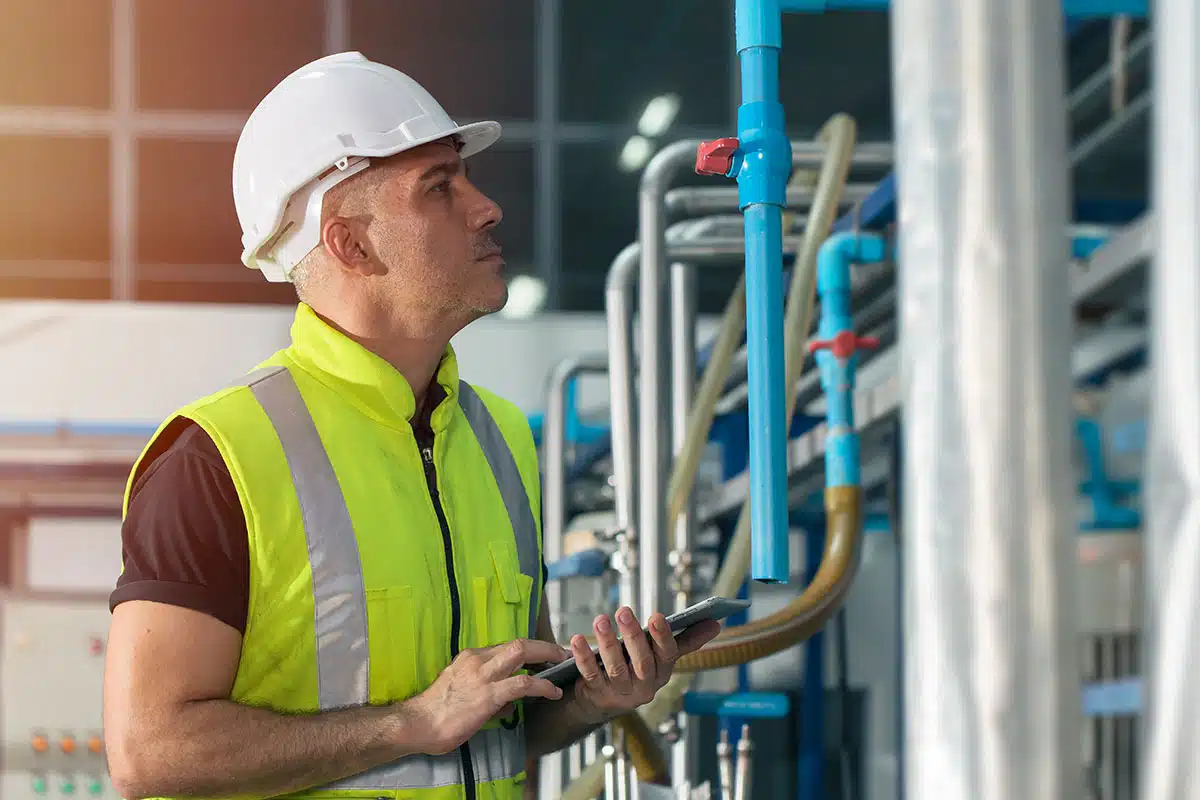
A technician wearing a hard hat and safety vest, holding a tablet, examines facility equipment
Gathering data and maintaining records is easier with software available to technicians on phones and tablets.

Knowledge is power, and pulling together data on your building portfolio and assets will help you identify strengths and opportunities in addition to weaknesses and gaps. This will allow you to better decide where future capital investments should go.

Organizational Objectives and Strategic Alignment

Since the facilities master plan is driven by the strategic facility plan, it’s critical to be well-versed in the vision laid out by the SFP. This will ensure that the FMP aligns with your organization’s goals for growth and serves these goals instead of holding them back.

Whether your company’s strategic plan is embedded in the FMP or is linked to a separate SFP, it’s important to know what the strategic plan is focused on. Does it account for objectives such as environmental changes, supply chain concerns, or new technologies? What about planned expansions or needed upgrades?

Whatever the strategies are, in order to carry out the objectives, you will likely need to coordinate with multiple stakeholders, including executive leadership and outside bodies such as planning and zoning agencies. Meeting with teams across your organization (for plan development and regular reviews) keeps everyone aware of progress and ensures alignment with the plan. It also ensures that everyone is aware of and in agreement with the FMP’s goals.  

Revisiting the FMP can be challenging for busy facilities managers, but consistent review is a must to keep things up-to-date and on target. Budgets change, strategies shift, and keeping an eye on regulations is a must.

Bridge the Gaps Using Scenarios

Once you’ve assessed your facility’s current conditions and reviewed your organization’s goals for the future, the next step is to identify and bridge gaps between the two. This involves scenario building—generating and evaluating alternatives or options based on the information at hand.

Scenarios should consider projected growth, industry trends, and evolving technology, together with considerations extending beyond immediate revenue generation such as regulation, environmental concerns, and objective-meeting criteria. In addition to alignment with objectives, scenarios should estimate feasibility and cost as well as impacts and benefits.

For example, consider a growing manufacturing facility that currently handles order fulfillment in house. In this case, a facilities master plan might evaluate whether adding space, using existing underutilized areas, or outsourcing certain tasks aligns best with the strategic facility plan.

Maintenance is another area up for consideration when devising scenarios. Switching from a reactive to a proactive maintenance strategy can reduce both costs and downtime. Adding sensors that monitor equipment health in real-time, streamlining work order processes, and training personnel on CMMS software can make it easier to achieve organizational goals.

Planning and Prioritizing Projects

Scenario planning helps you categorize and rank projects by priority. It may be urgent to replace large, expensive equipment such as HVAC systems. Or perhaps prioritizing your technology upgrades will be most beneficial.

Determining your priorities starts with creating a criteria-based system for evaluating projects. Criteria may include strategic alignment, urgency, impact on operations, compliance requirements, and cost. It’s important to develop a list of criteria that enables you to conduct an apples-to-apples comparison among possible projects. This will allow you to consider all the impacts and benefits, and to address your most urgent needs first.

Continual Development and Review

A clearly defined FMP includes blueprints of all the facilities covered by the plan.

The final FMP will be a detailed plan that includes building schematics as well as performance measures and projected budgets for each project, and of course an implementation timeline.

Once the plan is approved by the relevant stakeholders, it’s time to get started. But even then, the FMP process isn’t over, because as soon as you start executing on the FMP, you should schedule your first review. Periodic reviews are important to ensure that goals are being met, and that these goals are still in alignment with your organization’s needs.

Reaping the Rewards

Creating a successful FMP requires substantial work: compiling accurate data, careful planning and strategizing, and ensuring stakeholder involvement and continual review. But the rewards are also substantial.

By offering a detailed roadmap that balances short-term needs with long-term visions, FMPs enable efficient resource allocation, enhance operational efficiency, and align facilities with overarching organizational goals. After all, facilities are a cornerstone of an organization’s success, providing the physical infrastructure necessary for its operations. And a well-crafted, forward-looking facilities master plan is a key tool for ensuring the smooth, profitable operation of a company’s facilities.

Facilities Management that Promotes Success

Want to optimize your facilities and ensure they contribute to your company’s success? We’ve been helping businesses do just that for more than 35 years. Turn to us for the management expertise and resources you need to get your facilities running smoothly and cost-effectively.