Our Stories

The global pandemic has drastically altered many industries, especially in the medical field. What do experts predict will be the newest trend for medical device manufacturers?


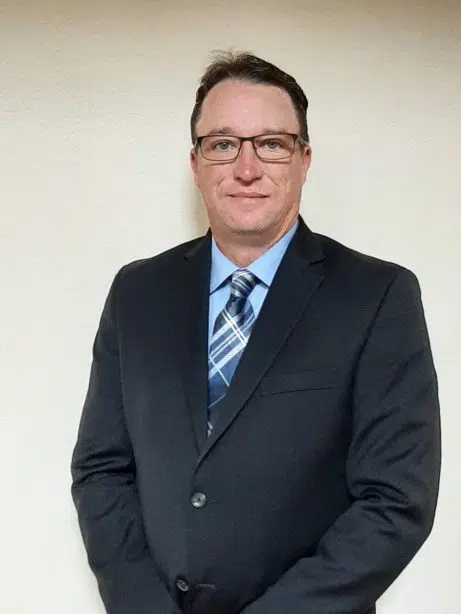
Recently, we sat down with Mike Douglas, Manufacturing & Engineering General Manager for PRIDE Industries. Mike has a reputation as a keen observer of the medical technology industry, borne out of a long and successful career. He shares both the opportunities and the roadblocks that medical device manufacturers are facing in today’s rapidly evolving situation.


Q: What is PRIDE’s involvement in the medical device manufacturing industry?


A: PRIDE Industries provides turnkey, end-to-end product solutions, ranging from kitting and assembly to full-blown product manufacturing services. Our current projects are quite varied, and include:

  • Manufacturing, assembling, and distributing a best-in-class, non chemical pain relief device used by everyone from professional athletes to casual joggers. Manufacturing this particular device requires us to source more than five hundred unique components.
  • Assembling serum and saliva test kits used for antibody testing.
  • Assembling and distributing recyclable, biodegradable medical carts used in single-patient and mass-capacity environments of care.
  • Manufacturing and kitting of a device used by anesthesiologists in hospital settings to control the dosing of medications.
  • Assembling low-cost, respiratory support devices for infants and children, specifically for use in low-resource countries.


Q: How is working with medical device technology more stringent than other industries?


A: The certification requirements for medical devices are far more exacting than for other products. For most products, ISO 90001 certification is the standard, which of course PRIDE has. But because we also manufacture and assemble medical devices, we also have the stricter ISO 13485 certification. This certification mandates greater managerial involvement. Goals must be minutely outlined, with strict accountability built into the various processes. Because of the potentially serious consequences of even a minor defect, we have to be able to track lots and even individual devices. Every shipment that includes a part we manufacture must have a Certificate of Compliance (COC). Our inbound inspection procedures are detailed and thorough, and we conduct quality checks on all the component parts we use.


Q: What sort of changes are you seeing in the medical device industry due to the effects of COVID-19?


A: One of the biggest changes I have seen has to do with the supply chain. Particularly with critical medical equipment, overseas suppliers have become less reliable. Many companies are now worried about the continuity of their production, which is why they’re looking to onshore manufacturing and assembly of equipment that supports critical medical needs.


Another change I’ve seen with the advent of COVID-19 is the shift in demand. Because many elective procedures were suddenly postponed or even cancelled, demand for related equipment dropped. At the same time, the demand for emergency and critical care equipment increased. Fortunately, PRIDE was able to quickly pivot to producing critical care equipment. During the first three months of the pandemic, PRIDE distributed 1.3 million face masks and 55,000 pairs of gloves. We also manufactured 1300 face shields, and distributed 500+ bottles of disinfectant.


Q: How will the pandemic change the face of medical device manufacturing?


A: Because so many companies have suffered from supply interruptions, I expect to see more of them choosing to create a buffer stock of essential supplies. Now more than ever, companies want dual-source capability. No one wants to rely on a single supplier. At a minimum, they want a backup supplier in place. Redundancy is key.


I also think we’re going to see an on-shoring trend. Even before the pandemic, rising tariffs were pushing manufacturing back to the US. Here at PRIDE, I’d already noticed an uptick in queries about landed costs. The fact is, when you look at the total cost of getting a product to the point of sale, PRIDE is a cost-competitive business partner. And I think now that people are aware of how something like a pandemic can rock the supply chain, there’s even more of an impetus to keep medical device manufacturing and supplies close to home.


Q: Has PRIDE seen a surge in the demand for medical devices?


A: Absolutely. There’s certainly been a surge in critical care devices and personal protective equipment. For a while, we saw a spike in ventilator production, but that’s since dropped back to more normal levels. And non-critical care equipment—the sort of devices that are associated with elective procedures—have also seen a drop in demand. But we expect demand for those types of medical devices to come back. People still want to have knee surgery, for example. And “non-urgent” is not the same as “not necessary.” So we expect to see a rebound on routine-care medical equipment, even as the demand for critical-care technology remains strong.


Q: As the global market for medical device manufacturing increases, do you see supply chain and material issues becoming more widespread and longer lasting?


A: In the near term, definitely there are going to be bottlenecks. Getting supplies from overseas will continue to be a challenge. But these supply issues should ease as domestic medical device manufacturing ramps up. And there are other benefits to bringing manufacturing home. Several industries have been plagued with counterfeiting problems and a lack of quality control. With domestic production, a company can exercise much greater control, which ultimately saves money. And it certainly saves a company’s reputation.


Another fundamental issue is the availability of core components. A lot of manufacturers are vying for the same materials. Obviously, if you can’t get supplies, you can’t build your product. And delays in supply acquisition lengthen the lead times in production. So again, onshoring gives a company greater control of the production process.


Q: Medical device manufacturing can be highly specialized. Do you find it difficult to balance medical manufacturing work while still serving other industries?


A: It’s never been a problem for us. In fact, manufacturing medical devices makes us better equipped for other products. Because we’re used to operating at such a high level for medical device manufacturing, we’re able to bring a lot of precision and quality control to our work in other industries. We’re used to the stringent requirements of ISO 13485, and it’s not like we “step down” when we switch to a nonmedical product. On the contrary, it’s our attention to detail—honed through working on medical devices—that has given us such a high customer satisfaction rating across all the industries we serve. Our employees are used to working precisely and efficiently, and our customers recognize that.

We can help your business grow
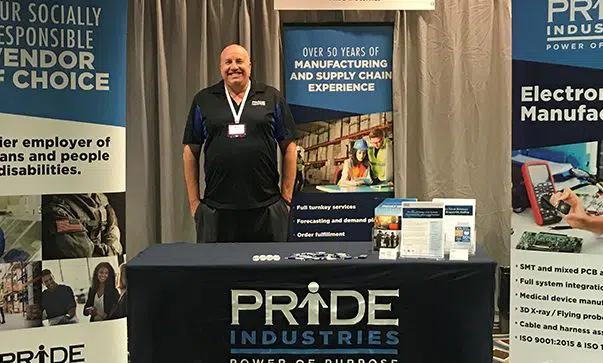
We offer cost-effective electronics manufacturing services in a wide variety of industries.
Mike Douglas, Manufacturing & Engineering General Manager for PRIDE industries

"I’ve had companies tell me, 'If PRIDE can build medical devices, then I’m betting you can build my product.' And they’re right."
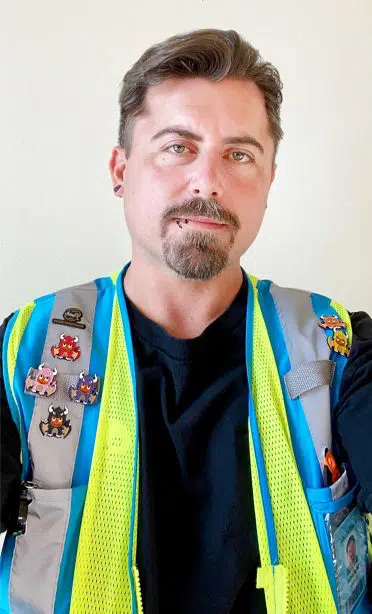
Mat Baker’s career as a learning trainer began after joining PRIDE Industries’ job placement assistance program in 2018, which landed him a position at Amazon. The journey wasn’t always easy, as a severe anxiety disorder initially prevented him from interacting with others or seeking a job. Employment with Amazon gave Mat the confidence and skills to overcome these obstacles and earn several promotions.

Job Placement Assistance for People with Anxiety

Mat suffered from severe panic attacks and anxiety his entire life. This prevented him from interacting with others, especially in large crowds. “At the same time, staying at home in isolation gave me a feeling of inadequacy, causing more anxiety,” he said. “It was a vicious cycle that felt impossible to overcome.”  


Others with severe anxiety face similar challenges. For this reason, each of PRIDE’s job coaches works one-on-one with candidates to assess their needs, create a goal plan, and help them prepare for successful job placement.  


“Just two years later, so much has changed!” Mat said. “I am employed as a learning trainer at Amazon’s Sortation Center in Vacaville, CA. I feel comfortable in what is a very hands-on position—I help train new hires and manage 60 Ambassadors to coach other associates. I’m part of a large team; all of us work together to make sure our customers get their packages on time!”


Working closely with his job coach at PRIDE Industries made all the difference for Mat. “From day one, PRIDE provided the foundation for my amazing growth,” he said. “This journey would not have happened without their job coaches. They showed me exactly what to expect and checked on me every step of the way. Job Coach Jarmar Pearson advocated for me every day, and I can’t thank him enough!”

Mat’s Ongoing Growth After Job Placement

Since day one at his new job, Mat’s confidence has grown and he went on to earn a promotion. Every step of the way, Mat’s job coach advocated for him, ensuring he had the support he needed from PRIDE and from his new Amazon team.


“This was my first job, and at the beginning, it felt daunting having to work with so many people. And there was so much to learn!” Mat shared. “But using techniques from therapy, I was able to keep a positive attitude and overcome these challenges. I remember asking the learning trainers follow-up questions, and they were always patient with me, helping to build my confidence, and speak up more.”


Mat began to realize his hard work was paying off when managers began requesting him in their areas. “I knew I could move up. When a learning trainer asked me to become an ambassador, I signed up immediately. Since I had to interact with up to 10 new hires every day, I gradually felt less anxious around others.” Thanks to his determination and targeted job placement assistance from PRIDE, Mat was proudly overcoming his anxiety and thriving at work.

Continued Advancement and Career Success

Mat continued to make an impression on the leadership team at work. “The learning trainers and the learning coordinator encouraged me to apply for a job as a seasonal trainer. Despite the fierce competition for this position, I got the job. Even though I joined during our peak season, when Amazon hires thousands of people, I rose to the challenge and earned the respect of my team. I was hired permanently in February 2020. I am proud of my ability to overcome the difficulties related to my disability. It’s exciting to realize that two years ago, I was a nervous associate coached by a learning trainer; now, I am the one teaching others! This incredible experience has created positive changes throughout my whole life.”


“It’s been a long, rewarding road, and now the sky is the limit,” Mat said. “I plan on becoming a learning coordinator or an area manager. Trust me when I say I won’t be stopping here!”

Need employment placement support?

Contact our I AM ABLE Helpline to discuss your options.
Mat Baker
Mat Baker

“No words can express my gratitude for the support, the encouragement, and the hope that PRIDE has given other associates with disabilities and me. I love my job.”

Commissary Manager Carey Young’s Decisive Action Saved Lives

It was after midnight on a Saturday in late May when Carey Young finally decided to call it a day. As the Commissary Manager for Oceana Naval Air Station in Virginia Beach, VA, he often works late at night, overseeing the restocking and custodial operations of his large team.


Carey is a hands-on manager, and if he’s not in his office, he’s most likely pitching in with needed work. That’s why on this particular night, he was driving a forklift, having just dropped a bale of cardboard into the recycling dumpster.


Carey went through his mental checklist of final tasks to complete before he could go home. He’d return the forklift to the warehouse, gather his things from the office, and tell Carmen Hanft—his second-in-command for 16 years—that he was leaving.


Then he’d drive home on quiet freeways, arriving at his house after his wife Senga and their children had gone to bed. But there would be a light on in the kitchen, and a healthy supper waiting in the fridge. Dessert too, usually a fruit salad, perfect for a warm, muggy Virginia night.


Carey was driving the forklift towards the bay doors of the warehouse, thinking of dinner and bed, when something caught his attention. He stopped and took a deep breath. A faint odor, laced with chemicals, drifted past him. Smoke.

Dan Enrique, the Quality Assurance Evaluator (QAE), happened to be walking out of the warehouse at just that moment. Carey stopped him, asked him if he could smell the smoke too. Dan told him he’d already investigated the smell and hadn’t found a source anywhere in the two-story commissary. Most likely, the smell was coming from the campsite down the road.


It was certainly a reasonable explanation. But Carey had grown up in the country. He knew well what bonfires and barbecues smell like. This was different.


Carey scanned the roofline of the building. Off in the distance, near the roof’s edge, a haze seemed to blur the outline of the structure. It could be nothing—after all, it was hard to see anything at night. But a stint in the Navy had taught Carey not to take safety for granted.


Carey suggested to Dan that they recheck the roof, and Dan agreed. So Carey parked the forklift in the warehouse and climbed the stairs to the roof with Dan.


As soon as Carey stepped onto the roof, he noticed that his shoes were sticking to the gummy surface. Carey knew there were contractors working on the roof, and it was possible they had recently laid down tar. But even so, when he reached down to touch the roof’s surface, the tar was so warm it stuck to his hand.


Carey stood, and shined his flashlight across the roof’s surface. Right away, he noticed a puff of smoke. Even more concerning, among the welding torches and other tools that the contractors had left behind for another day’s work, Carey spotted several large metal canisters. He knew what was likely in those tanks—propane gas, used to power torches for cutting and welding.


In that instant, Carey realized the danger of the situation. The warm roof told him there was a fire starting somewhere beneath him. If that fire reached those propane tanks, the explosions would be devastating.


And in the building beneath his feet, there were nearly thirty people—25 PRIDE employees and four government personnel—busily stocking shelves and cleaning floors, oblivious to the fact that they were effectively encased in a time bomb.


Carey acted quickly. He pulled out his phone and called the base fire station, while Dan dialed 911. Then, as the two men were walking across the roof to the stairs, Carey called Carmen and told her to clear the building. By the time he made it down to the first floor, the commissary was empty. A headcount, taken in the parking lot, confirmed that everyone was out of the building.


Moments later, the first of seven fire trucks came roaring into the parking lot. The firefighters moved quickly, unfurling hoses and hauling gear into the building. Soon they were joined by more firefighters, and in just minutes, they’d chopped a hole in the roof and doused the developing fire.


It was later determined that hot tar, laid down earlier that day, had seeped through the roof and onto electrical wiring in the attic. There the fire had begun to smolder, slowly growing as it fed on the plastic covering of the electrical wires. There’s little doubt that if the fire hadn’t been stopped, it would have spread to the roof and caused an explosion.


That day, Carey’s quick thinking and decisive action averted disaster. Had it not been for him, the fire could easily have been deadly. Instead, everyone got to go home that night.


And at the end of a very long day, Carey finally got to enjoy a bowl of fruit salad.


Need employment placement support?

Contact our I AM ABLE Helpline to discuss your options.
Cary Young
Carey Young, on his way to work

“You don’t take any chances with a possible fire,” he says. “You double and triple check.”

In March 2020, Marcel Bobson reached a major accomplishment – he became a licensed journeyman plumber in the state of Texas. The path to this goal required patience and determination; Marcel completed 8,000 hours of training in four years, all while working a full-time job. The hard work and sacrifice paid off, however, when Marcel mastered the subject and passed the licensed plumber examination with flying colors.


Throughout this journey, Marcel knew he could count on the support of his co-workers at PRIDE, where he started as a Maintenance Trades Helper and now plies his trade as a certified plumber. “As a new journeyman plumber in these challenging times, it is my privilege to work with PRIDE Industries and to help keep our military families safe,” said Marcel.


The grit and perseverance required to reach his career goals were nothing new to Marcel, who has overcome many obstacles in his life. He grew up in the South American country of Suriname, and joined the Dutch Army after graduating high school. A military accident in 1982 caused him to completely lose hearing in his right ear and experience partial hearing loss in his left ear.


Because Marcel’s disability was newly acquired, he didn’t know sign language and struggled to communicate at first. Eventually, with the help of hearing aids, he regained the ability to speak with others.


About a decade after the military accident, Marcel moved to the United States. After meeting his future wife, who was stationed at Ft. Bliss, he moved to El Paso, TX. Marcel then enrolled at the University of Texas at El Paso (UTEP), where he took general courses in the Electrical Engineering Program for several months, but eventually decided to look for employment again.


For three years, Marcel searched for a permanent job position. Finding work seemed elusive, especially as his hearing loss began to worsen. Many employers were hesitant to hire someone with a disability. However, this all changed when Marcel joined PRIDE’s Ft. Bliss Commercial Facilities Management contract in 2014 as a Maintenance Trades Helper (following a referral from the Texas Workforce Commission) in the Electrical Shop. With Marcel’s impressive work ethic, the job proved to be a perfect fit, and he was promoted to General Maintenance Worker shortly after he started with PRIDE.


Marcel started an after-work apprenticeship program in 2015 which would make him eligible for the state plumbing exam. In 2016, he applied for and earned a General Maintenance Worker (GMW) position in the PRIDE-Ft. Bliss plumbing department. PRIDE’s Training Department paid for all his course fees, testing fees and his travel expenses related to his apprenticeship to help Marcel achieve his goal.


“As a GMW working with other plumbers, my daily job tasks include repairing plumbing fixtures, unclogging sewer lines, troubleshooting hot water heaters, installing sinks, and toilets. I find that plumbing is like solving a puzzle—I have to locate the leak or find which line is clogged up. At the end of the day, I like working with my hands and getting the job done!”


“A rewarding moment is when I was called to troubleshoot a building that had only hot water. A soldier personally thanked me for helping them out, and it felt great.”


While his professional career continued to prosper, Marcel’s hearing, unfortunately, continued to worsen. This factor made his job especially difficult since he could no longer understand instructions while in a warehouse environment. or during work service calls. To accommodate this change, PRIDE’s Vocational Rehabilitation department provided Marcel with a new cell phone with closed captioning, a larger screen, and notetaking apps. Marcel also started taking ASL sign language classes offered by PRIDE Job Coaches.


In 2018, Marcel learned that he qualified for cochlear implants, and decided to go through with the procedure. This process was an adjustment, as he initially experienced side effects of dizziness, and nausea.

“Despite the initial difficulty, I am now able to hear better. It took some effort, but with the continued help of my PRIDE Job Coach, I was ready to complete my job assignments again.”

Marcel never let any of these challenges get in his way of finishing his apprenticeship, and he ultimately passed the examination and was promoted to Plumber in March 2020.


“Marcel worked so hard for this accomplishment,” said Rehabilitation Counselor Shannon Bloxham. “He’s faced every obstacle that’s come his way with a positive attitude and persistence. I am proud of his accomplishments.”


Marcel is pleased with what he’s accomplished. But more than anything, he’s glad to be doing the work he loves, at a company where he has forged many friendships.


“My job means I can provide for my family while working in a career that I enjoy,” he says. “And I also like knowing that I’m contributing to PRIDE’s mission to help people with disabilities like me.”

Need employment placement support?

Contact our I AM ABLE Helpline to discuss your options.

“My job means I can provide for my family while working in a career that I enjoy. And I also like knowing that I’m contributing to PRIDE’s mission to help people with disabilities like me.”

On a brisk, sunny morning this past May, Don Lucy jogged up several concrete steps, crossed a small plaza, and entered a nondescript office building. He passed through a glass door and walked to where a plastic X had been placed on the lobby floor. A moment later, a receptionist waved him forward. She checked his ID, then directed him to a row of standing lockers—personal belongings weren’t allowed where he was going.


After stowing his watch, keys, and phone, Don pushed his way through another door, stood on another plastic X. When he was called forward, he walked to a large desk where a man sat at a computer. Don had to show his ID again, and remove his face mask so that the man could confirm his identity. Then Don was asked to take off his glasses and place them in a box on the table. He did so, then watched as the man at the table inspected them carefully.


A moment later, Don was allowed to retrieve his glasses, but the intense scrutiny wasn’t over. He was asked to hold his arms out, lift his pants legs above his socks. Don complied with each of these requests, waiting patiently for the man to confirm that he wasn’t carrying any electronic devices. Finally, the man at the table nodded his approval. Don was finally cleared to pass through the third and final door.

Don Lucy
Don Lucy, CFM

These kinds of security measures bring to mind images of national intelligence briefings. But Don is not, in fact, a secret agent. He is PRIDE Industries’ General Manager of Commercial Facilities Services for the NorCal Region. And he’d gone to the office building that May morning to take an important test—the Certified Facilities Manager (CFM) Examination.


Not many tests require their takers to undergo such scrutiny, but the CFM exam isn’t just any test. The exam is administered by the International Facilities Management Association (IFMA), and it’s demanding. Test-takers must answer 180 questions in just four hours, on topics covering everything from financial risk management to real estate strategies to health and safety issues. IFMA doesn’t disclose the pass rate for the exam, but given that there are only 2,600 CFMs in the world, it can’t be too high.


Don knew the test would be a challenge. So he’d prepared, spending over 100 hours studying and practicing. And the hard work paid off. In early May, he was notified that he had passed.


Don is now one of a handful of credentialed CFMs here at PRIDE, a group that includes his manager, Chris Bunch, who Don credits with encouraging him to take on the challenge.


“When Chris first talked to me about CFM certification, he made it clear he was confident I could do it,” Don said. “That meant a lot to me.”


The knowledge and skills Don gained on his way to becoming a CFM will serve him well in his job as General Manager, a role he undertook this past January. As GM for the NorCal Region, he oversees 21 service contracts worth $33 million. He’s also responsible for the day-to-day operations of nearly 3 million square feet of facility space and leads a team of more than 350 employees. It’s a complex job, but if his performance on the CFM test is any indication, Don is more than up to the task.


So what’s next for the newly minted CFM?


“I’m just glad the test is behind me and that the certification came through,” Don says. “Now I can focus on the reason I did all that learning in the first place—applying best practices to PRIDE’s business lines.”

Move forward in your career

Whether you’re looking for a job in your community, need pre-employment job support, or are ready to start a career with PRIDE Industries, we’re here to help.

“I’m just glad the test is behind me and that the certification came through.”

As online applications become the standard, face-to-face introductions often give job seekers an edge. This option may be difficult for people who have challenges with verbal communication. PRIDE Industries’ disability job placement services and employment programs for people with disabilities is here to help navigate options and provide support. PRIDE Industries’ Job Developers reach out to businesses in the community to help place people with disabilities in the perfect job, creating the means for lasting employment success.


During the pandemic, PRIDE Industries’ Employment Services team remains hard at work to place individuals with disabilities in employment. Using videoconferencing, they are reviewing resumes, practicing online interviews, and focusing on placements for in-demand fields such as grocery stores, fulfillment, and custodial jobs.


Carlos Perez, one of PRIDE Industries’ Job Developers, places individuals in community employment and supports them through the process of getting an internship, a permanent job, and their first three months of employment. He shares his story with PRIDE below:

Disability Job Placement Services that Ensure Long-Term Success

“While studying Psychology at Sacramento State, I continued to work at Safeway as a Store Associate. I enjoyed mentoring those who were new to the job, including ways to help customers pick out the right produce and checking them out at the cash register.


During my time at Safeway, a few individuals from PRIDE’s Employment Services Program also worked at this store. In 2016, I met PRIDE Job Coach John Edwards, who explained PRIDE’s mission to create job opportunities for people with disabilities. I was so impressed by PRIDE’s work and employment services that when the opportunity came up, I took a chance and joined as a Job Coach in 2017.


Job coaches help ensure the long-term success of individuals with disabilities after job placement. I work with people with a variety of disabilities, including many on the Autism (ASD) spectrum. Everyone has their unique talents; for example, those with ASD often have excellent memory and organizational skills. However, all placements work hard to contribute to their position.

Job Placement for People Facing Barriers to Employment

After a year, I was promoted to Job Developer for PRIDE’s Youth Services program, focusing on placing young adults that have disabilities, who are emancipating from foster care, and survivors of sex trafficking into employment.


Getting to that final point can be a challenge, as it ranges from 4 to 7 months to place a person. Ultimately, it comes down to the individual’s persistence and willingness to continue.


Many of my clients have dealt with trauma. We are sensitive to their pasts and help them develop more confidence by creating their resumes and arranging for paid internships in community internships.


Retail jobs are my most frequent placements; it’s an excellent match for my clients as they are just getting into the job market and have the chance to build up necessary skills such as customer service.

Beyond Job Placement Services: Cultivating Vital Skills

Knowing how to talk to employers is tough for anyone, especially if you have a disability. Many of my clients communicate differently and struggle with eye contact and anxiety. PRIDE Employment Services provides training in skills that are necessary to succeed at work. Additionally, following up with the employer often helps. They are more willing to give the individual an opportunity once they learn that PRIDE is there to provide ongoing support.


When approaching a potential employer to help place an individual, I usually go in-person to introduce myself. Paper only gets you so far!


Along with job planning, I help my clients develop an education plan if they desire to attend college. I remind them that it is essential to focus on performing well at their jobs; it’s a good stepping stone to building a career. I use my previous experience at Safeway as an example, as it taught me a strong work ethic and customer service skills.


When my clients get jobs, and their families thank me, it’s truly priceless and the best part of my job. Helping one person might not change the whole world, but it could change the world for one person.”

Need employment placement support?

Contact our I AM ABLE Helpline to discuss your options.

“Helping one person might not change the whole world, but it could change the world for one person.”