
Our Stories
Here are several top facilities management events for 2026 and 2027 that facilities managers and their teams should be aware of.
Learn how AI and other developments are reshaping the design and operations of healthcare facilities. Network with fellow professionals; and get expert advice on attracting reliable talent and managing crisis situations. Learn more.
This event offers networking and learning opportunities for facilities, maintenance, and energy managers in the high-tech manufacturing, education, utilities, biotechnology, government, hospitality, retail, healthcare, finance, and entertainment industries. Learn more.
This event offers networking and learning opportunities for facilities, maintenance, and energy managers in the food processing, government, healthcare, manufacturing, education, winery, utilities, and other industries. Learn more.
Get the latest on facilities management best practices from respected industry professionals, and learn how to optimize your operations with emerging technologies like AI. Discover new products and services, and network with your colleagues from across the country. Learn more.
BSCAI’s largest in-person event of the year, this conference offers multiple networking events and more than 20 educational sessions for professionals in the janitorial services industry. Learn more.
Groundbreaking discussions on facility management and the environment. Workplace professionals come to discover innovative FM technologies, build valuable relationships, and sharpen skills. Learn more.
Designed for HVAC, sustainability, and facilities management professionals, this conference is your chance to network with peers and explore solutions to pressing facilities management challenges like data center cooling, indoor air quality, and energy conservation. Learn more.
For property managers, owners, and investors, this technology conference is the place to go to discover the innovations—in AI, data integration, and green technology—that are driving growth in commercial and multifamily real estate. Learn more.
Bringing education, networking, and product discovery together in one dynamic event. Broad-based education for facilities professionals from every type of organization. Learn more.
Billed as the largest show in facilities management, this conference is for multisite facilities management professionals seeking techniques and technologies to cope with challenges like extreme weather, fluctuating occupancy, and labor shortages. Learn more.
IFMA’s Facility Fusion event offers TED-style talks, learning labs, and team-building exercises designed to help you discover your leadership style, learn how to communicate a vision others will follow, and successfully contribute to creating a top-performing organization. Learn more.
The premiere event for fire and life safety, this conference is a great way to stay up to date with the standards and codes regulating the design, construction, and operations of buildings and facilities. Discover new safety technologies and network with fellow facilities professionals. Learn more.
Network with your peers in the building operations, maintenance, real estate, and rental industries (among others). And get the latest on new building technologies, changing occupant expectations, decarbonization efforts, and hybrid work trends. Learn more.
Health Care Facilities Innovation Conference
Colorado Convention Center / Denver, CO
August 1–4, 2027
Billed as the largest gathering of healthcare facilities professionals, this conference lets you connect with fellow professionals and hear from facilities experts about the latest techniques and technologies for advancing the safety of healthcare facilities.
Ready to enhance efficiency, lower costs, and increase your supplier diversity?
Few companies provide the deep expertise in facilities management services with the opportunity for social impact like PRIDE Industries does.
For those who drive the creation and development of manufacturing technology, this event will help you discover practical solutions, learn about evolving best practices, and connect with fellow manufacturing tech experts. Learn more.
Silicon Valley’s largest conference for printed circuit board design, fabrication, and assembly. This event offers technical training and industry exhibitions. Explore military, aerospace, cutting-edge IoT, and wearable technology. Learn more.
One of the largest global expos of its kind, this event offers a wide range of educational opportunities and networking events. Come catch up on the latest in packaging and processing technology. Learn more.
Billed as the industry’s largest technical conference, this is the place to explore groundbreaking research and discover insights from leading experts across all aspects of electronics manufacturing. Learn more.
If you make a consumer product, then you don’t want to miss this trade show. Long recognized as the most influential tech event in the world, this is the place to be to catch upcoming trends and keep an eye on the competition. Learn more.
This educational forum is designed specifically for chip, board, and systems design engineers. If you want to discover the latest trends, or you’re looking to level up your skills, don’t miss this conference. Learn more.
Rightly called one of the leading medical device trade shows in the U.S., this event is your chance to explore the latest in life-saving and health-improving technologies. Come explore innovative solutions in such fields as medical devices, digital health, hospital equipment and supplies, cardiovascular solutions, pharmaceuticals, and much more. Learn more.
This technical conference is geared towards aerospace experts, academics, military personnel, and industry leaders. Here’s your chance to learn about cutting-edge technologies from researchers working on the frontiers of science and engineering. Learn more.
Dubbed the electronics manufacturing industry’s leading technical conference for professional development, this event features a world-class trade show, a cutting-edge technical conference, extensive networking opportunities, and professional development courses taught by industry experts. Learn more.
Electrical Wire Processing Technology Expo (EWPTE)
Baird Center / Milwaukee, WI
May 4–6, 2027
With a focus on electrical wire processing technology, this conference offers solutions to challenging wire technology problems through training and education, along with the chance to network with industry leaders and subject matter experts.
One of America’s largest design and contract manufacturing trade shows. Discover new custom and stock parts and find everything you need to go from design and prototypes to production, finishing, and assembly. Learn more.
A leading conference for manufacturing, engineering, and digital transformation leaders, the Forum lets you discover and debate the latest Industry 4.0 trends. Here’s your chance to benchmark your company’s processes and strategies against your industry peers. Learn more.
Discover where space-related technologies are headed over the next two decades as you deepen your technical expertise and connect with fellow professionals. If you’re part of building the space-based future, then don’t miss this conference. Learn more.
The Design Automation Conference offers more than 300 technical presentations on new products, methodologies, and technologies in the electronics industry. If you’re a designer, researcher, tool developer, or vendor, here’s your chance to take a deep dive into AI, machine learning, EDA, embedded systems, IP issues, cybersecurity, and other cutting-edge topics. Learn more.
Where manufacturers of all sizes come together to benchmark, network, and learn how to become smarter and more connected. Learn from technology exhibits, workshops, and presentations by Industry 4.0 leaders. Learn more.
We can help your business grow
We offer cost-effective electronics manufacturing services for a wide variety of industries.
The earliest recorded use of a “pesticide” or chemical compound to deal with insects was in 2500 BC; archeological research has shown that the ancient Sumerians were using sulfur compounds to repel and kill insects during this time. And while the types of pesticides commonly used have changed in the past 3000 years, the desire to get rid of pests hasn’t. Even today, a bug sighting can inspire an instinctive urge to eliminate the invader at all costs, leading, in some cases, to the overuse of hazardous pesticides. Fortunately, now there’s another option available for commercial pest control: integrated pest management.
Unlike traditional grab‑and‑spray protocols, integrated pest management (IPM) takes a different approach. By leveraging data about insects—their lifecycles, and how they interact with plants and other insects—IPM can stop problems before they start. And while IPM does include the judicious use of pesticides, this methodology relies more on other means, making it an increasingly popular choice for companies seeking sustainable pest control solutions for commercial landscaping.
Healthier landscapes require less intervention overall, and targeted treatments reduce labor and material expenses. Over time, this leads to more predictable budgeting and fewer costly surprises.
The Benefits of IPM for Commercial Pest Control
Integrated pest management has become the preferred approach for sustainable commercial pest control because it balances effectiveness, environmental responsibility, and long‑term cost savings. Rather than relying on routine chemical applications, IPM emphasizes prevention, monitoring, and targeted intervention. This shift reflects a broader national movement toward greener facility operations and more resilient landscapes.
IPM for commercial pest management has several important benefits:
- Reduced chemical use – IPM prioritizes non‑chemical methods and uses pesticides only when necessary, improving safety and reducing environmental impact.
- Lower long‑term costs – Preventative strategies and targeted treatments minimize expensive remediation and reduce material waste.
- Improved regulatory compliance – IPM aligns with evolving environmental standards and supports documentation for audits and inspections.
- Enhanced sustainability – Healthier landscapes, reduced runoff, and lower toxicity contribute to ESG and corporate sustainability goals.
- Greater effectiveness – By addressing root causes rather than symptoms, IPM provides more durable, long‑lasting pest control.
One of the primary advantages of IPM is its ability to limit the development of pesticide‑resistant pest populations. In decades past, heavy reliance on chemical pesticides allowed certain insects and weeds to adapt, rendering once‑reliable treatments far less effective. IPM counters this problem by incorporating a wider range of control methods—biological, mechanical, and chemical—making it harder for pests to develop resistance. This diversified strategy not only protects the environment but also preserves the long‑term viability of pest‑control tools.
IPM also supports healthier indoor and outdoor environments. By reducing the frequency and volume of chemical applications, facilities minimize the risk of contaminating soil, waterways, and air. This is especially important in public spaces such as parks, campuses, and recreational areas, where visitors may be sensitive to chemical exposure. For organizations with ESG goals, IPM provides a measurable way to reduce environmental impact while maintaining high standards of effectiveness and safety.
IPM has financial benefits too. Because it focuses on prevention and early detection, IPM reduces the need for large‑scale remediation and repeated chemical treatments. Healthier landscapes require less intervention overall, and targeted treatments reduce labor and material expenses. Over time, this leads to more predictable budgeting and fewer costly surprises.
Together, these benefits make IPM a powerful tool for facilities managers seeking to protect their buildings, landscapes, and occupants while meeting sustainability expectations.
Eco-Friendly Commercial Pest Control Methods
Today’s sustainable commercial pest control programs include a wide range of low‑toxicity and non‑chemical solutions that weren’t widely available even a few years ago. These methods help organizations reduce chemical exposure, improve indoor air quality, and support sustainability goals.
Botanical and Essential‑Oil‑Based Treatments
Plant‑derived compounds such as rosemary, peppermint, thyme, and geraniol provide effective control of ants, roaches, and flying insects with minimal environmental impact. These products break down quickly, reducing the risk of residue in sensitive environments.
Microbial and Biological Controls
Beneficial organisms—such as Bacillus thuringiensis (Bt), parasitic wasps, predatory mites, and nematodes—can be used to target specific pests without harming people, pets, or beneficial insect species like bees and ladybugs. These biological agents are especially useful in landscaped areas, green roofs, and outdoor common spaces.
Heat Treatments
High‑temperature remediation is now a leading method for eliminating bed bugs and other heat‑sensitive pests without chemicals. Heat treatments are particularly valuable in hospitality, healthcare, and multi‑unit residential settings where chemical exposure must be minimized.
Pheromone and CO₂‑Based Traps
These traps attract and capture pests by mimicking the chemical signals that drive insect behavior, and so reduce the need for broad‑spectrum pesticides. Pheromone traps are especially effective in warehouses and food‑service environments.
Mechanical Controls
These include adjusting irrigation schedules, improving soil health, installing physical barriers, using mulches that deter pests, and pruning vegetation. These methods support long‑term pest suppression by making the environment less hospitable to unwanted species.
Smart Technology: The New Frontier of Commercial Pest Control
In addition to the traditional tools listed above, advances in digital technology have created new IPM solutions that are reshaping commercial pest control. Facilities can now leverage advanced monitoring tools that improve accuracy, reduce chemical use, and support data‑driven decision-making. Here are four smart tools worth considering.
IoT‑Enabled Pest Monitoring Traps
Monitoring traps use sensors to detect pest activity and send real‑time alerts to technicians. This enables faster response times, reduced labor costs, more precise interventions, and better documentation for audits. These smart traps are especially useful in large facilities such as warehouses, distribution centers, and manufacturing plants.
AI‑Driven Monitoring and Analytics
Artificial intelligence can identify patterns, predict infestations, and optimize technician routes. AI systems analyze temperature and humidity trends, historical pest activity, structural vulnerabilities, and seasonal patterns. This predictive capability helps facilities managers address issues before they escalate.
Drone‑Assisted Inspections
Drones can inspect roofs, loading docks, and hard‑to‑reach exterior areas, providing a safe way to detect the presence of insects before they become a serious problem. Drones are particularly valuable for large campuses, industrial sites, and buildings with complex architecture.
Digital Reporting and Compliance Tools
Modern pest‑control platforms provide automated service logs, photo documentation, trend analysis, and compliance reports. These tools streamline communication between pest‑control providers and facilities teams.
Whether or not you choose to invest in advanced digital technologies, or prefer to rely solely on traditional methods, it’s important to ground your operations in practices and techniques that have proven to keep buildings and landscapes healthy. Here are six best practices that will help ensure your pest control program’s long‑term success.


1. Strengthen Sanitation Protocols
Sanitation is the foundation of any effective commercial pest control program. Pests are opportunistic; they gravitate toward food, moisture, and shelter. When these resources are available to insects—whether in a break room, warehouse, loading dock, or landscaped area—pest pressure increases dramatically. Facilities managers can reduce this pressure by ensuring that food waste is promptly removed, spills are cleaned quickly, and storage areas remain organized and free of clutter. Even small lapses, such as leaving trash bags beside a dumpster or allowing organic debris to accumulate in drains, can create ideal breeding conditions for bugs.
In commercial environments, sanitation must be consistent and systematic. This means establishing clear cleaning schedules, ensuring that custodial teams understand their role in pest prevention, and conducting regular inspections of high‑risk areas such as kitchens, waste‑handling zones, and mechanical rooms. When sanitation is treated as a shared responsibility across departments, pest problems become far less likely to escalate.
2. Improve Structural Integrity
Exclusion—physically preventing pests from entering a building—is one of the most effective and sustainable pest‑control strategies available. Many infestations begin with small structural vulnerabilities: a gap under a door, a torn window screen, or a crack in a foundation wall. Rodents, insects, and other pests can exploit openings far smaller than most people realize. For example, mice can squeeze through holes the size of a dime, and cockroaches can flatten their bodies to slip through narrow crevices.
Facilities managers should incorporate routine structural inspections into their maintenance programs. This includes checking for damaged weather stripping, ensuring door sweeps are intact, sealing utility penetrations, and repairing worn or broken screens. Loading docks, in particular, require close attention due to their frequent traffic and open spaces. By addressing these vulnerabilities proactively, facilities can significantly reduce the need for chemical treatments and improve long‑term pest control.
3. Manage Landscaping Thoughtfully
Outdoor environments play a major role in indoor pest pressure. Overgrown vegetation, standing water, and poorly selected plant species can attract insects and rodents, creating a pipeline of pests that eventually make their way indoors. Sustainable landscaping practices—such as choosing native or pest‑resistant plants, maintaining proper irrigation schedules, and ensuring adequate drainage—help create an exterior environment that discourages pest activity.
Facilities managers should work closely with landscaping teams to ensure that shrubs and trees are trimmed away from building exteriors, mulch is applied sparingly near foundations, and irrigation systems are calibrated to avoid over‑watering. Excess moisture is one of the most common contributors to pest problems, particularly in warm climates. By designing and maintaining landscapes with pest prevention in mind, organizations can reduce both outdoor and indoor insect activity while supporting healthier, more sustainable grounds.
4. Monitor Continuously
Regular monitoring is essential for early detection and targeted intervention. Traditionally, commercial pest control relied on reactive measures—responding only after a problem became visible. Modern IPM emphasizes proactive monitoring through frequent inspections, strategically placed traps, and digital tools that track pest activity over time. This approach allows facilities managers to identify trends, pinpoint hotspots, and address insect incursions before they escalate into full infestations. Over time, this data also helps refine pest‑control strategies, which can reduce chemical use and improve overall facility performance.
Monitoring also supports better documentation, which is increasingly important for regulatory compliance, third‑party audits, and internal reporting. Keep in mind that while smart traps and other technologies do provide useful information on insect activity, visual inspections are still needed to confirm the data in order to make truly informed decisions.
5. Train Staff
Even the most sophisticated pest‑control program can falter if employees are not trained to support it. Staff members are often the first to notice early signs of pest activity, such as droppings, gnaw marks, damaged packaging, or unusual odors. When employees know what to look for and how to report it, facilities managers gain valuable eyes and ears throughout the building. Training should also cover basic prevention practices, such as proper food storage, waste handling, and maintaining clean workspaces.
Creating a culture of awareness does not require extensive training sessions. Short, focused briefings during staff meetings, onboarding, or safety trainings can be highly effective. The goal is to empower employees to participate in pest prevention rather than relying solely on external service providers. When everyone understands their role, pest issues are identified earlier, addressed faster, and prevented more effectively.
6. Collaborate Across Departments
Sustainable commercial pest control is inherently collaborative. Pest issues rarely originate from a single source; they emerge from the interplay of sanitation, maintenance, landscaping, operations, and even procurement decisions. For example, a maintenance team may repair structural gaps, but if the janitorial team is not managing waste effectively, pest pressure will persist. Similarly, landscaping teams may maintain vegetation, but if operations staff leave loading dock doors open, pests will still find their way inside.
Facilities managers can strengthen pest‑control outcomes by fostering communication between departments and establishing shared goals. Regular cross‑departmental check‑ins, joint inspections, and clear reporting channels help ensure that everyone understands how their work contributes to pest prevention. When pest control becomes a collective effort rather than a siloed responsibility, facilities achieve more consistent, long‑lasting results.
A National Shift Toward Sustainable Pest Control
Across the country, pest‑control strategies are evolving to incorporate broader sustainability goals. California’s 20‑year Sustainable Pest Management (SPM) Roadmap is just one example of how governments and industries are rethinking commercial pest control with an emphasis on prevention, environmental health, and reduced chemical reliance. Similar initiatives are emerging nationwide as states and municipalities adopt more stringent environmental standards.
This shift mirrors a broader movement toward holistic, science‑based approaches to pest management—ones that prioritize prevention, monitoring, and targeted intervention over routine chemical application. For facilities managers, this means adapting to new expectations around transparency, environmental stewardship, and long‑term planning.
A Partner in Sustainable Pest Management
PRIDE Industries offers sustainable, IPM-based commercial pest control services that align with environmental and regulatory expectations. Our technicians use eco-friendly methods and up-to-date monitoring technologies to help facilities maintain healthy, resilient landscapes while reducing chemical use and maintenance costs.
The time when packaging simply protected electronics from an accidental drop has passed. Today, embedded sensors, RFID tags, and IoT connectivity enable smart packaging to provide real-time visibility into product location, condition, and even authenticity. These features are redefining what boxes, labels, and containers are able and expected to do—and turning a once-passive element into an active part of the supply chain.
A 2024-2025 smart packaging market study by Global Market Insights forecasts that the global smart-packaging market will grow from $21 billion to $40 billion by 2032. The question is no longer if companies need to utilize smart packaging, but how.
What is Smart Packaging?
Smart packaging is packaging that goes beyond protecting a product during transport or storage. This means packaging that includes sensors, RFID or NFC (near field communication) tags, printed electronics, or visual indicators that monitor a package’s condition, identity, and location. The goal of smart packaging is to provide operations teams with better visibility into product status, handling history, and authenticity.
A distinction can be made between two different types of smart packaging: active and intelligent. Active packaging is packaging that interacts with the contents or the package environment. This type of packaging may help with moisture control, provide corrosion protection, or contain other features that preserve sensitive components. In contrast, intelligent packaging does not affect the product or its environment. Rather, it collects, stores, or transmits data. For example, an RFID tag can record identity, a label can show whether temperature limits were exceeded, and a code can link shipment records to a database.
With smart packaging, manufacturers gain real-time visibility into product location, condition, and authenticity—addressing challenges such as supply chain complexity, regulatory pressure, counterfeiting, and sustainability demands.
Smart packaging can be especially useful for electronics manufacturers. For example, transporting PCB shipments in RFID-enabled totes enables warehouse staff to verify the locations and contents of the totes instantly. And packing semiconductor reels in packaging that includes temperature indicators and QR codes makes it easy to check the reels’ handling history and tie it to digital records.
Industry Trends Driving the Need for Smart Packaging
Several industry trends are making smart packaging less of a nice-to-have supply chain element and more of an operational necessity. Here are the four primary trends driving this shift.
Supply Chain Complexity
The supply chain for electronics is far more complex now than it was just a decade ago. Materials that were once sourced locally are now sourced globally. Delivery windows are growing smaller. And the need for better traceability and control is being driven by shrinking product lifecycles. (For example, the Consumer Technology Association reported that TV life expectancy fell from 9 years in 2011 to just 6.5 years by 2022.)
Improved inventory control and traceability are two of the biggest advantages smart packaging can bring to the supply chain. Packages equipped with RFID tags can accurately capture inventory data and product location automatically, without the need for barcode scanning by workers. This greatly improves accuracy, as shown by an Auburn University study that examined tracking data from the distribution centers of several leading retailers. The study compared manually scanned barcode data with data captured automatically via RFID and found that RFID-based packaging systems are far more efficient than manual scanning, raising SKU-level inventory accuracy from a mediocre 63% to a stellar 95%.
Regulatory Pressure
According to a 2025 alert from law firm Proskauer Rose, a new era of corporate environmental regulations is emerging through extended producer responsibility (EPR) packaging legislation. For years, EPR laws in the U.S. have covered products like paint, mattresses, batteries, and electronics. Now, state-enacted EPR laws are introducing compliance obligations for the packaging as well. As of October 1, 2025, seven states—California, Oregon, Washington, Minnesota, Maine, Maryland, and Colorado—have enacted comprehensive EPR packaging laws.
These new regulations require greater transparency in materials, product origin, and environmental impact, requiring increased record-keeping and documentation. This is why the best smart packaging not only monitors temperature, humidity, and shock exposure, but also provides quality documentation for audits. Proper documentation is especially important in industries such as automotive, aerospace, and medical device electronics, where traceability and process records are required to meet strict standards and audits.
Authenticity Issues
Counterfeit products are a growing risk in the electronics industry, bringing severe financial, safety, and compliance consequences. The risk is especially serious because parts can often look legitimate but fail in the field. Particularly for high-value electronic components, customers expect packaging to be tamper-evident and verifiable. For manufacturers, using serialized RFID/NFC tags, scannable codes, and cloud-linked records helps to authenticate genuine components and assemblies at each step of the supply chain. In short, smart packaging systems protect revenue by reducing warranty fraud and reinforcing trust with OEM and enterprise customers.
Sustainability Demands
Sustainability expectations from customers, governments, and other stakeholders are rising. Because of this, companies now have to rethink their packaging lifecycles, paying special attention to the materials used and the waste generated. For example, EPEAT, an EPA-supported eco-label and procurement tool for electronics, provides federal agencies with environmental purchasing criteria that cover material selection, supply chain impacts, product longevity, and end-of-life management.
Smart packaging allows manufacturers to meet EPEAT and other requirements with packaging that addresses not just sustainability, but product integrity, packaging lifecycle, and data-tracking issues as well. However, reaping the benefits of smart packaging isn’t automatic. To get the most from smart packaging technologies, manufacturers should keep in mind seven best practices.
1. Start with a Measurable Business Problem as a Pilot Program
Before you can choose the right smart packaging technology, you need to define your biggest pain point. Which metric needs your attention most: shipping damage, inventory errors, counterfeit risk, or slow traceability? Once you identify the line or SKU family that most needs improvement, you’ll have a good candidate for a smart packaging pilot program.
In electronics manufacturing, high-value components or products that have specific moisture, electrostatic discharge (ESD), or anti-counterfeit requirements can be ideal candidates for a pilot program. For example, you could identify unacceptable inventory discrepancies in a particular SKU of PCBs. Once that problem is defined, you can set a measurable goal, i.e., “cut inventory discrepancies in this SKU by X%.”
2. Build the Team First
Smart packaging touches more functions than plant teams typically expect, which is why it’s critical to assemble a cross-functional team before implementing a pilot program. Here are four teams to draw from for the pilot program, along with their recommended roles.
Operations Team: Define handling steps.
Quality Assurance Team: Define acceptance criteria.
Engineering Team: Define material compatibility.
IT Team: Connect the data to the manufacturing execution system (MES) or enterprise resource planning (ERP) system.
It’s important to form a team with a representative from each group so that there is alignment from the start. Otherwise, a project can stall after the proof-of-concept stage because no one owns the exceptions, data flow, or system changes. For example, problems will ensue if a warehouse team starts scanning RFID tags, but no MES or ERP integration exists. Likewise, packaging may become useless if it is created before confirming that the selected materials are compatible with ESD and moisture-control requirements.
3. Match the Smart Packaging Technology to the Job
Once pain points have been identified and a team is in place, it’s time to select the appropriate smart packaging technologies. There are a broad range of tools to choose from—including RFID/NFC tags, QR codes, printed sensors, and visual indicators—each of which solves a different set of problems.
Key smart components for electronics packaging include:
- RFID and NFC tags for unique identification, authentication, and tracking through receiving, line feeding, and shipping.
- Printed electronics and smart labels for low-cost sensing or display functions (especially useful for high-volume packaging).
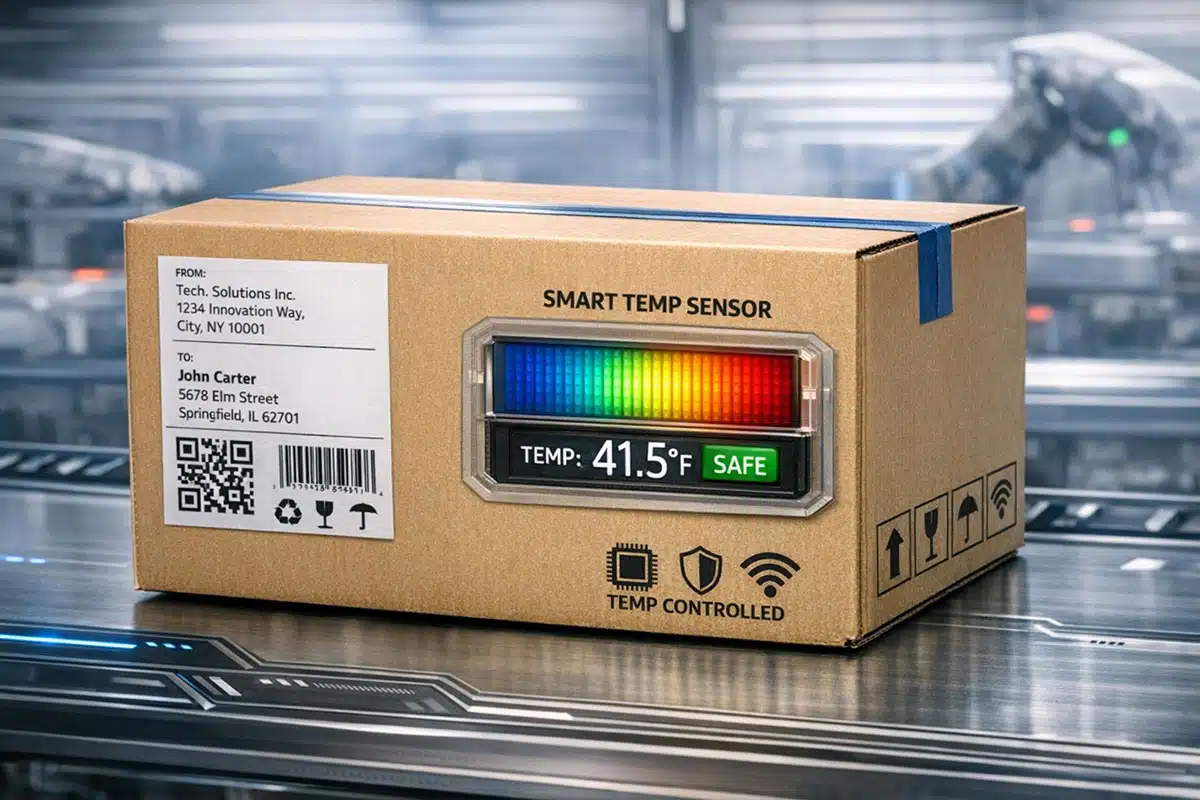
- Indicators for humidity, temperature, and shock. These indicators can help a team determine whether a reel, tray, or tote was exposed to handling conditions that could compromise component performance or reliability.
Keep in mind that just because packaging is smart doesn’t mean it has to be complicated. A simple thermal indicator embedded in a package can indicate when temperatures are out of range merely by changing color.

4. Design Data Flow
The value of your smart packaging is limited if the scans stay local in a handheld device or are limited to a pilot-only system. To optimize smart packaging, you must integrate it into the systems that run your operations, such as enterprise resource planning (ERP), manufacturing execution system (MES), warehouse management system (WMS), and transportation management system (TMS).
If the data flow is unclear, you could end up with:
- Scans recorded within the pilot program but not reflected in the main systems.
- Wasted labor as workers manually enter the same information in different places.
- No clear ownership for exceptions. For example, if no team is assigned to address “tag not read” or to act when a shock indicator changes color.
To address the above issues, be sure to design a simple data model, test it with real volumes, and fix the biggest issues before expanding your pilot.
5. Prioritize Protection
Keep in mind that RFID and NFC tags, QR codes, and printed sensors are additions, not replacements. The first goal of electronics packaging is still to protect the product.
Key protection considerations:
- Moisture-barrier bags for moisture-sensitive device (MSD) parts need to remain sealed; labels should not create weak spots or holes in the packaging.
- ESD-safe packaging must meet stringent ESD control standards and not be damaged by labels or tags.
- Mechanical design (foam, cartons, bracing) must handle the shocks and loads that can occur during the product’s journey.
6. Measure Costs vs. Benefits
One way to evaluate the costs and benefits of smart packaging is to match the cost of the tag/label to the expense, scarcity, or critical nature of the component being packaged. For example, an application-specific integrated circuit (ASIC) used on a motherboard is expensive, hard to source, and critical for any electronics product. Protecting it may justify the higher cost of an RFID-enabled tote, reel label, or specialized rugged tag. In contrast, a low-value, high-volume component like an off-the-shelf resistor for the same board might require only a simple, low-cost QR code.
When evaluating the cost of smart packaging, be sure to include the savings made possible. For example, what are the savings made by switching from manual to automatic scanning? Consider also how many problems never occur because of better monitoring. For example, if a semiconductor reel’s temperature-sensitive label shows it got too hot during transit, you can quarantine it instead of using the chips on the line, and so avoid having to remove and scrap the components later. Or you can avoid an even worse scenario—having malfunctioning chips end up in a finished product, leading to returns and damage claims.
Smart packaging can also help you reuse and recycle, enabling you to meet ESG and sustainability goals while also documenting regulatory compliance through advanced traceability and reporting. According to a 2025 paper by the International Journal on Science and Technology (IJSAT), intelligent packaging systems can reduce material usage by 20–35% while maintaining or even improving protection levels.
7. Roll Out Smart Packaging in Phases
A step-by-step rollout will help you learn, fix issues, and build a scalable smart packaging system. For electronics, a rollout might include the following steps: discovery, concept design, pilot, scale-up, and continuous improvement. During the pilot period and beyond, it’s important to track metrics and behaviors. How reliably do your tags or codes scan? Do people skip scans, cover labels, or reuse packaging in ways that break the system? How well are the scans updating and integrating into your inventory or WIP reports?
Choose a small set of clear KPIs and track them carefully. Some suggested KPIs include:
- Traceability: What percentage of lots or containers are fully traceable from receipt to shipment?
- Read accuracy: What percentage of tags or codes are read accurately on the first attempt?
- Damage-related scrap: Has your scrap declined post pilot? By what percentage?
- Counterfeit or non-compliant incidents: By what percentage have these improved?
- Return rates: Have return rates related to condition issues decreased? By what percentage?
- Sustainability improvement: By what percentage has the recycle rate of cartons, trays, or protective inserts increased?
The Smarter Way to Package
Smart packaging is shifting electronics packaging beyond passive protection to active asset tracking and risk control. By leveraging technologies such as RFID tags, sensors, and temperature/shock indicators, manufacturers can gain real-time visibility into product location, condition, and authenticity—addressing growing challenges such as supply chain complexity, regulatory pressure, counterfeiting, and sustainability demands. When used judiciously, smart packaging is a cost-effective way to improve inventory accuracy, reduce damage and fraud, and support compliance and sustainability initiatives.
Your Smart Packaging and Shipping Partner
Ready to improve traceability, reduce risk, and gain a competitive advantage? Our teams have the experience, certifications, and work ethic to deliver excellence. Count on us for the smart, scalable packaging and fulfillment solutions you need.
Autism Acceptance Month is a time to recognize and celebrate the talents, capabilities, and contributions of people with autism—while also challenging long‑standing misconceptions that have prevented many qualified individuals from fully participating in the workforce.
For employers, particularly in technology, manufacturing, and other technical fields, Autism Acceptance Month is an opportunity to rethink how talent is identified, hired, and supported. Growing research consistently shows that neurodivergent employees, including individuals on the autism spectrum, bring skills that align closely with today’s most in‑demand roles.
Strengths That Drive Business Performance
Research highlighted by Forbes shows that neurodivergent employees can bring a powerful combination of creativity, focus, precision, and integrity to the workplace. 78% of employers report that neurodivergent employees contribute creativity, offering fresh perspectives that support product design, user experience, and complex problem‑solving. Many neurodivergent employees also demonstrate exceptional hyperfocus: 84% of employers recognize their ability to concentrate deeply for extended periods, a critical asset in roles such as software development, engineering, and cybersecurity.
Precision is another common strength among neurodivergent employees. According to data from the University of London, 78% of employers see strong detail‑processing skills among their neurodivergent employees, making them well suited for quality assurance, manufacturing, and data‑driven work where accuracy and pattern recognition are essential. These strengths also fuel innovation and critical thinking—65% of employers cite innovative thinking as a benefit of a neurodiverse workforce, and more than 71% of employers have found that their neurodivergent employees have advanced analytical skills that support research, product development, and continuous improvement.
Together, these capabilities illustrate why inclusive hiring is a smart business decision.
Why Technical and Manufacturing Industries Stand to Gain the Most
Industries facing skills shortages, quality demands, and pressure to innovate are increasingly recognizing neurodivergent talent as a strategic advantage. Deloitte research shows that teams including neurodivergent professionals in certain roles can see up to a 30% increase in productivity, while analysis from JPMorgan Chase found neurodivergent employees to be 90% to 140% more productive and prone to fewer errors in some roles.
Marc Grundy Makes a Difference at PRIDE Industries
The impact of inclusive hiring is perhaps best illustrated through real people and real outcomes.
In 2019, Marc Grundy came to PRIDE Industries after struggling to find the right path following college. Diagnosed with autism at a young age, Marc faced challenges with communication and social interaction—barriers that too often limit employment opportunities for people with autism.
He began a paid internship as an assembler in PRIDE Industries’ manufacturing department, where his passion for building and attention to detail quickly stood out.
“When I build things, I always tell myself, ‘Quality over speed,’” Marc shared. “I pay great attention to detail. I think that’s one of the strengths of the high‑functioning autistic mind.”
Just four months later, Marc was hired into a permanent role. Today, he works in PRIDE Industries’ Medical Business Unit, helping produce Game Ready™ medical devices used by athletes and medical professionals worldwide. His supervisor describes him as “a great employee” whose dedication, teamwork, and eagerness to learn contribute to a positive work environment.
Marc also became an advocate for neurodiversity—helping shape inclusive practices at the I AM ABLE Disability Job Fair by recommending quiet spaces for participants who communicate better with reduced sensory input. More than 600 attendees benefited from that insight alone.
“As much as possible, employers should be aware of what autism is, so that they can put good policies in place,” Marc said. “A big part of that will be accommodations.”
Stories like Marc’s are especially powerful during Autism Acceptance Month, reminding employers that talent thrives when individuals are given the opportunity to work in roles aligned with their strengths.
Inclusion That Works for Everyone
Reasonable accommodations are often far simpler and less costly than many employers assume. According to the Job Accommodation Network, most workplace accommodations are free, and the remainder typically cost only a few hundred dollars. For neurodivergent employees, small adjustments—such as sensory‑friendly spaces, clear instructions, or additional time to process questions—can significantly improve productivity and well‑being.
Autism Acceptance Month reinforces the importance of normalizing these supports—not as exceptions, but as standard practices that help employees do their best work.
Marc puts it even more simply: “Just make them feel safe.”
Moving from Awareness to Acceptance
Autism Acceptance Month challenges employers to move beyond awareness toward meaningful action. For organizations in technical and manufacturing sectors, the message is clear: when roles align with individual strengths and workplaces are designed with inclusion in mind, both employees and businesses thrive.
By fostering psychological safety, offering thoughtful accommodations, and recognizing the value of neurodivergent employees, organizations can build more innovative, resilient, and effective workforces—while creating meaningful career opportunities for individuals on the autism spectrum.
- Page 1
- Page 2
- Page 3
- Interim pages omitted …
- Page 55
- Go to Next Page »