
Fire is a growing risk nationally, making building fire safety a top priority for facilities managers.
Over the past decade, nonresidential fires have increased by 19%, with fire-related deaths up 70%. According to the U.S. Fire Administration, there were an estimated 110,000 nonresidential fires nationwide in 2023 alone, resulting in 130 deaths, 1,200 injuries, and losses of more than $3 billion.
Numbers like these are a big reason why fire safety is top of mind for many facilities managers. Fortunately, new technologies are making it easier to enhance any facility’s building fire safety.
Prevention and Suppression Systems for Building Fire Safety
For maximum building fire safety, structures should include both active detection and alarm systems—which can automatically trigger countermeasures like sprinklers—and passive systems that are part of the building’s structure.
In today’s modern commercial facility, the same smart technology that optimizes a building’s energy use and access security can help improve building fire safety.
Detection and Alarm Systems
Commercial fire alarm systems include detection devices for smoke, heat, and flames, a control panel, and notification devices such as sirens and strobes. There are two primary types of commercial fire alarm systems: conventional and addressable.
Conventional systems have long been the industry standard. They use wired analog signals to link initiating devices (like smoke detectors) to the control panel and allow responders to determine the general location of the fire. These systems are reliable and affordable, but there is a tendency for false alarms.
Addressable systems are digital. Each device in this system has its own unique address, which enables building personnel to pinpoint a fire’s location within a building. In addition, because addressable systems use a single cabling loop, it’s easy to integrate new devices into the system, which makes addressable systems much more scalable and customizable than conventional ones. This is a big reason why, despite their higher cost, managers of large buildings prefer them over conventional fire detection and alarm systems.
Wireless systems use radio frequency or other wireless communication methods, rather than physical wiring, to transmit signals between initiating devices and the control panel. This type of system can be either addressable or conventional, and is typically easier to install than a conventional system. Because wireless technology eliminates the need for extensive wiring, this type of system is ideal for historic buildings and other structures where it’s difficult to run new wiring.
Initiating Devices
Whether a fire detection system is conventional or addressable, it relies on sensitive detection technology to initiate a response. These initiating devices include:
- Smoke detectors that detect smoke particles in the air
- Heat detectors that respond to changes in temperature
- Flame detectors that use infrared or ultraviolet sensors to detect flames
- Gas detectors that pick up on harmful gases which could indicate a fire or other health hazard
- Duct detectors that are designed to detect smoke or heat within HVAC systems
The oldest initiating device is the manual pull system, which is still an essential part of any fire safety system.
Passive Systems Improve Building Fire Safety
In addition to using technology to detect a fire and alert first responders, today’s facilities are also built to mitigate the impact of a fire when it does occur, using passive systems that can contain and slow down the spread of fire and smoke within a building. The following passive safety measures are required by modern building codes, but if the buildings you manage were built before these codes went into effect, you may want to retrofit to include these improvements:
- Dampers to prevent the fire and smoke from spreading through ducts and wall openings
- Fire Doors that can withstand high temperatures and contain a fire’s spread
- Fire-Resistant Glass Partitions that can withstand high temperatures for an extended period
- Smoke and Fire Curtains made of flexible fire-resistant fabric that automatically deploy when a fire is detected, sealing off elevators, stairwells, and other openings
Fire Suppression Systems that Support Building Fire Safety
Once a fire has been detected, the next step is to put it out. Fortunately, there are several types of commercial fire suppression systems, each with its own distinct benefits.
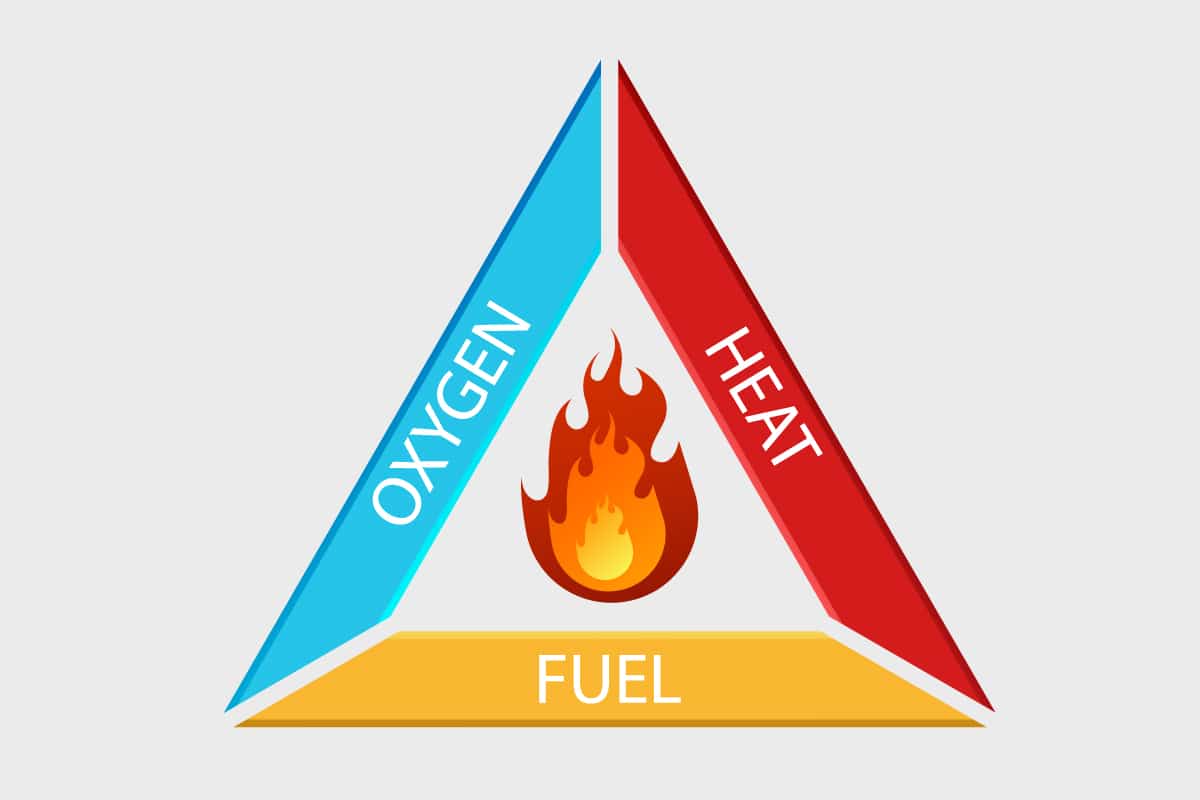
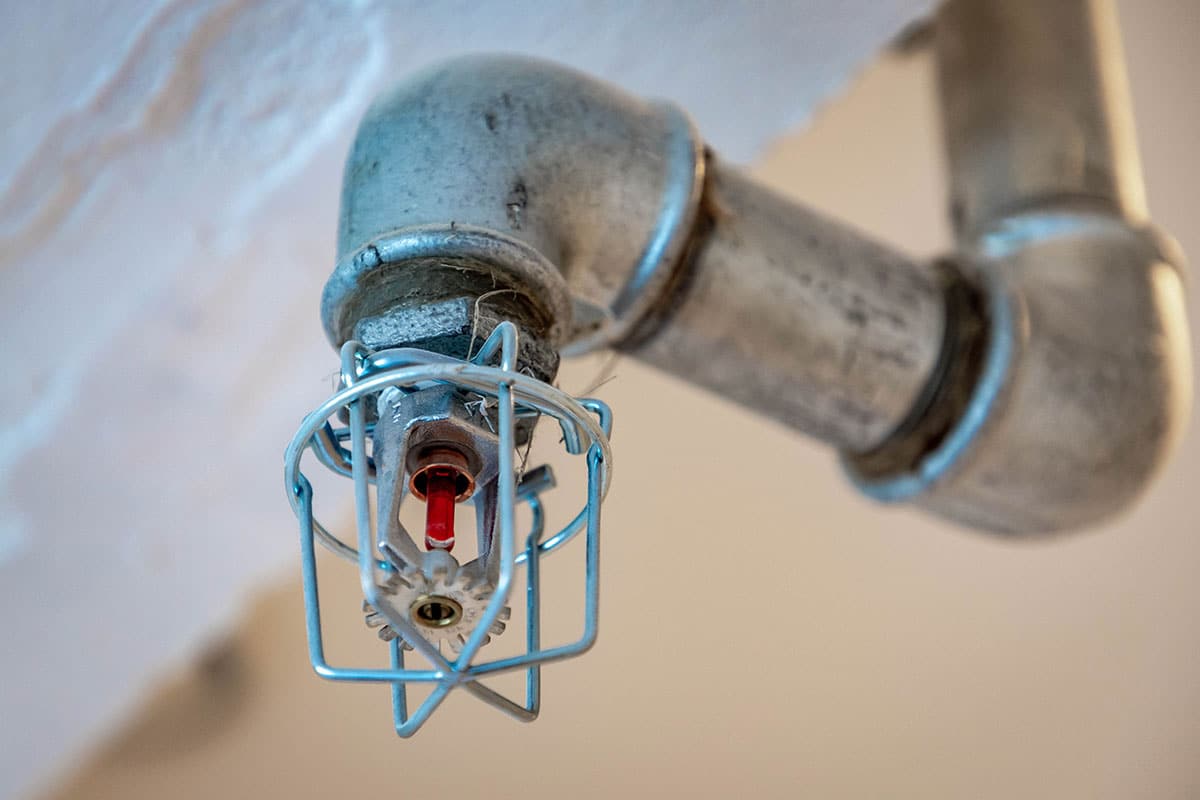
The wet pipe sprinkler system is the workhorse of fire suppression systems. The system relies on a network of pipes that are filled with pressurized water, ready for immediate discharge. Each sprinkler head contains a heat-sensitive element—either a glass bulb filled with liquid or a fusible link. When a fire starts, the heat causes the temperature around the sprinkler head to rise. Once the temperature exceeds the rated threshold (around 155°F/68°C), the glass bulb bursts or the fusible link melts, opening the sprinkler head.
Because the system’s pipes are already full, water is released immediately through the activated sprinkler head and directed onto the fire. Only the sprinkler heads exposed to sufficient heat will activate, ensuring that water is delivered directly to the fire’s location rather than the entire building. The water is sprayed in a specific pattern, controlled by the sprinkler head’s deflector, to cool the flames, reduce heat, and limit the spread of fire. The wet pipe sprinkler system is extremely reliable, and the National Fire Protection Association (NFPA) recommends it as the go-to system for most buildings.
But in areas where temperatures drop below freezing, dry pipe systems are preferred. Dry pipe systems operate much like wet pipe systems, except that instead of being filled with pressurized water, the system’s pipes are filled with pressurized air or nitrogen. Once a sprinkler head is triggered, the pressurized gas escapes and a valve opens, allowing water from insulated pipes to flow.
Pre-action sprinkler systems add an extra layer of activation to dry pipe systems. Instead of relying only on heat to trigger the sprinkler head, a secondary initiating device, like a smoke detector, must confirm that there is a fire before the suppression system can deploy. This precautionary approach prevents accidental water discharge, making pre-action sprinkler systems ideal for environments where water damage would be especially costly or disruptive, such as data centers, museums, libraries, archival vaults, and freezer warehouses.
While water is the most common fire suppressant used in fire safety systems, it’s not ideal for certain types of structures. Water is highly destructive to electronics, paper documents, and sensitive artifacts, which is why some museums and factories rely on chemical non-liquid systems that use inert gases like argon, nitrogen, and carbon dioxide to snuff out flames through oxygen starvation, minimizing collateral damage. These gases also leave no residue and so make post-fire cleanup easier.
Similarly, areas with flammable liquids or chemicals may need to look at foam water systems, where water is mixed with foam concentrate to smother the fire.
Portable Fire Suppression
In addition to building-wide, automated fire suppression systems, hand-held fire extinguishers provide another layer of defense against fire. Regulations in most states require that fire extinguishers be mounted within 75 feet of any area within a building. This proximity can allow building occupants to begin fighting a fire even before the automated systems kick in.
There are four different types of fire extinguishers:
- Class A extinguishers use water-based agents for standard combustible materials like paper and wood.
- Class B models use chemical agents to smother commercial grease, motor oil, and gasoline fires.
- Class C varieties use non-conductive agents to fight electrical fires.
- Class K extinguishers use wet chemical agents to extinguish the cooking oil and grease fires that can occur in restaurants and other commercial kitchens.
Extinguishers should be inspected monthly and replaced every five to 15 years.
Smart Technology Enhances Building Fire Safety
As with most aspects of operating a modern commercial facility, fire prevention and suppression is benefiting from new technologies. The same smart building technology that optimizes a building’s energy use can help improve building fire safety.
Smart fire alarms can be integrated with HVAC and access-control systems to provide a unified emergency response. Smart systems deliver real-time notifications, including the nature and location of the emergency, to smartphones. These systems can automatically initiate defensive actions, like shutting down elevators and unlocking doors for evacuation. Smart systems can also improve proactive maintenance by analyzing data from sensors to predict when problems are likely to occur.
The spread of the internet of things (IoT) is one of the developments that has brought fire safety into a new era. For example, smart smoke detectors can differentiate between harmless smoke and a real fire, reducing false alarms. And if there is a fire, these devices can catch it sooner. Using thermal imaging cameras, these systems can quickly identify unusual temperature increases, even in low-visibility conditions—enabling fire alarms to sound earlier and suppression systems to deploy sooner.
Smart signage and wayfinding systems are two more developments that are making buildings safer. In the event of a fire, these systems provide occupants with clear and swift evacuation routes, and can even modify routes as conditions change, making evacuations safer.
And fire safety technology continues to evolve. Experts see several new developments on the horizon—using AI for predictive maintenance and risk analysis, employing virtual reality in emergency scenario responses, and adding 5G connectivity for faster speeds and more efficient communication.
Maintenance and Continuous Improvement
Installing the most up-to-date fire safety equipment is only effective if the equipment is properly maintained and your response teams are fully prepared. This is why proper recordkeeping and regular inspections are so critical to building fire safety.
Routine Inspections and Training to Enhance Building Fire Safety
A well-defined inspection and maintenance schedule that follows national and local standards is critical for ensuring the safety of your facilities. Trained personnel should conduct regular visual inspections to check for obvious signs of wear and tear, note any obstructions to fire protection system components, and check for changes to furniture layouts or other structural matters that could affect system performance.
Facilities staff should also regularly test alarm systems and emergency lights, ensure emergency exits and pathways remain unobstructed, and conduct spot checks on high-risk equipment.
Smoke detectors should be tested monthly. Heat detectors should be inspected every six months or so for signs of dust or debris that might affect performance. And both these types of initiating devices need to be replaced after 10 years, as their reliability diminishes over time.
Manual pull stations should be cleaned and tested annually by a professional technician. In addition, fire extinguishers should be checked for any signs of tampering and to ensure optimal pressure. Any problems discovered should be addressed immediately to maintain compliance and safety.
Recordkeeping and Documentation
Fire safety recordkeeping isn’t just essential for maintaining your fire detection and suppression systems, it’s required by law. Regardless of size, every business must maintain an organized, up-to-date log of all fire protection systems, inspections, and maintenance. Doing so is essential for proving compliance with fire safety regulations and preparing your facility for inspections.
The types of records that should be maintained include:
- Fire Drill Logs that record the timing and results of scheduled fire drills, ensuring that employees know how to evacuate the building safely in the event of a fire
- Equipment Maintenance Logs that track the servicing, repairs, and inspections of fire protection systems
- Inspection Reports that must be kept up to date and stored in an accessible format, whether inspections are conducted by internal teams or third-party fire safety companies
Here again, smart technologies can help. A Computerized Maintenance Management System (CMMS), for example, makes it simple to maintain fire drill logs and fire safety equipment maintenance records by automating, centralizing, and streamlining critical safety tasks. A CMMS system is also ideal for automating scheduling and issuing reminders. The system can both assign tasks and track their completion, providing managers with real-time alerts and updates.
A New Era in Building Fire Safety
In 2023, fires in commercial facilities led to almost $3.2 billion in commercial property and other losses. As this figure makes clear, building fire safety is a crucial element of any business’ asset management strategy. Fortunately, new technology is making fire risk mitigation easier than ever. Today’s smart building technologies help facilities managers respond faster, meet compliance requirements more easily, and optimize operational efficiency—using a proactive, layered approach to fire safety that protects people, property, and operations.