People with Disabilities

“You must first learn to go slow before you can go fast.”

This motto became a source of inspiration for Sherryl Kubel during her extensive recovery after an acquired disability in 2017. A car accident left her with multiple fractures and a brain injury, impacting her speech, memory, and mobility. Consequently, she had to relearn various fundamental life skills. Embracing the idea of “slow before fast” gave her room to do so.

Sherryl would soon apply this adage to another milestone when, after more than a year of physical rehabilitation and three months of brain rehabilitation, she was medically released for work. At that point, she wanted to initiate the second phase of her recovery from the accident: employment.

Upon conducting some initial research, Sherryl quickly discovered that finding a job wouldn’t be easy. Only about a third of people with disabilities, including acquired disabilities, are employed. When it comes to getting hired, they find themselves up against myths and stigma—which is unfortunate not only for people eager and skilled to work, but also for potential employers who miss out on the benefits this workforce boasts: high retention rates, low turnover, and low absenteeism—to name a few.

Creating a Path to Employment with an Acquired Disability

Fortunately, Sherryl’s search led her to the California Department of Rehabilitation which, in turn, referred her to PRIDE Industries. There, she was linked to job developers who helped her with every step of the pre-employment process.

“They showed me how to write a resume, how to write a cover letter, how to fill out applications, and how to interview,” said Sherryl. “I learned how to seek accommodations and ask for them if needed. Then they worked with me on skill development toward my employment goal of office assistant.”

Sherry’s job coaches also trained her in multiple office skills, including data entry, phone etiquette, software, and even video meeting practice.

“At each level, my job coaches gave me the space to ‘go slow before I went fast,’” said Sherryl. “A strategy that proved, as it had during my rehabilitation, fruitful.”

From there, Sherryl underwent one of the most helpful parts of her PRIDE Industries program: a simulated work environment. For three weeks, she went to an office every day as if going to a full-time job.

“While I did this, they tested me on around 50 different tasks, providing feedback on my strengths and weaknesses. This helped me to clearly understand what I needed to work on going forward.”

Watch Sherryl tell her story in the video below. 

An Internship, a Job, and a Certification

After that, PRIDE Industries offered Sherryl a five-month internship in the Proposals Department as a Proposal Development Assistant. The proposals team was so impressed with her that they soon offered her a full-time position. Three years later, after gaining skills and knowledge in the field, she has a new milestone to celebrate: acquiring the Association of Proposal Management Professional’s (APMP) Foundation-level certification.

As the global standard for developing and demonstrating proposal management competency, the certification program is robust and the test comprehensive.

“I studied for it, intermittently, for three years,” said Sherryl.

Sherryl’s work within the Proposals Department also equipped her for the test.

“It’s not something you can pass just by studying,” she said. “You have to have had exposure to the whole process and have experience applying the knowledge.”

The certification signals Sherryl’s competency in a career she enjoys.

“This is what I like doing,” she said. “It’s my passion and makes use of my degree in technical writing.”

Sherryl’s achievement has also been noted by her supervisor, Proposal Development Director Lisa Forster.

“This is a big accomplishment for Sherryl,” said Lisa. “But it also brings value to the proposals team and to PRIDE Industries. Not every proposals professional has this certification, and Sherryl took the initiative to go after it while working and supporting our department.”

Continuing the Path of Recovery and Employment

Not only has Sherryl brought her own unique qualities and skills to the PRIDE Industries Proposals Department, but she has also embodied significant employment truths: People with disabilities, including brain injuries, can and do make great employees. In fact, in several areas, their presence in an organization brings many business benefits, including higher retention, more revenue, more net income, and more profit.

Slow before fast, Sherryl has accomplished much—with no signs of stopping.

 “I’m on my way to advancing my career as a proposal writer,” said Sherryl. “It’s like a dream come true!”

Make a social impact

PRIDE Industries builds inclusive, diverse work environments where people with disabilities can thrive. Is your company seeking well-trained, reliable employees? Join our employment partner network today.
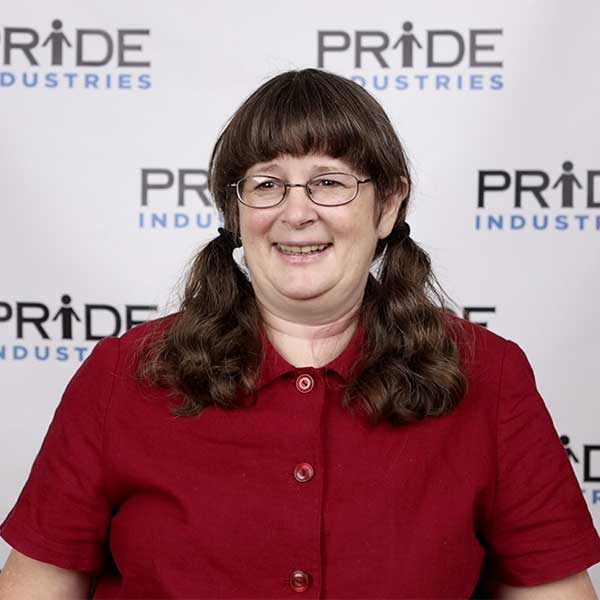
woman with brown hair and red shirt smiling
Sherryl Kubel had to re-learn many basic life skills following an acquired disability.

“I’m on my way to advancing my career as a proposal writer. It’s like a dream come true!”

Living with Tourette Syndrome (TS) isn’t easy at any age, but it’s especially tough for a child—something Ian Webster knows all too well, as he was diagnosed with TS when he was just five years old. At the time, he couldn’t have known that, one day, finding an employer that supported neurodiversity in the workplace would be crucial to achieving his dreams.

Also called chronic motor and vocal tic disorder, Tourette Syndrome is a neurological disorder that causes involuntary “tics”—sudden vocalizations and movements. People who have it are often misunderstood and frequently viewed as rude or disruptive. Sometimes perceived this way by his classmates, Ian struggled through elementary, middle, and high school, and then into community college.

“Sometimes, it made it hard to keep going,” Ian said.

So hard, in fact, that Ian left college after a year, opting to work as a window cleaner for his mother’s business. While he liked that work, he wanted more independence. He also wanted all the things that come with employment at a large organization, including a better salary, medical benefits, and room for growth.

“I had a goal to work at the state someday,” he said. 

Realizing that he would need more employment experience under his belt to get there, the 22-year-old reached out to PRIDE Industries, a social enterprise with a mission to create employment for people with disabilities and experienced at supporting neurodiversity in the workplace.

Accommodating Neurodiversity in the Workplace

At PRIDE Industries, Ian was paired with Caryl Balko, a job developer, and Tameka Rich, then the Rehabilitation Services Supervisor. The two showed Ian what support for neurodiversity in the workplace looks like. They began by assisting Ian with employment preparation, including a two-week trial position as a dishwasher at a senior care facility. While he worked there, he underwent an assessment to determine his skills and strengths.

“His assessment went so well,” said Caryl. “His motivation and work ethic were admirable. Even though he was young, he was one of the hardest workers we’d seen.”

Both Caryl and Tameka recognized that Ian was also gifted with a friendly, personable nature and a great sense of humor. Unfortunately, soon after starting his trial position, Ian experienced some personal life changes that required him to leave the workforce. But by then he’d made an impression on the PRIDE Industries team, and they asked him to return when he was able.

Back on the Path

Six years later, in 2019, after gaining more job experience as a part-time packager with UPS, Ian did just that. He’d held onto his goal—full time employment with a large organization that could, eventually, ready him for a state job. He was also as eager and personable as ever. Once more at PRIDE Industries, he worked with Tameka, who reinitiated the employment preparation process. Three months later, he was placed in a custodial position at the Sacramento Metropolitan Airport—where he began on the graveyard shift.

“I was glad to get my foot in the door,” said Ian.

He thrived in his position, eventually moving to the much busier day shift, which allowed him to work more independently and get the type of experience he needed to move forward in his career.

“I loved the environment and my supervisors and shift leads,” he said.

They loved Ian, too. So did Caryl and Tameka, who observed in him the same work ethic and great attitude he’d exhibited years before.

“We saw him really come into himself and grow in confidence at the airport,” said Tameka.

2019 and 2020 found Ian thriving in his position.  As much as he enjoyed working at the airport, however, his ultimate goal was still to secure a job with the State of California.

Later in 2020, he reached his goal, gaining a custodial position with California’s General Services Administration.

Arriving at Home Ownership

Though Ian worked only 16 months as a PRIDE Industries employee, that time had a huge impact on his life. First, he saw that neurodiversity in the workplace can and should be normalized. Second, he realized that he had what it took to excel at work and become financially self-sufficient.

“PRIDE Industries was the first steady full-time job I ever had,” he said. “It allowed me to become more independent.”

Tameka and Caryl couldn’t be happier for him.

“PRIDE Industries was a steppingstone for Ian,” said Tameka. “Great for him and great for us.”

A steppingstone, indeed, along a path that now includes home ownership.

“I pay my own mortgage now,” Ian said.

From part-time job to full-time, independent employment, Ian has come a long way. You could say that his journey has led him, literally, home.

In the wake of the pandemic, employee mental health is taking its rightful place as a business imperative. Not only are many companies implementing stigma-reduction initiatives, but they are also normalizing reasonable accommodations—most that wind up benefiting all employees. Here, we explore the top five, but first let’s bust a myth:

Myth: Accommodations are Expensive

Fact: In the Job Accommodation Network’s (JAN) most recent survey, almost half of employers said accommodations cost nothing, and 37 percent reported a median one-time cost of $300. Moreover, by law, accommodation cannot pose an undue burden to the employer.

Five Mental Health Accommodations and Their Benefits

Destigmatization Measures

Stigma thrives in silence. Fortunately, a 2022 Fisher Phillips survey found 60 percent of employers starting to have conversations about mental health—whether through ERGs or other workplace initiatives. That’s a good thing. Where stigma is sent packing, employees with mental health conditions are more able to bring their whole selves to the workplace—including the full range of their skills and talents. What’s more, in the absence of stigma, they are far more likely to ask for a simple accommodation that could allow their abilities to shine even more. Ultimately, employers will reap the benefits. Companies that prioritize inclusion of people with a variety of disabilities perform better than peer organizations that lack this level of inclusion.

Flexible Schedules

A 2022 study by McKinsey & Company found that, overall, employees and employers are already embracing flexible schedules and conditions—because it works. “Employers report many benefits from shifting to flexible schedules,” reported SHRM. “Ranging from making it easier to attract talent to increasing employee productivity, loyalty, and retention.” Similarly, a survey by LinkedIn Talent Solutions found 94 percent of employers reporting the same or higher productivity than with traditional 9-to-5 teams. Because flexible schedules remove stress around doctor appointments, therapy, or support group attendance, employees are better able to manage mental health disabilities and conditions—or even eliminate some of them.

Rest Area/Quiet Space

According to Mental Health America, “Employees should have access to safe, calm, and private space(s) at their company.” Brain science bears this out. Typical office distractions—pinging email and chat messages, office machinery, coworker discussion at volume, and multi-tasking—drench the brain in cortisol and adrenaline. In the short term, these chemicals fuel us through short periods of stress. However, long term, they can deplete the body of calming hormones like serotonin and dopamine—affecting everything from cognition to heart rhythm, breathing, sleep, and pain levels. Some companies are even incorporating meditation in their workplaces—an initiative supported by several studies, including a comprehensive 2016 analysis by Case Western Reserve University. Their research found that “injecting a corporate culture of mindfulness not only improves focus, but the ability to manage stress and how employees work together.” Google, Aetna, Mayo Clinic, and the United States Marine Corps, among others, are already doing this.

Identifying and Reducing Triggers

For conditions such as anxiety, panic disorder, and post-traumatic stress disorder, common triggers include excessive noise, pulsing light, crowded spaces, and spaces without easy exits. An individual recovering from PTSD, for example, may experience traumatic memories that involved being trapped. Similarly, an employee with panic disorder may be triggered in large groups. While some workspaces—a warehouse floor, for example—may not allow for trigger mitigation, many do. Simply allowing an employee to move to a different workstation could be enough to do the trick. In meetings, an individual may be allowed to sit near the exit, while another might have a schedule that places them at work when the office is less crowded. Such accommodations are easily implemented and cost nothing.

On-Site Support Person

Employees who live with mental health challenges tend to feel isolated in the workplace, so the presence of even one empathetic person can make all the difference. Many companies have begun implementing mental-health-focused ERGs, groups that encourage interpersonal connection through the safe sharing of personal stories. Similarly, some organizations have begun to implement mental health “buddy” or “peer” programs. In short, a mental health peer is an individual who has lived experience with a mental health condition. Identified workplace peers (or buddies) typically undergo training—including active listening, ethics, and boundary establishing—equipping them to be supportive in a peer capacity, rather than a clinical one. Multiple studies reveal that this strategy works. Employees engaged in a workplace peer support initiative experienced enhanced mental well-being, heightened job contentment, and even elevated productivity levels. 

Don’t Overlook One in Four Potential Employees

One in four adults in the United States lives with a diagnoseable mental health condition. They might be your grocer, accountant, custodian, physician, or CEO. They could be the next candidate you interview—the one who is a perfect fit but has a standing appointment on Wednesday afternoons. “The reality is that workers with mental illnesses are no different than your average employee,” reports Health Partners, citing that employers who hire people with mental illness say that they are as productive, punctual, dependable, and motivated as those who do not have a mental health condition. This finding is consistent with the data when it comes to employees with disabilities at large. In fact, a study by analyst firm Accenture found that companies that actively recruit and support people with disabilities, including mental health conditions, earn six times more revenue, 2.6 times more net income, and two times more economic profit than companies that don’t.

As labor shortages persist across industries, it’s imperative for employers to embrace the workability of one in four adults in the United States who live with a mental disability. PRIDE Industries has decades of experience helping companies leverage the talents and business advantages of employing people with mental health and other disabilities. This includes a broad range of expertise in identifying and incorporating accommodations that significantly enhance overall success.

Let Us Help You Build an Inclusive Labor Force

Inclusive workforces, including those that employ people with disabilities, boast 35 percent greater productivity. PRIDE Industries has helped hundreds of companies to make their teams more inclusive, helping recruit, hire, train, and support this reliable talent pool—free of charge to employers.

When it comes to workforce inclusion, significant progress has been made in hiring and retaining people with physical disabilities. To some degree, inclusion has extended to those who live with neurologically based disabilities as well. Amidst these strides, however, one group is often left out of the conversation: people with mental (or psychiatric) health conditions.

While 90 percent of Fortune 500 companies report that they’ve hired applicants with physical disabilities, only 20 percent say they’ve hired people with mental health conditions. Given that one in four adults in the United States lives with a mental health condition, that translates to a huge untapped workforce.

Fortunately, some business leaders are speaking up about this aspect of inclusion. “It’s simply silly” to think that employers would intentionally or unintentionally exclude such a significant percentage people from their workplaces, said Aubrey Blanch, VP of Equitable Operations at Culture Amp.

According to the Substance Abuse and Mental Health Service Administration (SAMSHA), people with mental health conditions tend to be just as productive and dedicated as other employees. Of those already in the workforce, SAMHSA notes, “Employers often do not know if someone has a mental health condition, but if the condition is known to the employer, they often report good attendance and punctuality as well as motivation, good work, and job tenure on par with, or greater than, other employees.”

As for accommodation costs, Blanch observed that they are typically nominal—a fact supported by data. She also emphasized that everyone needs specific support to succeed. Moreover, according to a survey by the Job Accommodations Network (JAN), accommodations for employees with disabilities make the workplace better for everyone.

What is a Mental Health-Related Disability and How Prevalent Are They?

A mental health condition becomes a disability when it substantially limits one or more major life activities. As mentioned above, roughly one in four adults in the United States lives with a diagnosable mental disorder in a given year. Anxiety and depression are the most prevalent conditions, followed by post-traumatic stress disorder (PTSD) and bipolar disorder. And high rates of mental health conditions aren’t limited to the United States. Studies predict that one out of every two people, worldwide, will develop a mental health disorder in their lifetime. By 2030, mental health will be the leading cause of disease, globally.

Given that so many people live with a significant mental health condition—and research shows that employment improves mental health—their inclusion in the workforce should be a given. So, why do these individuals face employment barriers?

The answer lies in stigma—negative attitudes, beliefs, and stereotypes that society attaches to certain groups. In the case of mental conditions, today’s stigma echoes draconian superstitions dating back centuries. Though time has marked incremental shifts in attitude, much work is still needed to dismantle long-held misconceptions.

The Workplace is No Place for Stigma

Kaiser Permanente found stigma to be prevalent in the workplace, with eight out of 10 employees afraid to mention their condition or seek accommodation. Lyra Health echoes this finding, citing that stigma silences employees, making them “less likely to take steps to support their mental health.” Stigma deters even eager, highly qualified job seekers who fear asking for even the simplest mental health accommodation.

In addition to harming employees and candidates, stigma deprives employers of able, skilled employees. A quiet space or flexible schedule, for example, may be all an employee needs to be a top producer. When fear of an employer’s judgment stops the accommodation discussion before it starts, valuable skillsets remain underutilized or untapped entirely.

Stigma is exacerbated by a limited understanding of mental health as a spectrum, according to stigma expert Professor Stephen Hinshaw. “We often go immediately to extreme cases…a tiny percent of people with very severe, untreated chronic mental illness.” Focusing on extreme cases perpetuates cultural ignorance and fear, silencing those with less severe conditions. To break this cycle, Hinshaw advocates for a shift in workplace culture to encourage open discussions about mental health without shame or fear of repercussions.

Links Between Mental Health Conditions and Excellence

Progress has been made, but lingering misconceptions about mental health continue to hinder workplace inclusion. The most damaging fallacies cast an entire person as wholly “mentally ill,” rather than simply as a person that lives with a mental health condition that affects a certain aspect of their life. But, just as Deafness doesn’t have to impair a person’s ability to communicate effectively, and wheelchair use has no bearing on managerial skills, limits posed by even a severe mental health condition don’t automatically translate to job performance. In fact, data underscores positive correlations between some types of mental illness and success.

In a 2015 study, researcher Dr. Michael Freeman found that 49 percent of entrepreneurs who start a company have experienced a mental illness. A 2016 study published in Molecular Neuropsychiatry revealed that people with bipolar disorder, in particular, possess several business-oriented personality traits, including drive and motivation, ideation originality, and cognitive flexibility. Still further research by Nassir Ghaemi, MD, found similar links between leadership qualities and mental conditions such as bipolar disorder, anxiety, and depression.

People with a tendency toward anxiety tend to also be detail oriented, organized, creative, and punctual. Data indicates that people with certain types of PTSD demonstrate heightened empathy—increasingly found to be an imperative business skill. Moreover, several researchers have found depression underlying the empathy expressed by the likes of Mahatma Gandhi, Abraham Lincoln, Martin Luther King, Jr., and other successful leaders. It’s hard to imagine a world where the skills and talents of these luminaries had remained unutilized.

Inclusion Works

Copious research finds several business benefits associated with including people with disabilities in the workforce. Among them are improved work culture, boosted productivity, and increased market appeal. A 2023 study by Accenture found that companies that actively employ and support people with disabilities achieve greater financial outcomes—1.6x more revenue, 2.6x more net income, and 2x more economic profit—compared to peer organizations. A National Institutes of Health review drew similar conclusions, adding increased safety, higher employee retention, better company image, and boosted customer loyalty to the list.

With mental health awarness on the rise, it makes sense for companies to extend inclusion efforts toward those who live with them. And this level of inclusivity “isn’t actually that complicated,” said Blanch. “It simply requires intentionality and effort (that’s rarely about any type of financial cost).”

A big part of that intentionality centers around creating a work culture that normalizes mental health challenges and disabilities. Some companies are already taking innovative approaches to this. In 2023, Mind Share Partners, for example, launched the Leaders Go First campaign—a national initiative that featured a collection of videos from C-level leaders sharing their personal mental health stories. Microsoft, Dove, Unilever, Bell, and Pinterest all feature robust mental health awareness initiatives as well. Still other companies have encouraged open disclosure for some time. Barclay’s “This Is Me” initiative has featured employees sharing their personal mental health jouneys since 2013.

Where stigma is reduced and a few basic accommodations implemented, organizations can reap the benefits of a truly inclusive workforce—one that includes skills and talents that would otherwise go untapped. With labor shortages impacting many industries, employers cannot afford to overlook the one in four adults in the United States living with a mental health condition, many of whom are willing and able to contribute to the workforce. PRIDE Industries has decades of experience helping hundreds of businesses tap the talents and the business benefits of employing people with disabilities, including mental health conditions.

Let Us Help You Build an Inclusive Labor Force

Inclusive workforces, including those that employ people with disabilities, boast 35 percent greater productivity. PRIDE Industries has helped hundreds of companies to make their teams more inclusive, helping recruit, hire, train, and support this reliable talent pool—free of charge to employers.