Our Stories

National Disability Employment Awareness Month (NDEAM) is an annual campaign that takes place in October. NDEAM aims to promote workplace inclusion by increasing awareness about the challenges and contributions of workers with disabilities. 2018’s theme is “America’s Workforce: Empowering All.”


In honor of National Disability Employment Awareness Month, we invite your business to consider partnering with PRIDE Industries. We will pair you with dedicated, qualified employees who enjoy being productive and making a contribution to their community while excelling in their position.

Employment Programs to Promote Inclusion at Work

People with disabilities often face significant barriers to employment. These barriers result in lower rates of participation in the labor force and higher unemployment rates compared to non-disabled workers. Yet when they are able to find fulfilling work, they perform well and tend to have a high retention rate.


Employment is essential to an individual’s sense of purpose, dignity, inclusion and economic growth, ultimately resulting in a happier life. With a history spanning over 50 years, PRIDE Industries is one of the largest employers of people with disabilities nationwide. We focus on abilities rather than disabilities, and our inclusive programs and services help individuals overcome obstacles to employment. We also provide opportunities at all skill levels to help candidates from all walks of life  achieve their definition of success and self-sufficiency.


By partnering with PRIDE Industries, your business can leverage our person-centered services including assessments, job skills development, training, placement, transportation, and ongoing support to ensure long-term employment success and inclusion at work. PRIDE places people in its business lines and provides support to individuals in community-based opportunities.
Workplace inclusion benefits all

When inclusion at work becomes a goal for your business, everyone wins. Learn more about the many ways you can work with PRIDE Industries to build an inclusive workplace, expand your staff, and create jobs for people with disabilities.

In search of an opportunity to make a difference, David (last name withheld) joined the U.S. Air Force fresh out of high school in 1983. “This was my first real job besides working at a local restaurant as a busboy, while growing in Temple City, CA. I saw joining the military as a chance to serve my country and to help keep people safe.”


After enlisting, David attended basic training at Lackland Airforce Base in San Antonio, TX and graduated as an Airman Basic (E-1). Then after completing 12 weeks of specialized training, he joined the 88th Strategic Air Command Missile Squadron as a Security Specialist. “It was a complete culture shock; I transitioned from a civilian with choices to a service member with a strict regimen and structure. They say you start as a rainbow, then become a green bean (once uniforms are issued) and finally get a haircut and now you are officially a canned green bean.”


David earned promotions throughout his service; from an Airman Basic (E-1), to Airman (E-2) and then Airman 1st Class (E-3). He served his remaining time at Francis E. Warren Air Force Base in Cheyenne, Wyoming during the Cold War, providing security services and surveillance to Minuteman-3s nuclear warheads that were ready to launch in case of conflict.


In 1985, David was discharged honorably due to lack of war. “The transition back into civilian life was much easier than my development into an Airman. After being stationed on a remote base for so long, I enjoyed having more freedom. I also carried with me the discipline, time management and organizational skills learned from my time in the military.”


Despite his ease in transitioning to civilian life, David faced other challenges; he later received a dual diagnosis of both ADHD (Attention-Deficit/Hyperactivity Disorder) and Anxiety Disorder from the Veterans Administration (VA) in 2003. Nearly 40 million Americans (18%) experience Anxiety Disorder; ADHD affects around 4% of American adults. Both disorders cause lack of concentration and racing thoughts, which can impair everyday life.


“Before joining the service, I had never received any treatment for these conditions. Despite having these undiagnosed disabilities, I persevered and graduated from Tech school with a score of 98% when many of the course instructors doubted my ability to graduate.”


“While looking for civilian work, I continued to struggle with my communication skills. When I could not manage my anxiety, this would lead to outbursts and growing frustration with coworkers and employers. I was eventually able to use the tools and resources acquired in the military to cover up my disabilities and find a variety of jobs, including work at a grocery chain, acting and selling real estate.”


After receiving foot surgery in 2017, David had an accident and obtained mobility-related disabilities. While looking for work that would be a good fit and that would accommodate his disabilities, David was referred by his VA Representative at the Jewish Vocational Services to PRIDE Industries in Spring 2018. After interviewing, he was hired as a Service Order Dispatcher at PRIDE’s LAAFB contract site in May 2018.


“This job is perfect for me,” said David. “I like the challenges that come with solving different work orders at the customer service desk. Working at LAAFB, I interact with a wide variety of customers – from civilians all the way up to the Secretary of the Air Force.”


“The comradery at PRIDE is strong; my team treats each other like family and are very accommodating, especially with allowing supports for my disabilities. Job Coach Brandon Whatley and Araceli Gutierrez helped me transition to my new role and taught me other skills to help me succeed at my job.”


“It’s different, but a pleasant and familiar experience being back on a military base, especially now that I am receiving treatment for my ADHD and Anxiety; I understand all the protocols and acronyms. It’s exciting to have a career with room for advancement and new possibilities where I do not need to hide my disabilities.”


“If there were one piece of advice I could give to today’s transitioning veterans, it would be to seek out help from veteran support groups and services. The benefits provided today are far better than those offered at my time of discharge; however, it saddens me to know that many veterans do not receive enough training on how to maximize their benefits; seeking adequate treatment can be life-changing.”

“If there were one piece of advice I could give to today’s transitioning veterans, it would be to seek out help from veteran support groups and services.”

Did You Know?

Nearly 40 million Americans (18%) experience Anxiety Disorder; ADHD affects around 4% of American adults.

“As a young man, my life was going nowhere; I felt that something was missing. After leaving my turbulent home as a teenager, I found myself living on the street for a while. But I always wanted more for myself and to see the world.”


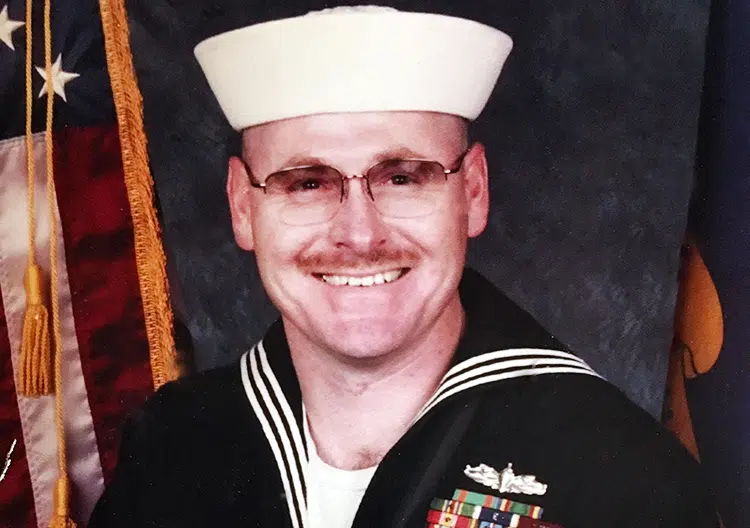
Billy Smith worked a series of short-term jobs as a construction worker, laborer, industrial painter, sandblaster, longshoreman, fish and shrimp loader, and gas station attendant before he received his high school GED from Tyler Junior College in Texas. After reaching this achievement, he decided to find his sense of purpose by joining the U.S. Navy in 1990.


“When I first took the military exam, I failed it. However, I retook it and aced it. I loved my life in the Navy. Training involved much hard work, and yep, it was harsh. Basic training involved a few men screaming at each one of us. After 8 or 36 weeks (depending on your test scores), you are off on your own to school and a duty station. It took many long hours of studying after final graduation until we were shipped off to serve on a fleet.”


“I started as an E1 Recruit/Deck Seaman and later attended Advanced C school (advanced Navy training) to study engineering. My final graduation test involved working for 24 hours on a broken jet engine to make it start by the morning. Throughout my service, I advanced to an E3 Fireman, and finished as a GSM1 Gas Turbine Systems Technician, Petty Officer First Class (Surface Warfare).”


Throughout his time in the Navy, Billy served on board of naval ships during multiple deployments, including for the Desert Storm (Gulf War), Operation Noble Eagle (in response to September 11th attack), Operation Iraqi Freedom, Operation Desert Shield (part of the Iraq War), and many more.


“My most extended term serving was for 10 months in Operation Desert Storm. On the ship, we launched missiles and examined passing vessels for contraband, human smuggling and bombs. We were working to protect our nation, as well as our allies that were there to help us.”


“Even when you come home, taking care of the ship always came first. One time, I slept in the engine room in a hammock all week, working all night. It hurt at times because I couldn’t see my family.”


“Despite the challenges of being deployed, I learned discipline and courage through serving. One of my most memorable moments occurred while being stationed in the Red Sea in 1991 when we escorted a group of our Egyptian allies. They gave us a tour of many cultural landmarks such as the Great Pyramids. It made such an impression on me, and I felt proud to protect people worldwide that need help.”


“Through 20 years of serving, I built my career and one of my biggest passions: engineering. Whether it is working on an LM2500 or an ALISON 501 Jet engine, or a 1000-ton chiller plant, it is a wonderful job to have. Later, I worked as an Instructor at the Great Lakes Center of Naval Engineering to teach young recruits. I am often told that I never left the service, as when I am working on a job all is forgotten but the task at hand.”


“I retired honorably from the military in 2010 in San Diego, CA. My family, including my wife and two daughters, supported me throughout my career and transition to civilian life. It was difficult at first; civilians are not wired the same as military personnel. In my opinion, civilians have it tougher since military life is sheltered, and we have the patience to slow down and assess difficult situations. I’m still using military acronyms to this day!”


After relocating to Texas, Billy joined PRIDE’s Bureau of Engraving, Western Currency Facility site at Ft. Worth, TX as a Stationary Engineer in 2010. “In my position, I help run operations on the plant including the chillers, boilers, air compressors, and turbines,” said Billy. “This environment is very supportive and a perfect for veterans like me. Once I joined, PRIDE even helped me get my recovery license. I would like to thank General Manager David Daniel, Assistant General Manager Brian Judd, Facilities Supervisor Chuck Wedgeworth, and Facilities Supervisor Brandon Kast. I am honored to work for these people every day, and they trust me to do my job.”


“I especially enjoy working with my colleagues with disabilities. From my time in the military, I have a service-connected disability and have received surgeries to reconnect fingers; as a result, I lack strength in my right hand. When I first joined PRIDE, I didn’t know sign language; now I am starting to learn some ASL (American Sign Language) to communicate with my co-workers who are deaf and hard-of-hearing.


“I earned all of what I sought by joining the Navy. Being deployed overseas makes you gain courage, grounds your faith by knowing you’ll make it home, helps you stay true to yourself, and allows you to be part of something greater.”

Billy Smith served 20 years in the U.S. Navy

“Being deployed overseas makes you gain courage, grounds your faith by knowing you’ll make it home, helps you stay true to yourself, and allows you to be part of something greater.”

Edward Arango grew up in Medellin, Colombia. After graduating from high school in 1987, he enlisted in the Colombian Air Force Academy and became an Air Weapon Control Officer. During this period, he participated in joint operations between the U.S. Air Force and the Colombian Air Force to curb drug trafficking.


“My father was my inspiration for joining; he served in the Colombian Army for 20 years, including in the Korean War. He was a man of few words, but always demonstrated dedication, respect, a genuine love for serving and support of other veterans – including my own military career.”


In 1994, Edward decided to immigrate to the United States and separated from the Colombian Air Force as a Lieutenant. After three years of working as a civilian, he enlisted in the U.S. Air Force as an Airman First Class and started attending the Supply Technical School in Lackland, Texas.


“Even though I did not speak perfect English, I graduated technical school with honors,” said Edward. “Re-joining the military in a different country still felt very similar, except that I had to start over again at a lower level. However, I learned valuable lessons about how to follow, as well as how to lead. I felt proud to work as a team member with my colleagues.”


Edward served throughout the country and moved up the ranks, including at Hurlburt Field AFB in Florida, Offutt AFB in Omaha, Nebraska, and finally to JB-MDL (Joint Base McGuire-Dix-Lakehurst), NJ as a Captain. “One of my proudest moments happened when I was promoted to Staff Sergeant after three years of service (which usually takes around ten years).”


After almost a decade of service, Edward’s military career came to an end in 2006 when he sustained a knee injury that required surgery; this unfortunately created a life-threatening pulmonary embolism and multiple complications. After going through this health ordeal, he decided to retire to enjoy more time with his family.


“Service left me with significant back and knee problems. There are many activities I’m no longer able to do that I once loved, such as playing soccer, but I’ve learned to adjust.” Besides recovering from surgery and the following complications, Edward’s transition to civilian life proved challenging. “Civilian life is much more laid back and flexible, and I had to learn to adjust my own expectations of others. In the military, discipline and integrity are highly ingrained – when you ask someone to do something, it gets done. Furthermore, because of my disabilities, many employers turned me down for opportunities.”


After he became physically ready to rejoin the workforce, Edward turned to the Veteran’s Administration’s Vocational Rehabilitation Department for assistance; they referred him to PRIDE Industries. Since 2010, he has worked as a Grounds Maintenance Supervisor at PRIDE’s JB-MDL contract – managing a team that keeps the JB-MDL cantonment, ranges and training areas in prime condition.


“PRIDE Industries gave me the opportunity to be part of a team with the same objective to help our military customer. Through our work, we help ensure their success at home and abroad. I especially enjoy creating opportunities for our employees with disabilities and veterans to succeed in their careers and to overcome expectations.”


“I was genuinely proud to serve my whole career. My experience was the path in life I was destined for.”

Eduardo Arango
Edward Arango served in the U.S. Air Force for almost a decade

“The military encompassed my entire life while growing up. When I finally joined, it was just as I expected it to be. I felt proud to be a part of a larger purpose.”

“I grew up on a farm in Walnut Ridge, AR. While attending college at Arkansas Tech University in Russellville, I joined the ROTC and decided to fully embrace the Army, as I enjoyed the comradery of the unit and the feeling that I worked for a worthwhile cause.”


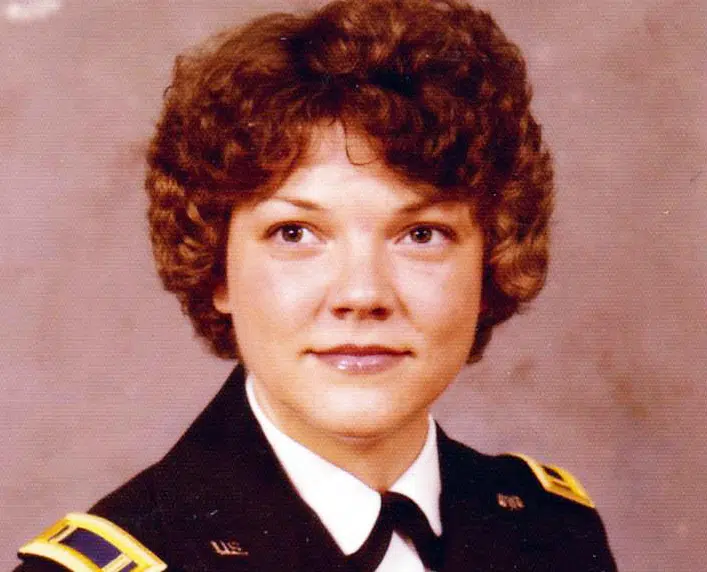
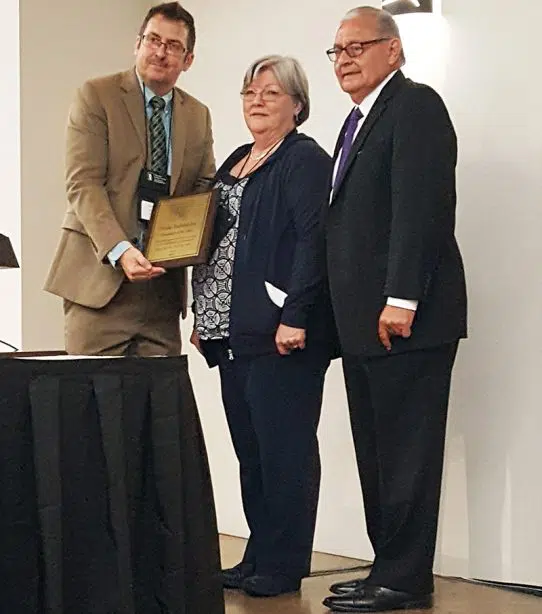
Joan O’Connor is the HR Rep/Case Manager for PRIDE’s Little Rock, AR office. In her job, she manages a team of job coaches and admin staff for PRIDE Industries’ Little Rock Custodial, Little Rock AFB and Ft. Campbell, KY contracts to recruit and support employees with disabilities. Joan’s excellent leadership helped PRIDE to earn the 2017 Employer of the Year recognition by the Arkansas Rehabilitation Association.


Before joining PRIDE, Joan served in the US Army from 1978 – 1984, where she rose up the ranks and learned the skills which carry over to her role today. Below is her story, in her own words:

Joan's Story:

“I was commissioned into the ‘Women’s Army Corps’ in May 1978, which had just fully integrated into the Army by the time I went on Active Duty that August as a Chemical Officer (NBC). My first unit was the 75th Field Artillery Group at Fort Sill, OK where I was their first female officer. I was later assigned to the 8th DIVARTY in Baumholder, Germany, and ended my service as the Officer in charge of the Personnel Processing Center there.”


“I earned my commission as a second lieutenant (2LT/O-1) and was then promoted to first lieutenant (1LT/O-2) in 1980 and to Captain (CPT/O-3) in 1982.”


“My transition from a civilian to a military member felt incremental. The hardest (but most comical) adjustment I had to make was adjusting my southern manners – I only addressed people as sir and ma’am. I was always getting corrected for calling NCOs ‘sir!'”


“The most significant skill that I learned in the military was adapting my leadership style to a wide variety of learning techniques. I grew up in a small town that had a close-minded atmosphere. After joining the Army, I quickly learned how to work in a fast-paced work environment with a greater diversity of individual backgrounds to work together as a team.”


“I was fortunate to learn from excellent NCOs (non-commissioned officers) and officers who impressed on me the value of experience as well as education. Learn from those who know -that lesson still helps me today. This advice also guided me through different situations such as entering a live nerve gas chamber for training.”

Joan O'Connor was commissioned into the “Women’s Army Corps” in May 1978

“I left the Army in 1984 after six years of active service in both the US and Germany to raise a growing family. ”

“I left the Army in 1984 after six years of active service in both the US and Germany to  raise a growing family. Again, my transition to civilian life felt incremental, as I was still a military spouse. My advice to veterans transitioning to civilian life is not to go cold turkey. Keep in touch with your military friends and try to find a similar job if you enjoyed your past role. Take advantage of the educational and other benefits and use your experience to the benefit of others.”


“I made my way to PRIDE Industries by chance, and I am so glad I did. After being laid off in 2008, I saw an HR job opening at PRIDE’s Little Rock, AR office and thought it was a perfect fit. I relate well to PRIDE’s mission, as I have a significant hearing loss (which became worse by my time serving in the Army Field Artillery) and have a child with learning disabilities. I also previously worked with the ARC and with an organization that advocated for the adoption of children in state care, many of whom had disabilities.”


“After nine years of joining PRIDE, I still feel the same way!”


“The most enjoyable part of my job is the wide variety of people that I work with to achieve the same mission, including nonprofits, community organizations, and governmental agencies. It feels wonderful to help people who might otherwise never have an opportunity to work for a ‘real’ paycheck and contribute with their talents. I also appreciate the opportunity to show our community what people with disabilities can achieve if given a chance.”

Joan’s excellent leadership helped PRIDE to earn the 2017 Employer of the Year recognition by the Arkansas Rehabilitation Association.

Since July 2010, PRIDE Industries has been providing facility operations and maintenance services at Joint Base MDL in Fort Dix, New Jersey. It is one of PRIDE’s 45 contract sites across the country. 


In July, two staff members at the  base noticed a family of Canadian Geese while performing a routine site inspection of the surface water pumping station. One of the geese became trapped. The employees’ quick action saved the life of the goose, reunited its family, and prevented a potential disaster by protecting the public water supply for JB MDL-Fort Dix—which has a population of approximately 40 thousand and an additional 60 thousand retirees within a 50-mile radius.  

Facility Operations Employees Going Above and Beyond

The following is a transcription of the event:


“The Water Utility crew arrived at the remote pump station to find a family of Canadian Geese consisting of an adult male and female with several juvenile geese loitering on the concrete retaining wall above the water intake structure for the water pump station. The family of geese became startled as the PRIDE employees entered the pump station and jumped into the creek below. Unbeknown to Sean and Ian, one of the adults landed inside the water intake structure.


Sean and Ian returned to the surface water pump station the next day. While inspecting the pump station, Sean discovered that one of the adult geese, believed to be the male, was trapped inside the intake structure and was unable to get out. It was obvious that the goose was becoming exhausted from his many attempts to free himself by climbing out of the water intake.


Sean began to make phone calls to find someone to rescue the goose. The first call was to the PRIDE Industries Service Order Desk at JB MDL for Pest Control. Pest Control informed the Service Order Desk that performing animal rescue was not possible.


Sean then attempted to contact local animal wildlife organization. Each entity that Sean spoke to was not able to respond.


Realizing the goose was not likely to survive if it remained trapped and the hazard that this posed to the potable water supply for the base, Sean and Ian took matters into their own hands. Using a pool skimmer (from one of the two JB MDL pools that the water utility department maintains) and a long handle water sampling dipper, Sean and Ian were able to reach down and lift the goose up and over the wall of the water intake.


The male goose quickly swam to the far bank of the creek all the while calling out to his goose family. After a few minutes, the adult female goose followed by the goslings appeared from upstream and reunited with the male.”

PRIDE Industries Facility Operations and Other Services

When you partner with PRIDE Industries, it is our goal to provide the level of initiative and service that Sam and Ian demonstrated. Along with offering a wide range of operating support and maintenance services, PRIDE creates employment opportunities for people with disabilities, including veterans with service-related disabilities. PRIDE’s contract creates 111 direct labor jobs. Fifty-seven of these employees have significant disabilities and 13 are veterans.


In the New Jersey area, PRIDE also offers scholarship funds for students with disabilities at Rutgers-Camden University. Partnering with PRIDE means supporting our mission to help people at all skill levels to reach their professional goals.

Need help with your facility operations?

PRIDE Industries can help you with facility operations, custodial and maintenance services, job assistance, and other services.