Our Stories

On a cold winter’s day in the early ‘90s, Technical Sergeant Jack Jackman was rubbing his hands together, doing his best to keep warm as the C-130 he was traveling in made its way through the skies above Sarajevo, Bosnia. Hunched into the small space behind the pilot, Jack kept a close eye on the SATCOM radio (airborne radio telephone communication via a satellite) perched next to him, just in case the plane’s communications went down, requiring his technical skills. Fortunately, Jack wasn’t called upon to use his SATCOM expertise on this trip, but he still had an important task coming up.


Jack felt the plane dive sharply towards the small airport. The plane’s cargo doors began opening as soon as the wheels touched down. When the aircraft stopped, Jack joined the crew chief and the loadmaster, pushing pallets of supplies out the cargo hold and into the hands of French Army personnel at the Sarajevo Airport. As soon as the last container was off, the plane closed its doors and rose back into the sky. It was a good delivery—the plane had been on the ground for five minutes and hadn’t come under fire.


Fast forward 25 years, and Lieutenant Colonel (Ret) Jackman is now Vice President of Contracts at PRIDE Industries. The following interview tells Jack’s story from airman to officer to valued member of the PRIDE team.


PRIDE: First things first—where did you grow up, and when did you join the military?


Jack: I was born at Fort Ord; my father was a career infantry soldier. But soon after, he finished his tour and we moved to Louisville, Kentucky. I lived there until right after high school, when I joined the Air Force as an E-1 Airman Basic.


PRIDE: Did you always want a career in the military?


Jack: No, my original plan was to serve four years, see the world, and learn some skills. And I did that. I was posted in Italy, and Germany, all over. And the longer I served, the more I realized that I liked what I was doing. I enjoyed working as part of a team, all of us with a common goal that was bigger than any one person. By the time I got near the end of my first tour, I knew I had to stay. Once I made that decision, I started working on my college degree. I eventually earned a B.S degree from Southern Illinois University. I applied to officer training school shortly afterwards.


PRIDE: You served in the Air Force for nearly four decades. That’s a long career. If you had to pick one memory that stands out, what would it be?


Jack: I was lucky to have several memorable postings, but I think what stands out most for me is the work I did in Kandahar Airfield Afghanistan as Chief of the Regional Contracting Center. In some ways, the project I was managing was straightforward. Our job was to finish building a road. But this wasn’t just any road. It was a supply line that led from Kandahar City to the town of Tarin Kowt, where a forward operating base had been established. The road was a lifeline, and the Taliban knew it, so they would attack along that route. There’s a saying about military convoys in combat zones: “Speed is life.” Every time an army convoy got bogged down on that unpaved stretch of road, lives were at risk.


So fixing that road became a kind of obsession for me. It took a lot of work. I had to find and hire a new contractor and a security force to protect the contractor’s workers. But casualties dropped as soon as the project was done.


PRIDE: The skills you gained in the military gave you the option to work at any of several companies. Why did you choose PRIDE?


Jack: I first learned about PRIDE when stationed at Los Angeles Air Force Base, where I was Chief of Enterprise & Specialized Contracting for the Space and Missile Systems Center. PRIDE was one of our contractors. I saw that their work was top-notch, and when I learned about their mission, I was even more impressed. A few years later, I came up to tour the Roseville facility and met Casey Blake [Major General (Ret) and PRIDE’s Chief Operating Officer]. I could see that he had found a sense of mission here, which is important to those of us who have served. So when General Blake offered me a job at PRIDE, I knew I had to take it.


PRIDE: What advice do you have for military personnel transitioning to civilian work?


Jack: Plan early. Retirement comes faster than you realize. Think about all the skills you’ve gained during your career, and how you can apply them to civilian work. PRIDE has a Military Translator tool that can help you with that.


You might find that you need special training or certification to pursue the civilian career you want. Again, figure that out early, so you can put together a game plan to build the skills you need. You may even be able to start on that before you leave the service.


PRIDE: You served in the Air Force for 39 years. Why not an even 40?


Jack (laughing): That was my original plan. I was going to serve 40 years—I liked the symbolism of four decades—and then transition to a civilian career. But as I learned more about PRIDE, I realized that I didn’t want to wait. I saw that there was good work I could do here; the mission really appealed to me. I decided to put in for retirement a few months earlier than I’d planned. The way I see it, I served my fortieth year here at PRIDE.

Veterans looking to start a career?

Check out PRIDE's Military Translator.
Jack Jackman
Lieutenant Colonel (Ret) Jackman is now Vice President of Contracts at PRIDE Industries

“Plan early. Retirement comes faster than you realize.”
Every day, Quality Control Inspector Levar Alexander ensures that PRIDE Industries delivers quality landscaping and custodial services to our military customer at Travis Air Force Base. When Levar took this position with PRIDE in 2017, he was already familiar with the base, as he had just retired from a long military career. PRIDE is fortunate to have Levar on the team; he shares his story below:


“While growing up in the small town of Cadiz, Kentucky, I always longed for an opportunity to see the world and serve my country. I signed up for the U.S. Air Force during my last year of high school in 1996 and immediately left after graduating in 1997. I always had an interest in fixing airplanes, so the Air Force was a perfect option.


I began basic training, including combat arms instruction, at Lackland AFB in San Antonio, Texas. After that, I relocated to Sheppard AFB in Wichita Falls, Texas, graduating from tech school and becoming an aircraft technician. Shortly after, I was stationed at McChord AFB in Lakewood, Washington.


My passion for repairing aircraft developed into a long, fulfilling career. I served as a 2A671 Aerospace Propulsion Technician for 20 years, repairing C-141, C-17, C-5, A-10, and F-16 aircraft. As I rose through the ranks, I became the Chief for F-16, F15, A-10, C-5, C-17, and C-141 aircraft.


During my service, I completed multiple tours in Kuwait, Afghanistan, and South Korea. While working overseas, I also teamed up with individuals from other countries, including Germany, Australia, France, Canada, Italy, and South Korea. This experience opened my eyes and made me realize that although others may not do things the way that I do, ultimately, the job gets done if we all work together.


My most memorable deployment was Operation Enduring Freedom. Finding out that I was going to Afghanistan was very sobering. I knew that this was a serious conflict and that sometimes people didn’t come back. While there, I was responsible for taking care of the aircraft; however, I knew I had to defend the base if we were under attack. We stayed on base, so I didn’t learn much about the local culture. But, from afar, I could tell that life moved at a slower pace, and the people were extremely appreciative of any assistance.


My favorite posting was Diego Garcia, a tropical island located in the Indian Ocean. The weather was amazing, and the water was crystal clear—it was paradise!


I retired from the military in 2017. I received multiple achievement awards and meritorious service medals, but I felt proudest when I fully returned to my family. Our separation was the most challenging part of my service. You miss birthdays, holidays, important events; life continues to move forward for others, even when you’re not there.


Fortunately, my transition to civilian life was smooth. I immediately found a new direction when I started working with PRIDE Industries. A good friend encouraged me to apply, and it has been an amazing ride working with the team here at Travis AFB. My colleagues inspire me every day, and I enjoy helping them be more proficient at their jobs. Ultimately, it’s been a smooth transition. I like that I can continue to serve the military through my job; it gives me an enormous sense of accomplishment.”

Attention veterans

Are you a veteran looking to start a career? Check out PRIDE’s Military Translator.

Each year on Veterans Day, we honor those who have served our country in wartime and in peace.


The Veterans Salute highlights PRIDE’s many employees that have served in the United States military. We thank them for their service.

On November 10, 1775, the Second Continental Congress passed a resolution creating two battalions of Marines. These new “Continental Marines” signed on to serve as landing forces for the colonial fleet. 


And serve they did. One of their most important duties was to provide security on naval vessels, which sometimes required a daring approachDuring naval battles, for example, Marine sharpshooters would climb to the fighting tops of the ships’ masts, so they could fire down on enemy soldiers who were aiming at continental officers, gunners, and helmsmen 


Today, the U.S. Marine Corps is famous for its amphibious operations. This expertise is not recent; it dates to the very beginning of the service, when Continental Marines carried out this country’s first wartime amphibious landing. During the Revolutionary War, as part of the colonial force at the Battle of Nassau, Marines landed in the Bahamas and seized England’s Fort Montagucapturing a large store of gunpowder and munitions.  

New Name, Same Mission

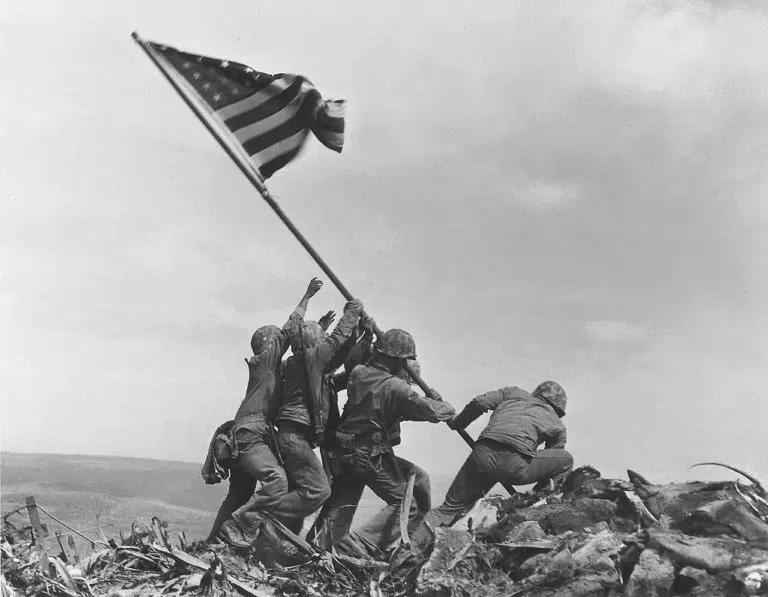
Raising the flag in Iwo Jima
Raising the Flag at Iwo Jima. Photo by Joe Rosenthal, 1945.

After the Revolutionary War, the Continental Marines disbanded. But after a hiatus of fifteen years, President John Adams signed into law a congressional act that created the United States Marine Corps. 


The Marines have played a crucial role in America’s defense ever since, fighting pirates in the early 1800s and even participating in the Civil War. In World War I, Marines fought in some of the toughest engagements of that conflict. For example, ithe Battle of Belleau Woodthousands of Marines engaged in 20 days of intense combat armed with little more than bayonets. Unwilling to give up, they eventually overcame their German opponents, who gave the Marines the now-famous nickname of “Devil Dogs.” 


In World War II, the Marines played a central role in the Pacific conflict and were active in every major battle in that theater. Photographer Joe Rosenthal memorialized their bravery and tenacity with his iconic photo of five Marines and a naval corpsman raising the U.S. flag at Iwo Jima 


Since then, the Marines have fought in every major U.S. military engagement. But Marines also serve during peacetime, and today they are well-known for providing humanitarian aid during times of crisis.  

A History of Helping

For decades, Marines have rendered aid both here in the U.S. and abroad, proving that they are just as effective at lending a hand as they are in battle. 


In California, Marines have fought fires and provided earthquake relief for fifty yearsIn states as diverse as Florida, South Carolina, and Hawaii, the Marine Corps has mounted rescue and relief operations after severe hurricanes knocked out critical infrastructureWhen Hurricane Katrina hit Louisiana, Marines left the safety of their base to rescue civilians, fighting through gale-force winds and blinding rain to bring people to safety. And after Hurricane Maria devastated Puerto Rico in 2017, the Marines conducted search and rescue operations, then set to work restoring the island’s infrastructure and bringing in food and medicine.


In addition to helping at home, the Marine Corps has provided humanitarian aid across the globe. They’ve delivered supplies and offered medical assistance after tsunamis and cyclones in Bangladesh, Indonesia, and Mozambique. In 2010, when a deadly earthquake struck Haiti, 2,000 Marines arrived to help the island nation feed and care for its people. And the Marines have returned every year since, providing medical, dental, and engineering assistance. 


As in war, the Marines are among the first on the ground after a calamity, providing aid, clearing roads, and restoring water, electricity, and other utilities. In 2011, right after Japan was hit by a massive tsunami, Marines arrived at the Sendai airport, where they cleared hundreds of smashed vehicles to reopen the runways. And when Nepal experienced a severe earthquake in 2015, Marine Corps helicopters delivered some of the first supplies to remote Himalayan villages

A Tradition of Celebration

The US Marine Corps began celebrating November 10 as its official birthday in 1921. Many of the most recognizable traditions started a few decades later, in 1952, under the leadership of Commandant Lemuel C. Shepherd, Jr. Now, every year on November 10, Marines gather across the country and throughout the world to celebrate the founding of the Corps. And wherever these celebrations take place, they all draw from the same rituals and traditions. 


These rituals include a cakecutting ceremony, in which a cake is sliced with a Mameluke sword. The first piece is given to the oldest Marine present at the gatheringwho then hands it to the youngest Marine, symbolizing the passing of duty, responsibility, and knowledge from experienced Marines to the next generation. 


Some celebratory balls include a pageant of current and historical Marine Corps uniforms, which provide a striking visual reminder of the service’s long historyAnother long-established tradition is the unit run every November 10, which often kicks off a day of celebration. In 2019, the Marine Corps introduced a new running cadence specific to the birthday unit run, thus establishing a new tradition. 

PRIDE Welcomes Marine Veterans

PRIDE Industries is fortunate to employ many Marine veterans and hundreds of veterans from other military branchesWe know from years of experience that the training veterans receive while in service makes them valuable employees once they return to civilian life.


To seek out these highly valued employees, PRIDE developed the Military Skills Translator, an online tool designed specifically for veterans. With the Skills Translator, veterans can easily determine which civilian jobs best correspond to the valuable experience they gained while serving our country. 


At PRIDE, we see every day how veterans of the U.S. Marine Corps contribute to their communities, even after they’ve left active service—a tradition that stretches back to those early Continental Marines 

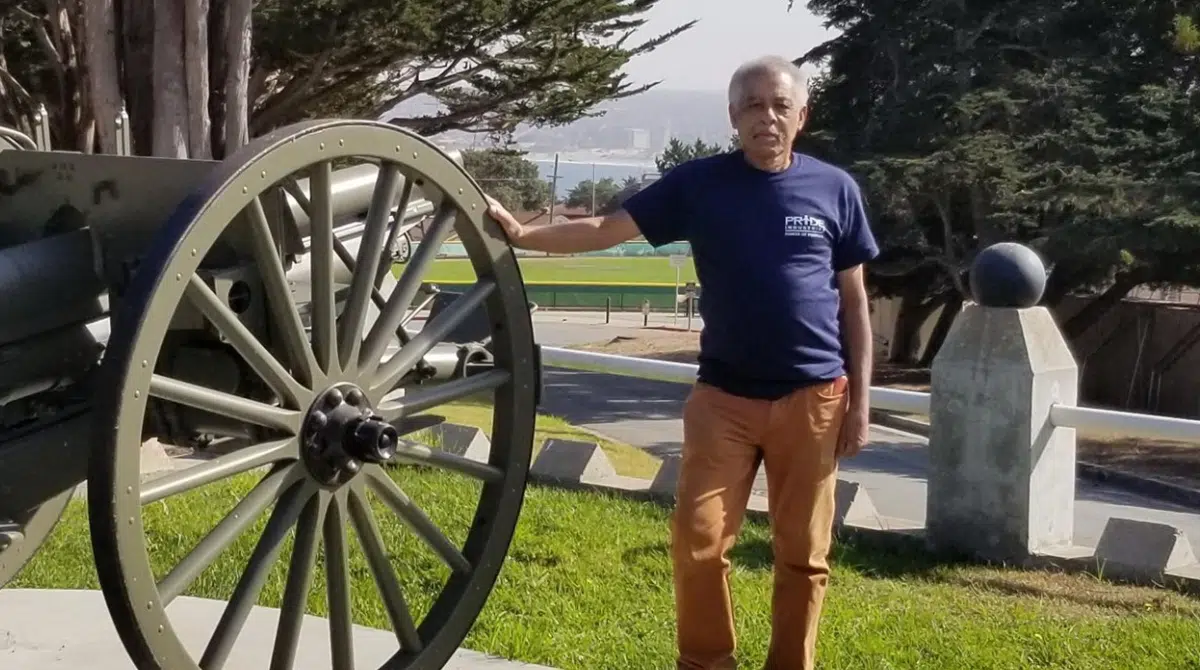
Calvin Wiseman is a veteran who joined PRIDE Industries in February 2020 and now works at the Defense Language Institute in Monterey, CA as a janitor. Before joining PRIDE, Calvin served our country honorably for 16 years. He shares his story below:


“Joining the U.S. Army gave me the change I needed. After occasionally working as fieldworkers in the Maryland agricultural industry, my friend and I wanted a different way of life, a chance to see more of the world. At 18 years old, I finished my junior year of high school, enlisted in the U.S Army, and earned my GED while serving.


And what a change it was! I went to Fort Ord, CA, for training. It was completely different from my hometown. I had grown up in a segregated schooling system, and now I was working in an integrated environment. It was an exciting time, being around such a diverse group of people. I fit right in and served three years in the U.S. Army, including a tour in Vietnam.


I had joined the U.S. Army as a Private E-1, and I left as an E-5 Sergeant. My most memorable moment was earning my first three service stripes. As I moved up the ranks, I felt incredibly accomplished.


In 1973, I left the Army and joined the U.S. Army National Guard. It was the right move for me, as I wanted time to focus on myself outside of a formal military routine. For 13 years, I served as a Sergeant in the National Guard and received specialized tank mechanics training. Then, after serving my country for 16 years, I was ready to rejoin the civilian world.


However, the adjustment from soldier to civilian proved difficult; I didn’t know who I was anymore. After the Army, most of my jobs were dead-end and unmeaningful, but I remained hopeful I’d find something better.


At the same time, I was struggling with post-traumatic stress disorder (PTSD) and depression. It was hard for me to accept this at first. Now, I’ve come to terms with it. And once I started going to the Veterans Administration (VA) for treatment, I began to feel better. My friends and family have noticed a change in me, and they’ve been wonderful—a real support system during my transition.


In 2020, I finally reached my goal of finding a job with a purpose when I was referred to PRIDE Industries by the Veterans Transition Center. I received assistance throughout my entire onboarding process from HR Director Paige Lindley. Counselor and Recruiter Sa’Cora Goodin checks in regularly to ensure that I have the support I need at my new job. My advice for other veterans struggling with PTSD is to seek help and stay connected to the VA.”

Attention Veterans

Are you a veteran looking to start a career? Check out PRIDE’s Military Translator.

“Working at DLI Monterey allows me to share my wisdom and experience with my PRIDE teammates. Every day, it gives me something to look forward to; I enjoy the opportunity to continue helping our military.”

Almost everyone has a dream career that they aim to reach. National Disability Employment Awareness Month (NDEAM) recognizes this fact. For three decades, NDEAM has celebrated the talent and drive of people of all abilities and advocated greater access to job opportunities.


PRIDE Industries has supported NDEAM since its inception, and we’ve championed the goals of NDEAM for even longer. For more than 50 years, PRIDE Industries has had a single mission: to create jobs for people with disabilities. Over the years, we’ve helped many talented people with disabilities find the job they’ve always wanted.


One such person is Dilver Funes, “F.D.,” who achieved his career goal as a PRIDE employee at Los Angeles Air Force Base (LAAFB), where he is putting his electrical technical skills to good use.


Getting to this point involved much perseverance; F.D. used to experience grand mal seizures several times a week – preventing him from participating in many common activities, such as driving. Despite having the qualifications and desire to work, F.D. had to give up his position at a mechanic’s shop because he could not handle a full 40-hour workweek.


Fortunately, F.D. underwent a life-changing surgery that allows him to live seizure-free. The surgery was a success, but it came with side effects. F.D. experiences short-term memory loss and challenges when processing information. He needs some support, but this has not affected his ambition, and in fact, F.D. earned an electrician’s certificate and has reapplied for his driver’s license.


The next step for F.D. was to rejoin the workforce. In 2019 he contacted the Southern California Resource Services for Independent Living (SCRS). They worked together to find a job position to match his qualifications. In December, they identified the perfect opportunity – a General Maintenance Worker position with PRIDE Industries.


PRIDE’s H.R. Rep and Case Manager, Haydee Garzon, in coordination with SCRS, helped F.D. complete the necessary security steps required to work on a military base. She reports:

.

“Once F.D. joined PRIDE, he immediately started to thrive. We are lucky to have him on our team.”

According to F.D.’s supervisor, HVAC Appliance Manager Shannon La Rue, “F.D. has continued to develop his skills and never hesitates to take on a challenge. He is an important part of our team and provides excellent customer service, keeping the military base in shape.”


To accommodate some of his disabilities, F.D. received a golf cart to carry around his tools. When the golf cart needed repairs, F.D. learned how to perform the bodywork and fixed it himself – showing his ingenuity and drive.


“I appreciate the opportunity to work with PRIDE and to have the extra training and vocational support,” said F.D. I’m enjoying my job so much that I want to stay with PRIDE until I retire.”

Dilver Funes "F.D."