
Employment Services

Your 18th birthday is around the corner. Like most of your friends, you are excited about reaching that special milestone and officially becoming an adult. However, unlike the rest of your friends, you’re nervous because you don’t have a plan for what’s next. As a teen in foster care, your group home has provided shelter and care, but not guidance for developing an independent life. You don’t know much about budgeting finances, exploring college, or how to find a job. Aging out of foster care is a daunting reality.


PRIDE Industries offers employment services for youth aging out of foster care. The program is designed to ease the transition out of foster care and help you reach your goals. You will have access to coaching, mentoring, training, internships, job placement training, and community resources, so you will be well equipped for your journey to a fulfilling life.


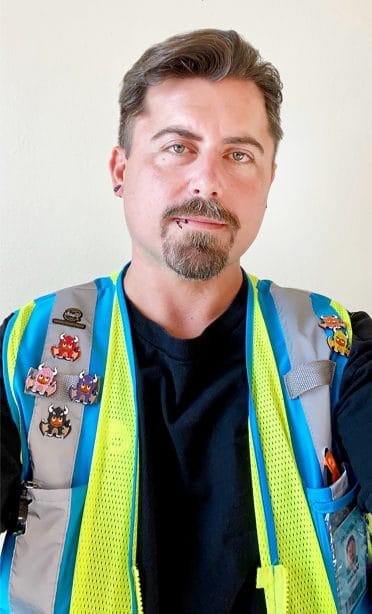
One member of PRIDE Industries’ foster youth employment services team is AbilityOne Recruiter Dustin Spears. Having grown up in the foster care system, he understands what it’s like to develop a career without much support. Today, Dustin is using his experience and expertise to help others like himself who are aging out of foster care. As part of his role at PRIDE, he partners with several nonprofits and governmental organizations to place our Inclusive Talent Solutions staffing line at companies like Amazon. In his own words, Dustin shares his story along with some advice:

Dustin Spears
AbilityOne Recruiter Dustin Spears understands what it’s like to develop a career without much support

From Foster Youth Services to Independence

“90% of youth in foster care end up repeating the cycle by having their children placed in the system as well.”

Hearing this statement completely chilled me as I sat in a classroom one afternoon. That day, I made a promise to myself that this wouldn’t happen to me. I had to break this pattern.


For kids in foster care, reaching that 18th birthday is hard. You know that you will soon be on your own without a lot of guidance or fallback support. Since the age of 11, I had bounced in and out of 12 group homes. In some ways, it was my choice: I did not feel comfortable being placed with a foster family. When I was 16, I knew I wanted to take control of my life—the first step was testing out and graduating high school two years early.


This time was definitely challenging for me. I started college while I was working two full-time jobs, one at Carl’s JR as an Assistant Manager and another for a transportation company.  It was hard, but I made the best of it and managed to support myself. I stuck with it, and along the way I learned valuable skills and lessons, like the importance of good customer service.


At age 21, I decided to switch gears to work in group homes for foster youth. Because I’d been in the same situation, I knew what these kids were going through. I was eventually promoted from a behavioral health associate to a manager. For several years, I managed a rehabilitation facility for children.


I’ve long known that I want to make a difference in the lives of former foster youth and people with disabilities, helping them gain independence and fulfillment. So when I got the chance to join PRIDE Industries in 2018 as an AbilityOne recruiter, I was thrilled.

Paying it Forward: Supporting Youth Transitioning Out of Foster Care

In my role with PRIDE Industries, I work with referrals, including former foster youth, to place them into jobs with PRIDE or through our partners in Southern California. So far in 2020, I have helped place over 25 youth into jobs at Amazon through our Inclusive Talent Solutions program.


What’s unique about PRIDE is the cycle of support that we offer, including job placement, vocational mentorship, training, and ongoing job coaching. We want to ensure that everyone succeeds in reaching their full potential. For every referral that I receive, I take the time to meet them and evaluate their goals, interests, and skills.


My advice for youth transitioning out of foster care is not to let your past define you. When searching for your first job, be flexible. Any place where you can get your foot in the door and build skills and experience can help you. Once you have a job, even if you don’t like it, keep it until you get a new one.


Another word of advice is to take advantage of as many nonprofit and government agencies as you can, including the Department of Rehabilitation in California. They will provide extra help, connections, and resources to set you on a career path and develop a resume. Accessing these resources will require filling out paperwork and dealing with agency bureaucracies. PRIDE can help with that. Consider PRIDE another resource for you.


One of the most significant barriers for former foster youth entering the workforce is access to transportation, especially now during the COVID-19 pandemic. Most youth who age out of the foster care system don’t have a car. PRIDE’s staff assists with navigating the system and looking for jobs/shifts that can accommodate the public transportation schedules.


The last thing I’d say to fellow foster youth is to realize that the experiences you’ve had have taught you valuable lessons about patience and perseverance. I know I wouldn’t be where I am today without my past. It’s brought me to a great job, and now I get to help other former foster youth find their success journey.

Take control of your life

Write the next chapter of your life with confidence. Learn more about PRIDE Industries’ foster youth employment services.

For a long time, many businesses subscribed to the myth that changing the workplace to accommodate people with disabilities did not yield a good return on investment.  Fortunately, that view is changing, as more and more studies show the benefits of creating a diverse, inclusive workplace.

Low Turnover, Low Cost Benefits of Diversity and Inclusion in the Workplace

The data show that employees with disabilities have much higher job retention rates—eliminating the costs associated with frequent turnover:

“A three-year study at Washington Mutual, Inc. found a turnover rate of 8 percent among people with developmental disabilities, compared with an overall rate of 45% in the general population.”

Furthermore, it’s become clear that accommodations aren’t necessarily complex or costly. Companies are now discovering that with just a bit of imagination and effort, they’re able to attract and retain highly productive employees.


This is something that PRIDE Industries has known for decades. Over fifty years ago, our nonprofit was founded with a commitment to ensuring that all our employees have the tools they need to be fully productive and enjoy their work. This emphasis on person-centered training and tools has created an efficient and reliable workforce, and this, in turn, has resulted in consistently high customer satisfaction ratings. Here at PRIDE, we have experienced the benefits of diversity and inclusion at work firsthand.


Simple Solutions to Promote Inclusion

Contrary to myth, many of the inclusive practices that PRIDE has implemented to accommodate our employees have been simple and inexpensive. And PRIDE has been able to make these accommodations by following one basic rule: ask the employees what they need.


Ray Muro, a stock clerk at Fort Bliss in Texas, shows why this approach is so effective. Muro has worked at the base’s Self-Help shop since 2007, and is responsible for helping PRIDE’s military customers pick out needed parts such as paint and batteries. He also stocks new supplies and inputs customer information into the shop database.


Blind since birth, Ray is nevertheless able to retrieve parts and navigate the shop floor easily, thanks to the braille lettering he helped put up in the shop when he first arrived. This low-cost, inclusive solution enables Muro to be a productive employee, one who has received dozens of positive comments from both customers and supervisors.

fixture can be used with one hand
This workstation can be used with one hand

Unforeseen Benefits of Diversity and Inclusion in the Workplace

Over the years, other PRIDE employees have developed similar approaches to overcoming workplace obstacles and promoting diversity and inclusion in the workplace. Sometimes the solutions are logistical, like instituting extra breaks, splitting jobs between two people, or offering ASL classes for better communication. Other solutions come ready-made, like providing day planners or phones with closed captioning.


Often, a modification made for one person ends up helping everyone on the team. When benches were lowered to accommodate people in wheelchairs, for example, employees discovered that everyone benefited by being able to sit when needed.


Sometimes the search for an effective accommodation leads to a useful invention. This was the case several years ago, when employees were looking for a way to keep people from tripping on empty pallets. Even though the pallets were always kept in designated areas, people sometimes forgot that a six-inch-high pallet was on the floor.


Then one day, an innovative employee created the pallet flag—a bright yellow banner atop a four-foot pole, with a base that can slide under a pallet to hold the flag in place. These flags serve as easy-to-spot reminders that a pallet is on the floor, and their widespread use in PRIDE facilities has virtually eliminated trips and falls.


Other easy inclusion practices include clamping tools to assembly workstations, thus allowing the user to tighten bolts and perform other operations with one hand. Likewise, workstation instructions are posted in plain view, and include photographs of each step of a production process, so that non-engineers can understand them.

pallet flag
PRIDE’s pallet flags greatly reduce trips and falls.

Diversity and Inclusion in the Workplace: A Wise Investment

Not all inclusive workplace practices are inexpensive, of course. PRIDE maintains its own fleet of buses to transport employees to and from work. And X-ray machines designed to help with inventory count can be relatively pricey. But PRIDE has discovered that even expensive machines pay for themselves by increasing productivity and ensuring a reliable workforce for our customers.


PRIDE’s state-of-the-art laser cutter is a case in point. Years ago, the company invested in this machine to allow employees to make tools like jigs, templates, and screw counters. These tools are customized to a particular person or task. The templates, for example, enable employees to label kit bags quickly, with the tag in perfect alignment. Screw counters ensure that the right number of parts go into every bag. Innovations like these make kitting fast, exact, and reliable.


PRIDE’s commitment to giving individuals the tools they need to succeed has enabled the company to build an effective, dedicated workforce that is highly ranked by our many customers. Our approach is validated by the results. PRIDE is the nation’s leading employer of people with disabilities, and we continue to grow our lines of business.


Andrew Williams, Engineering Manager at PRIDE’s Roseville facility, exemplifies the inclusive workplace philosophy that has made PRIDE both a sought-after employer and a successful vendor for over fifty years.


“Everyone knows what equipment they need to complete their work, and my job as a manager is to make sure they have what they need,” said Williams. “The tools that work best will vary from person to person. Whether they have a disability or not isn’t the issue. It’s about equipping every employee to work to their maximum potential.”

Benefits for your business

Wondering how your business can benefit from inclusive workplace practices?
Engineering Manager Andrew Williams

Mat Baker’s career as a learning trainer began after joining PRIDE Industries’ job placement assistance program in 2018, which landed him a position at Amazon. The journey wasn’t always easy, as a severe anxiety disorder initially prevented him from interacting with others or seeking a job. Employment with Amazon gave Mat the confidence and skills to overcome these obstacles and earn several promotions.

Job Placement Assistance for People with Anxiety

Mat suffered from severe panic attacks and anxiety his entire life. This prevented him from interacting with others, especially in large crowds. “At the same time, staying at home in isolation gave me a feeling of inadequacy, causing more anxiety,” he said. “It was a vicious cycle that felt impossible to overcome.”  


Others with severe anxiety face similar challenges. For this reason, each of PRIDE’s job coaches works one-on-one with candidates to assess their needs, create a goal plan, and help them prepare for successful job placement.  


“Just two years later, so much has changed!” Mat said. “I am employed as a learning trainer at Amazon’s Sortation Center in Vacaville, CA. I feel comfortable in what is a very hands-on position—I help train new hires and manage 60 Ambassadors to coach other associates. I’m part of a large team; all of us work together to make sure our customers get their packages on time!”


Working closely with his job coach at PRIDE Industries made all the difference for Mat. “From day one, PRIDE provided the foundation for my amazing growth,” he said. “This journey would not have happened without their job coaches. They showed me exactly what to expect and checked on me every step of the way. Job Coach Jarmar Pearson advocated for me every day, and I can’t thank him enough!”

Mat’s Ongoing Growth After Job Placement

Since day one at his new job, Mat’s confidence has grown and he went on to earn a promotion. Every step of the way, Mat’s job coach advocated for him, ensuring he had the support he needed from PRIDE and from his new Amazon team.


“This was my first job, and at the beginning, it felt daunting having to work with so many people. And there was so much to learn!” Mat shared. “But using techniques from therapy, I was able to keep a positive attitude and overcome these challenges. I remember asking the learning trainers follow-up questions, and they were always patient with me, helping to build my confidence, and speak up more.”


Mat began to realize his hard work was paying off when managers began requesting him in their areas. “I knew I could move up. When a learning trainer asked me to become an ambassador, I signed up immediately. Since I had to interact with up to 10 new hires every day, I gradually felt less anxious around others.” Thanks to his determination and targeted job placement assistance from PRIDE, Mat was proudly overcoming his anxiety and thriving at work.

Continued Advancement and Career Success

Mat continued to make an impression on the leadership team at work. “The learning trainers and the learning coordinator encouraged me to apply for a job as a seasonal trainer. Despite the fierce competition for this position, I got the job. Even though I joined during our peak season, when Amazon hires thousands of people, I rose to the challenge and earned the respect of my team. I was hired permanently in February 2020. I am proud of my ability to overcome the difficulties related to my disability. It’s exciting to realize that two years ago, I was a nervous associate coached by a learning trainer; now, I am the one teaching others! This incredible experience has created positive changes throughout my whole life.”


“It’s been a long, rewarding road, and now the sky is the limit,” Mat said. “I plan on becoming a learning coordinator or an area manager. Trust me when I say I won’t be stopping here!”

Need employment placement support?
Contact our I AM ABLE Helpline to discuss your options.
Mat Baker
Mat Baker

“No words can express my gratitude for the support, the encouragement, and the hope that PRIDE has given other associates with disabilities and me. I love my job.”
As online applications become the standard, face-to-face introductions often give job seekers an edge. This option may be difficult for people who have challenges with verbal communication. PRIDE Industries’ disability job placement services and employment programs for people with disabilities is here to help navigate options and provide support. PRIDE Industries’ Job Developers reach out to businesses in the community to help place people with disabilities in the perfect job, creating the means for lasting employment success.


During the pandemic, PRIDE Industries’ Employment Services team remains hard at work to place individuals with disabilities in employment. Using videoconferencing, they are reviewing resumes, practicing online interviews, and focusing on placements for in-demand fields such as grocery stores, fulfillment, and custodial jobs.


Carlos Perez, one of PRIDE Industries’ Job Developers, places individuals in community employment and supports them through the process of getting an internship, a permanent job, and their first three months of employment. He shares his story with PRIDE below:

Disability Job Placement Services that Ensure Long-Term Success

“While studying Psychology at Sacramento State, I continued to work at Safeway as a Store Associate. I enjoyed mentoring those who were new to the job, including ways to help customers pick out the right produce and checking them out at the cash register.


During my time at Safeway, a few individuals from PRIDE’s Employment Services Program also worked at this store. In 2016, I met PRIDE Job Coach John Edwards, who explained PRIDE’s mission to create job opportunities for people with disabilities. I was so impressed by PRIDE’s work and employment services that when the opportunity came up, I took a chance and joined as a Job Coach in 2017.


Job coaches help ensure the long-term success of individuals with disabilities after job placement. I work with people with a variety of disabilities, including many on the Autism (ASD) spectrum. Everyone has their unique talents; for example, those with ASD often have excellent memory and organizational skills. However, all placements work hard to contribute to their position.

Job Placement for People Facing Barriers to Employment

After a year, I was promoted to Job Developer for PRIDE’s Youth Services program, focusing on placing young adults that have disabilities, who are emancipating from foster care, and survivors of sex trafficking into employment.


Getting to that final point can be a challenge, as it ranges from 4 to 7 months to place a person. Ultimately, it comes down to the individual’s persistence and willingness to continue.


Many of my clients have dealt with trauma. We are sensitive to their pasts and help them develop more confidence by creating their resumes and arranging for paid internships in community internships.


Retail jobs are my most frequent placements; it’s an excellent match for my clients as they are just getting into the job market and have the chance to build up necessary skills such as customer service.

Beyond Job Placement Services: Cultivating Vital Skills

Knowing how to talk to employers is tough for anyone, especially if you have a disability. Many of my clients communicate differently and struggle with eye contact and anxiety. PRIDE Employment Services provides training in skills that are necessary to succeed at work. Additionally, following up with the employer often helps. They are more willing to give the individual an opportunity once they learn that PRIDE is there to provide ongoing support.


When approaching a potential employer to help place an individual, I usually go in-person to introduce myself. Paper only gets you so far!


Along with job planning, I help my clients develop an education plan if they desire to attend college. I remind them that it is essential to focus on performing well at their jobs; it’s a good stepping stone to building a career. I use my previous experience at Safeway as an example, as it taught me a strong work ethic and customer service skills.


When my clients get jobs, and their families thank me, it’s truly priceless and the best part of my job. Helping one person might not change the whole world, but it could change the world for one person.”

Need employment placement support?

Contact our I AM ABLE Helpline to discuss your options.

“Helping one person might not change the whole world, but it could change the world for one person.”

Transition to civilian life is often complicated and overwhelming. Without the proper support, many veterans find themselves disconnected from the community and services that they need to adjust. In Hawaii, many veterans become homeless as a result of these challenges; they face incredible obstacles to rejoining their communities. PRIDE Industries has partnered with the U.S. Department of Veterans Affairs (VA) to provide employment services, job training, and more to help veterans overcome these barriers.

Going Beyond Employment Services for Veterans in Hawaii

Sean Sullivan was enthusiastic to support people with disabilities and other barriers to employment, including our nation’s veterans. He became an AbilityOne Recruiter and Employment Services Manager with PRIDE Industries in 2015. Since then he has been providing practical assistance to veterans struggling to find jobs and adapt to civilian life. 


But Sean’s efforts did not stop at employment and training services. He connected with Jackie Nguyen, the Community Employment Coordinator (CEC) of the VA Homeless Veterans Employment Services, to explore additional ways they could improve outreach and job placement efforts to address more of the barriers that veterans were facing. 


“When I started as a recruiter, many veterans were referred to my office for placement into PRIDE Industries,” Sean said. “Due to increasing demand, we began to offer services to place people into other jobs and careers in the community, addressing the barriers and obstacles that they faced in getting a job, including housing, transportation, mental and physical health, and transitioning from the military into civilian life.”

Helping Veterans Find Jobs in Their Community

“We both found that many veterans struggle to look for new jobs through USAJOBs or other traditional methods that they are encouraged to use,” said Sean. “Jackie and I strategized on ways to increase the numbers of unemployed veterans placed in employment. Our first course of action was to reach out to employers, like Marriott Hotels, in person, to show how PRIDE Industries and the VA work together to provide employment support for veterans. We emphasize how hiring our nation’s veterans can make a business a true partner in strengthening our communities.”


To help veterans gain job skills, Sean and Jackie began hosting monthly workshops at the Department of Labor and elsewhere. Activities include resume writing, interview role play, team building exercises, and learning how to apply for jobs on USAJOBS. 


“The U.S. Attorney’s Office in Hawaii also participated in the workshops and provided insights and tips to workshop attendees on how to apply for Federal jobs,” said Sean.

Connecting Veterans with Local Employers

In October 2019, PRIDE worked with the Homeless Veterans Employment services to start conducting monthly job fairs. The local Veteran Center and American Job Center were gracious to allow the employment team free use of their space. Promoted locally, the job fair takes place on the first Monday of each month. The local Disability:In Hawaii Chapter and other businesses on Oahu invite employers to interview and offer jobs on the spot.


“So far, since the monthly job fairs started, we have had seven (7) veterans offered jobs on the spot, and an additional nine (9) interviews scheduled in December 2019. We look forward to getting more veterans hired in 2020 and partnering with more businesses to fulfill their staffing need for a qualified workforce,” said Sean.


PRIDE Industries offers a variety of employment services for veterans in Hawaii and across the country. Find out how our vocational training, job placement services, and internship opportunities can help you build a strong career path.

Are you a veteran?

Contact our Veterans Employment Advantage Program for support.

“We emphasize how hiring our nation’s veterans can make a business a true partner in strengthening our communities.”

Most people remember that first job right out of high school. Developing a professional resume, navigating through interview questions, and proving yourself despite a lack of experience, all made reaching that milestone even more special. However, for youth with disabilities, these obstacles are compounded, making that first paycheck even more elusive. This problem hinders further markers of independence, like moving into a new apartment, affording higher education, or purchasing a car. PRIDE Industries offers employment services to help people with disabilities prepare for and secure their first job out of high school and begin the path to their chosen career. 

Partnering with PRIDE Employment Services to Overcome Obstacles

Alexzander turned to PRIDE Industries’ employment services after he graduated high school in 2018. He had minimal experience working in his high school and at a camp for youth in foster care. He was eager for his first permanent job, but after months of searching, he hadn’t found one.


“Whenever I saw a help wanted sign, I would go into the store to fill out an application and introduce myself. While speaking to the manager, I would become incredibly nervous, start stuttering, and completely forget what I wanted to say. Months went by, and I couldn’t find anything. I just wanted a job where I could grow.”


PRIDE Industries’ employment services helped bridge this gap. Alexzander met Carlos Perez, a job developer, via referral, and together they developed a resume and cover letter and practiced interviewing. PRIDE also provided Alexzander with professional work clothes, a planner, and other items to help him succeed.


“I have a learning disability, and Carlos worked with me to develop ways to overcome my anxiety and remember the correct steps while applying and interviewing for a job,” said Alexzander. “The consistent practice made me more confident since I knew that I had support, and Carlos would accompany me to meet with potential employers.”

Employment Services: Laying A Foundation for the Future

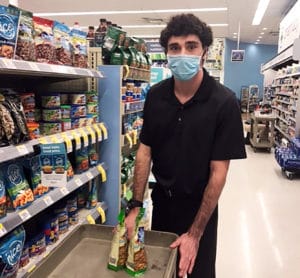
All their hard work paid off when Carlos helped connect Alexzander to a paid internship, funded by donations to PRIDE, at a local Rite-Aid store. Eager to start working, Alexzander continually showed up with a positive attitude, impressing his colleagues. “It meant so much when my manager told me that my entire team wanted to invite me to join them as a store associate!”


“I am currently thriving in my job and am starting to learn how to become a cashier and change prices. The best part of each day is making someone’s day a little better.”


Thanks to PRIDE’s donors, Alexzander is now able to build a foundation for his future career. “While learning new skills at my job, I have been saving up money for college; I plan to study computer coding to become a video game or animation designer.

Need employment placement support?

Contact our I AM ABLE Helpline to discuss your options.

“I am currently thriving in my job and am starting to learn how to become a cashier and change prices. The best part of each day is making someone’s day a little better.”