Comstock’s Magazine features PRIDE Industries’ partnerships with organizations throughout the Sacramento region to provide employment for people with disabilities and strengthen communities.

Comstock’s Magazine features PRIDE Industries’ partnerships with organizations throughout the Sacramento region to provide employment for people with disabilities and strengthen communities.
Misconceptions abound when it comes to employment for people with disabilities despite growing awareness and efforts to promote inclusivity in the workplace. These myths often stem from a lack of understanding and can hinder businesses from tapping into a diverse and talented workforce. In this article, we aim to debunk the most common myths surrounding the employment of individuals with disabilities.
Facts: There are many qualified candidates with disabilities that have the necessary education and experience for a variety of jobs. In fact, employees with disabilities often bring innovative, efficient approaches to tasks, offering fresh ideas and methods.
An individual’s disability may have nothing to do with the job they’ve applied for. Moreover, people with disabilities, like any other group, are not a homogenous population. They are simply individuals whose abilities often face societally created barriers.
Quoted in a recent Forbes article, former Connecticut state senator, past Chair of the American Association of People with Disabilities, and disability attorney, Ted Kennedy Jr. said, “For too long, people with disabilities—individuals who are perfectly qualified and overwhelmingly willing to work—face enormous barriers to being offered a job.” Kennedy cited a recent study by Accenture which provides “compelling evidence” of the many benefits employees with disabilities bring to the workforce, including an acceleration of overall business performance.
Facts: The Americans with Disabilities Act (ADA) stipulates that employers must provide “reasonable accommodation” for people with disabilities. Many employers wrongly assume such accommodations are prohibitively expensive. The truth is that accommodation is surprisingly easy in most cases. In a survey of 3,528 employers by the Job Accommodation Network (JAN), 49.4% reported that the accommodations for employees with disabilities “cost absolutely nothing.” For employers that incurred a one-time cost to accommodate employees with disabilities, the median expenditure was just $300.
Many accommodations for people with disabilities—ramps, close captioning, quiet spaces—also benefit employees without disabilities as well as customers. And, when employees see employers cultivate a sense of belonging, they feel better about coming to work—even when they’re not the ones being accommodated.
The late disability rights advocate Judy Heumann put it this way, “Disability only becomes a tragedy when society fails to provide the things we need to lead our lives—job opportunities or barrier-free buildings, for example.”
At the same time, companies who hire people with disabilities are eligible for tax credits and other government initiatives that can totally offset, or even surpass, the cost of accommodation.
The Work Opportunity Tax Credit, for example, is a federal program that provides employers with tax credits for hiring individuals from certain target groups that have faced barriers to employment, including people with disabilities. Tax credits are also available to improve architectural accessibility, and several states offer their own incentives related to hiring people with disabilities and creating accessible workplaces.
Facts: Job performance of people with disabilities has proven equal to, if not better than, that of workers without disabilities—a fact underscored by studies dating back decades.
In 1990, DuPont surveyed 811 employees with disabilities, finding that 90 percent rated average or better in job performance. Similar studies in 1973 and 1981 found employees with disabilities rated higher than their peers without disabilities. A 2002 study by Virginia Commonwealth University’s Rehabilitation Research and Training Center found that employees with disabilities “are as capable and productive” as employees without disabilities, including in the areas of timeliness, punctuality, task consistency, and work speed.
Not only are employees with disabilities highly productive on an individual level, but according to the Bureau of Labor Statistics, businesses that include employees with disabilities see a 72 percent increase in employee productivity.
Facts: This myth is not only false, the opposite is the case—companies that actively hire people with disabilities perform better than peers. According to Accenture’s groundbreaking research, companies that actively employ and support people with disabilities achieve 1.6 times more revenue, 2.6 times the net income, and twice the economic profit compared businesses that do not.
Similarly, a National Institutes of Health Review of 6176 studies found that companies that employ people with disabilities see “improvements in profitability” stemming from profits and cost-effectiveness; low turnover and high retention; high levels of reliability, punctuality, and employee loyalty; and an enhanced company image.
Facts: Some employers assume that people with disabilities aren’t interested in working at their companies because few apply. In fact, many online job applications aren’t accessible to people with disabilities. According to a survey by the Partnership on Employment & Accessible Technology (PEAT), 46 percent of respondents rated their most recent attempt to apply for a job online as “difficult to impossible.” Color-reliant applications, poor contrast, mobile device incompatibility, screen reader incompatibility, and rapid auto-timeout presented the biggest challenges.
Ableist language in job ads can discourage people with disabilities from even attempting to apply. Boilerplate verbiage like “must be able to lift 50 pounds”—which may have nothing to do with actual job duties—may deter a highly qualified candidate with physical challenges. While some jobs do require physicality, words matter when it comes to specific physical requirements. For example, will an employee truly need to “walk” or “crouch”? Or will they simply need to be able to move from point A to point B?
The ADA requires employers to provide equal opportunity to people with disabilities, beginning with the application process. The World Wide Web Consortium has published Web Content Accessibility Guidelines (WCAG) to help businesses evaluate their website’s accessibility, including online job application functions. When it comes to advertising jobs, The Employer Assistance and Resource Network on Disability Inclusion (EARN) recommends creating job announcements that emphasize the specific outcomes a job requires, rather than how the duties should be accomplished.
Employment for people with disabilities is like employment for anybody else. Each individual is equipped with strengths, weaknesses, goals, and needs. Much the same as it is with any employee, leveraging the capabilities of an employee with a disability is about identifying strengths and abilities and providing the tools and support they need to be successful.
Companies of all kinds are in the midst of a persistent labor shortage, and the need for a talent pipeline is acute for many employers. The U.S. Chamber puts it this way: “We hear every day from our member companies—of every size and industry, across nearly every state—they’re facing unprecedented challenges trying to find enough workers to fill open jobs.” To solve this problem, employers are seeking innovative staffing solutions, but there’s one that may not be on employers’ radar: Work groups comprised of employees with disabilities.
Hundreds of companies have partnered PRIDE Industries for work groups for a reliable talent pipeline. In a nutshell, work groups are comprised of three employees with disabilities who are placed at a business, in accordance with the workplace’s staffing needs. Each group is supported onsite by a trained, dedicated employment coach.
PRIDE Industries serves as the employer of record, taking on the recruiting, hiring, training, payroll, supervision, and quality control work—eliminating management overhead for the partner business. What’s more, the program can be tailored for specific roles, offering flexible, scalable solutions while the pre-employment preparation process and on-the-job support ensure a workforce that’s both skilled and safe.
“They are the most can-do group I've ever been around, and they elevate the attitudes of everyone around them. They're happy to be here, and if I could have a hundred of them, I would.”
—Doug Jacot, Acushnet Director of Manufacturing
As the nation’s leading employer of people with disabilities, PRIDE Industries has been successfully utilizing the work group model as a talent pipeline for nearly two decades. It’s a staffing solution that’s proven effective across industries, offering numerous business benefits.
In addition to the business benefits of the work group employment model, businesses that actively include people with disabilities enjoy additional proven outcomes.
The short answer is “most.”
From manufacturing to facilities management; food services to retail; landscaping to packaging; work groups do it all and do it well.
According to Food Logistics Magazine, “quiet quitting”—employees unwilling to go above and beyond the scope of their regular responsibilities—has plagued the packaging industry.
At Knee Deep Brewing, where a PRIDE Industries work group helps package the brewery’s artisan beers for shipment, the opposite rings true.
“I’ve been extremely pleased with our PRIDE Industries team members,” said Jerry Moore, Owner and CEO of Knee Deep. The company was so impressed with the work ethic and positivity of its PRIDE Industries work groups that, for two years in a row, it created a season beer dedicated to them.
“The partnership with Knee Deep has been a perfect fit for our employees,” said PRIDE Industries Workforce Inclusion Manager Melissa Sweet. “They are always excited to get to work every day, as shown by a stellar attendance record!”
Some 80 percent of hotels are experiencing staffing shortages, according to the American Hotel and Lodging Association (AHLA)—all the more troubling with room demand reach record highs.
Meanwhile, at Thunder Valley Casino Resort, “elite” laundry work groups have managed 10,000 pounds of laundry per day since 2019. The teams’ work has proven so impressive that Laundry Manager Khawar Qureshi has called on other teams to “step up and learn” from them. “They are very productive,” said Qureshi. “And they do quality work.”
Director of Hotel Operations, Brant Kelly, concurs. “It’s a great workforce,” he said, adding that working with them has been “nothing but a pleasure.”
Turnover on manufacturing floors is typically around 40 percent. At San Diego golf manufacturer Acushnet, parent of Titleist and FootJoy brands, that’s not the case. Employees with disabilities build packages for thousands of products, day in and day out.
“They are the most can-do group I’ve ever been around,” said Director of Manufacturing Doug Jacot. “And they elevate the attitudes of everyone around them. They’re happy to be here, and if I could have a hundred of them, I would.”
Whether it’s dealing with a messy corporate lobby, overflowing trash in a break room, or dirty hallway floors, it’s no secret that the custodial industry is struggling with staffing shortages and retention. Not so at the U.S. Forest Service’s Regional Headquarters on Mare Island, where a work group keeps the organization’s facilities clean and tidy.
“The Forest Service throws parties for our employees out there,” said Workforce Inclusion Employment Coach Assistant Manager Sean Sharpe. “Because they keep the place immaculate.”
Immaculate, indeed. This past December, a customer inspection of the facility rated the team’s work at a nearly perfect 99 percent. “The employees really know what they’re doing,” said Sharpe. “They could train me on the job.”
Ongoing labor shortages—there are more than 8 million unfilled front-line jobs—has experts like business consulting firm Gartner and employers like Google, IBM, and Salesforce urging companies to expand their talent search to include people with disabilities. “For years, organizations have talked about the strategic value of expanding and diversifying their talent pipelines,” said Gartner analyst Emily Rose McRae. “Organizations can no longer meet their talent needs solely through traditional sourcing methods and candidate pools.”
Over 10 percent of working-age Americans have a disability. Many who are currently unemployed are both skilled and eager to work. Through work group employment, they have the opportunity to let their abilities shine, giving smart employers that diverse talent pipeline that they need.
Director of Product Engagement Andrew Williams shares how, amid a persistent manufacturing labor shortage, companies are finding reliable alternative talent pools like people with disabilities.
Civilian jobs for veterans can be hard to find. Here’s one military veteran’s story.
When Raina Stevens, at 18, found herself on a bus headed for Fort McClellan, Alabama, she knew one thing for sure: She needed stability in her life.
“My upbringing included a lot of chaos,” she said. “And I needed the opposite.”
Shortly after graduating high school in 1998, Raina had enlisted in the United States Army and was now on her way to basic training.
Once trained, Raina was sent to Fort Johnson (formerly Fort Polk) in Louisiana. It was there that she met someone who would be pivotal in her journey to stability.
“First Sergeant Michael Collins was the first father figure I ever had,” Raina said. “He told me just how much fortitude I had and what I was capable of. He bridged the gap from where I’d come from to where I was going.”
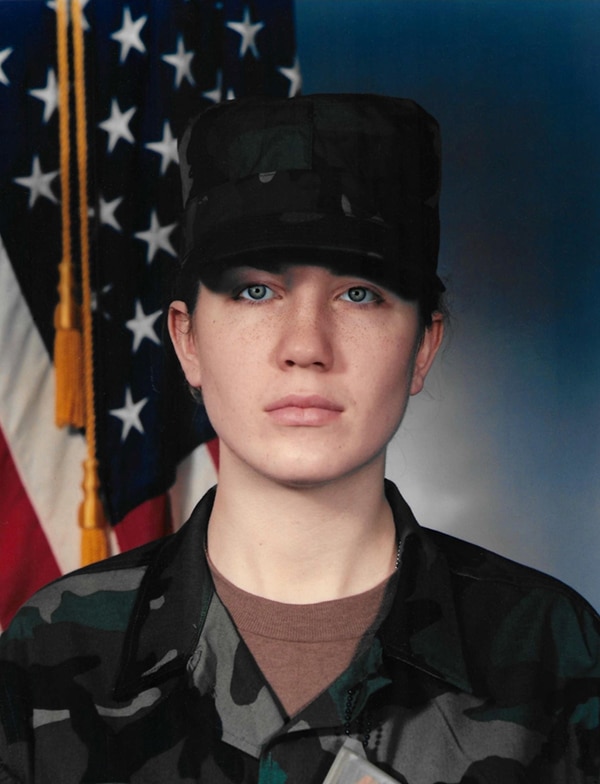
Collins also challenged Raina to ask herself: “Could I, someday, help bridge gaps for others? Could my history be useful in that way?”
While stationed at Fort Johnson, Raina also got married and gave birth to a son. She became a reservist, allowing time for her to care for her child while working full time. In 2005, she completed her military service.
Collins also challenged Raina to ask herself: “Could I, someday, help bridge gaps for others? Could my history be useful in that way?”
While stationed at Fort Johnson, Raina also got married and gave birth to a son. She became a reservist, allowing time for her to care for her child while working full time. In 2005, she completed her military service.
“A woman who’d recently lost her sight was registering for the same program that I was. She was looking for a professional reader.”
Raina took on that role, a Texas state-funded position, until the two-year program’s completion. Inspired by the experience, she enrolled in Oklahoma State’s Interpreter Training Program and then in Oklahoma’s Sight Hearing Encouragement Program (SHEP).
“I became a certified Support Service Professional (SSP)—a Deafblind Interpreter.”
Raina was trained in “tactile sign language,” a modality used to communicate with individuals who are both deaf and blind. She was on her way to using her history to help others.
But life as a now-single mom mandated a move back to Texas. Fortunately, once there, Raina found PRIDE Industries where she began work as an employment coach, specializing in American Sign Language (ASL).
Raina was hired in 2018 to work at Western Currency Facility (WCF), a PRIDE Industries customer. In her role as an ASL job coach, she wore two hats: She interpreted for the facility’s eight Deaf employees while covering human resources responsibilities—both roles at which she excelled. Then, in 2023, she saw that the PRIDE Industries Veterans Liaison position had become available.
“When I read the job description, I thought it would be a great opportunity to serve others while contributing to PRIDE Industries’ success.” This is also when another mentor factored into Raina’s life. “PRIDE Industries General Manager Jim Gaston empowered me to take the lead on several initiatives, regardless of my title,” said Raina. “Like my first sergeant, he saw something in me that I’m not sure I saw in myself.”
As PRIDE Industries Veterans Liaison, Raina oversees multiple aspects of veteran recruitment and employment. She assists in the development of relationships with the Veterans Administration and other veterans’ organizations, working closely with recruiters and hiring managers throughout the process of finding jobs for veterans.
Raina recommends activities and events to connect with the veteran community, provides educational materials to veterans and referral agencies, assists with developing professional advancement opportunities to benefit our veteran employees, represents PRIDE Industries at a public-relations level, works with PRIDE Industries’ Veterans Employee Resource Group (ERG), and reports on these efforts.
“I am really proud of the hands-on work that I did with the team at WCF,” said Raina. “Now, in my new position, I feel like I can contribute to our mission on a new level.”
A new homeowner, a parent, and now a PRIDE Industries Veterans Liaison, Raina has the stability she once longed for, as well as a career that allows her to be of service on a larger scale. “Through all the hardships, I’ve also been given opportunities that many with my history haven’t,” said Raina. “That’s why giving back, whether through ASL or as PRIDE Industries’ Veterans Liaison, is so important to me.”
As the pandemic has waned, hospitality staffing solutions are needed more than ever.
The hospitality industry continues to face an acute staffing shortage, making it difficult for many businesses to maintain high-quality service and meet customer expectations. Hotels, restaurants, and other service-oriented businesses report shortages severe enough to affect their ability to operate. The good news? There’s a proven solution that not only addresses staffing shortages but also promotes inclusivity and diversity within the workforce—employing people with disabilities.
Over 10 percent of working-age Americans have a disability. Historically, only about 30 percent of these individuals have participated in the workforce—as opposed to 75 percent of persons without disabilities. That’s changing. A recent National Trends in Disability Employment (nTIDE) report, published by the Kessler Foundation and the University of New Hampshire, found that the disability employment-to-population ratio has risen to 37.9 percent. As cause for the shift, the study cited an increase in remote work and a growing awareness of the benefits of a workforce that includes people of all abilities—many of which specifically translate to hospitality staffing solutions.
A recent report by analyst firm Accenture found that employers who actively hire and support employees with disabilities earned 1.6 times more revenue, 2.6 times more net income and 2 times more economic profit than peer organizations.
Not only are hotels, restaurants, and other service-oriented businesses grappling to find employees, but retention is also an issue. According to the Bureau of Labor Statistics, up to 80 percent of hospitality employees leave within the first year—incurring operational disruptions, impaired customer service, and substantial costs to employers. All of this has left hotel operators and food service providers with a dismal outlook. According to a survey by Deloitte, these employers don’t expect staffing to return to 2019 levels until around 2030. But it doesn’t have to be that way.
Of the many reported benefits that people with disabilities bring to employers, long-term retention, reliability, and high customer satisfaction top the list. That’s certainly what the managers of three busy hotels discovered when they adopted an inclusive hiring model.
Viejas Resort and Casino in Southern California has about 20 employees with disabilities, part of a 10-year partnership with PRIDE Industries. One, Mike Becker, an employee with a developmental disability, was recently featured on San Diego’s CBS 8 News for providing a decade of “hard work” to Viejas. Mike loves keeping the resort clean. “I would like to work here at the casino for 10 more years,” he said.
“Viejas management and executives love having our employees there,” said David Cuevas, Director of Workforce Inclusion. “They are an integral part of the team, keeping the different casino areas spotless.”
Viejas also appreciates the positivity this workforce brings. “They show up every day with a smile on their face, eager to work,” said Cuevas.
So valued is this team that they are “treated like family,” according to Viejas management.
Ben Godown impressed the team at San Diego’s Legacy Resort Hotel and Spa team from the start of the hiring process in 2020.
“Unlike many of our interviewees, Ben was totally at ease,” said Tonya Seidler, Legacy’s Human Resources Director. “He answered all the interview questions thoroughly, providing examples of prior work responsibilities to help us visualize him in our open position.”
In addition to being professional and prepared for the interview, Ben had an infectious enthusiasm that impressed Tonya from the very start. “He’s continued to wow us ever since,” she said.
“We serve people from all over the world,” said Steve Marciano, General Manager. “And we need quality people like Ben.”
Ben’s supervisor, Josh Bueno, concurs. “Providing quality service includes being friendly and helpful to the hotel’s guests,” he said. “Ben does this every day. He’s a team player, too. When he’s asked to deviate from his assigned tasks, he does so willingly.”
In Northern California, an “elite laundry team,” which includes 23 employees with disabilities, has helped keep Thunder Valley Casino Resort patrons supplied with clean linens and towels since 2019. So impressive is this team that Laundry Manager Khawar Qureshi has called on other teams to “step up and learn” from them, citing the group’s ability to multi-task while maintaining production flow in a busy environment. “They are very productive, and they do quality work,” said Khawar.
“I think it’s a great workforce,” said Brant Kelly, Director of Hotel Operations, adding that working with the team has been “nothing but a pleasure.”
Joel Moore, Vice President of Operations at Thunder Valley, shares the enthusiasm, saying that laundry operations have been so successful that the casino is looking to add employees with disabilities in other areas.
Aside from strengthening day-to-day operations, a workforce that includes people with disabilities garners many financial benefits as well. A recent report by analyst firm Accenture found that employers who actively hire and support employees with disabilities earned 1.6 times more revenue, 2.6 times more net income, and 2 times more economic profit than peer organizations. A separate study by Global Markets found that inclusive companies earn 2.5 times higher cash flow per employee, and inclusive teams are more productive by over 35%.
There really is. The Accenture study found that companies that hire people with disabilities demonstrate greater appeal to customers and socially conscious investors, increase innovation, and enjoy greater workplace morale—with all employees benefitting from an inclusive environment.
What’s more, this workforce specifically excels in areas that are key to the hospitality industry: retention, adaptability, and empathy.
When it comes to hospitality staffing solutions, extending your talent search to include people with disabilities just makes sense. With decades of experience as the leading employer of people with disabilities, PRIDE Industries makes connecting with this stellar workforce easy.